
Add ₹999 more to unlock FREE SHIPPING!
Your sacred cart is currently empty.
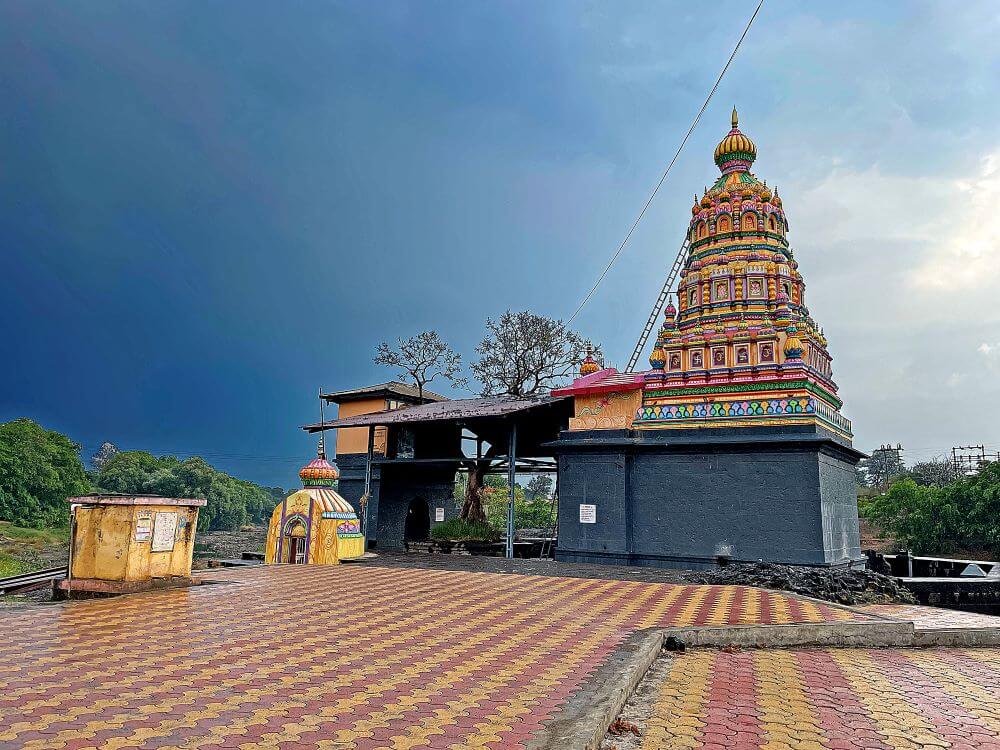
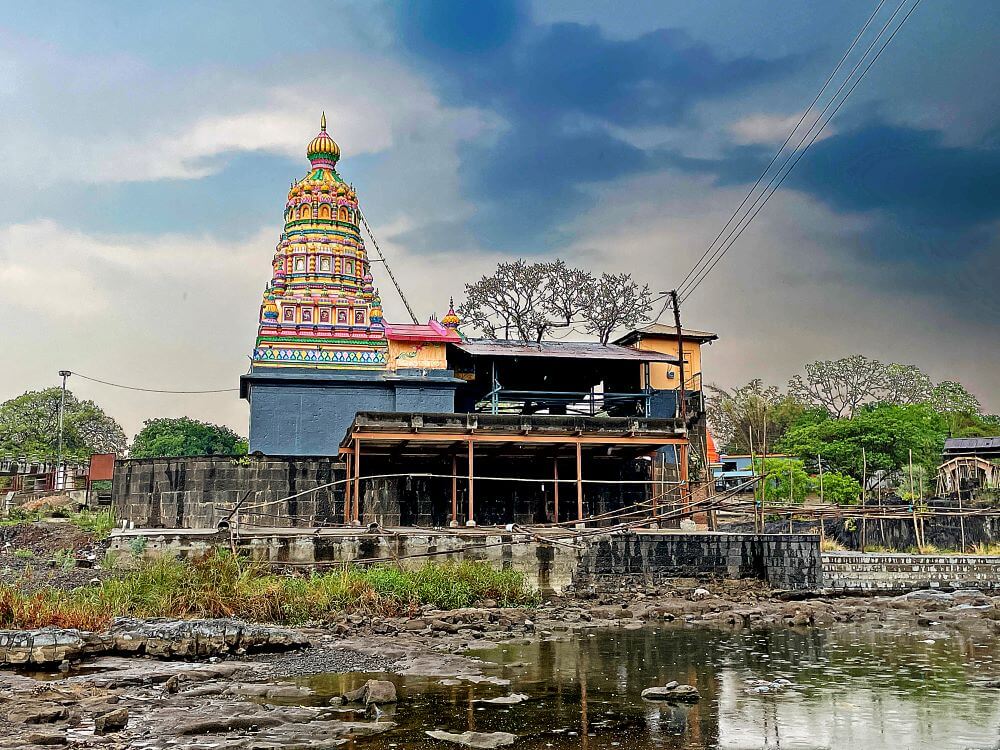
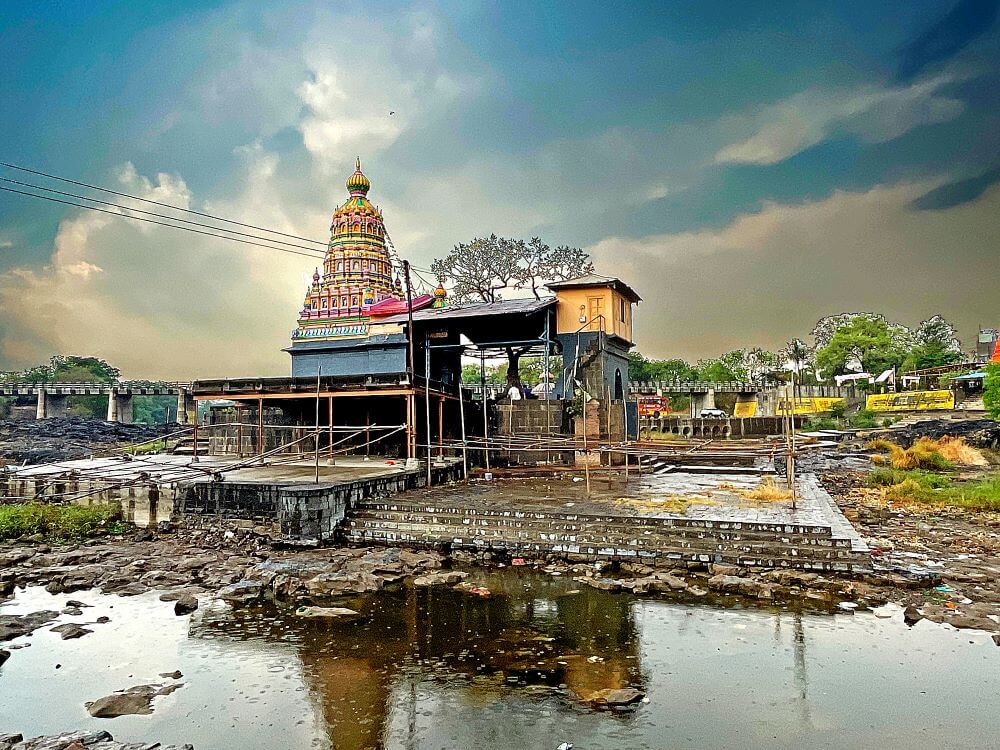
Shop Photo FramesThe village of Limb, near Satara, is famous for its well with twelve water-drawing wheels (Bara Mota). Alongside this, the Koteshwar Mahadev Temple, situated on a rock in the middle of the Krishna River, is a place of deep faith for devotees. Tourists also visit in large numbers to see this temple located in the heart of the riverbed. A unique feature of this village is that Shahu Maharaj had established a mango orchard here, featuring various varieties of mangoes from across the country. Even today, one can see trees of these diverse mango varieties throughout the area.
There is a legend regarding this temple that the Krishna River originates from Mahabaleshwar, and the total number of Shiva Lingas along the banks of the Krishna from there to Limb village is one crore. Since the last temple in this series is in the village of Limb, it was named Koteshwar. Therefore, this temple is considered to be as significant as the Shri Kshetra Mahabaleshwar and the Panchganga Temple in Mahabaleshwar. Devotees believe this ancient temple is a ‘Jagrut Devasthan’ (an awakened abode of the Divine), set in a picturesque environment with the flowing Krishna River, lush natural surroundings, and the chirping of birds.
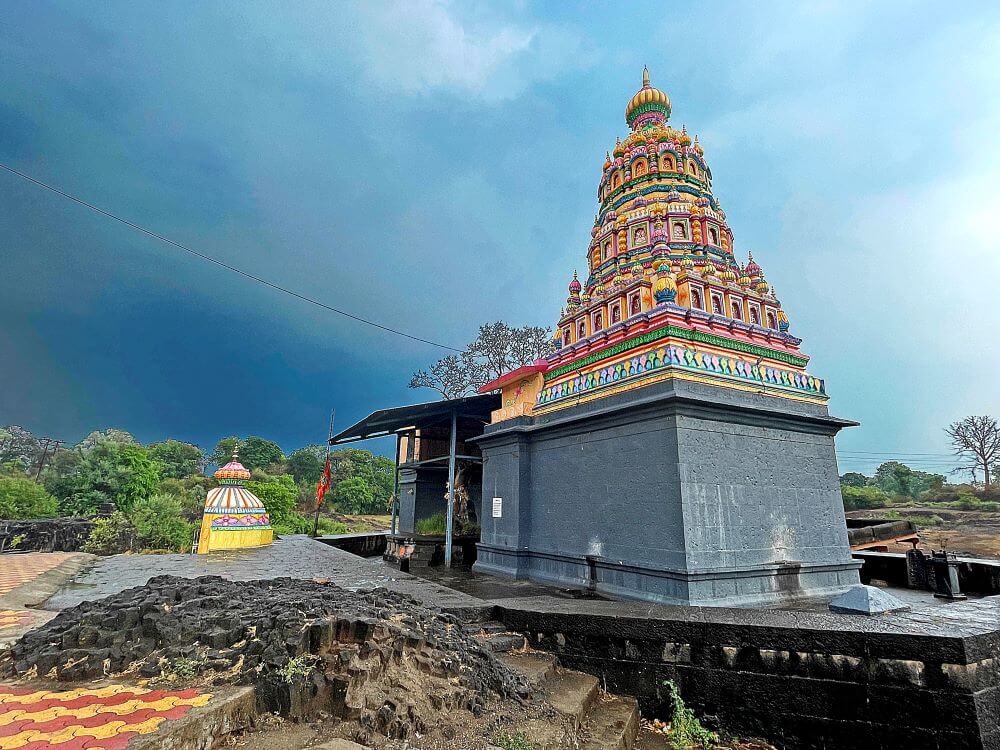
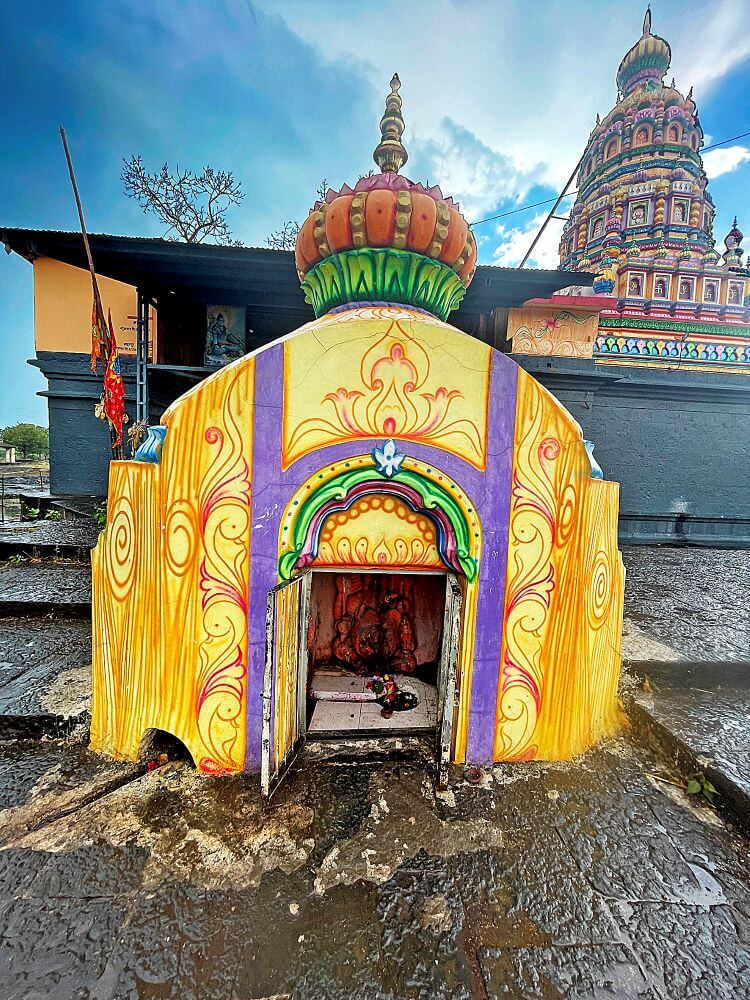
The Peshwa’s Sardar, Naro Appaji Khire (Tulshibagwale), was a native of Limb village. He built the Tulshibag and the Ram Temple in Pune. He also constructed this Koteshwar Shiva Temple. One can reach the Koteshwar Temple in the riverbed from near the bridge over the Krishna River. However, during the monsoon season, when the river is overflowing, the temple cannot be accessed. The temple premises are paved, giving the area a beautiful and clean appearance. Before reaching the main temple, there is an idol of Shri Ganesha in a small shrine on the left. Moving a little further, there is an open hall with a tin roof where a circular platform is built around a Banyan tree. In the niches at the base of this platform, there are various idols. To the east of the platform, there is an arched main entrance in the fortification to enter the temple premises from the riverbed. There is a Nagarkhana (drum house) above this entrance. Opposite the entrance are two water tanks, one of which contains a Nandi and a Shiva Linga. From there, one climbs a few steps to enter the temple premises.
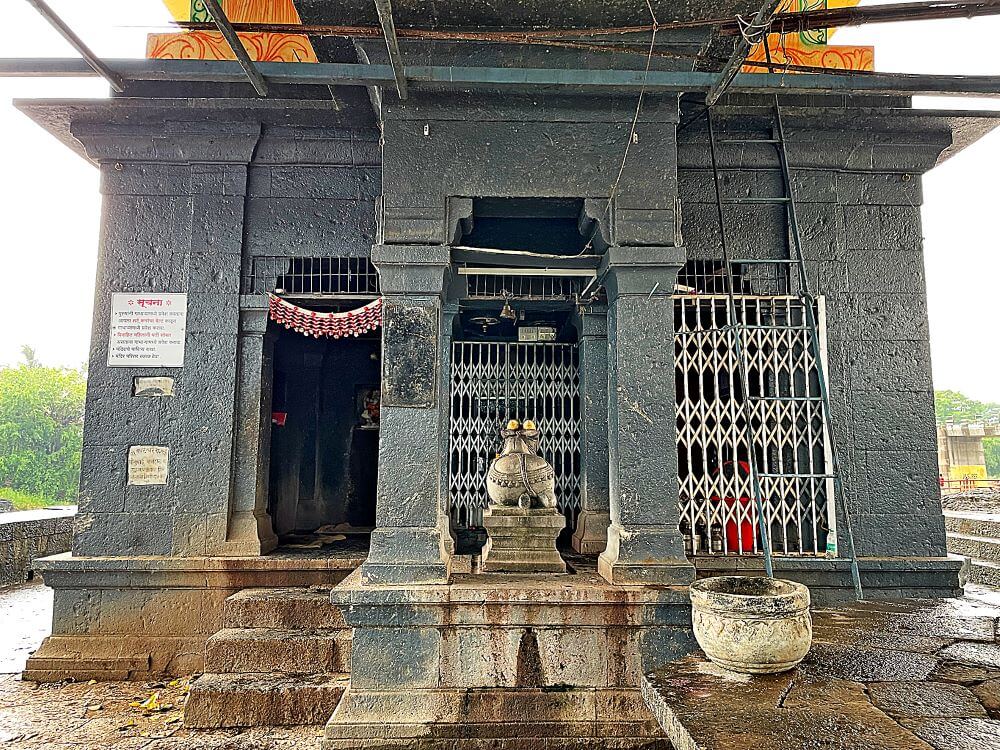
To the west of the platform is the Koteshwar Mahadev Temple. In the temple’s Darshan Mandap, there is an idol of Nandi. This Nandi, carved from a single stone, features exquisite and unique jewelry craftsmanship. In the sanctum sanctorum, there is a large Shiva Linga made of black stone. Devotees believe that by bathing in the tank in front of the temple and having Darshan of Koteshwar, one can be cured of skin diseases. Devotees also offer prayers here for prosperity and the purchase of vehicles. Festivals like Mahashivratri and Tripurari Purnima are celebrated on a grand scale at this temple. Thousands of devotees visit for Darshan during these times. A fair is held here every Shravani Monday. The Krishnamai Festival is held in Wai for approximately a month and a half, from Magh Shuddha Pratipada to Phalgun Purnima. It is said that Chhatrapati Shivaji Maharaj himself started this festival there. During this same period, the Krishnamai festival is also celebrated on a large scale in Limb village.
Apart from the Koteshwar Temple, this village is famous for the ‘Bara Mota’ (twelve-wheel) well, which is a historical marvel and an excellent example of water management. This well is located three kilometers from Limb village on the Satara-Pune road. This beautiful well was built by Queen Virubaisaheb, the wife of Chhatrapati Shahu Maharaj. There are stone steps to descend into the well. Upon descending these steps, one sees an arch that resembles a fort. There is a bridge inside the well, which allows one to cross to the other side. Sculptures of Ganesha, Hanuman, elephants, and Queen Virubaisaheb are carved on the stone pillars here. There are also carvings of flowers and birds. Although the well is famous as ‘Bara Mota’ (twelve-wheel), the structure reveals that there were actually 15 wheels here.
The water distribution system here is unique. Traces of the 15 wheels used to supply water to the surrounding farms can still be seen today. The inscription on this well reads ‘Shrimant Saubhagyavati Virubaisaheb’. Chhatrapati Shahu Maharaj had ordered saplings of various mango varieties from across the country and created special mango orchards in Limb village. Those trees were also watered by this well. It is said that Shahu Maharaj often stayed in Limb village.
This sacred temple stands as a testament to deep spiritual devotion, ancient architectural grandeur, and rich local cultural traditions.
The sanctum sanctorum houses the divine idol consecrated according to ancient Vedic traditions, surrounded by serene courtyards and traditional temple architecture.
Navratri, Maha Shivratri, Annual Temple Jatra & Deepotsav
Compare and book flights, secure top-rated local hotels near the temple, hire reliable guides, and rent cars instantly.
Extend your pilgrimage by visiting other highly sacred temples located nearby.


Add ₹999 more to unlock FREE SHIPPING!
Your sacred cart is currently empty.
Shop Photo FramesFill in your delivery details below to place your order.
Add comment