
Add ₹999 more to unlock FREE SHIPPING!
Your sacred cart is currently empty.
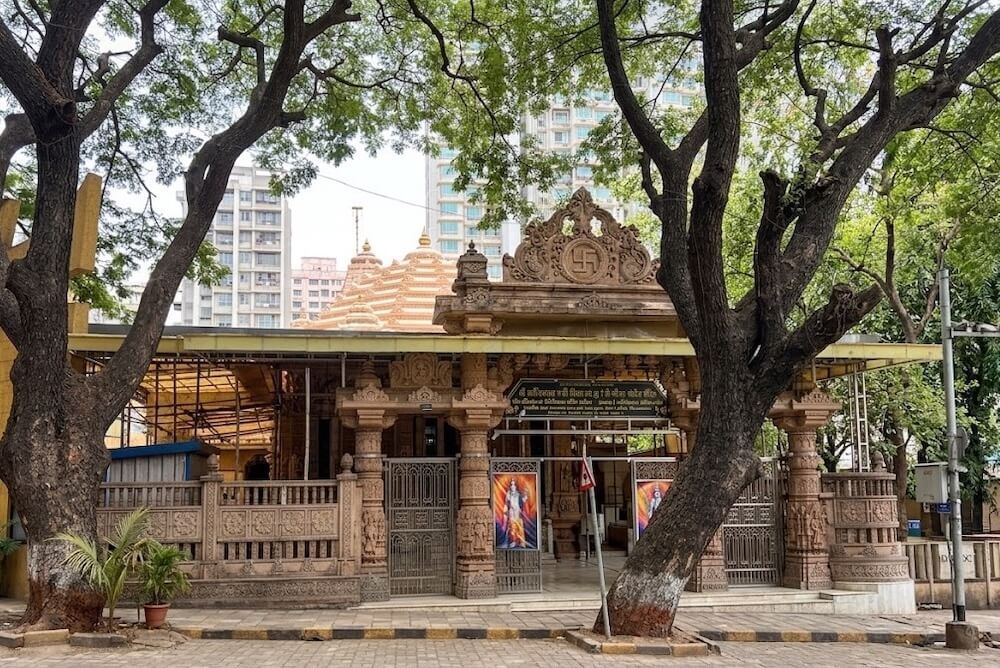
Shop Photo FramesUmiya Mata is a form of Parvati, also known as Uma. This Goddess, who is the symbol of Shakti, is the family deity (Kuldevi) of the prosperous Kadva Patidar community across the world. The original seat of this Goddess is at Unjha in the Mehsana district of Gujarat. The Kadva Patidar community, spread across the country, has built temples of their family deity in various places. The Patidar community settled in Mumbai built this temple in Goregaon through the ‘Umiya Mataji Mandir Trust’ to preserve their religious culture. The idols of Lakshmi-Narayan and the Linga of Umeshwar Mahadev are also enshrined in this temple.
Umiya Mata is a form of Parvati, also known as Uma. A mythological legend is famous regarding this Goddess. According to it, before sacrificing her life in the sacrificial fire (Agni-kund), Sati had expressed the wish, “May I get Lord Shiva as my husband in my next incarnation.” Accordingly, in her next birth, she was born as Uma in the house of King Himalaya. She performed severe penance and thereafter married Lord Shiva. Following this, Uma came to be known as ‘Mata Umiya’. She is also known as ‘Annapurna Mata’. Sita also used to worship Umiya Mata daily. There was a temple of Umiya Mata in the garden of King Janaka’s palace. During the Swayamvara, Sita had gone to this garden to offer prayers. At that time, she had the vision of Lord Ramachandra. She prayed before the Goddess, “May I get Lord Ramachandra as my husband.” It was due to the Goddess’s blessings that her wish was fulfilled. Before departing from the Earth, she entrusted Lava and Kusha to Umiya Mata. Since then, they began worshipping Umiya Mata. After them, their descendants also continued the daily worship of Umiya Mata.
It is said that the roots of the Kadva Patidar community lie in the Indus Valley Civilization. This community originally belonged to the Kshatriya varna. Later, the Kshatriya varna was divided into three sub-varnas. Among them, the Kurmi Kshatriyas, who were farmers, are the ancestors of today’s Patidar community. After the year 1000 CE, due to the increase in attacks by foreign invaders, some Kurmi groups migrated from Punjab to the Unjha region in North Gujarat. Among them, the groups that came from the Karad region of Gujranwala in Punjab began calling themselves ‘Karad Kurmi’, and the groups that came from the Leu region began calling themselves ‘Leu Kurmi’. Later, ‘Karad’ became corrupted to ‘Kadva’ and ‘Kurmi’ to ‘Kanbi’. In the seventeenth century, this community started taking land grants from kings. Over time, they came to be called ‘Patidar’. This community initially settled in the Unjha region of Gujarat. There, they have a large temple of their family deity, Umiya Mata.
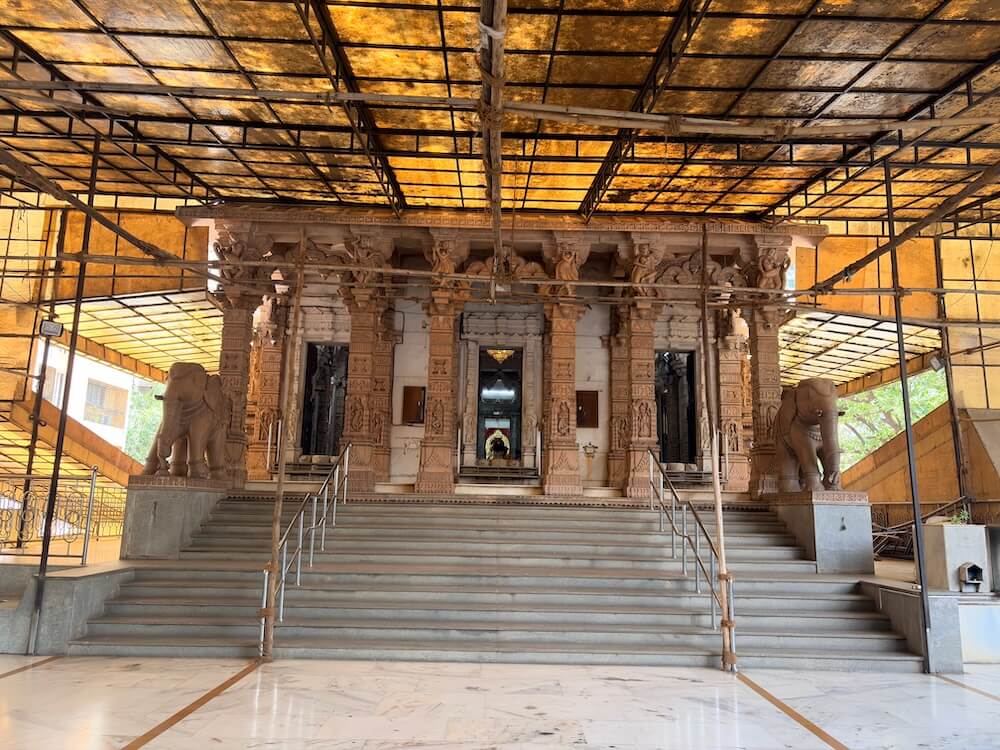
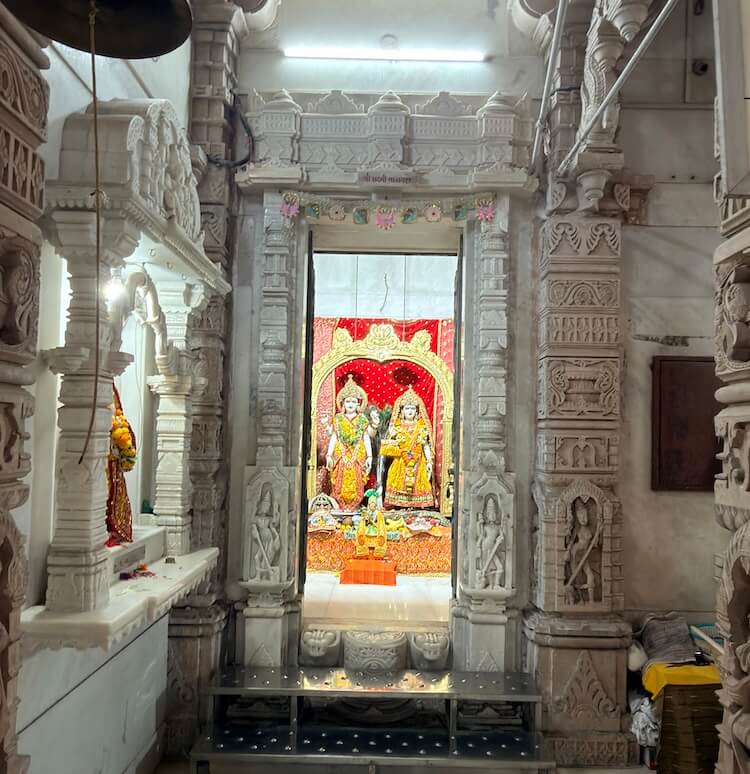
The Umiya Mataji Temple at Churi Wadi (Vishweshwar Nagar Road) in Goregaon East was established around the year 2010. A fine example of modern and traditional Indian temple architecture, this temple makes extensive use of Rajasthani sandstone in its construction. The temple has a large boundary wall. The premises feature a tall and grand entrance gate. The door pillars here have intricate carvings, and statues of gatekeepers (Dwarapalas) are carved upon them. The temple has a marble-paved courtyard. The temple is built on a high plinth (Jagati). The structure of the temple consists of a Mukhamandapa (entrance porch), Sabhamandapa (assembly hall), Antarala (vestibule), and Garbhagriha (sanctum sanctorum). There is a pyramid-shaped Shikhara over the Sabhamandapa. The temple has three sanctums, each topped with a tall Shikhara. These Shikharas have a circular Amalaka. Atop them is a golden Kalash. One enters the Mukhamandapa of the temple by climbing twelve steps. On the railings on both sides of these steps are large elephant sculptures. The Mukhamandapa and the Sabhamandapa of the temple have many pillars. On these beautifully carved pillars in the Sabhamandapa, images of celestial attendants (Sur-sevakas) in various postures, as well as Makara-toranas (arched gateways), are carved. The dome-shaped ceiling of the Sabhamandapa is also decorated with beautiful carvings. A large crystal chandelier hangs in its center. In the beautifully carved niches of the Antarala, marble idols of Ganapati and Hanuman are enshrined.
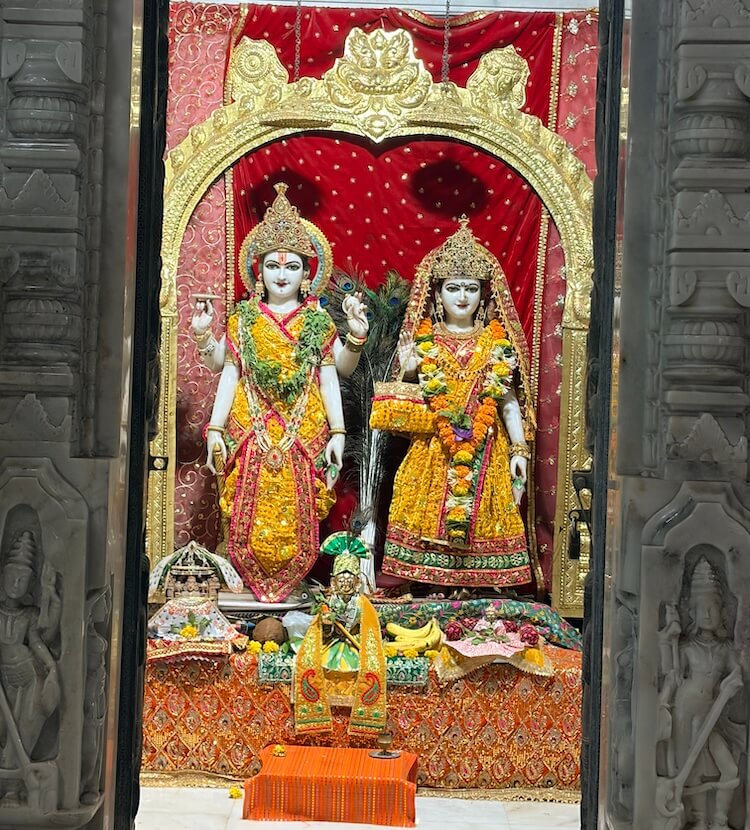
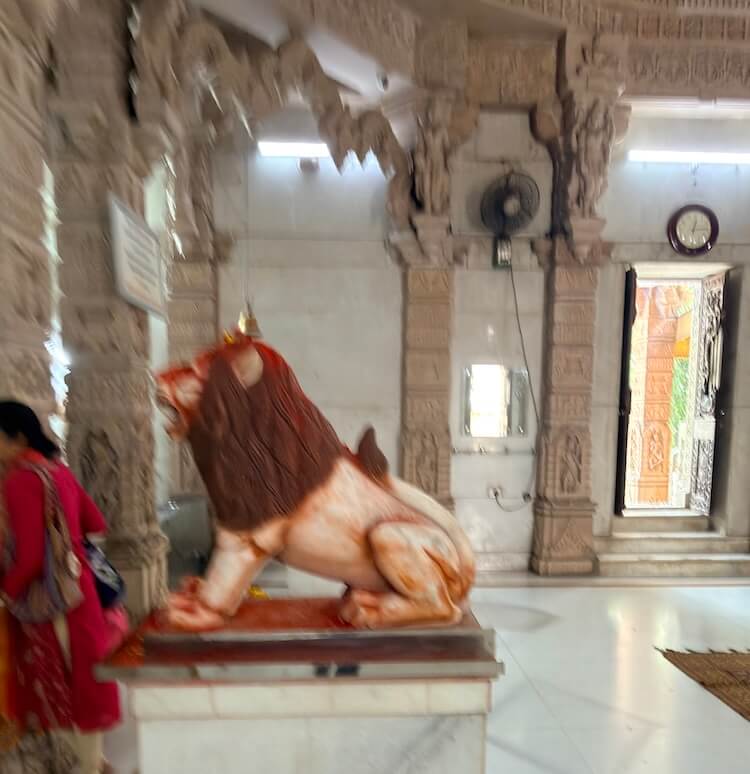
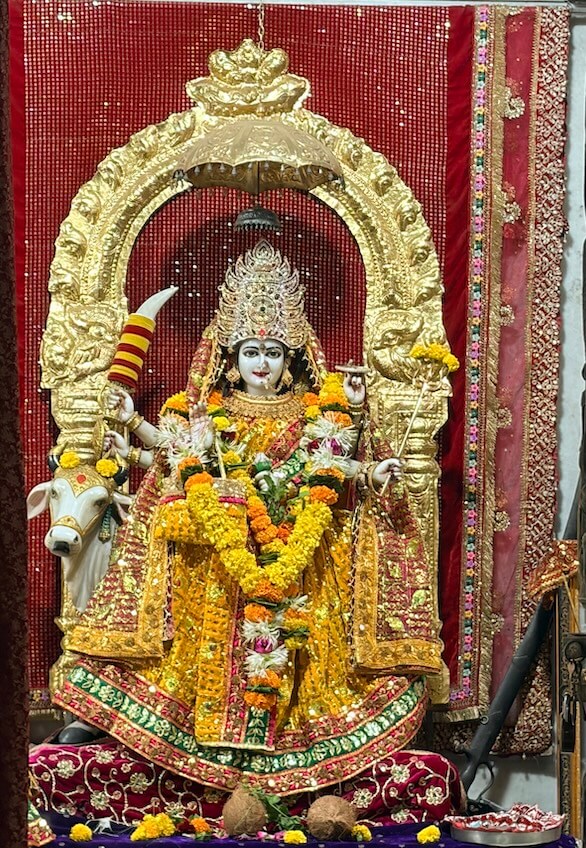
In front of the main sanctum of the temple, a large statue of a lion is seated on a high marble pedestal. The sanctum has a marble entrance with carved pillars. At the base of these pillars, statues of gatekeepers are carved. Inside, on a high altar, the idol of Umiya Mata is enshrined. The idol of the Goddess is four-armed and in a standing posture. The Goddess holds a sword, shield, discus, and trident. The Goddess is adorned here with rich garments, ornaments, and flower garlands. Behind her stands a cow (Gomata). In front of the sub-sanctum to the left of this sanctum, there is a statue of Garuda on a marble pedestal. Beautiful idols of Lakshmi-Narayan are enshrined in this sub-sanctum. In front of the sub-sanctum on the right, a statue of Nandi is seated on a pedestal. A large Linga of Umeshwar Mahadev is installed in this sanctum. A copper serpent deity has raised its hood over this Shiva Linga. In a niche on the back wall of the sanctum, Mother Parvati is enshrined. Nearby, on a pedestal, there is a large brass mask of Shankar. During festivals, this mask is placed on the Shiva Linga.
In this temple, devotees can avail the benefit of Darshan from 7 AM to 12.30 PM and from 3 PM to 9 PM. A musical Aarti is performed here every morning at 9 AM. In summer, the evening Aarti takes place at 7 PM, and in winter at 6 PM. The Navratri festival is the largest and most important festival in this temple. During Ashwin Navratri, special pujas, Havan, and Garba-Dandiya are organized here for nine days. During this time, thousands of devotees from all over Mumbai come here for Darshan. Similarly, the Goddess is specially adorned on the days of Shakambhari Navratri and Lalita Panchami. There is a large crowd of devotees here on Shivratri as well as on Mondays in the month of Shravan. In the temple premises, there is a ‘Umiya Mataji Mandir Guest House’ for devotees and a large hall for social events. Family ceremonies like weddings are held here.
This sacred temple stands as a testament to deep spiritual devotion, ancient architectural grandeur, and rich local cultural traditions.
The sanctum sanctorum houses the divine idol consecrated according to ancient Vedic traditions, surrounded by serene courtyards and traditional temple architecture.
Navratri, Maha Shivratri, Annual Temple Jatra & Deepotsav
Compare and book flights, secure top-rated local hotels near the temple, hire reliable guides, and rent cars instantly.
Extend your pilgrimage by visiting other highly sacred temples located nearby.


Add ₹999 more to unlock FREE SHIPPING!
Your sacred cart is currently empty.
Shop Photo FramesFill in your delivery details below to place your order.
Add comment