
Add ₹999 more to unlock FREE SHIPPING!
Your sacred cart is currently empty.
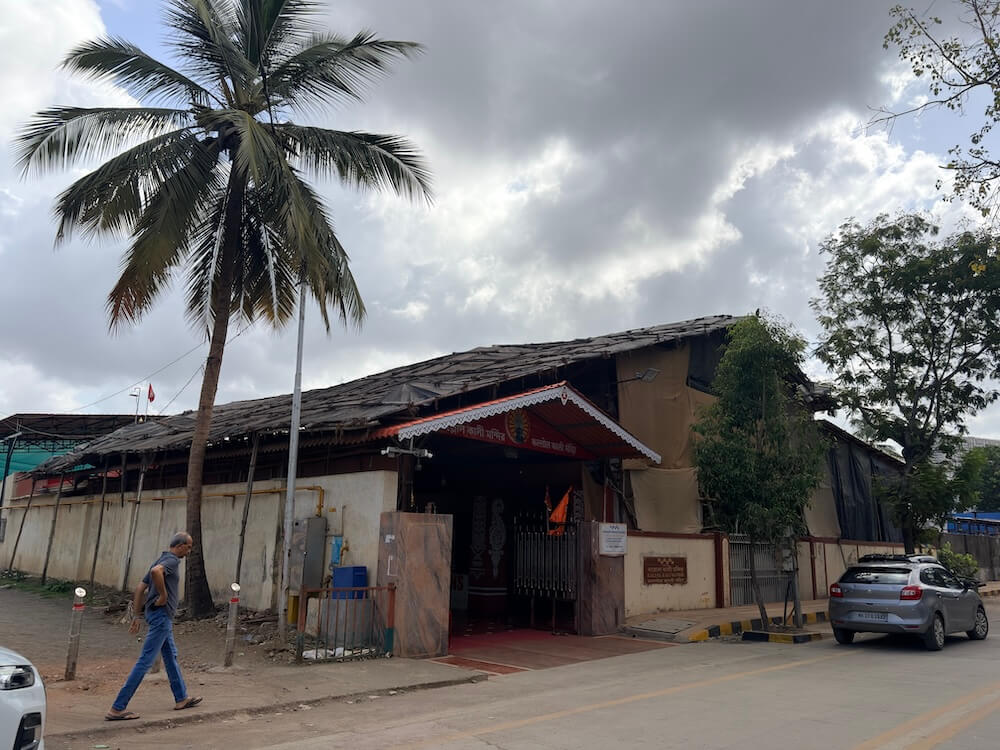
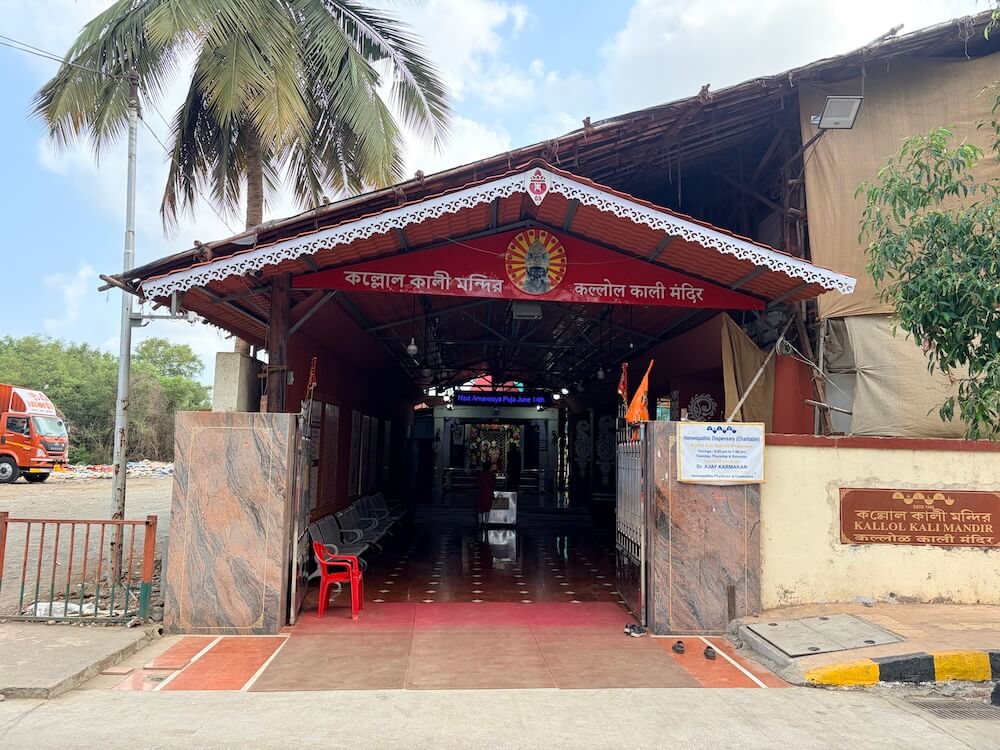
Shop Photo FramesThe Kallol Kali Mata Mandir is situated in the Bangur Nagar area of Goregaon, in the western suburbs of Mumbai. This temple was established by the ‘Kallol Social and Cultural Organization,’ an institution that brings together the Bengali community settled in Mumbai and preserves their cultural traditions. Consequently, the temple was named Kallol Kali Mandir. Since 1968, this organization began organizing large-scale Durga Puja in this locality. Initially, Kali Puja was held every new moon (Amavasya) in a temporary public pavilion. As the scope of the organization expanded, the community felt the need for a permanent and dedicated temple. It was from this need that the Kallol Kali Mandir was built.
In the Bengali language, ‘Kallol’ means the sound of waves. In the cultural landscape of Maharashtra, the magazine ‘Satyakatha’ initiated a modern literary movement. On similar lines, the magazine ‘Kallol’ started a new and influential cultural movement in Bengal. Dinesh Ranjan Das and Gokul Chandra Nag started this cultural-literary magazine in 1923. Renowned litterateurs like Kazi Nazrul Islam, Premendra Mitra, and Buddhadeb Basu were the pioneers of this movement. From this very movement, magazines like ‘Uttara’ (1925), ‘Pragati’ (1926), ‘Kalikalam’ (1926), and ‘Purbasha’ (1932) were subsequently launched. This movement is credited with bringing a wave of modernity to Bengali literature, as well as to theater, music, and painting. As a reaction against the classicism and romanticism in arts and literature, this movement brought the struggles of the working class and urban society of Bengal to the forefront. The social and cultural organization founded by the Bengalis settled in Mumbai was named after this very movement.
Established with the vision of preserving Bengali culture and traditions, the organization initially conducted various programs such as Vasant Panchami, Saraswati Puja, and Kali Puja. A community Kali Puja was held here every month on the new moon. In Bengali society, the worship of Mother Kali holds exceptional historical and cultural significance. During the medieval period, the Tantric and Shakta traditions spread extensively in Bengal. In the eighteenth century, Raja Krishnachandra and other local rulers gave Kali Puja a broad social dimension. Saints like Ramprasad Sen and Ramakrishna Paramahansa rooted the form of Mother Kali in the Bengali consciousness in a very simple and domestic manner. Because of this, even today, Kali Puja is given the highest priority in every auspicious occasion and annual festival in Bengali society.
Ancient scriptures and Puranas contain numerous references to the fierce and benevolent forms of Goddess Kali. Specifically, the ‘Devi Mahatmya,’ also known as ‘Durga Saptashati,’ in the Markandeya Purana provides detailed information about the origin and prowess of the Goddess. According to this text, the primordial nature, Adimaya Bhagavati Mahalakshmi, created the forms of Mahakali and Mahasaraswati from the Tamoguna and Sattvaguna. It is believed that just as Mahakali is the destroyer, she is also the Mother of the Universe and the sustainer. Tantric texts like the ‘Kalika Purana’ and ‘Mahanirvana Tantra’ clarify the rituals of Kali Puja, her meditation (Dhyana), and her spiritual significance. Kali Puja also holds immense importance in the Shakta and Tantric paths, which are esoteric traditions that emphasize mantras and rituals. Bengal is said to be particularly renowned for these disciplines.
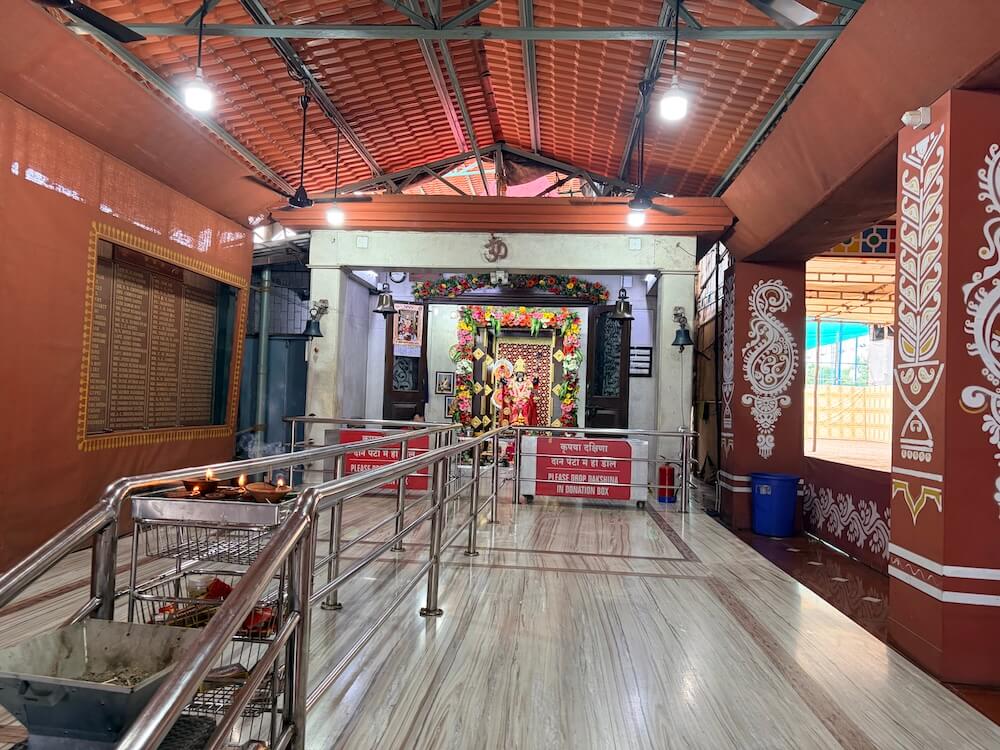
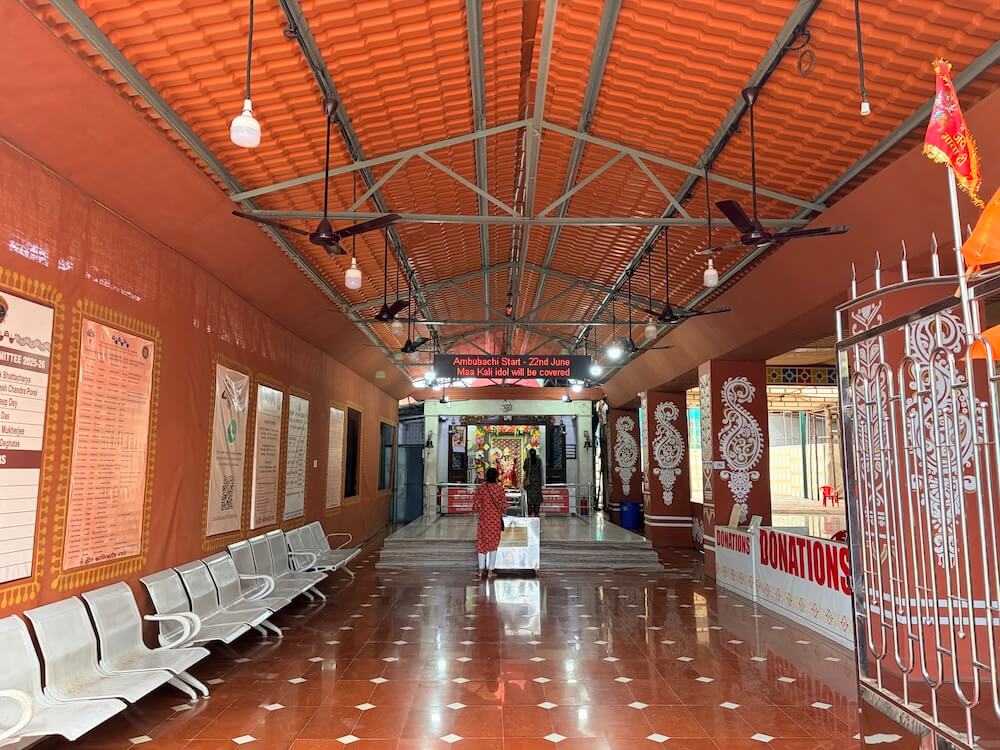
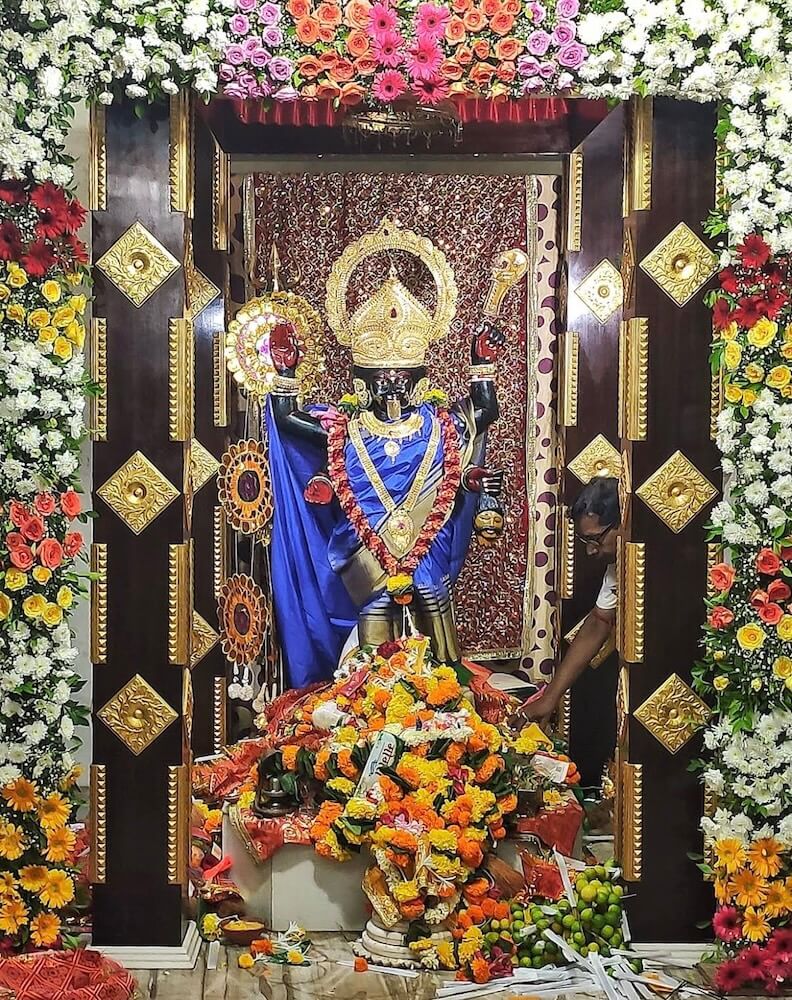
The temple of the Goddess is located in the central area of Bangur Nagar. One enters the assembly hall of the temple through the gate in the surrounding wall. In the Bengali tradition, this assembly hall is called the ‘Natmandir.’ Benches have been provided in this hall for devotees to sit. Beyond this, one climbs three steps to enter the inner sanctum (Antaral). A disciplined queue system has been arranged in this area to properly manage the crowd of devotees and visitors. Further ahead is the sanctum sanctorum (Garbhagriha) of the temple. The idol of Mother Kali is consecrated in this sanctum. Carved from a single piece of black stone, the idol is in the traditional Dakshinakali form. Lord Shiva is depicted in a reclining posture at the feet of Mother Kali.
The Durga Puja organized by the Kallol organization is extremely famous throughout Western Mumbai. During this five-day festival, which runs from Mahashasthi to Vijayadashami in the month of Ashwin, cultural, social, and literary programs are organized on a large scale alongside religious rituals. For this festival, special artisans are called every year to craft a traditional clay idol in the ‘Ekchala’ style, meaning all deities are placed within a single frame. The design of the puja pavilion is based on different social, eco-friendly, or historical themes each year. (The schedule for the Maha Aarti, the competition of ‘Dhunuchi’—a traditional religious dance form from West Bengal—and the rhythmic ‘Chandipath’ held during these five days is published on the organization’s website at the appropriate time.)
Apart from Durga Puja, the Kali Puja celebrated on the day of Diwali is the most important and original festival of this temple. On the night of the Kartik Amavasya, the Mahanisha Puja is performed here following Tantric and Vedic religious rules. This puja begins at midnight and continues until dawn. During this puja, thousands of devotees stay awake all night and observe a fast. Furthermore, the Saraswati Puja held on Vasant Panchami is considered extremely important, primarily for the ‘Hate Khori’ ritual—the initiation of children into their first letters—and for the education of students. Additionally, there is a tradition of celebrating ‘Poila Baisakh’ (the Bengali New Year), Mahashivratri, and Lakshmi Pujan with great enthusiasm. Devotees can visit the temple on Wednesdays, Thursdays, and Fridays from 6:00 AM to 12:30 PM and from 5:00 PM to 9:00 PM. On Tuesdays, Saturdays, and Sundays, the visiting hours are from 6:00 AM to 1:00 PM and from 5:00 PM to 9:30 PM.
‘Kallol Social and Cultural Organization’ conducts various philanthropic activities throughout the year. The organization runs a well-equipped charitable dispensary. Here, local poor, hardworking, and needy patients are provided with medical advice, primary treatment, and essential medicines at nominal rates or free of cost. The organization also makes a significant contribution to the field of education. Every year, scholarships are awarded to meritorious and needy students from economically weaker sections for higher education. Additionally, educational materials are regularly distributed to primary school children. To keep the younger generation connected to their cultural roots, formal training classes in Hindustani and Bengali classical music, traditional dance, instrumental music, and painting are conducted at the temple for a modest fee.
This sacred temple stands as a testament to deep spiritual devotion, ancient architectural grandeur, and rich local cultural traditions.
The sanctum sanctorum houses the divine idol consecrated according to ancient Vedic traditions, surrounded by serene courtyards and traditional temple architecture.
Navratri, Maha Shivratri, Annual Temple Jatra & Deepotsav
Compare and book flights, secure top-rated local hotels near the temple, hire reliable guides, and rent cars instantly.
Extend your pilgrimage by visiting other highly sacred temples located nearby.


Add ₹999 more to unlock FREE SHIPPING!
Your sacred cart is currently empty.
Shop Photo FramesFill in your delivery details below to place your order.
Add comment