
Add ₹999 more to unlock FREE SHIPPING!
Your sacred cart is currently empty.
Shop Photo FramesPunyashlok Ahilyabai Holkar reigned over the throne of Indore for approximately 30 years, from 1766 CE to 1795 CE. During this period, she undertook the restoration of hundreds of temples across the country. The number of temples restored in Maharashtra is also significant. The Vankhanath Temple located in Nagao, in the Alibag taluka, is one of them and is considered an excellent example of architectural craftsmanship. A unique feature of this temple’s construction is that when a lamp is lit at the top of the stone lamp pillar (Deepmala), situated 70 to 80 feet away across the road in front of the temple, its light falls directly onto the face of the Goddess Parvati idol in the sanctum sanctorum.
Nagao village is situated on the Alibag-Revdanda road. Many historical references to Nagao are found in the book ‘Angrekalin Ashtagar’ written by Shantaram Vishnu Avalaskar. Ashtagar means eight main stations… there are differing opinions regarding exactly which these eight stations are. Some historical references mention the villages of Alibag, Nagao, Thal, Sasavane, Akshi, Kihim, Sakhar, and Awas as being part of the Ashtagar, while some books state that Revdanda, Chaul, Nagao, Akshi, Varsoli, Thal, Kihim, and Awas are the villages in the Ashtagar. It is noted that there is a consensus regarding Nagao in both lists. Around 1662 CE, Chhatrapati Shivaji Maharaj added a large part of this Ashtagar in the Konkan to the Maratha Empire. In 1710 CE, Kanhoji Angre defeated the Portuguese and brought this region under his suzerainty.
Upon entering the village, there are nine sculptures carved with images of snakes (Naga). It is said that the village may have been named Naggram because of this. This name eventually corrupted into Nagao. The Vankhanath Shiva temple in this village is famous. The book ‘Angrekalin Ashtagar’ gives the year of the temple’s construction as 1763. However, the ‘Kolaba Gazette’ of the ‘Bombay Presidency’ mentions the construction period as being around 1790. Nevertheless, according to both references, Keshav Mahajan, a resident of Nagao, built this temple using funds provided by Ahilyabai Holkar. It is said that Mahajan incurred an expenditure of approximately 75,000 rupees to build the Vankhanath Temple and a mosque located near the hill in the southern direction.
While going towards Chaul, this Vankhanath Temple is located in Khargalli at Atale, on the right side of the main road. Interestingly, because a road was built later through the temple premises, the temple’s lamp pillar is now on the left side of the road. In front of the temple, there is an ancient square stone stepped well (Pushkarani) measuring 50 feet in length and width. Inside this well, constructed with large black carved stones, there are also sculptures carved into the stone. When the water level recedes in summer, some of these sculptures can be seen. Additionally, there is beautiful carving in the niches on all four sides. There are steps to descend into the well from the road side and the temple side.
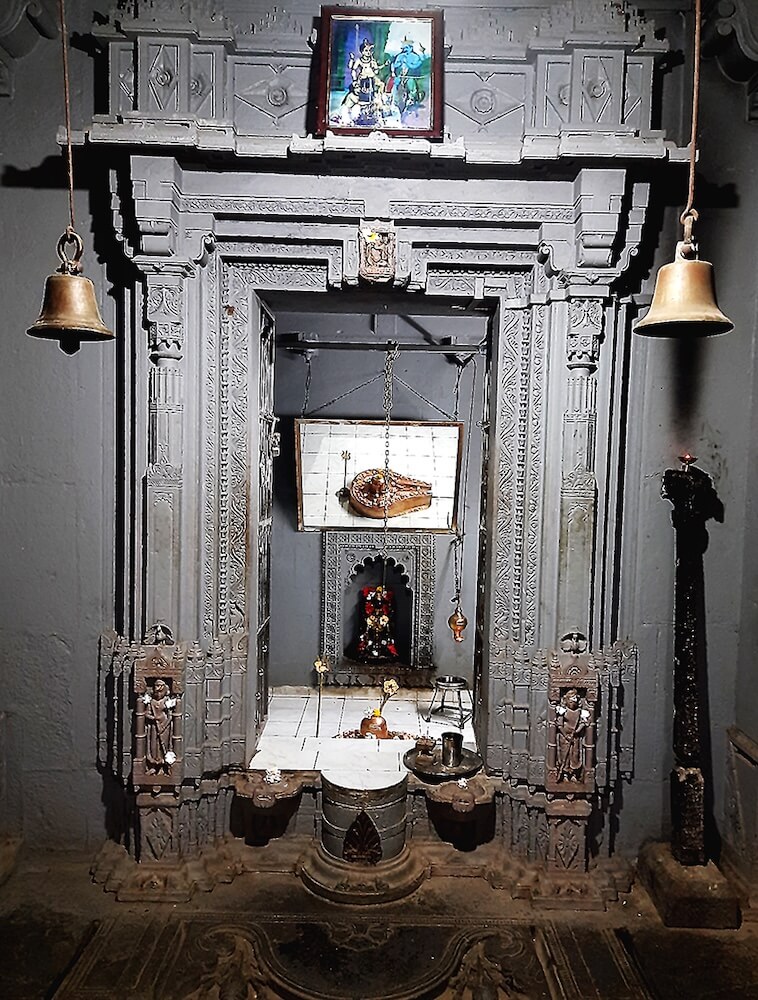
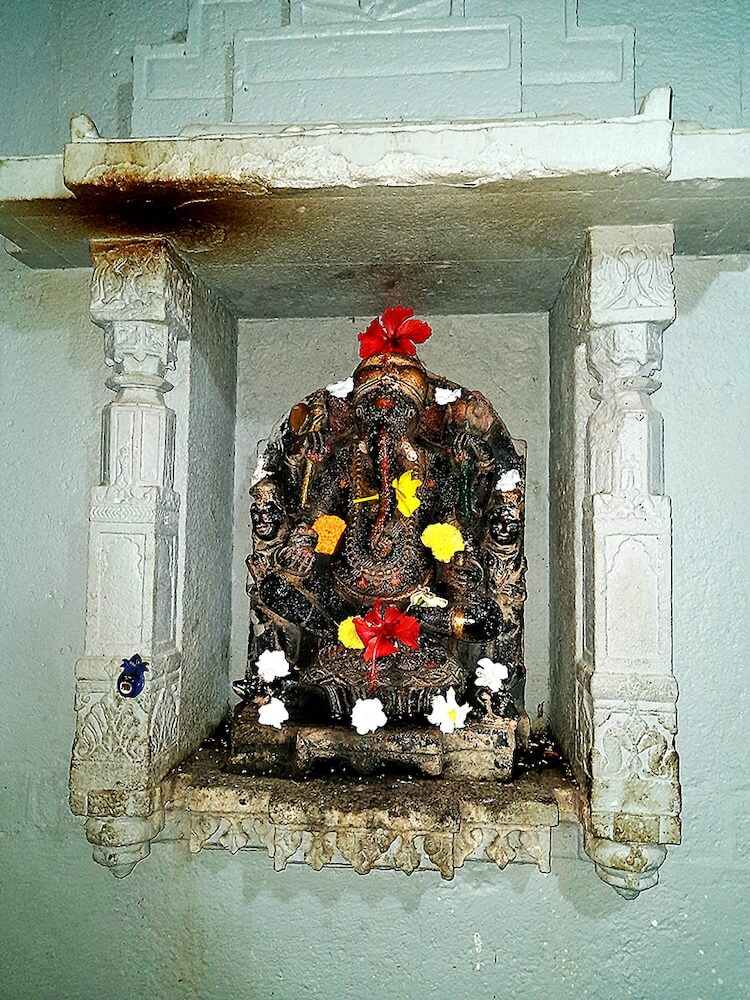
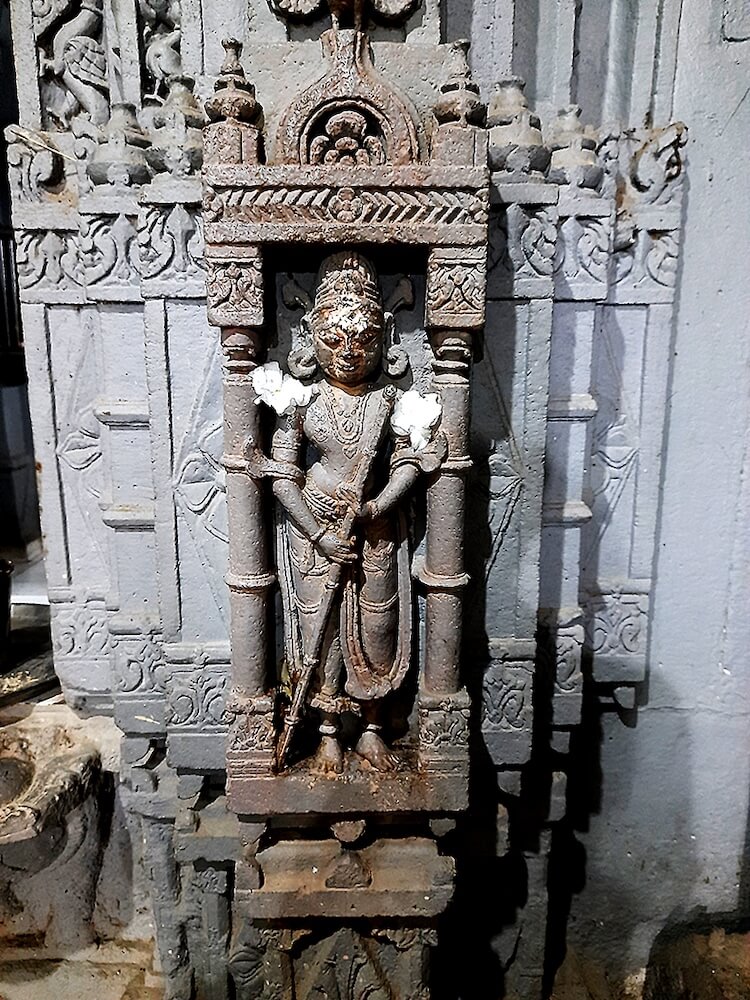
The structure of this temple consists of a Mandap (hall), Sabha Mandap (assembly hall), Antarala (vestibule), and Garbhagriha (sanctum sanctorum). The Mandap here was built later in front of the original temple. There is a tin shed above this Mandap. The construction of the Sabha Mandap, Antarala, and Garbhagriha is done in black carved stone. The door of the Sabha Mandap is carved in black stone. On both sides of the entrance, there are pillar branches and an idol of Lord Ganesha on the lintel. There is beautiful carving on the pillar branches here. In the Sabha Mandap, there is an idol of Nandi made of a single piece of black stone on a pedestal. In the niches of the front wall of the Antarala, there are idols of Ganpati and Bhairava carved in black stone.
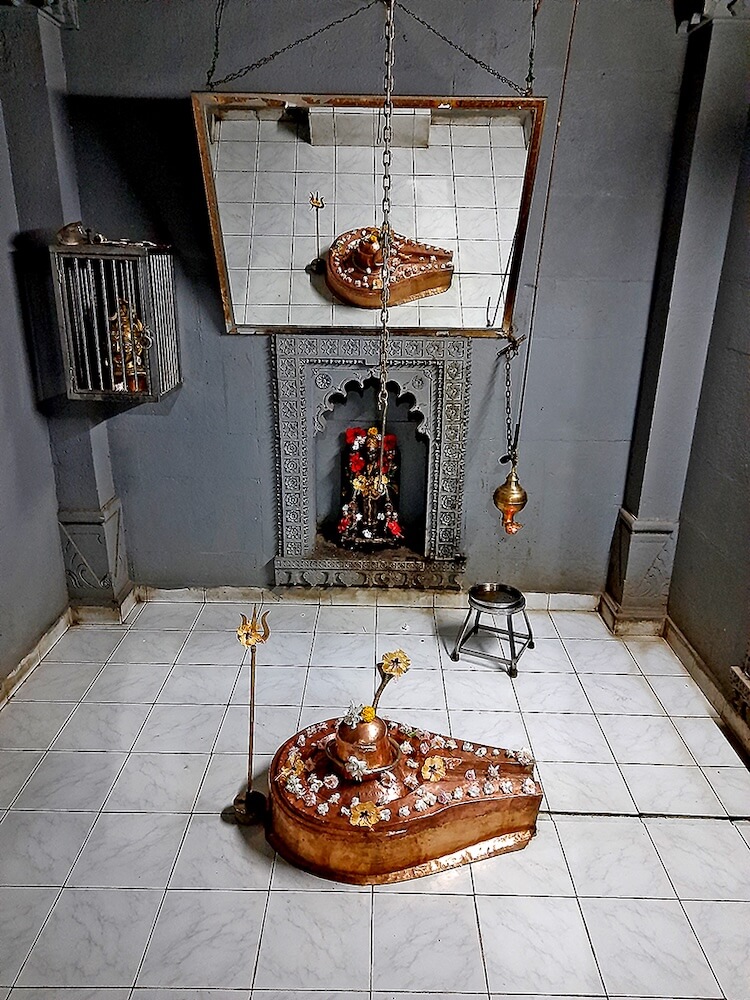
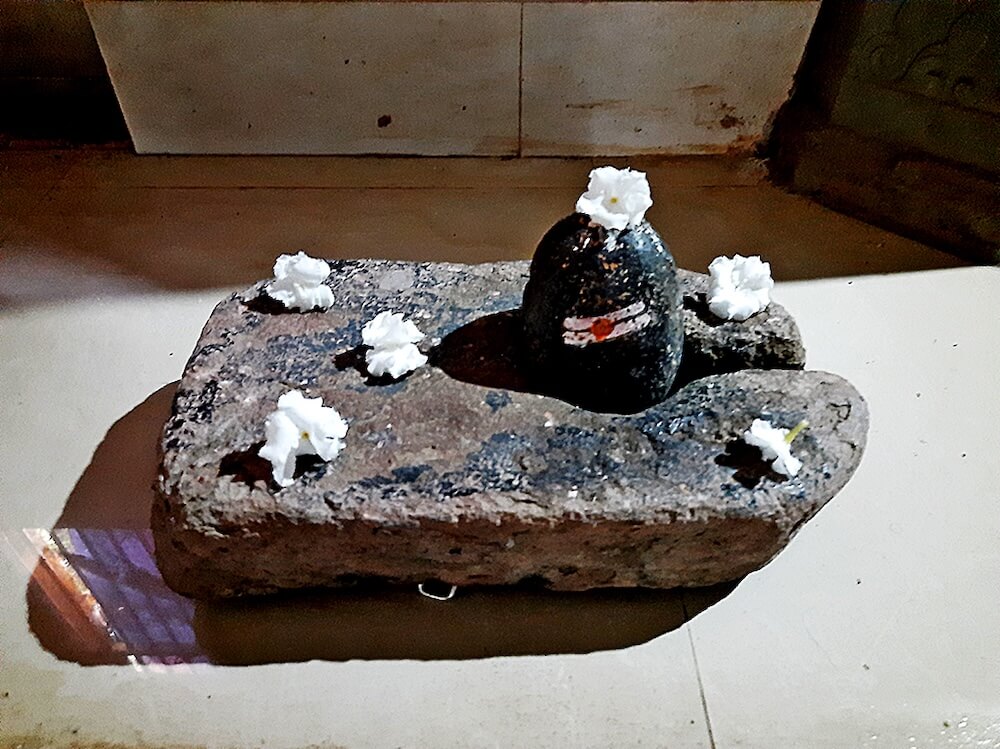
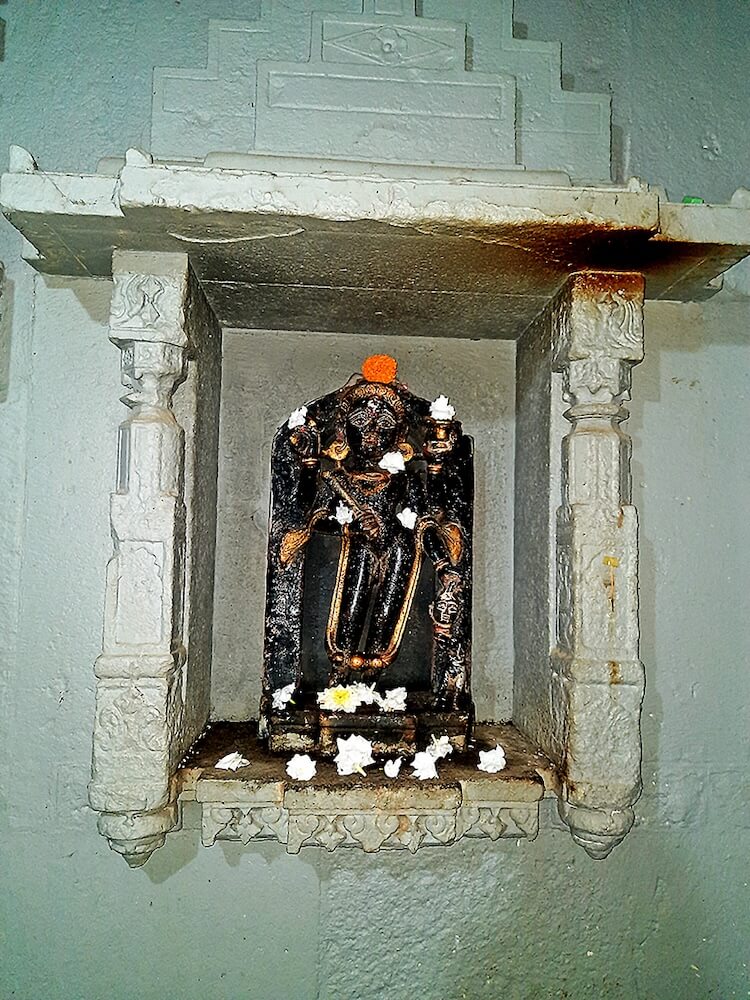
The entrance to the Garbhagriha is very distinctive. Many sculptures are carved on this door. These include some scenes from the life of Lord Krishna. The sculpture of Krishna playing the flute, his companions, and the cow in front is unique. The honored place given to Lord Krishna, the deity of the Vaishnavas, in a Shiva temple is said to be a special feature of this temple. There are gatekeeper sculptures and carvings on the door frames of the Garbhagriha. There is an idol of Ganpati on the lintel. The Garbhagriha here is somewhat deep. Therefore, one enters the Garbhagriha by descending a few steps from the entrance. In the center of the floor in the Garbhagriha is the Vankhanath Mahadev Lingam. There is a metal sheet covering and an image of a snake on this Lingam. In the niche of the front wall, there is an idol of Parvati made of black stone.
The work on the spire (Kalash) of this Garbhagriha is in the Nagara style and has distinctive carvings. Every year on Mahashivratri, the Vankhanath procession (Palkhi) is taken out. The procession is taken around the village amidst the sound of traditional Konkani musical instruments. After that, programs like Bhajans and Kirtans are held in the temple throughout the night. Apart from this, daily worship and Aarti take place in the temple. There is a large crowd of devotees here on Mondays and especially on Shravani Mondays.
This sacred temple stands as a testament to deep spiritual devotion, ancient architectural grandeur, and rich local cultural traditions.
The sanctum sanctorum houses the divine idol consecrated according to ancient Vedic traditions, surrounded by serene courtyards and traditional temple architecture.
Navratri, Maha Shivratri, Annual Temple Jatra & Deepotsav
Compare and book flights, secure top-rated local hotels near the temple, hire reliable guides, and rent cars instantly.
Extend your pilgrimage by visiting other highly sacred temples located nearby.


Add ₹999 more to unlock FREE SHIPPING!
Your sacred cart is currently empty.
Shop Photo FramesFill in your delivery details below to place your order.
Add comment