
Add ₹999 more to unlock FREE SHIPPING!
Your sacred cart is currently empty.
Shop Photo FramesThe Mahanubhav Sampradaya emerged in India during the twelfth to thirteenth centuries. Rejecting caste discrimination and the Chaturvarnya system, and treating women and Shudras as equals, although this sect originated in Maharashtra, its spread reached all across India. Therefore, the Mathas, Ashrams, and temples of this sect are found everywhere in India. In this sect, Shri Krishna Prabhu, Shri Datta Prabhu, Chakrapani Maharaj, Govinda Prabhu, and Chakradhar Swami are considered the main incarnations. Among these, an ancient and famous temple of Shri Datta Prabhu is situated in Sarangkheda village of Shahada Taluka. The Ekmukhi (single-faced) Datta idol here is the unique feature of this temple.
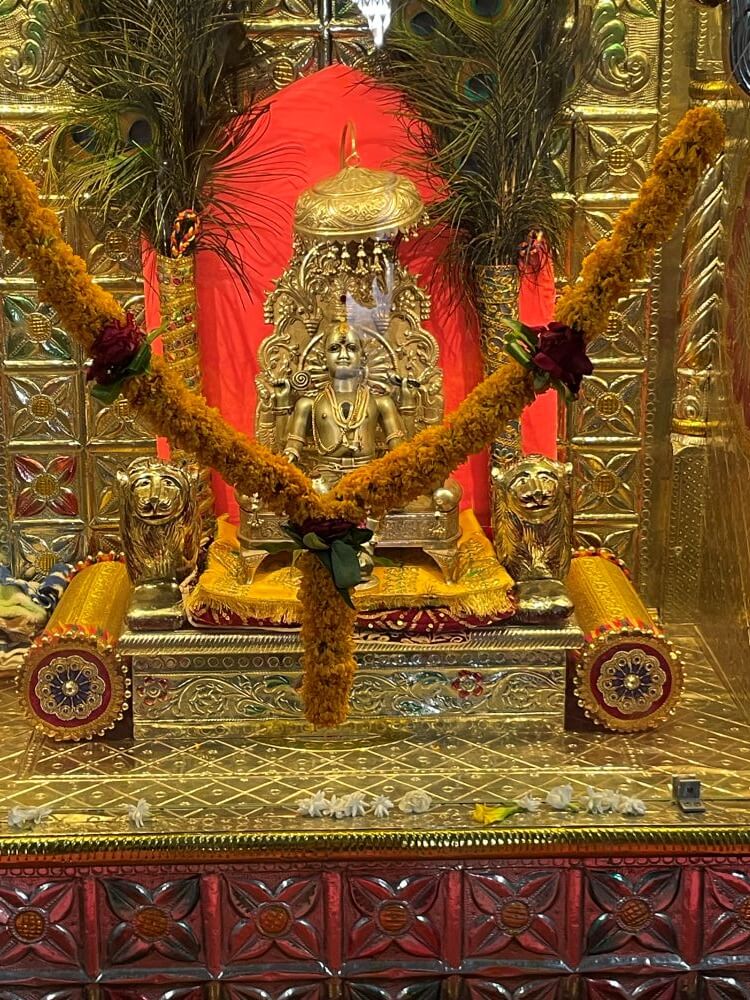
Built in the Hemadpanti architectural style, this temple is approximately 350 years old. The tradition of the annual fair and festival here has continued uninterruptedly from the 18th century to the present day. Although idol worship is considered forbidden in the Mahanubhav Sampradaya, there is a tradition here of taking Ashtanga Darshan of the Panchdhatu (five-metal alloy) idol. The Datta here is single-faced (Ekmukhi) instead of three-faced. In this regard, it is said that in the Mahanubhav Sampradaya, Shri Datta is considered the second incarnation of Shri Krishna. Therefore, He is not Brahma-Vishnu-Mahesh, but single-faced Shri Krishna. Hence, in this temple, the Ashtanga Puja of the Panchdhatu idol of Ekmukhi Dattatreya is performed. The renovation of this temple was carried out by Gopiraj Mahanubhav of the Pathurkar family.
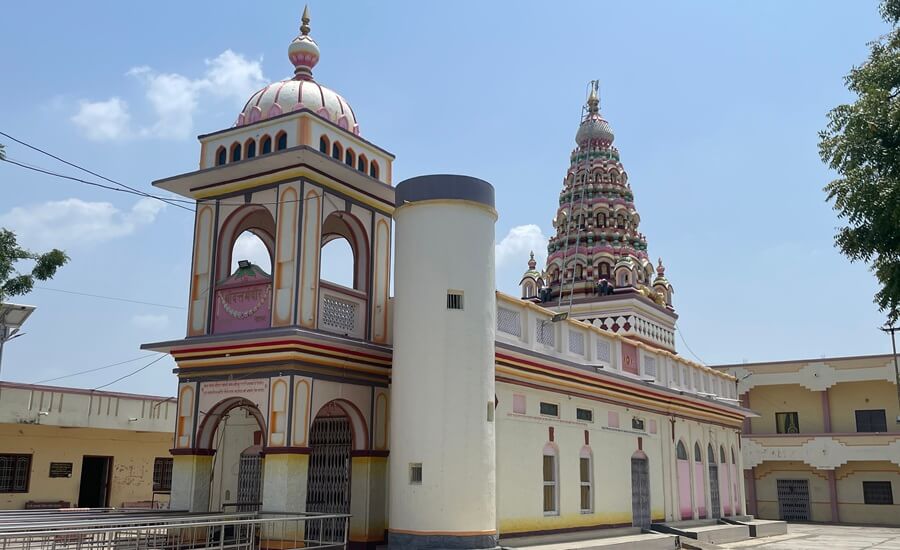
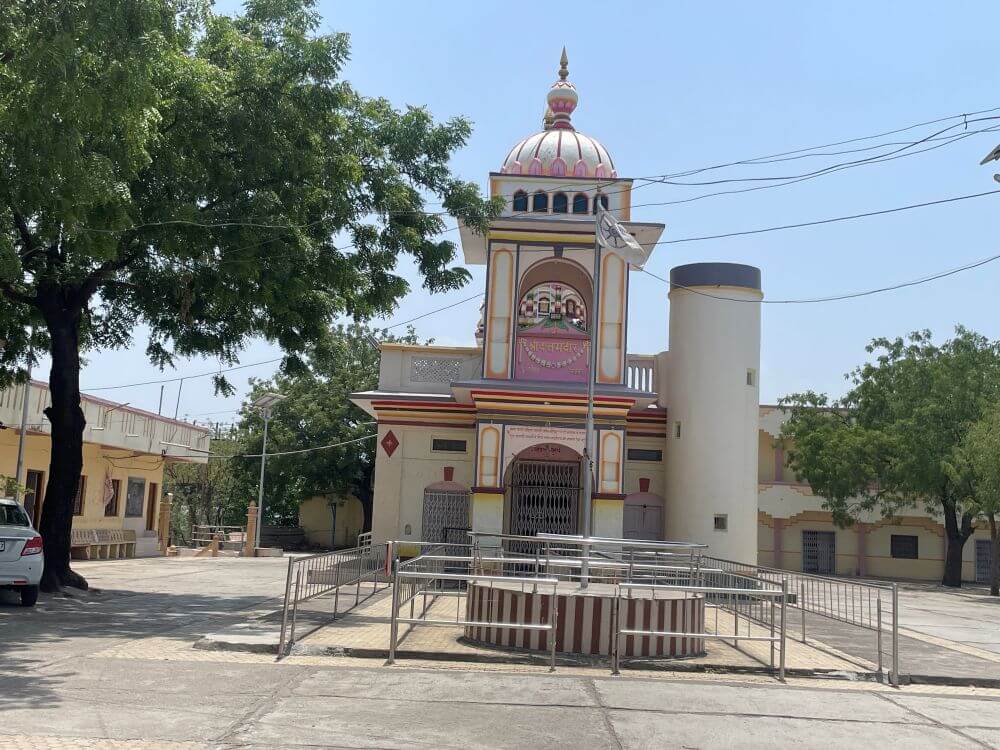
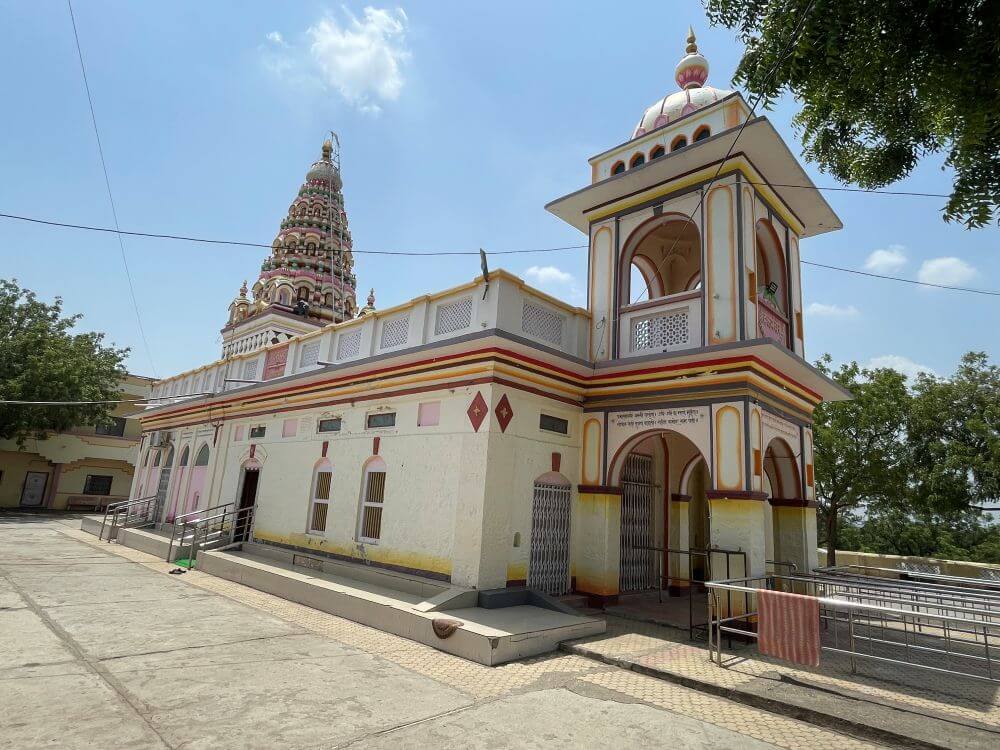
Situated on a hill about a hundred feet high from the village, the temple has a grand entrance arch at the base. Proceeding through the arch, one reaches the compound wall and the main entrance gate of the temple. Through this entrance, one steps into the paved courtyard of the temple. For the convenience of devotees, a queue management system with stainless steel railings has been set up here. In front of the temple, the white flag of the Mahanubhav Sampradaya flutters. Adjacent to the temple, on the right side of the Mukhamandapa (entrance porch), stands an ancient circular Deepmal (lamp tower). To ascend to the upper part of this Deepmal, there is an internal spiral staircase. The Mukhamandapa, resting on four carved pillars, is two-storeyed. On the upper floor is a Nagarkhana (drum house), and on the roof is a domed Shikhara, topped with an Amalaka and a Kalash. The Mukhamandapa and Nagarkhana feature arched openings on all four sides.
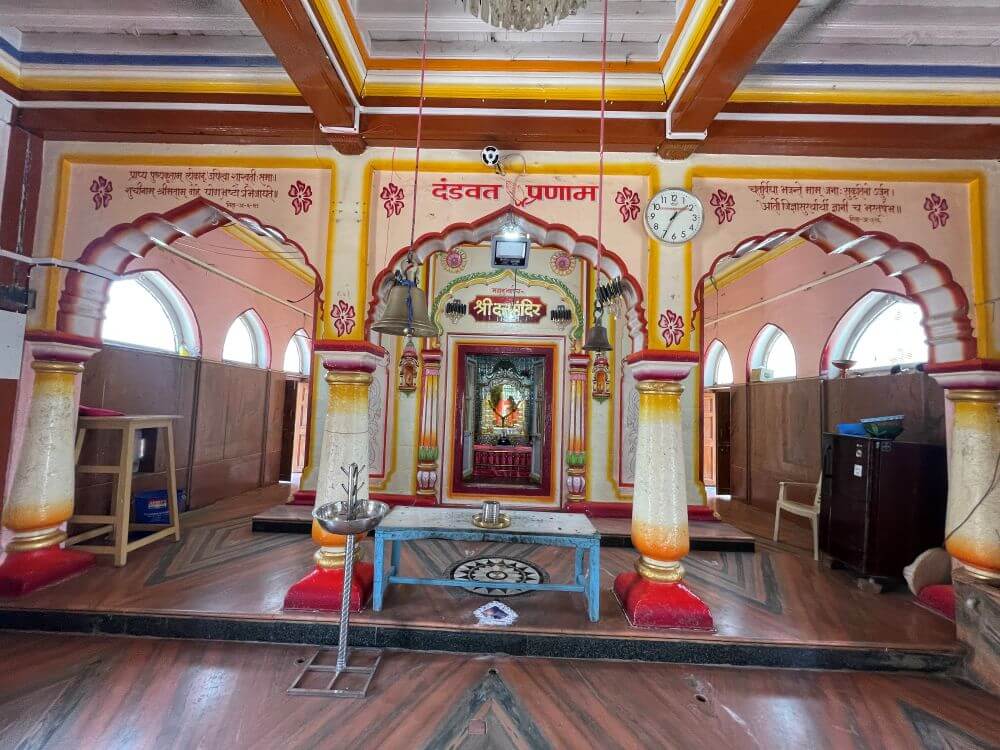
The Sabhamandapa (assembly hall) of the temple has a total of five entrance doors—three at the front and one each on the right and left sides. Inside the Sabhamandapa, there are four rows of four carved square wooden pillars each. To allow light and ventilation into the enclosed Sabhamandapa, lattice windows (Gavaksha) are present. Further ahead is the entrance to the Garbhagriha (sanctum sanctorum). Its doorframes (Dwarasakha) are embellished with floral and leaf carvings. The pillar shafts feature vertical fluted carvings. At the base of the pillars are Kumbha-kamala motifs, while at the top are square capitals topped with cusped arches. On both sides of the entrance, there are carved lamp niches (Deepkoshtakas).
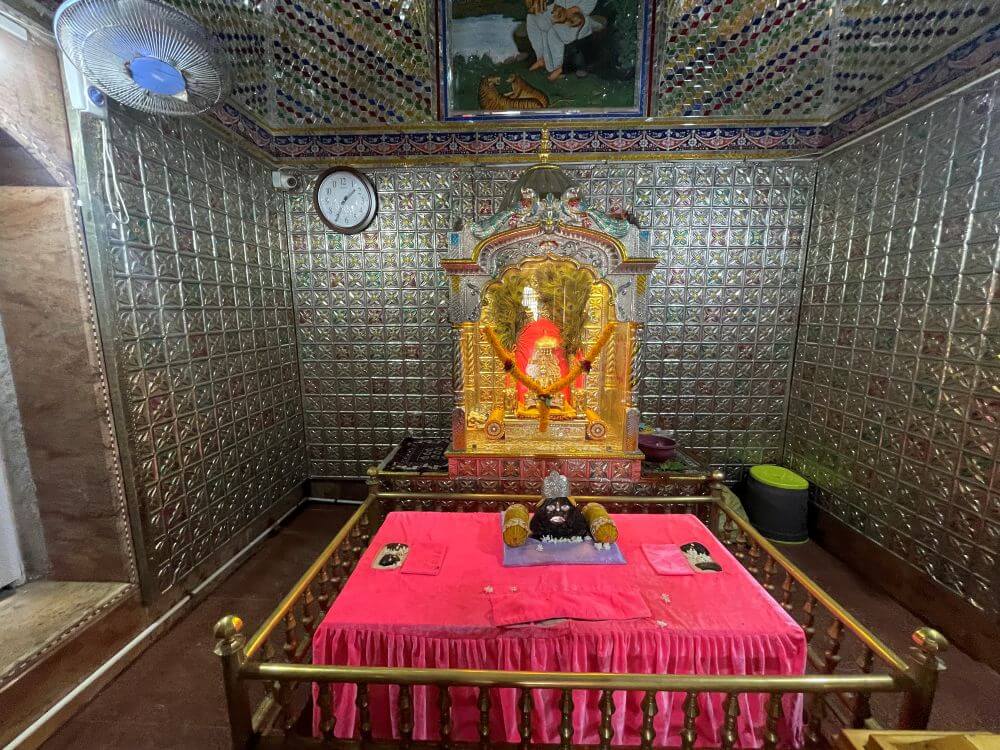
Inside the Garbhagriha, upon a Vajrapitha within a glass Makhar (shrine enclosure), sits the Panchdhatu enthroned idol of Ekmukhi Datta. In the Lord’s right hand is a mace (Gada) and in the left hand is a Kamandalu (water pot). Sacred soil objects are placed upon the eight limbs (Ashtanga) of the deity and in front of the Makhar. These eight objects are referred to as ‘Vishesh’. Devotees offer prayers by touching these Vishesh objects. The Prabhavali (halo arch) behind the idol is adorned with floral patterns. Around the Garbhagriha is a Pradakshina (circumambulation) path, and there are exit doors on the left and right sides of the sanctum.
A protective parapet runs along all four sides of the temple roof. On the parapet over the roof of the Garbhagriha, there are eight tiger sculptures. At all four corners stand four Meghdambari (canopies) with Amalaka and Kalash above them. In the center of the Garbhagriha roof is a five-tiered circular Shikhara. Each tier contains twelve niches (Devakoshtakas) housing divine icons. At the apex is an Amalaka, surmounted by a Kalash and a flag (Dhvajapataka).
Datta Jayanti is the main annual festival celebrated here with great enthusiasm. On this day, various religious rituals and programs are organized starting from early morning. In the evening, after performing Maha Aarti, the idol of Ekmukhi Datta is placed in a decorated palanquin (Palkhi). Before lifting the palanquin, Maha Aarti is performed once again. All devotees offer Aarti to the Lord with lit Niranjans (oil lamps) in their hands. At this moment, the entire temple premises lights up with the glow of thousands of lamps. As the palanquin sets off for the village procession (Grampradakshina), the resonance of Dhol-Tasha and Tutari fills the air. All devotees accompany the palanquin on the procession through the village and return to the temple. Hundreds of thousands of devotees from across the state and neighboring states visit for this festival. The horse fair held here during the festival is especially famous. Traders from all over the country come here to purchase horses.
In the temple, there is a tradition of offering Upahar, meaning a meal, to the Deity. The meal offered to God is later distributed among the devotees. Here, ‘Tur-dud’ is prepared by stacking five coconuts one above the other and tying pigeon pea (tur) plants around them, forming a Dud, which is then offered to the Deity. Additionally, there is a custom of making a vow (Navas) by wrapping a coconut in a fresh unbleached cloth and tying it in the temple. Upon the fulfillment of the vow, the cloth is untied and the coconut is cracked open. There is also a tradition of offering ‘Avasar’ to the Deity, which consists of a betel leaf leaf-wrap (Vida) containing sugar candy, cloves, betel nut, almonds, raisins, chironji (charoli), and sugar drops (battasa), accompanied by a coconut and incense sticks.
This sacred temple stands as a testament to deep spiritual devotion, ancient architectural grandeur, and rich local cultural traditions.
The sanctum sanctorum houses the divine idol consecrated according to ancient Vedic traditions, surrounded by serene courtyards and traditional temple architecture.
Navratri, Maha Shivratri, Annual Temple Jatra & Deepotsav
Compare and book flights, secure top-rated local hotels near the temple, hire reliable guides, and rent cars instantly.
Extend your pilgrimage by visiting other highly sacred temples located nearby.

Add ₹999 more to unlock FREE SHIPPING!
Your sacred cart is currently empty.
Shop Photo FramesFill in your delivery details below to place your order.
Add comment