
Add ₹999 more to unlock FREE SHIPPING!
Your sacred cart is currently empty.
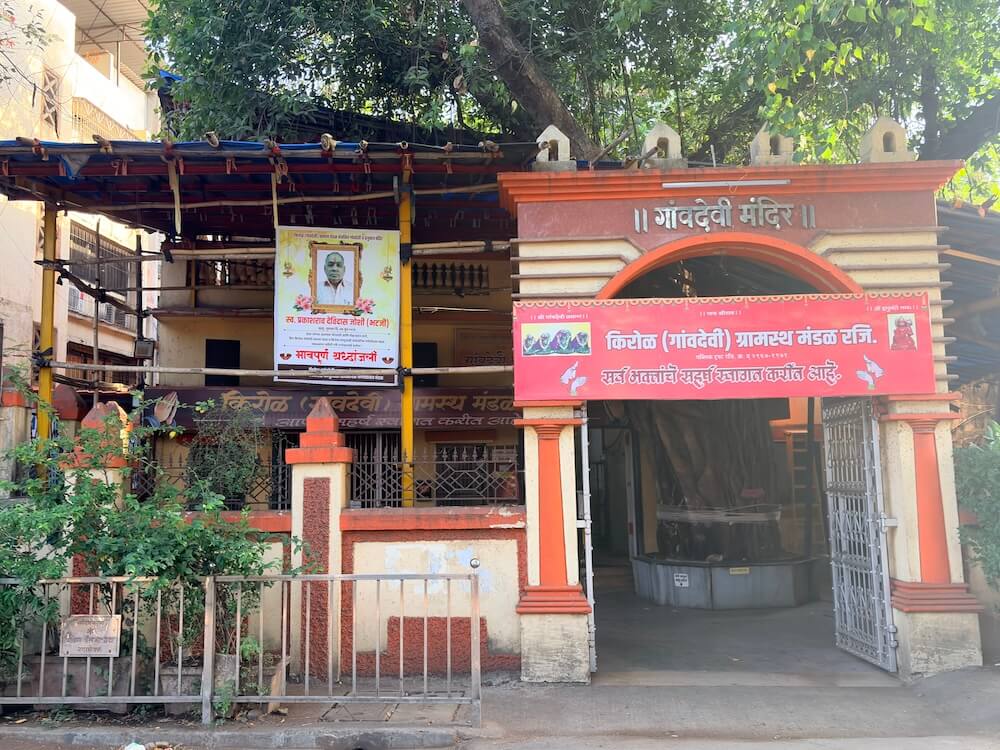
Shop Photo FramesVidyavihar in Mumbai is a suburb known for its educational complex. In the village of Kirol, located within this suburb, stands an ancient temple of Gavdevi. This Gavdevi is considered the guardian deity of the local indigenous communities, including the Agri and Koli people. Having been present here long before the urbanization of Vidyavihar, this temple is considered a significant landmark of the region’s ancient village culture. According to the faith of local devotees, the Gavdevi of this temple is one who removes the troubles of her devotees and fulfills their vows. The Navratri festival of this Gavdevi is celebrated here with great enthusiasm.
In Indian tradition, the village is considered a very important unit. Hindu folk religion recognizes deities that protect each of these villages; they are called Gramdevatas (village deities). Different in nature and essence from Vedic deities, these deities appear in both female and male forms. According to folk belief, Gramdevatas protect villages from natural calamities such as epidemics and droughts. It is believed that through their grace, not only the village’s residential land (pandhari) but also the agricultural land (kali) flourishes. Most Gramdevatas are female; they are called Gavdevi. There are Gavdevi temples in many villages across the country. Although some folk deities of the pre-Aryan original inhabitants of India were later elevated and given mythological characters, their role as village protectors has remained intact.
According to historian Usha Vijayalakshmi, who researches the origins of Gramdevata temples, these temples were not only places of worship but also served the purpose of defining village boundaries. In ancient times, village boundaries were marked by stones. However, people often moved these stone markers, leading to disputes between two villages. The Sanskrit word ‘Sangram’ originated from such disputes, meaning a battle or conflict between two villages. To resolve this issue, a Gavdevi temple was often erected on the border as a permanent marker. Beyond this practical purpose, Gavdevi temples were also built as sacred places of worship and as the family deity (Kuldevata) for the local families. The Gavdevi of Kirol is considered the protective or presiding deity of this village.
Before the suburb of Vidyavihar was established, Kirol was one of the major villages among the small villages and hamlets that existed here. In ancient times, this village was part of the Turbe island in the Salsette (Sashti) islands. The village is mentioned as ‘Kirhol’ in texts like ‘Mahikavatichi Bakhar’ and ‘Bimbakhyan’, which recount the history of Pratap Bimb, the first king of Mumbai, and Bimbadev Yadav. Later, in the sixteenth century, the Portuguese took control of Salsette and the seven islands of Mumbai. Like in Goa, the Portuguese wreaked havoc with religious intolerance here, destroying many temples and forcibly converting many people. Even during this period, the local citizens tried their best to preserve their religious traditions. Under British rule, citizens gained religious freedom. In January 1805, during the tenure of British Governor Jonathan Duncan, the Sion Causeway was built. This connected villages like Kurla, Kirol, and beyond, such as Ghatkopar, to the island of Mumbai. In the following period, princely rulers like the Gaekwads of Baroda and some wealthy merchants of Mumbai built their mansions here. The land owned by the Gaekwads here is known today as Rajawadi.
In the 1950s, many industries and factories were established here, leading to an increase in the local population. The development of Kirol and its surrounding areas was truly spurred by the railway station established here. The credit for this goes to the Gandhian industrialist Karamshibhai Jethabhai Somaiya. In June 1960, he started an Arts and Science college on his own land. By the very next year, the number of students in this college reached over a thousand. At that time, residents of Kirol and the surrounding areas were demanding a railway station. Karamshibhai Somaiya supported this demand with the intention of also facilitating the students, and through his efforts, a railway station was built here within a period of three months. This station was named Vidyavihar. It was inaugurated in September 1961 by the then Defense Minister V. K. Krishna Menon. Due to this station, Vidyavihar is geographically divided into two parts: the eastern side is the Rajawadi area, and the western side is the village of Kirol.
The exact history of the Gavdevi temple here is unavailable. However, scholars speculate that a shrine to the Goddess has existed here since the time of King Bimb, i.e., the twelfth century. It is said that in the early nineteenth century, the East India Company began the work of surveying land and defining village boundaries in the Salsette islands. Under this, around 1813, the agricultural land, settlements, and religious sites, including temple lands in Kirol and the surrounding area, were recorded in government registers. In these old revenue records, the ‘Gavdevi’ and ‘Ambika’ sites on the outskirts of Kirol village are mentioned as ‘Juna Devasthan’ (old temple). Initially, this temple was small. The temple attained its current form after the renovation initiated by the ‘Kirol (Gavdevi) Gramasth Mandal’, an organization registered in the year 1971.
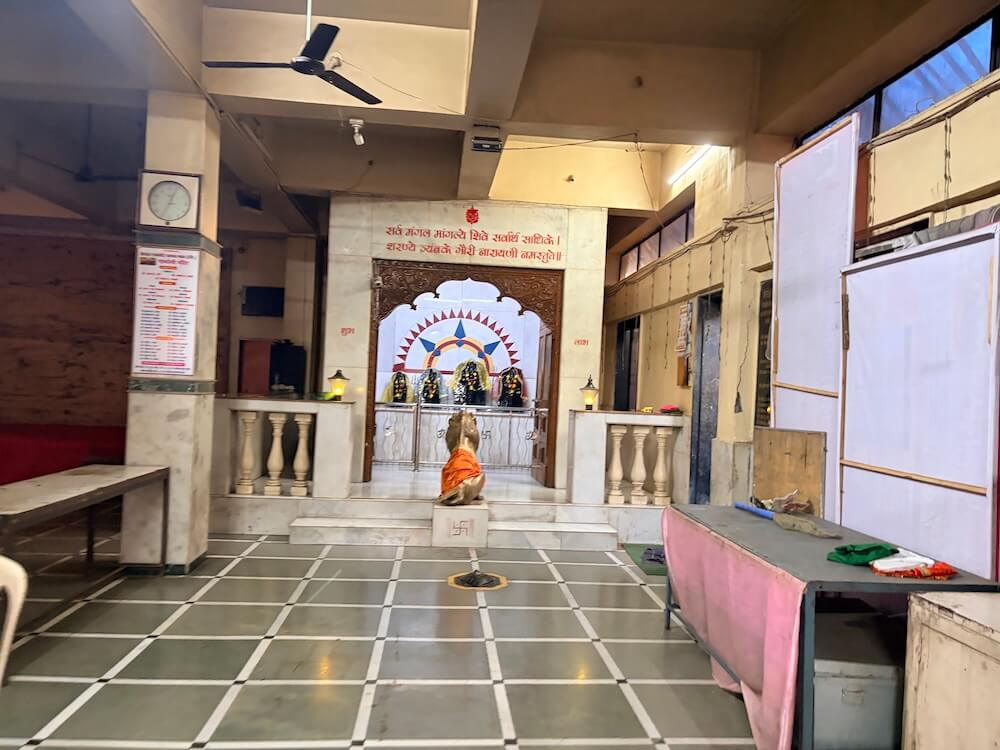
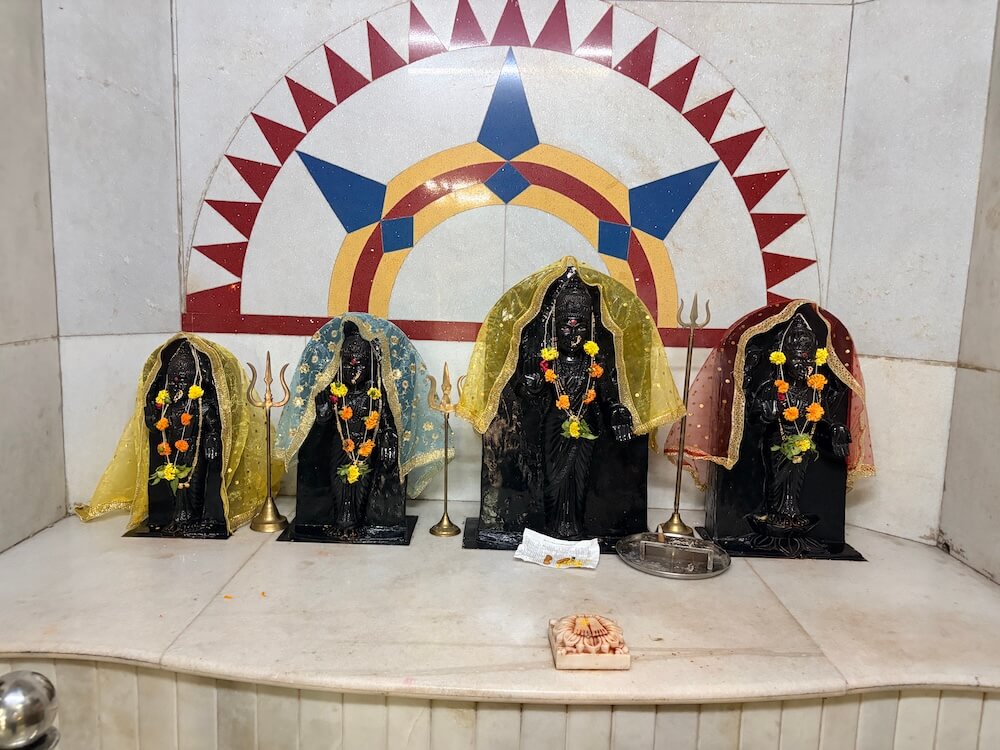
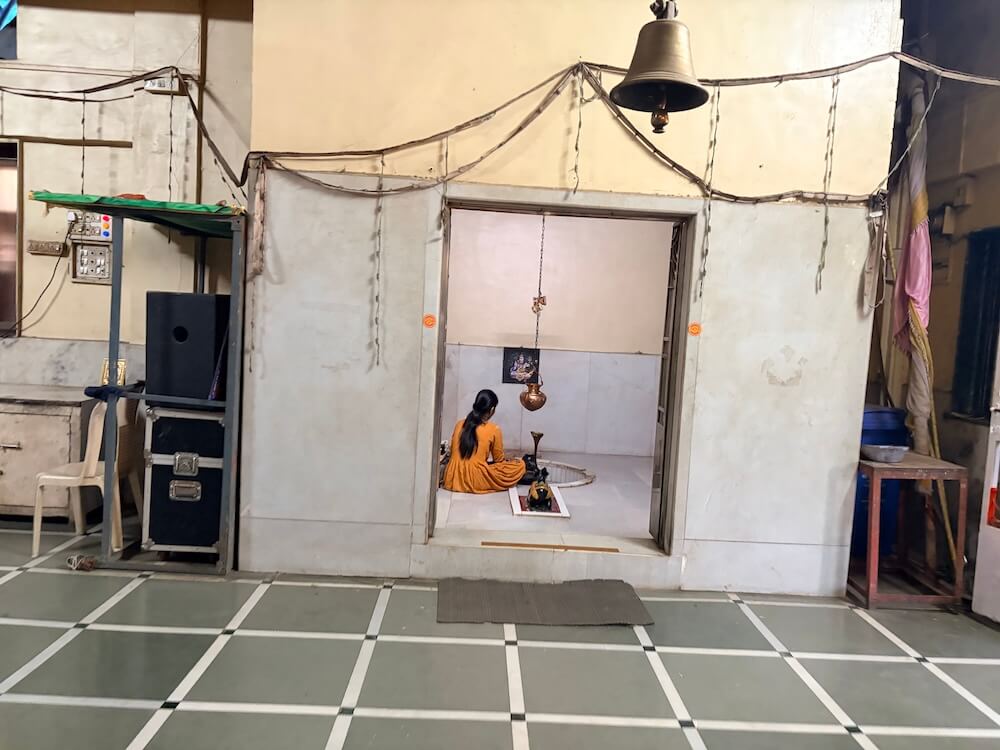
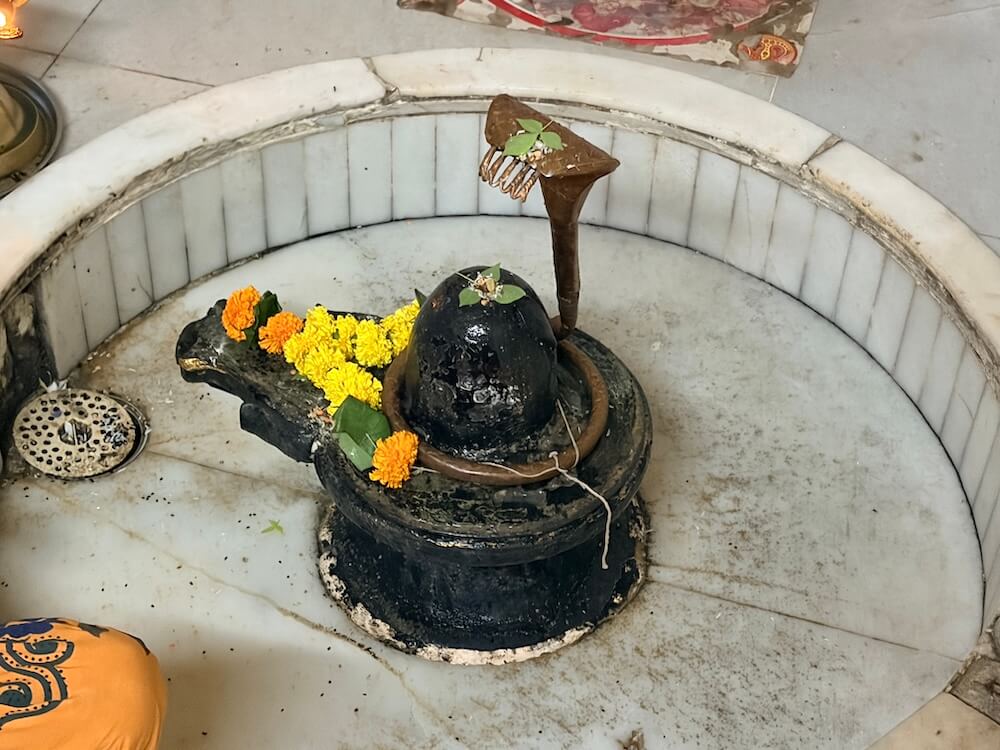
This temple, which was once built on the village boundary, now stands in the middle of this developed suburb. A tall entrance gate has been built in the temple’s compound wall. There is a small courtyard in front of the temple, which houses a large banyan tree. A large number of women gather here on the day of Vat Purnima. Built in a modern architectural style, the temple structure consists of a Sabhamandap (assembly hall) and a Garbhagriha (sanctum sanctorum). In the Sabha Mandap (assembly hall), there is a Kurma Murti (tortoise idol) on the floor. Similarly, there is a large brass lion statue placed on a marble platform here. Directly in front is the Garbhagriha (sanctum sanctorum) with an arched entrance. Inside, on a high marble altar, the idol of Gavdevi is consecrated along with the idols of three other deities. These idols, carved from black stone, are generally similar in appearance. The Goddesses are in the Samapada posture, displaying the Varada (boon-bestowing) and Abhaya (fear-dispelling) mudras. Large brass tridents are placed on the sides of the idols. The lotus feet of the Goddess are enshrined on the altar in front of the idols. This temple complex also houses a shrine to Lord Shiva. There, a stone Shivling is consecrated within a circular marble base. A brass serpent king with a raised hood is positioned over the Linga. In front of the Linga is a small stone Nandi statue, and an Abhishek vessel made of brass is placed above the Linga.
Devotees can seek the blessings of Gavdevi at this temple from 6:00 AM to 12:00 PM and from 4:00 PM to 10:30 PM. Every Tuesday at 8:30 PM, the Maha-Aarti of the Goddess is performed. Many devotees from the surrounding areas make it a point to attend this Aarti. As Tuesday and Friday are considered auspicious days for the Goddess, the number of devotees is higher than usual on these days. On these days, many women perform the ‘Oti Bharne’ ritual and fulfill their vows. Various religious programs are organized in the temple throughout the year. Navratri is the grandest festival celebrated at this temple. During Ashwin Navratri, the sanctum and the entire temple premises are decorated with attractive lighting for nine days. A Ghatasthapana is performed, and a lamp is kept lit continuously for nine days. On Ashtami, a special Havan-Puja and Mahaprasad are organized. Thousands of devotees participate in this festival. On the day of Dussehra, the Goddess is adorned with special finery. During Diwali, a Deepotsav (festival of lights) is celebrated in the temple.
This sacred temple stands as a testament to deep spiritual devotion, ancient architectural grandeur, and rich local cultural traditions.
The sanctum sanctorum houses the divine idol consecrated according to ancient Vedic traditions, surrounded by serene courtyards and traditional temple architecture.

Navratri, Maha Shivratri, Annual Temple Jatra & Deepotsav
Compare and book flights, secure top-rated local hotels near the temple, hire reliable guides, and rent cars instantly.
Extend your pilgrimage by visiting other highly sacred temples located nearby.


Add ₹999 more to unlock FREE SHIPPING!
Your sacred cart is currently empty.
Shop Photo FramesFill in your delivery details below to place your order.
Add comment