
Add ₹999 more to unlock FREE SHIPPING!
Your sacred cart is currently empty.
Shop Photo FramesVidyavihar is the only suburb in Mumbai known by the name of an educational institution. In this city of knowledge, there is a temple dedicated to Lord Shriramchandra. This temple is considered one of the prominent temples in the Vidyavihar and Ghatkopar East areas. Through programs based on the Ramayana, religious discourses, and various festivals celebrated at the temple, it has established a significant place in the religious life of the locality. A unique feature of this temple is that a special Deepotsav and Annakut ceremony are organized here on the occasion of Gudi Padwa, the Hindu New Year.
The Vidyavihar area is situated between the two suburbs of Kurla and Ghatkopar. This area derived the name Vidyavihar from the name of the local railway station. The history of this station’s name is linked to the Karamshibhai Jethabhai (K. J.) Somaiya Educational Complex located here. Karamshibhai, who left his mark on the sugar industry in Maharashtra, was a renowned Gandhian industrialist. According to his biography written by the famous litterateur Raja Mangalvedhekar, Karamshibhai, who was known as a very bright student in school, could not complete his education due to domestic difficulties. Later, through his own efforts, he established the sugar industry in the Ahilyanagar (Ahmednagar) district of Maharashtra. He was greatly influenced by Mahatma Gandhi.
Keeping in mind Gandhiji’s teaching that the wealth remaining after meeting one’s needs should be used for society with the spirit of a trustee, he had built secondary schools in Ahilyanagar district through the ‘Somaiya Trust’. Thereafter, in the year 1958, an incident led him to think about establishing a college of Arts and Science in Mumbai. For this, he finalized a site between Ghatkopar and Kurla. On 14 April 1944, the ship ‘S. S. Fort Stikine’ exploded in Mumbai’s ‘Victoria Dock’. The ship, which had arrived carrying about 1,400 tons of ammunition and 382 kilograms of gold bars, suffered two massive explosions between 4 and 4:20 in the evening. This caused large-scale loss of life and property. Numerous buildings in the dock area collapsed. This included the homes of many in the Kacchi Lohana community. With the intention of rehabilitating such homeless refugees, Karamshibhai had purchased a large plot of land between Ghatkopar and Kurla at that time. It was decided to start this college on one of the plots there. Around the same time, on 7 September 1959, the Somaiya Vidyavihar institution was formally established. Former Supreme Court Judge N. H. Bhagwati was the founding president of this institution. On 18 March 1960, the foundation stone laying ceremony for the building of this planned college was performed by the leader of Maharashtra and the then Chief Minister of Bombay State, Yashwantrao Chavan. In June 1960, a three-story towering building stood here. The very next year, the number of students in this college crossed one thousand. During that period, residents from the nearby Kirol village and the surrounding areas were demanding the construction of a railway station here. Karamshibhai Somaiya supported this demand with the intention that it would also be convenient for the students, and through his efforts, a railway station was built here within a period of three months. Recognizing the importance of education, this station was named Vidyavihar. In September 1961, the station was inaugurated by the then Defense Minister V. K. Menon.
The Shriram temple here is located in the Rajawadi colony. As this land was previously owned by the Gaekwad Maharaja of Baroda, it was known as Rajawadi. In 1950, the Mumbai Municipal Corporation took possession of this land and built a hospital there in 1956 for the citizens of the area. The development of this colony took place from the middle of the twentieth century. Middle-class Marathi, Gujarati, and South Indian families mainly settled in this area. To fulfill their religious and cultural needs, these people established this temple of their presiding deity, Shriram. The exact history of this temple is unavailable. According to experts, it has a tradition of at least six to seven decades. After the renovation carried out in recent times, the temple has attained its present form.
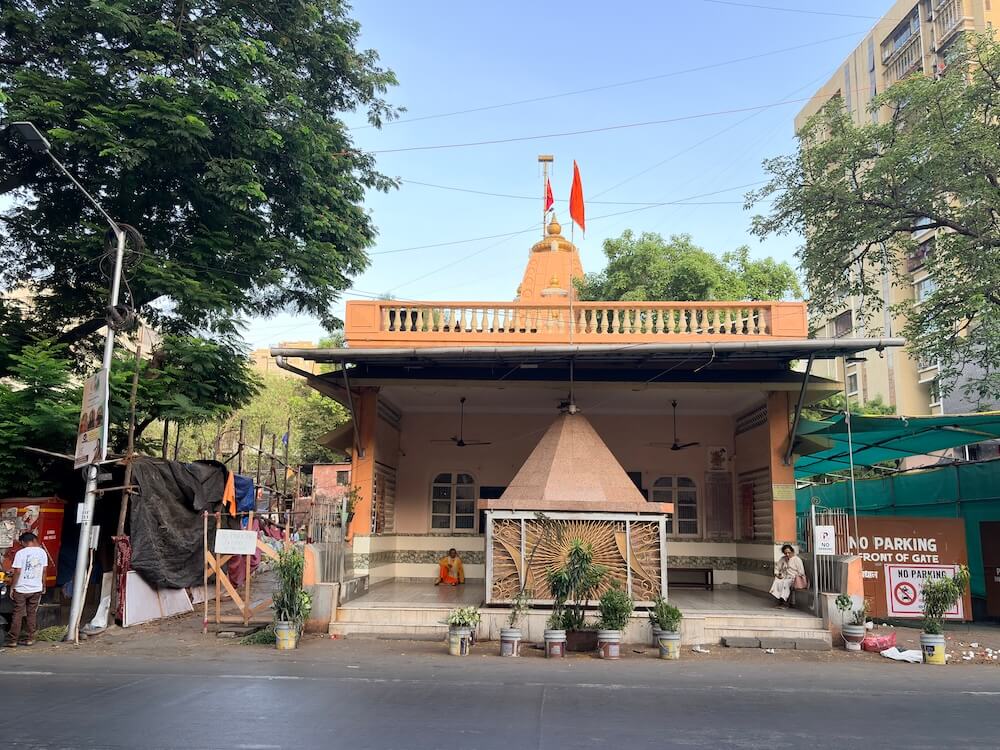
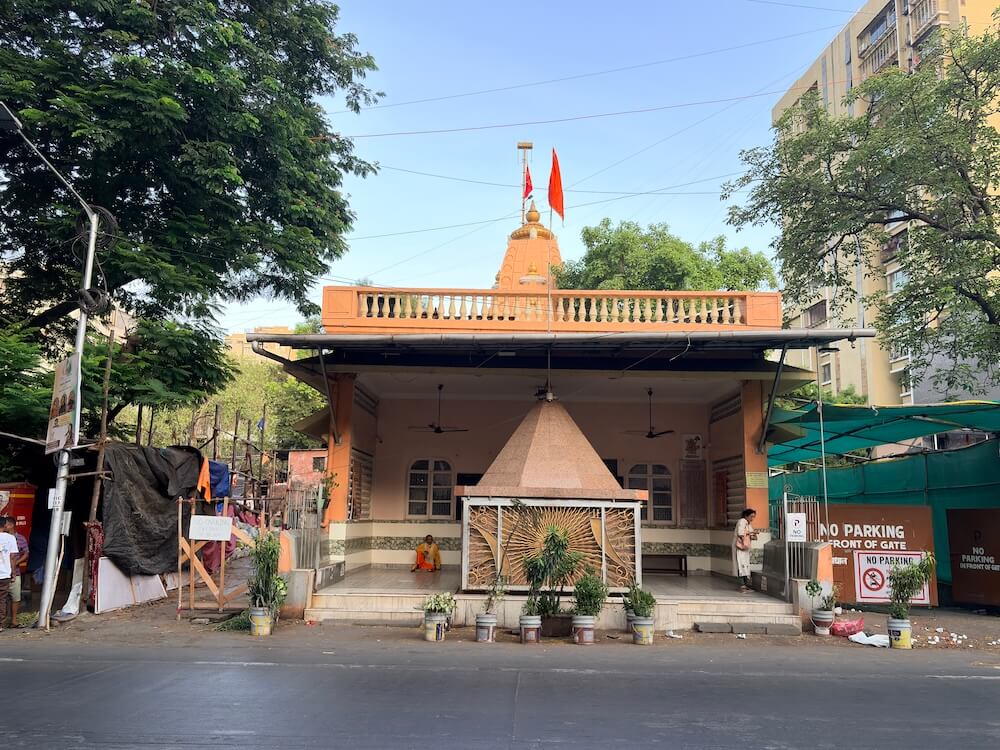
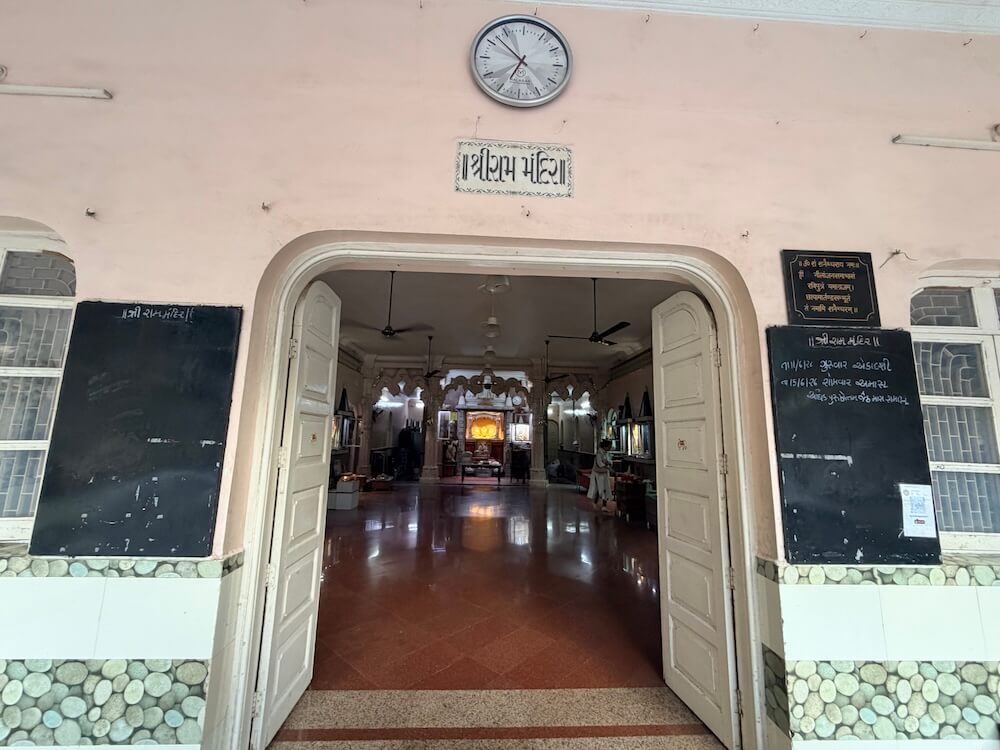
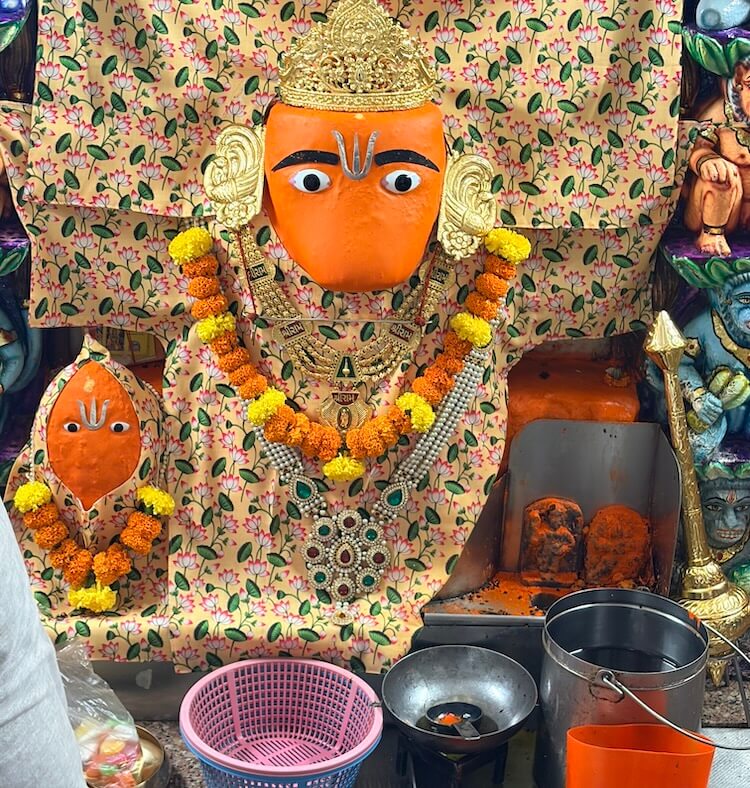
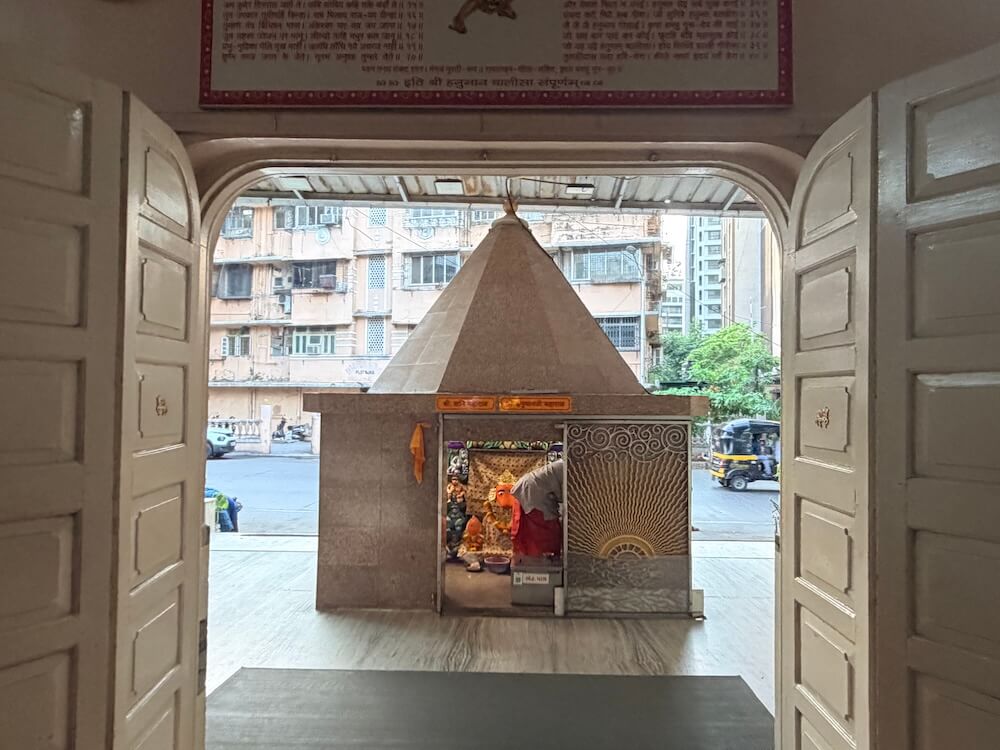
Situated along Mahatma Gandhi Road, the structure of this temple consists of a Darshan Mandap, Sabha Mandap, Antarala, and Garbhagriha. The roof of the temple’s Sabha Mandap is flat, and there is a high Shikhara over the Garbhagriha. On top of it, there is a golden-colored circular Amalaka and Kalash. In the Darshan Mandap, there is a marble shrine of Hanuman. A vermilion-smeared stone idol of Hanuman is enshrined here. Some monkey sculptures are carved on the pillars of the Prabhavali behind this idol. Beside this idol is an idol of Shani. The Sabha Mandap of the temple is spacious. Near its entrance, on the outer wall to the right, a stone slab inscribed with Shani Shlokas is installed. In the niches on its walls are idols of various saints as well as gods and goddesses. The pillars of the Antarala have intricate carvings. These include carved Makara Toranas. In the niches of the Antarala, marble idols of Hanuman, Ganesha, and Kamaladevi are enshrined. Near the entrance of the Garbhagriha, a standing black stone idol of Ganesha in the Southern style is also enshrined. The door frame of the Garbhagriha has intricate carvings, and sculptures of Dwarapalas are carved upon it. On the Mandarka of the door frame, there are Ardha-Chandra-Shila and Kirtimukhas, while the idol of Ganesha is enshrined at the Lalatabimba. Above it is a sculpture of Lord Shriram, Lakshman, and Janaki. In the Garbhagriha, idols of Shriram, Lakshman, and Sita are installed in a silver throne on a high pedestal. These marble idols are adorned with garments, ornaments, and flower garlands. In front of the pedestal in the Garbhagriha, there is a large image of Panchamukhi Hanuman.
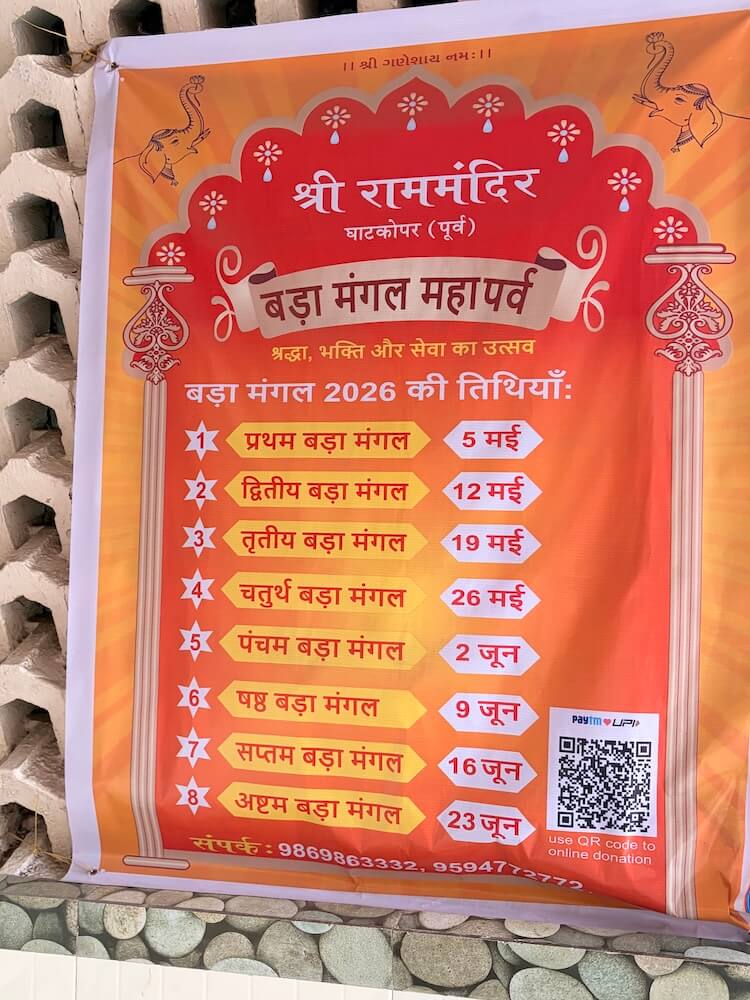
Devotees can avail the benefit of Darshan at this temple from 6:30 AM to 1:00 PM and from 4:30 PM to 9:00 PM. There is a special rush of devotees at the temple on Saturdays. Therefore, on this day, Darshan can be performed from 6:00 AM to 11:00 PM. The biggest festival at this temple is Ram Navami. On this day, special Abhishekam, Ram Janma ceremony, Bhajans, Sundarkand recitation, Kirtan, and Mahaprasad are organized. During this festival, the entire temple is decorated with attractive lighting and flowers. Similarly, the Hanuman Jayanti ceremony is also celebrated here with great enthusiasm and religious programs. Along with festivals like Krishna Janmashtami, Navratri, and Vijayadashami, another festival that draws a large crowd of devotees here is the Deepotsav during Diwali. During this time, a special Aarti is performed here in memory of Lord Rama’s return to Ayodhya. Bhajan programs are organized in this temple every Saturday and Tuesday. Local citizens participate in these in large numbers.
This sacred temple stands as a testament to deep spiritual devotion, ancient architectural grandeur, and rich local cultural traditions.
The sanctum sanctorum houses the divine idol consecrated according to ancient Vedic traditions, surrounded by serene courtyards and traditional temple architecture.
Navratri, Maha Shivratri, Annual Temple Jatra & Deepotsav
Compare and book flights, secure top-rated local hotels near the temple, hire reliable guides, and rent cars instantly.
Extend your pilgrimage by visiting other highly sacred temples located nearby.


Add ₹999 more to unlock FREE SHIPPING!
Your sacred cart is currently empty.
Shop Photo FramesFill in your delivery details below to place your order.
Add comment