
Add ₹999 more to unlock FREE SHIPPING!
Your sacred cart is currently empty.
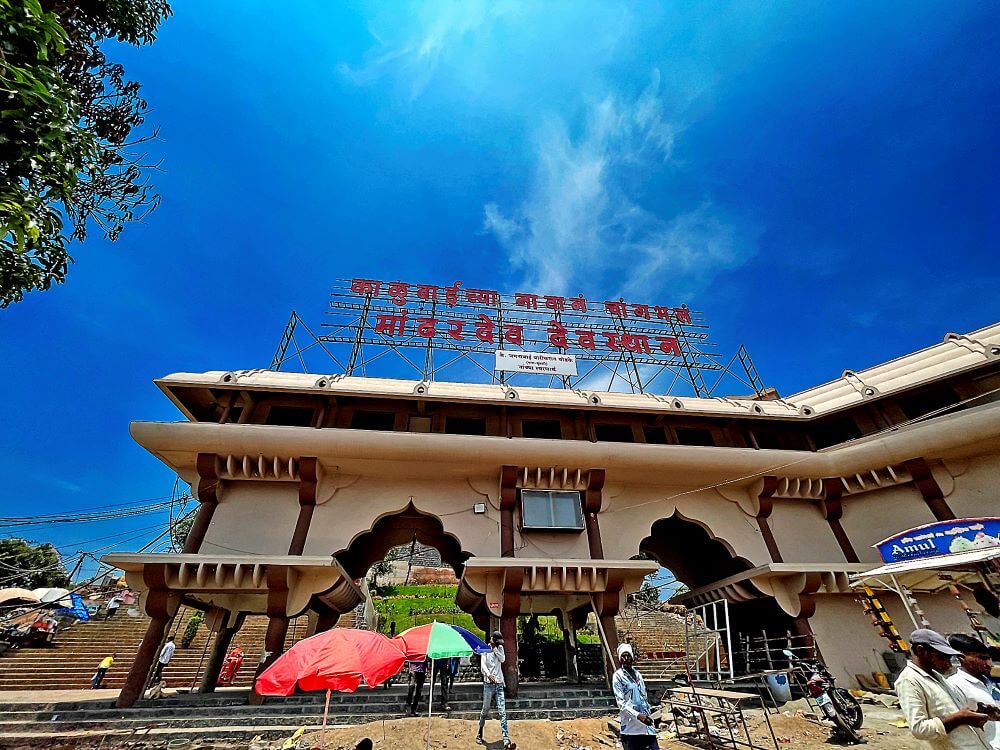
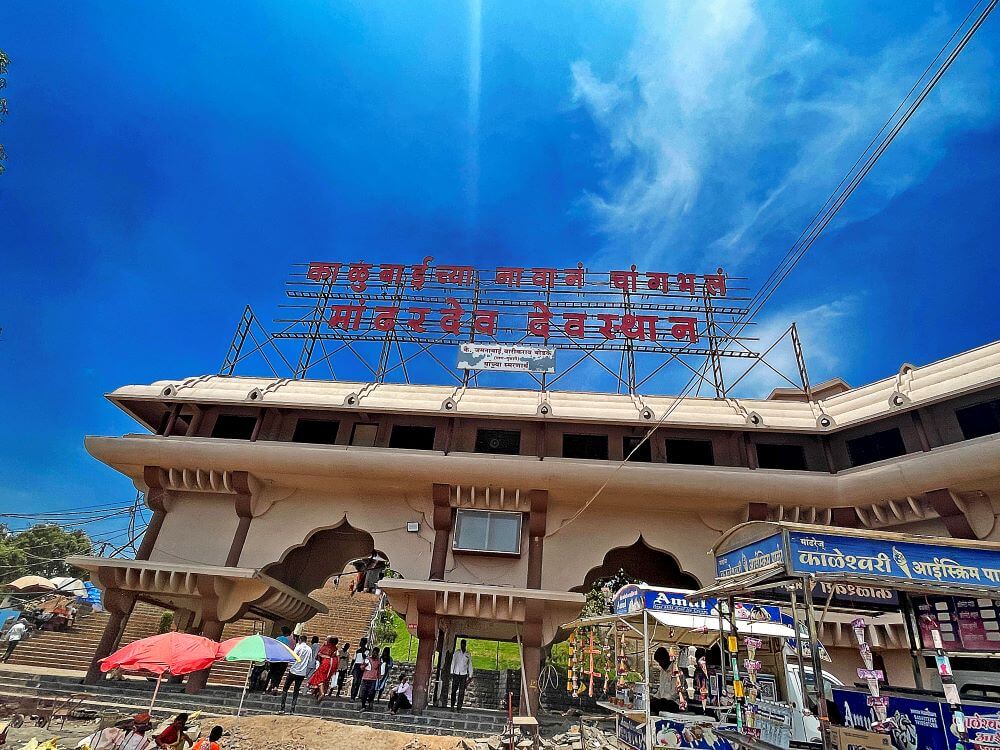
Shop Photo FramesThe temple of Shri Kaleshwari, also known as Kalubai Devi, is located at Mandhardev in the Wai taluka of Satara district. It is considered one of the most significant places of worship for the Goddess among the famous temples in the state. Thousands of devotees visit here daily for the darshan of the Goddess. The annual fair, which begins on Paush Purnima and lasts for 10 days, is one of the largest in the district. During this time, lakhs of devotees ascend the Mandhardev fort. Devotees hold deep faith that this Goddess grants wishes and fulfills prayers. She is the Kuldevi (family deity) for many in the Bahujan community of Maharashtra.
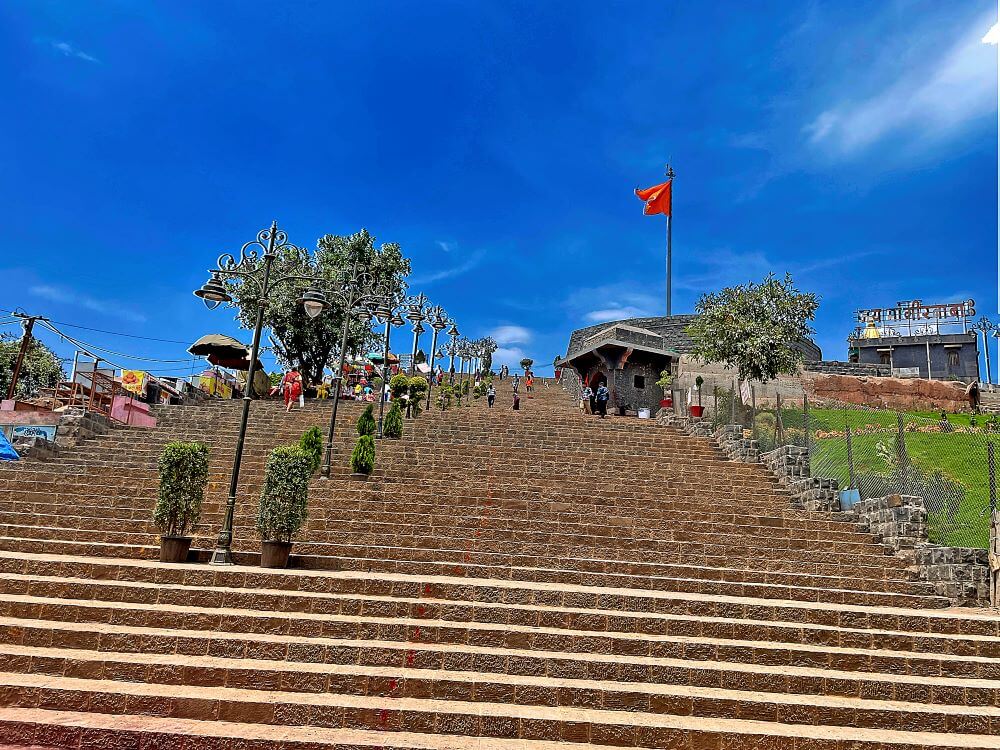
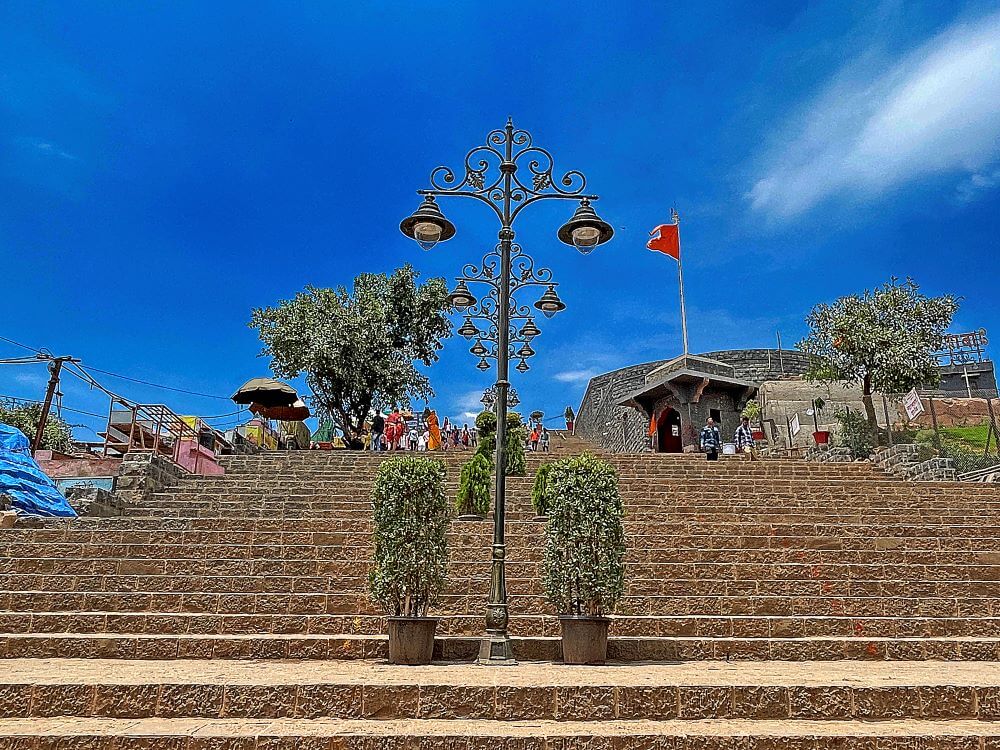
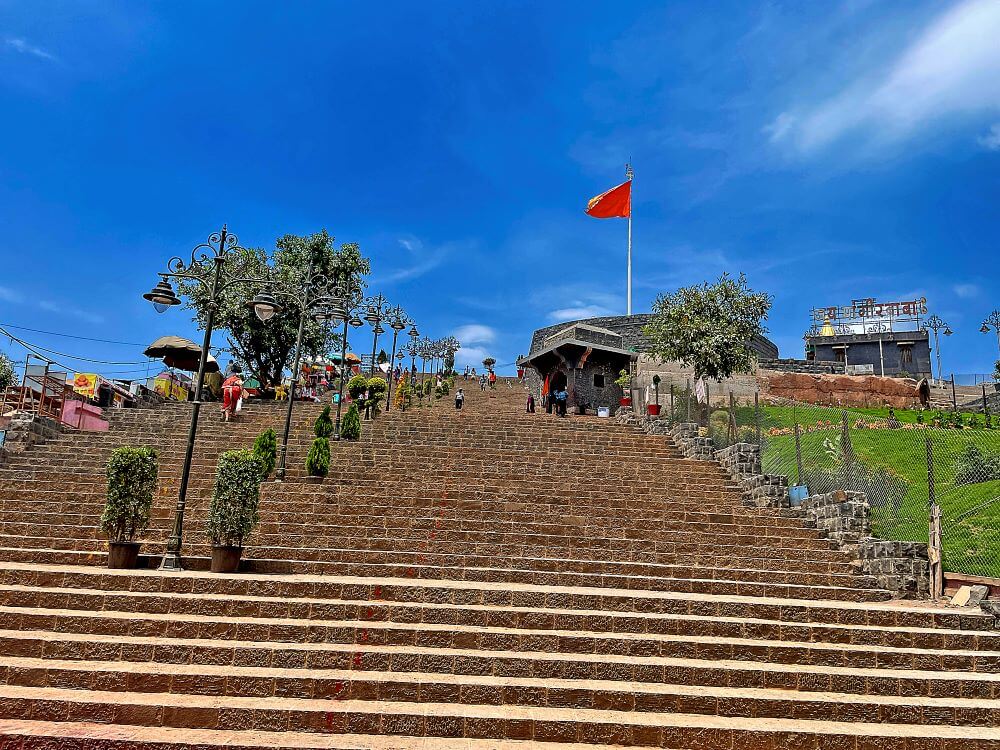
This abode of Kalubai Devi is situated on the border of Pune and Satara districts, as well as the talukas of Bhor, Wai, and Khandala, at an altitude of 4600 feet above sea level. The Goddess resides amidst the dense greenery of the Mandar mountain range within the Sahyadri mountains. This place is also known as Mandhargad. To reach here, there are roads via Wai from Satara district and via Bhor from Pune district. Vehicles can travel directly to the parking area near the temple of the Goddess on Mandhargad. Additionally, one can reach the site via a mountain path from Shirwal in the Khandala taluka of Satara district. While trekking this path, one passes the temples of Mhasoba and Mandabai (Mandi Aai), the wife of Sage Mandavya. It is said that the mountain was named Mandhargad and the village Mandhardev due to the residence of Sage Mandavya here.
Regarding Kalubai Devi, a legend is told that in the Dvapara Yuga, Lakhasur, the commander of the demon king Ratnasur, had received a boon from Lord Mahadeva that “no god or man could kill him during the day.” Due to this boon, Lakhasur became arrogant. He spread terror throughout the Mandar mountain region and frequently disrupted the penance of the sages and hermits on this mountain. At that time, Sage Mandavya was residing on this mountain with his wife, Mandabai. Seeing the suffering caused to the sages by Lakhasur, Mandabai sought help from Adi Maya Parvati to resolve this crisis. Mother Parvati accepted Mandabai’s request and, taking the form of Kalubai, challenged Lakhasur to a battle. During the seven-day war, because of Lord Mahadeva’s boon, he remained unharmed during the day. Therefore, the Goddess ended his life at the stroke of midnight on Paush Purnima. After the battle, the Goddess chose the site where the temple currently stands for her rest. Since then, the Goddess has resided here.
No definitive information is available regarding the establishment of the Kalubai temple. It is said that this temple was built during the time of Chhatrapati Shivaji Maharaj. On this mountain, there is also a Hemadpanti-style temple of Lord Mahadeva, which dates back to the reign of the Yadava Emperor Singhan (1210 to 1247). The Kalubai Devi temple faces east and is structured with a sabhamandap (assembly hall) and a garbhagriha (sanctum sanctorum). In front of the temple stand two large stone lamp pillars (deepmalas). In the compact assembly hall, there is an idol of the lion, the vehicle of the Goddess. In the relatively large sanctum, there is a self-manifested (swayambhu) standing idol of Kalubai Devi, covered in vermilion, with four arms. In her right hands, she holds a trident and a sword. In one of her left hands, she holds a shield, and in the other, she holds the head of the demon. The Goddess is standing with one foot on the demon’s chest. Adorned with a silver crown, radiant eyes, various ornaments, wearing a green saree and blouse, and with her forehead smeared with turmeric and kumkum, the form of the Goddess leaves devotees spellbound. The intricate carvings on the silver plating in the sanctum are unique. The temple spire features sculptures of a cow and a lion.
A grand fair is held here starting from Paush Purnima. During this time, the Goddess is worshipped with a grand puja and mahabhishek. For this festival, a golden mask is placed on the face of the Goddess. The Fadtare family from Bopgaon in the Purandar taluka of Pune district is traditionally honored with the right to carry the sasan-kathi (ceremonial pole) and the palanquin. At midnight on Paush Purnima, the Goddess’s mask is placed in a palanquin and taken out in a procession (chhabina) amidst the sound of musical instruments. This chhabina is the main attraction of the fair. During this festival, devotees from various villages climb the mountain chanting the glory of the Goddess to the beat of instruments like tasha, halgi, sambal, and jhanj. Hundreds of stalls selling puja materials, snacks, tea, and water are set up along the mountain path. According to official information, three to four lakh devotees visit for the Goddess’s darshan during these ten days. To fulfill their vows, devotees offer Puran-Poli and curd-rice as naivedya to the Goddess.
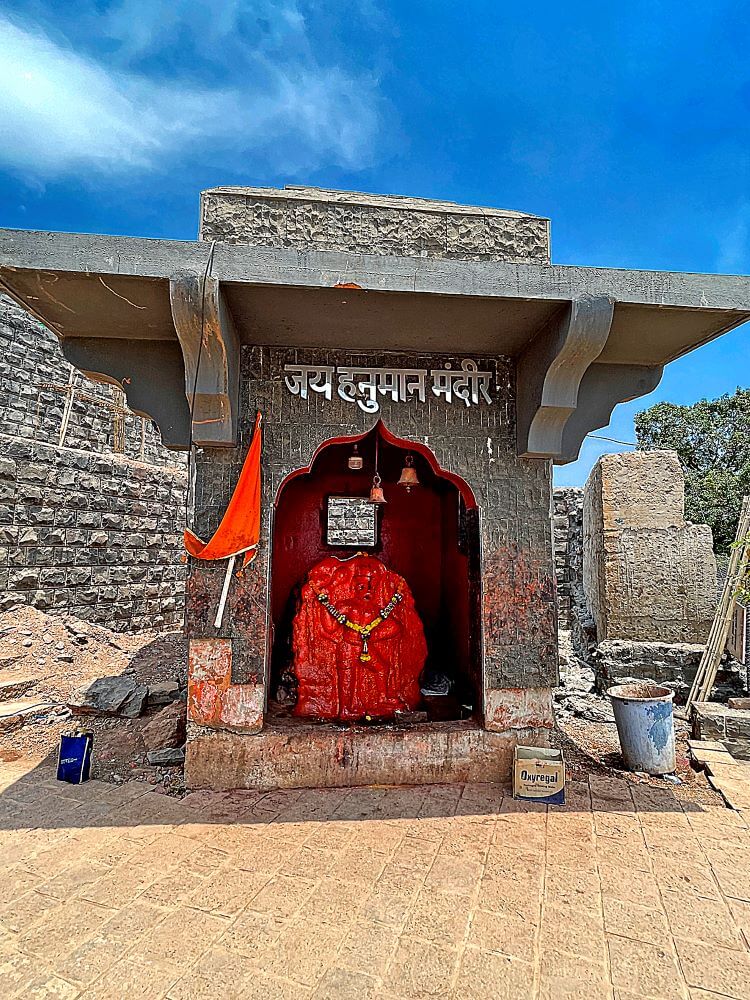
To the right of the main temple are the temples of Gonjibaba, and to the left are the temples of Mangirbaba. Additionally, there are temples of Lakshmimata, Mariai, Gangajibaba, Telibaba, and Dhavji Patil in the vicinity. Regarding Telibaba, it is said that he passed away while the temple of the Goddess was being built, so his samadhi was constructed in his memory, and there is a tradition of offering oil there. Devotees can have darshan of the Goddess in the temple on the fort from 5 AM to 7 PM. The Maharashtra Tourism Development Corporation (MTDC) provides Mahaprasad to devotees during the afternoon for a nominal fee.
This sacred temple stands as a testament to deep spiritual devotion, ancient architectural grandeur, and rich local cultural traditions.
The sanctum sanctorum houses the divine idol consecrated according to ancient Vedic traditions, surrounded by serene courtyards and traditional temple architecture.
Navratri, Maha Shivratri, Annual Temple Jatra & Deepotsav
Compare and book flights, secure top-rated local hotels near the temple, hire reliable guides, and rent cars instantly.
Extend your pilgrimage by visiting other highly sacred temples located nearby.


Add ₹999 more to unlock FREE SHIPPING!
Your sacred cart is currently empty.
Shop Photo FramesFill in your delivery details below to place your order.
Add comment