
Add ₹999 more to unlock FREE SHIPPING!
Your sacred cart is currently empty.
Shop Photo FramesAt Manwath in Parbhani district, one can seek the blessings of the idols and Padukas of Lord Dattatreya, established by Yoganand Saraswati (Ganda Maharaj), the chief disciple of Vasudevanand Saraswati (Tembe) Swami Maharaj, who is considered the fourth avatar of Dattaguru. This sacred site is known as the ‘Old Datta Mandir’. The strict rules and traditions established by Yoganand Saraswati are still meticulously followed in this temple today. Along with Lord Dattatreya, the idols of Lord Ramachandra, Lakshmana, Mother Sita, and Yoganand Saraswati himself are also consecrated here. Consequently, many followers and devotees of the Datta Sampradaya regularly visit this place for darshan.
The background of the temple’s establishment is that after the passing of Vasudevanand Saraswati ‘Tembe’ Swami, his chief disciple Yoganand Saraswati (Ganda Maharaj) performed the great task of spreading pure spirituality to the people through discourses across various places. While traveling to carry out this mission, he arrived in the sacred land of Marathwada. During his journey through Marathwada, he visited major places such as Chhatrapati Sambhajinagar, Selu, Jintur, Parbhani, Purna, Aundha, and Gunj. Among these, a Datta Mandir was built in Gunj at the suggestion and guidance of Yoganand Saraswati himself. While residing in Gunj, he wrote the ‘Gurumurti Charitra’ of his guru, Tembe Swami. After successfully completing his Chaturmas in Gunj in the year 1944, Yoganand Saraswati traveled towards the Pathri and Renapur regions. During his stay in Renapur, a Datta devotee named Baba Kohe requested Yoganand Maharaj to visit Manwath. At the insistence of his devotee, the Maharaj came to the town of Manwath. In the year 1944, on the day of Margashirsha Shuddha Trayodashi, he ceremoniously installed the idols and Padukas of Lord Dattatreya in the historic Ram Mandir here. At the time of this installation, he performed the Abhishek on the idols of Lord Dattatreya using water from his own Kamandalu until the initial eleven recitations were completed. Over time, the temple has been renovated in recent years. This temple falls under the main Datta Sansthan of Gunj in Pathri taluka.
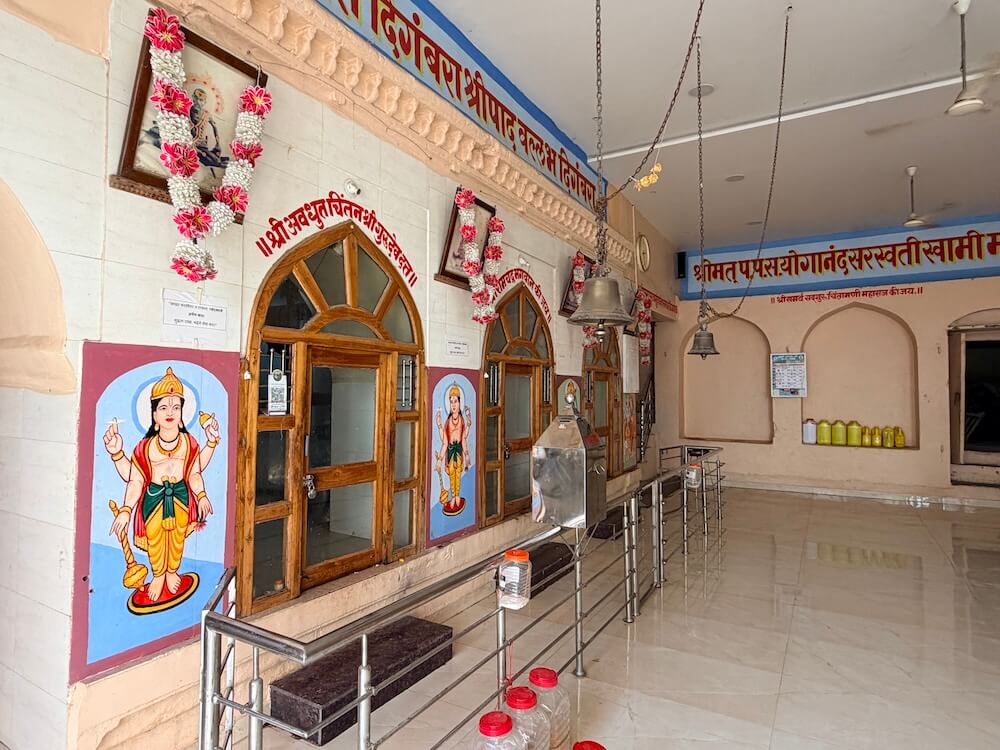
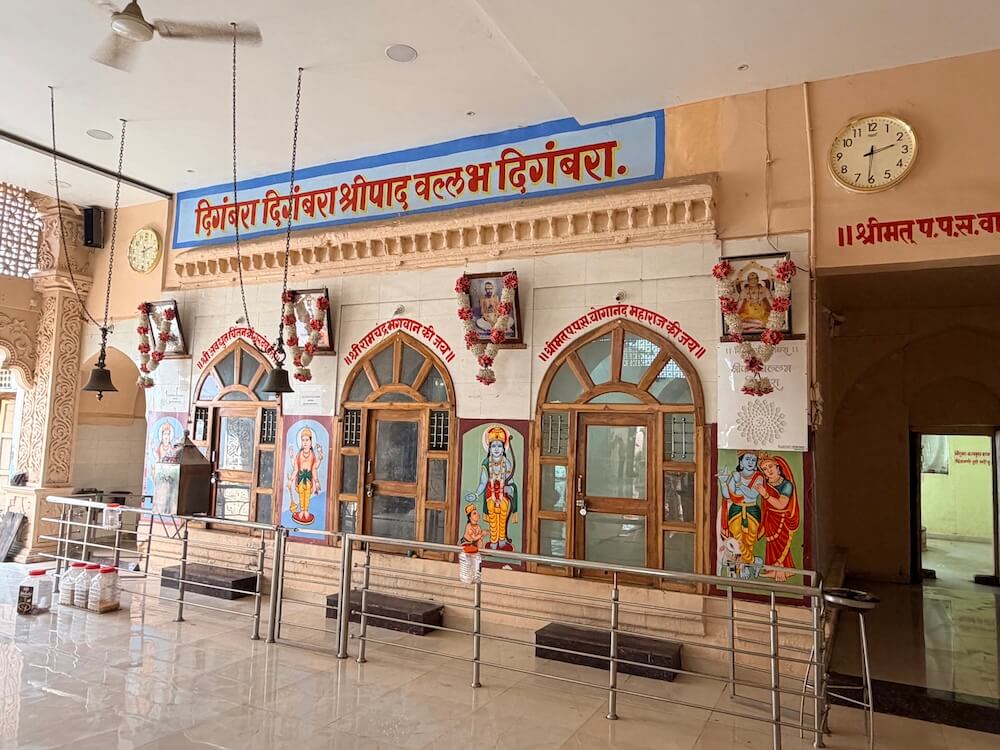
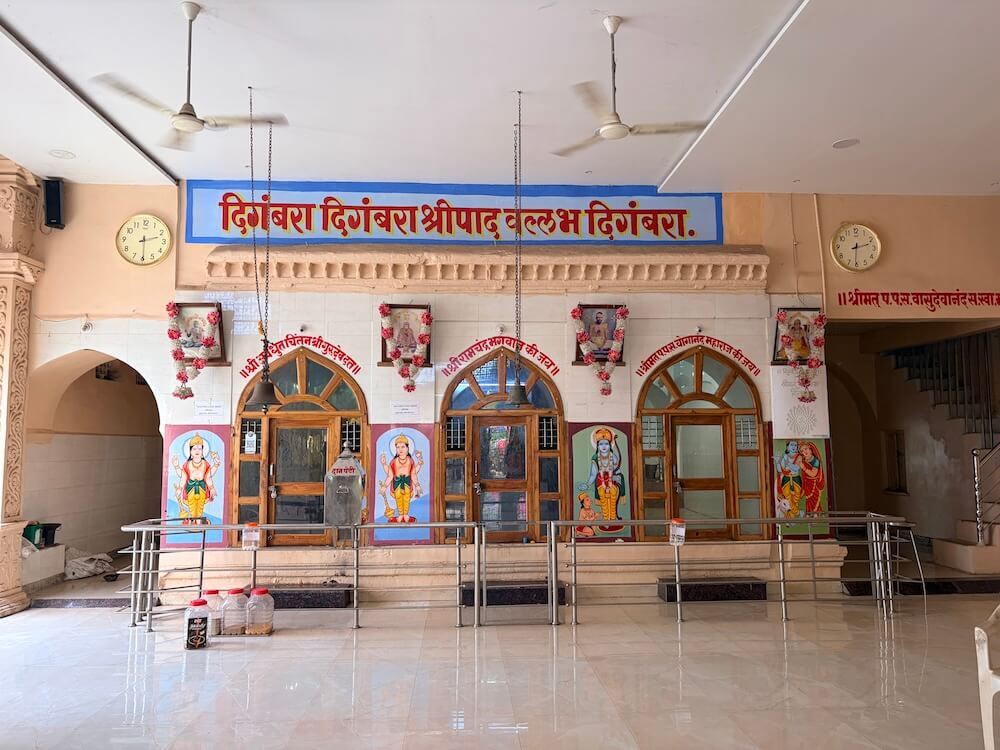
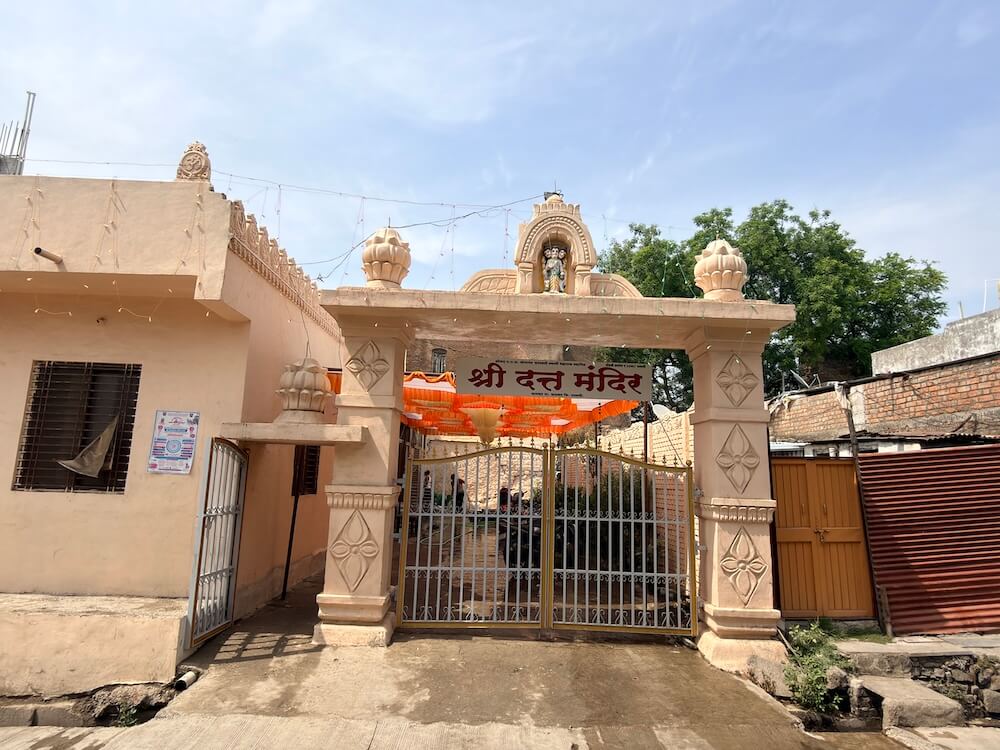
The temple has a main entrance gate. An idol of Lord Dattatreya is carved right in the center of the entrance. The structure of the temple consists of a Sabha Mandap (assembly hall) and three separate sanctums (Garbhagrihas) in a single row in front of it. Upon entering the Sabha Mandap, one can see the idols of the Dwarpalas (gatekeepers) on both sides. The three sanctums in front of the Sabha Mandap have arched entrances. The sanctum on the left contains an exquisite idol of Lord Dattatreya carved in marble. The Padukas are placed right in front of this main idol. On these Padukas, the lotus of Lord Brahma, the conch of Lord Vishnu, as well as the Padukas and Pindi of Lord Mahadeva are beautifully carved. These Padukas are worshipped daily with scriptural Abhishek. The central sanctum houses the idols of Lord Rama, Lakshmana, and Mother Sita. The idol of the temple’s founder, Yoganand Saraswati, is installed in the sanctum on the right.
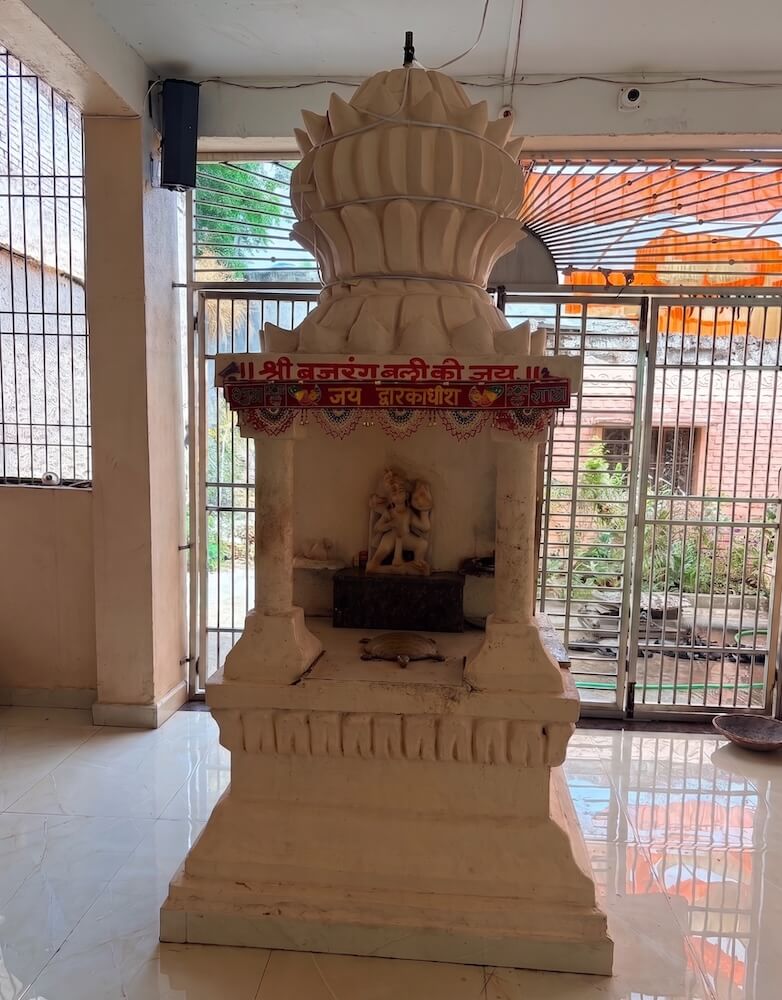
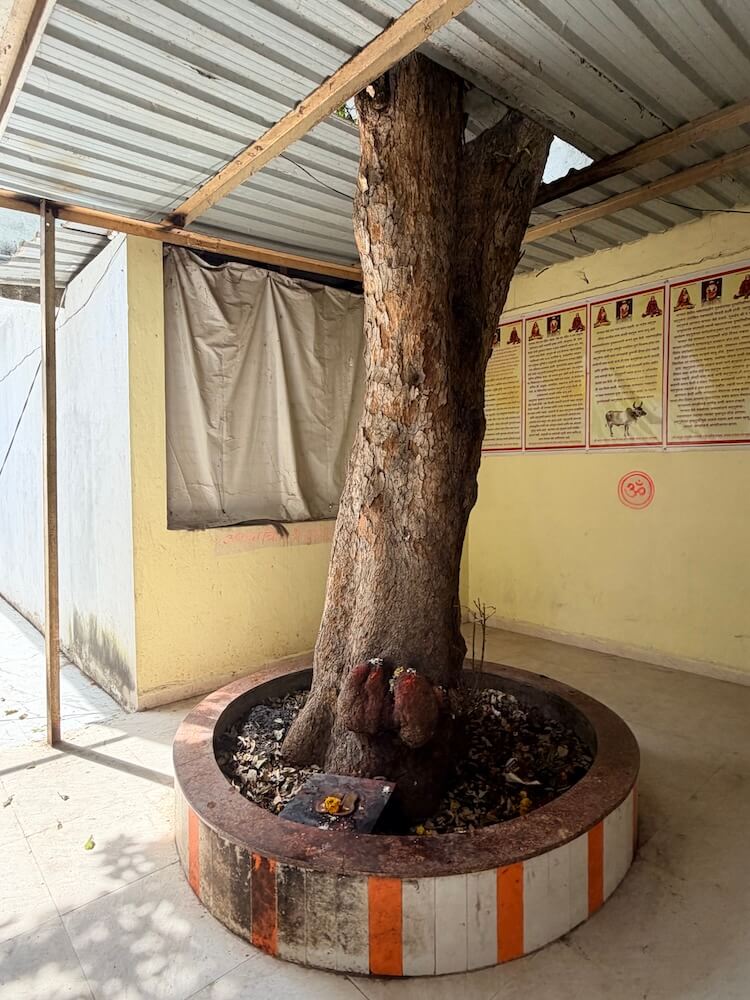
There are several other structures within the main temple premises. There is a separate shrine for Lord Hanuman in the entire temple complex. A Shivalinga is installed on the left side under the pedestal of the Hanuman idol here. There is an Audumbar tree in the temple courtyard. A large hall has also been built for the convenience of devotees. Very close to this hall is the Sansthan’s kitchen. The daily Naivedya as well as the Mahaprasad for various festivals and celebrations are prepared here. There is also a historic well in the premises. This well has water throughout all twelve months. Notably, the water from this well is used for preparing the Naivedya and Mahaprasad for the deity. Very close to this kitchen is the Munj place. The ancient tradition of offering the Naivedya prepared in the temple first at this Munj place is still followed today. As an expansion of spiritual and educational work, a ‘Veda Vidyalaya’ has also been established in this temple complex under the joint auspices of the ‘Old Datta Mandir Sansthan’ and the ‘Maharshi Vedavyas Pratishthan’ of Pune.
The daily religious rituals and festivals throughout the year are performed in a scriptural manner. The Kakad Aarti is performed every day at 5:30 in the morning. After the Kakad Aarti is completed, an Abhishek is performed on the idol of Lord Dattatreya. Thereafter, after the Maharudra Path, the main Maha Aarti of the deities is performed, and the Maha Naivedya is offered to the Lord. In the evening, a Panchpadi Bhajan program is held in the temple, and the temple doors are closed after the Shej Aarti at night. On the full moon day of every month, food is distributed by the Sansthan. Datta Jayanti, which falls in the month of Margashirsha, is considered the main festival of this temple. This festival is celebrated during the period from Margashirsha Shukla Ashtami to Margashirsha Purnima. During this festival, various religious rituals such as daily Kakad Aarti, Panchpadi, ‘Gurumurti Charitra’ recitation, Shanti Path, Laghurudra Abhishek, Mahapuja, and Maha Aarti are performed. Taking this festival as an opportunity, many devotees also perform Anushthana here. On the day of Datta Jayanti, a Palkhi procession takes place after the Datta Janmotsav in the temple. Apart from this main festival, special celebrations are also held on the occasion of Yoganand Maharaj’s Jayanti and the Punyatithi of Paramguru Vasudevanand Saraswati. During the festival held on Ashadh Shuddha Pratipada for the Punyatithi of Vasudevanand Saraswati, rituals such as Kakad Aarti, ‘Gurumurti Charitra’ recitation, Ekadashini Abhishek, main Aarti, Shanti Path, Panchopachar Puja, and musical Datta Panchpadi are performed here. Thereafter, in the afternoon, the Palkhi procession of the deities is taken out. Also, on the occasion of Tripurari Purnima in the month of Kartik, a Deepotsav (festival of lights) is celebrated in this entire area.
This sacred temple stands as a testament to deep spiritual devotion, ancient architectural grandeur, and rich local cultural traditions.
The sanctum sanctorum houses the divine idol consecrated according to ancient Vedic traditions, surrounded by serene courtyards and traditional temple architecture.
Navratri, Maha Shivratri, Annual Temple Jatra & Deepotsav
Compare and book flights, secure top-rated local hotels near the temple, hire reliable guides, and rent cars instantly.
Extend your pilgrimage by visiting other highly sacred temples located nearby.


Add ₹999 more to unlock FREE SHIPPING!
Your sacred cart is currently empty.
Shop Photo FramesFill in your delivery details below to place your order.
Add comment