
Add ₹999 more to unlock FREE SHIPPING!
Your sacred cart is currently empty.
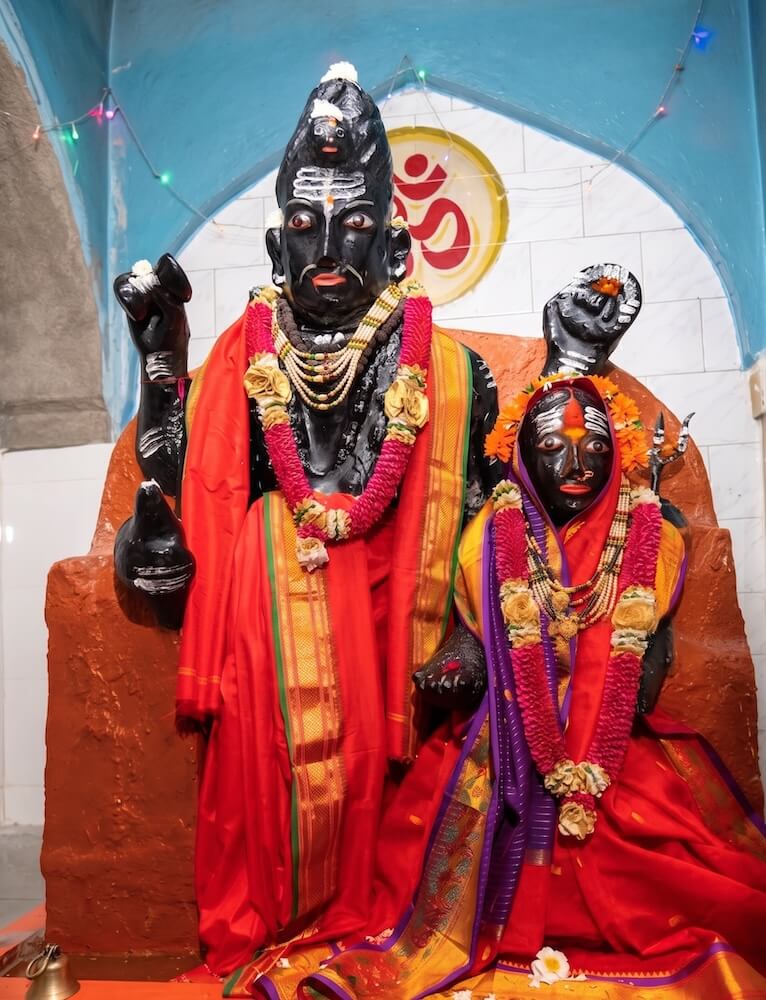
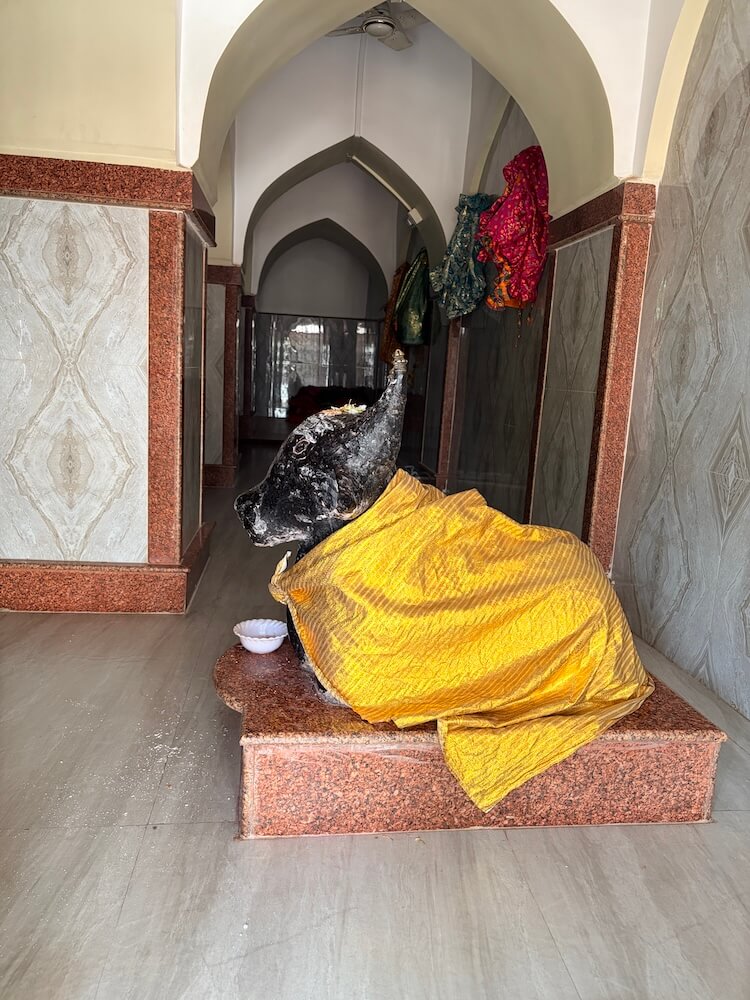
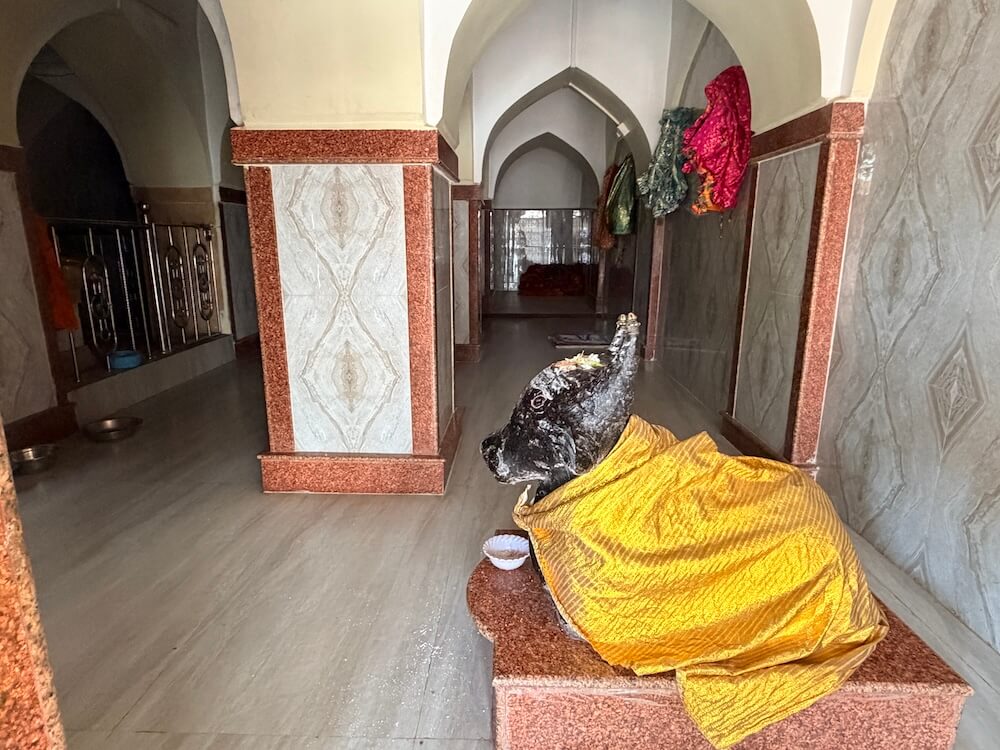
Shop Photo FramesThe city of Manwath, known as ‘Manipur’ during the Pandava era, is famous for the temple of Lord Shiva and Mother Parvati in a standing posture. In 1937, a devotee of Shiva received a divine vision from Lord Shiva. Subsequently, while digging a well, an idol of Shiva and Parvati carved from a single black stone was discovered. Devotees believe that the expressions on the face of the Shiva idol change three times a day. In other Shiva temples, Nandi is usually in a seated position, but since the Shiva-Parvati idols here are standing, the Nandi here is also in a standing position. The main attraction here is the Shiva-Parvati wedding ceremony, which takes place every year on Chaitra Shuddha Ashtami at the Goraj Muhurta. It is a tradition for those desiring marriage to make a vow at this temple. After their marriage is settled, the wedding ceremony takes place in the temple premises on the day before Ram Navami.
According to the legend regarding this temple, Gangadhar Bapu Swami, a resident of this village, was a devotee of Shiva. One day, while he was meditating in the basement of his house-like monastery, Lord Shiva gave him a vision, saying, “Start digging a well at the place where you reside.” Following this, Gangadhar Bapu Swami began digging the well. After digging ten to fifteen feet, an idol of Shiva and Parvati, carved from a single monolithic stone, was found under a stone slab. The height of Mahadev is four and a half feet, and the height of Parvati is three and a half feet. A four-foot-tall idol of Nandi was also found in the lower part of this idol. Gangadhar Swami installed this idol in his monastery. The construction of this temple follows the Vavara style (a simple architectural style). In 2023, the temple was renovated without disturbing its original structure.
Manwath is a taluka headquarters in Parbhani. The ancient name of this village was ‘Manipur’. Manipur was the capital of Babhruvahana during the Pandava era. During his exile, Arjuna set out on a pilgrimage to atone for his sins after interrupting the privacy of Dharma and Draupadi. At that time, Chitrangada, the daughter of King Chitravahana of Manipur, insisted on marrying Arjuna. King Chitravahana laid down a condition that the son born to them would remain a resident of Manipur and would uphold the traditions of the land. Later, Arjuna came to this area for the Ashwamedha Yajna. His son, Babhruvahana, did not prepare for war but instead went forward to welcome his father very humbly, carrying various gifts. According to the Kshatriya dharma, it is considered the duty of a brave man to stop the Ashwamedha horse and prove his valor through battle. Because Babhruvahana did not do so and chose a peaceful path, appearing to surrender, Arjuna became extremely angry. Consequently, Arjuna rebuked him in harsh words. Arjuna told him that being the son of a mighty Kshatriya, he was welcoming him like a merchant with gifts instead of fighting on the battlefield, which did not befit the Kshatriya dharma. In this way, Arjuna doubted his bravery, insulted him, and belittled him. Hurt by this ironic behavior and disdain from his father, Babhruvahana later accepted Arjuna’s challenge, fought him, and defeated him.
Some experts believe that this city formerly had a total of seven gates. None of the remains of these gates exist today. A stone from before the construction of the Jama Masjid in the village has been preserved there. It bears an inscription in Persian that reads, ‘San Hijri 1111 Karam Hussain alias Abdul Malik Sahab’. A stone with a similar inscription belongs to the gate in the Dargah Mohalla of the city. From this, it is believed that this gate and the other gates of the village were built at the same time.
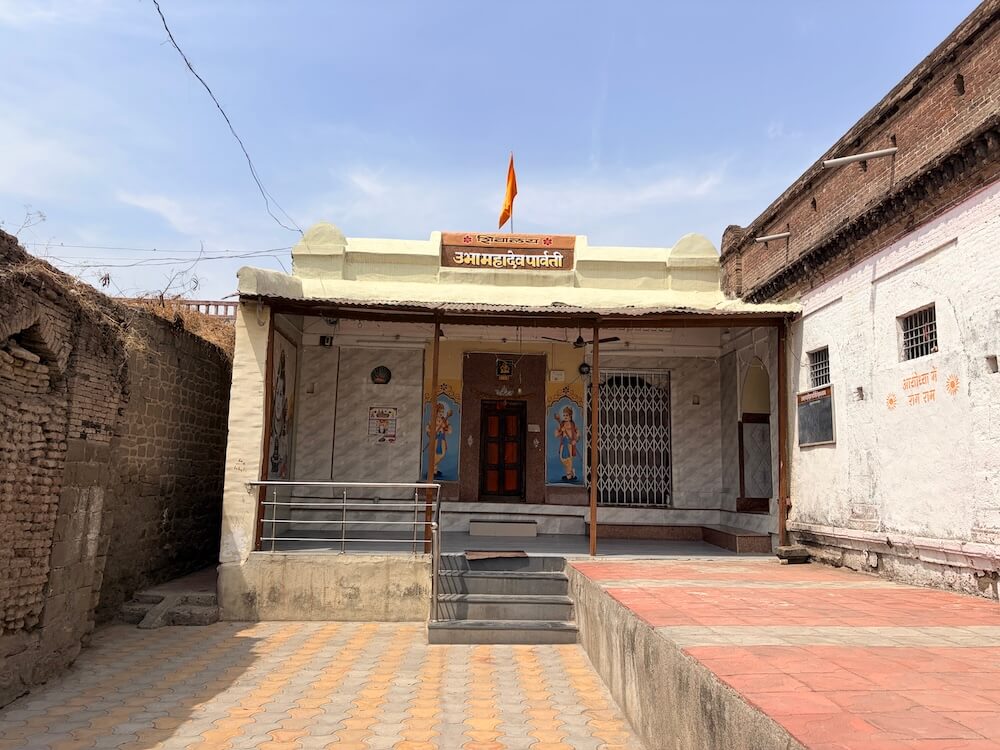
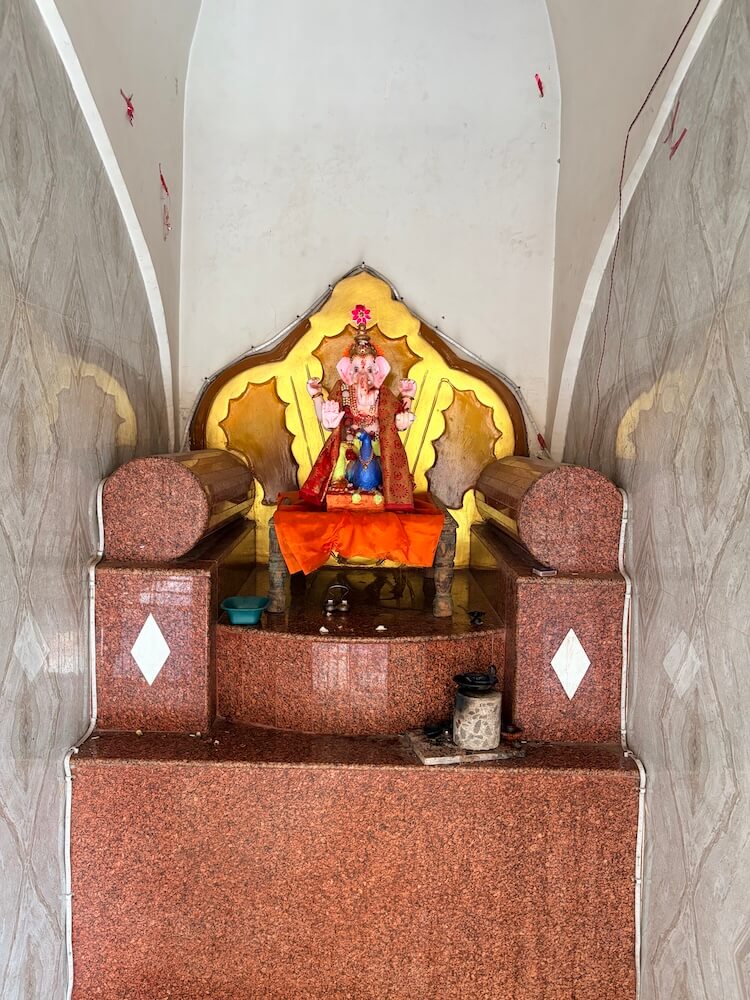
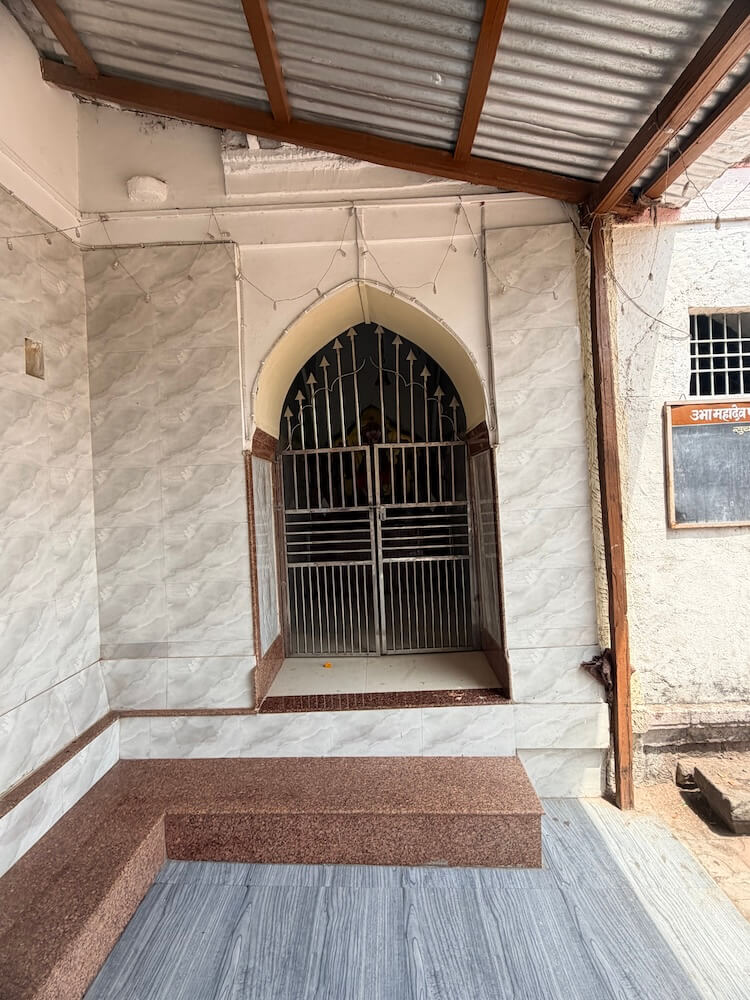
The Ubha Mahadev Temple is located in Rangar Galli in the Kshatriyawadi area of the city. To the right of this temple is the place of Ganesha. An idol of Ganesha was installed here 110 years ago after a woman’s vow was fulfilled. This Ganesha is known as the ‘Mana cha Ganpati’. Every year during the Ganeshotsav, a procession of this idol is taken out. There is a porch in front of the main temple. The structure of this temple consists of a assembly hall (sabhamandap) with six arches and a sanctum sanctorum (garbhagriha). There is a sculpture of Ganesha on the lintel of the entrance to the assembly hall. There is also a Ganesha idol on the upper side. The height of the entrance is somewhat low. There is a standing Nandi in front of the sanctum sanctorum. Inside the sanctum sanctorum, there is a standing idol of Shiva-Parvati. Lord Shiva has four hands. In his right hands, he holds a conch and a damaru, while in his left hands, he holds a discus and a trident. Ganga is in his matted hair.
Parvati is right beside Lord Shiva. Devotees believe that different expressions appear on the idol of Lord Shiva three times a day. In the morning, the form of the idol is like a smiling child. In the afternoon, it takes on an adult form with an angry expression, and in the evening, it appears as a tired old man. There is a popular belief that Shiva and Parvati go around the village every evening riding on Nandi, so a custom is followed that no one should stand near the entrance of this temple in the evening.
In this temple, there is also the Sanjeevan Samadhi of Gangadhar Bapu Swami. There is a mask on this Samadhi. A few steps away from this Samadhi site, a path leading to the basement is visible. Gangadhar Bapu Swami used to meditate in this basement. It is said that a path from this basement led to the well where the idol was found. Gangadhar Bapu Swami used to bring water from this well to worship Shiva-Parvati. A few steps to the left of this temple was the well where the idol was found. Currently, this well has been filled in.
Various religious programs are organized here throughout the year. On the day of Chaitra Shuddha Ashtami, the formal wedding ceremony of Shiva-Parvati takes place here. Devotees whose wishes have been fulfilled take on the role of hosts for this ceremony.
An invitation card is also printed for this wedding ceremony. On the previous day, turmeric is applied to the idols. The next day, there is a flurry of wedding preparations throughout the day. New clothes are adorned on Shiva and Parvati. In the afternoon, a meal including sweets is arranged for the wedding guests. After that, a Shevanti program is held, and a musical procession is taken out through the village. At the auspicious time, Mundavalya (wedding headgear) are tied to the idols. Silver crowns are also placed on them.
In the evening, at the Goraj Muhurta, the Shiva-Parvati wedding ceremony takes place amidst the chanting of mantras, the sound of Mangalashtakas, and the music of traditional instruments. During this ceremony, the assembly hall and the temple premises are bustling with wedding guests. Many women also perform Fugadi in the premises during this ceremony.
This sacred temple stands as a testament to deep spiritual devotion, ancient architectural grandeur, and rich local cultural traditions.
The sanctum sanctorum houses the divine idol consecrated according to ancient Vedic traditions, surrounded by serene courtyards and traditional temple architecture.
Navratri, Maha Shivratri, Annual Temple Jatra & Deepotsav
Compare and book flights, secure top-rated local hotels near the temple, hire reliable guides, and rent cars instantly.
Extend your pilgrimage by visiting other highly sacred temples located nearby.


Add ₹999 more to unlock FREE SHIPPING!
Your sacred cart is currently empty.
Shop Photo FramesFill in your delivery details below to place your order.
Add comment