
Add ₹999 more to unlock FREE SHIPPING!
Your sacred cart is currently empty.
Shop Photo FramesThe village of Shirdi is famous as the workplace of Saibaba, who taught ‘Shraddha and Saburi’ (Faith and Patience), ‘Sab Ka Malik Ek’ (One God governs all), and the ‘equality of all religions’. It is claimed, based on evidence, that Pathri in Parbhani district is his birthplace. This village, established by Arjuna during the Mahabharata era, was formerly known as ‘Parthapuri’. Over time, this name was corrupted to ‘Pathri’. The old fort here reflects the antiquity of the village. References are found stating that the renowned saint Shridhar wrote the ‘Ashwamedh’ scripture here. An ancient copper plate illustrating the historical prominence of Pathri is also famous. Saibaba’s guru in Pathri was Babasaheb Maharaj from Selu. When Saibaba went to Selu, people considered him mad and drove him away. A stone thrown at that time caused a wound on his forehead and a scar remained. A clear record in the government gazette states that the bandage tied by Babasaheb Maharaj on his forehead remained there permanently.
Saibaba, who taught humanity, welfare, and unity to the world, has countless devotees of all religions in India and abroad. Many Hindus consider him an incarnation of Dattatreya. He resided for about 60 years in Shirdi, located in the Rahata taluka of Ahmednagar (formerly Ahilyanagar) district. During this stay, while serving humanity, he gave the great mantra of ‘Shraddha and Saburi’. His teachings were a blend of the philosophies of all religions. These teachings emphasized the unity of all religions, selfless service, charity, and the importance of love. His teachings of compassion, love, and unity continue to inspire millions even today. Saibaba himself never commented on his early life. Therefore, although Shirdi was considered his workplace, everyone remained unaware of his birthplace. Against this backdrop, Vishwas Balasaheb Kher, son of the former Chief Minister of Bombay State, Balasaheb Kher, and a former trustee of the Shirdi Sai Sansthan, conducted research for about 25 years regarding Saibaba’s birthplace. He met many elderly people in Pathri who had come into contact with Saibaba. He also held in-depth discussions with Saint Dasganu Maharaj, a supreme devotee of Saibaba. In this research, he received valuable support from Sai devotee Dinkarrao Choudhary of Pathri. Based on the information obtained in this research, Kher clarified that Saibaba was born in Pathri village in a Brahmin family with the surname Bhusari. He also attempted to prove with evidence that his original name was ‘Hari’. For this research, Kher received the cooperation of Saibaba’s disciples, Swami Sai Sharananand and Shri Balvababa.
Some strong evidence that Pathri is indeed Saibaba’s birthplace is available with the Shri Saibaba Janmasthan Sansthan Trust in Pathri. In a verse from the seventh chapter of the book ‘Shri Bhaktisaramrut’ written by Saint Dasganu Maharaj, it is clearly mentioned that Saibaba was born in Selu-Manwat, which is Pathri. An official record of the house of Saibaba’s father, Annasaheb Bhusari, is found in the old records of the Pathri Municipal Council. The ‘Sai Satcharitra’ book published in English by the Shirdi Sai Sansthan in 1972 mentions that Saibaba was born in Pathri. This book contains a reference that Saibaba told his supreme disciple Mhalsapati, “I was born in Pathri.” The book ‘Divine Life of Saibaba’ (Part 1) written by B. V. Narasimha Swami also mentions that Pathri is Saibaba’s birthplace. The ‘Sai Satcharitra’ book published in Hindi by the Shirdi Sai Sansthan in 1994 also mentions that Saibaba was born in Pathri village. In this, the name is mistakenly mentioned as ‘Pathardi’. Based on such various evidence, Vishwas Balasaheb Kher established a Board of Trustees in the name of the Sai Sansthan in 1978. In the same year, Kher and Choudhary purchased the land where the temple currently stands from Raghunath Bhusari, a descendant of the Bhusari family settled in Hyderabad. Although there are many differing opinions regarding Saibaba’s birthplace, a large number of Sai devotees from across the country come here for darshan just as they do in Shirdi.
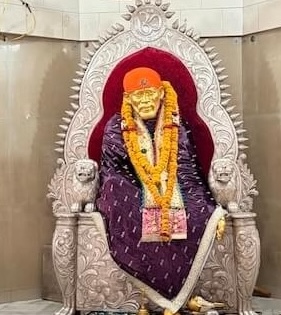
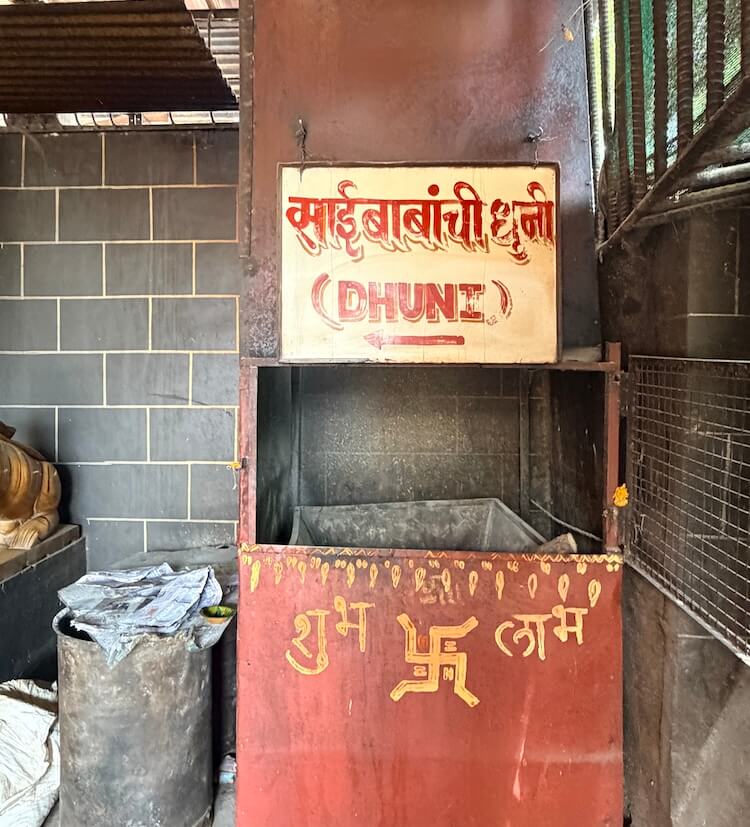
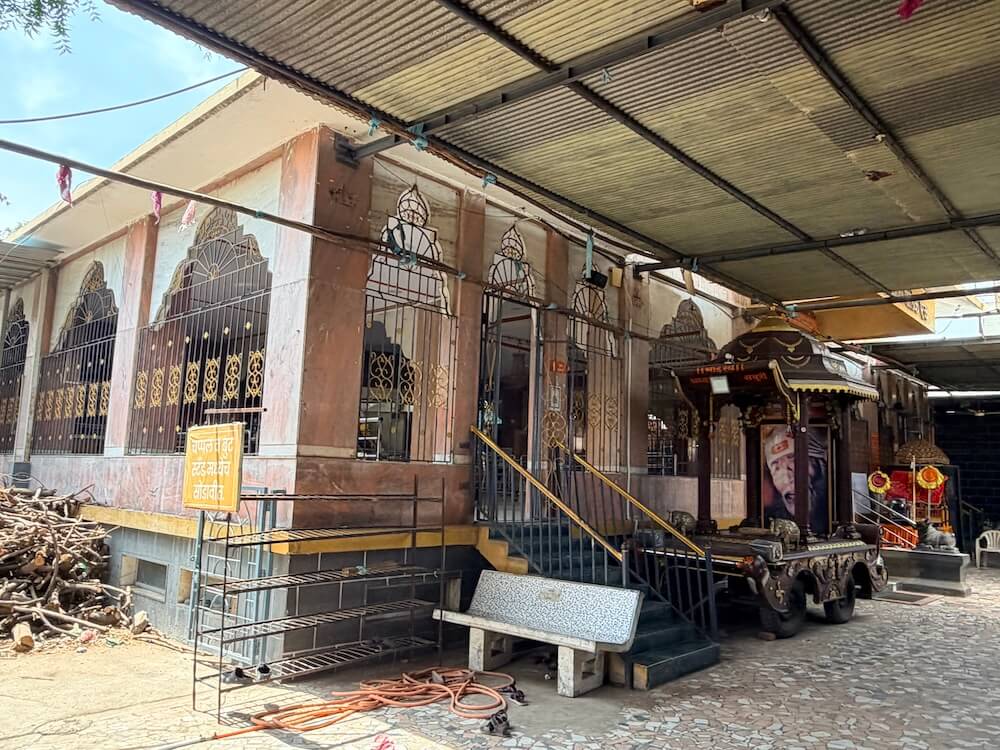
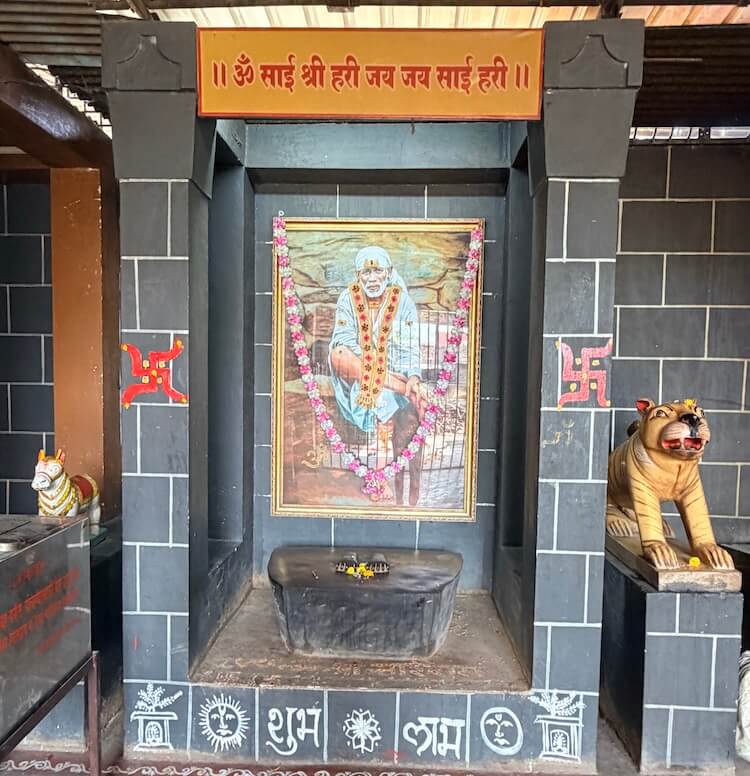
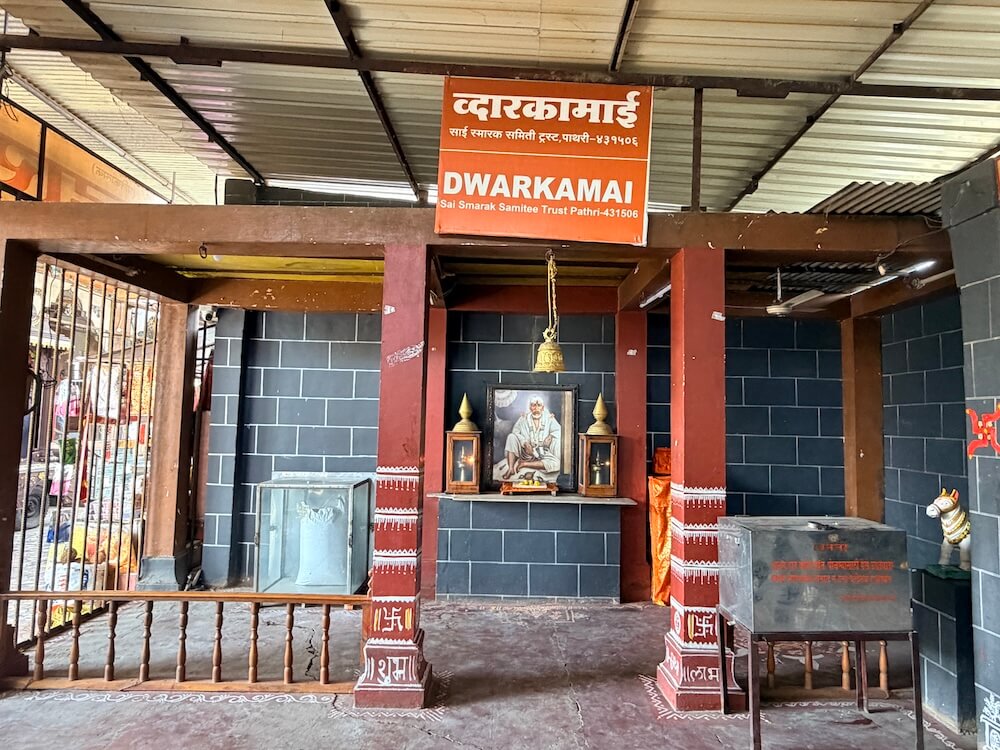
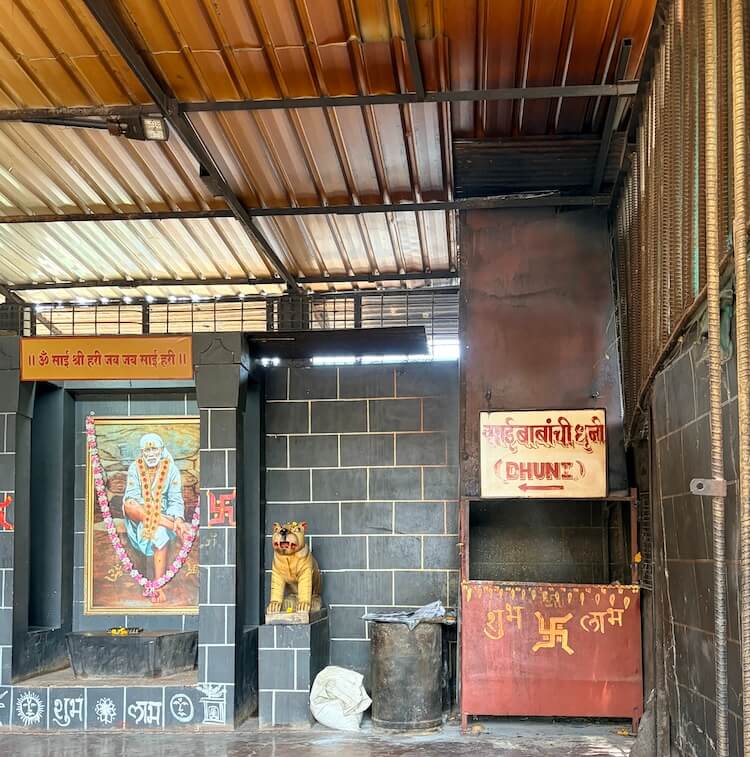
This temple of Saibaba was built in 1998 on the site of this historical birthplace. During the excavation for the temple construction, two historical arches and an underground chamber were found. Some ancient items related to Saibaba were found in this chamber. After the temple was completed, it was opened for devotees for darshan on the auspicious occasion of Vijayadashami on 19 October 1999. The temple has entrances on the south and east sides. A statue of Nandi is installed on a small stone platform in front of the temple. The structure of the temple consists of a large assembly hall and a sanctum sanctorum. In the sanctum sanctorum in the center of the assembly hall, a five-and-a-half-foot tall bronze statue of Saibaba seated on a throne is installed. A short distance from this statue, Saibaba’s marble padukas (footprints) covered in silver are kept for worship. On the right side of the temple, there is a ‘Dwarakamai’ and an arrangement for an eternal dhuni (sacred fire). A devotee residence (bhaktanivas) has been built in the temple premises for the accommodation of devotees coming from afar. Also, a special Naivedya Kothi (kitchen) is available in this area to prepare offerings for Saibaba.
Stairs have been built on the outside to go into the basement of the temple. After descending these stairs, one can see some original parts of the ancient house of Saibaba’s family in the basement. This part has been kept enclosed and safe exactly as it was. There is an old stone-and-mud building in this basement. This building includes the delivery room and other parts. All items such as worship tools, a statue of Maruti, an earthen water pot, a grinding stone, old lamps, etc., found during the excavation of the temple construction, have been preserved very carefully in this basement. There is also a well and an underground grain storage in the basement. A meditation hall has been built in this area. A large oil painting of Saibaba, about six feet tall, has been placed here. To the left of this oil painting, oil paintings of Swami Sai Sharananand and to the right, Balvababa have been placed. Saibaba’s Uti (sacred ash) is kept here. Some rare photographs of the old structure can also be seen.
This temple opens daily at five o’clock in the morning, and the Baba’s Kakad Aarti is performed at five-thirty in the morning. Following this, the Madhyanha Aarti is held at twelve o’clock in the afternoon, the Dhup Aarti in the evening, and the Shej Aarti at eight-forty-five at night. The temple doors are closed at nine o’clock at night. Every morning at eight-thirty, the breakfast offering (Naivedya) is presented to Sai Baba.
This breakfast includes two rotis, chutney, sugar, milk, and onion. Onion and garlic are not used in the afternoon grand offering (Maha Naivedya). This grand offering primarily consists of yogurt, shira, kheer, puri, two vegetables, chutney, salad, rice, and lemon. In the evening, a simple offering of pithla-bhakri, onion, chutney, milk, and jaggery is presented. On the day of Ekadashi, a special fasting offering (Faral Naivedya) is presented to Sai Baba. There is a large dining hall (Prasadalaya) in the temple premises. Prasad is distributed there between twelve-thirty and one-thirty in the afternoon. After the afternoon Aarti, Khichdi Prasad is given to the devotees in this dining hall.
Thousands of devotees from various parts of Maharashtra, as well as from the neighboring states of Karnataka, Andhra Pradesh, and Telangana, come to this temple in Pathri for Darshan every day.
Every Thursday, a Palkhi procession of Sai Baba is taken out from the temple. Many religious festivals and celebrations are observed with great enthusiasm in the temple throughout the year. These primarily include various festivals such as Hanuman Jayanti, Ram Navami, Swami Sai Sharananand Jayanti, Shri Krishna Janmashtami, Balvababa Punyatithi, Dattajayanti, Guru Purnima, Vijayadashami, and the festival of lights on Deepavali Padwa. During these festivals, there is a large crowd of devotees in the entire temple premises.
This sacred temple stands as a testament to deep spiritual devotion, ancient architectural grandeur, and rich local cultural traditions.
The sanctum sanctorum houses the divine idol consecrated according to ancient Vedic traditions, surrounded by serene courtyards and traditional temple architecture.
Navratri, Maha Shivratri, Annual Temple Jatra & Deepotsav
Compare and book flights, secure top-rated local hotels near the temple, hire reliable guides, and rent cars instantly.
Extend your pilgrimage by visiting other highly sacred temples located nearby.


Add ₹999 more to unlock FREE SHIPPING!
Your sacred cart is currently empty.
Shop Photo FramesFill in your delivery details below to place your order.
Add comment