
Add ₹999 more to unlock FREE SHIPPING!
Your sacred cart is currently empty.
Shop Photo FramesPohara is recognized across the nation as the ‘Kashi of the Banjara community’. Along with the temple of Mother Jagadamba, addressed here as Pohara Devi, this sacred site houses the samadhi shrines of Sant Sevalal Maharaj, the revered deity of the Gor-Banjara community, and his successor, Sant Ramrao Maharaj. Consequently, this site holds unparalleled significance within the Banjara community. Devotees from not only Maharashtra but from all over the country visit this place for darshan. This includes devotees from other castes and religions as well. The ‘Bhakti Dham’ and ‘Nangara Bhavan’ are also significant landmarks located here.
“Instead of spending time in rituals, learn to perform your duties,” by giving this teaching and showing the righteous path to society, Saint Sevalal became the spiritual guru of the Banjara community. Regarding his history, he was born on 15 February 1739 at Sevagad (Golar Dodi Tanda, Taluka Gunti, District Anantapur) in Andhra Pradesh. His father’s name was Bhima Naik and his mother’s name was Dharmai. Bhima Naik’s primary occupation was transporting sacks of grain on the backs of oxen. He used to supply provisions to many princely states. After marriage, they did not have children for as many as 12 years. According to a legend, they were blessed with a son through the grace of Mother Jagadamba, and he was none other than Sevalal Maharaj. Since childhood, he possessed a detached nature.
Sevalal, a supreme devotee of Mother Jagadamba, took a vow to remain unmarried throughout his life and dedicate himself to social service. After spending the early part of his life in Andhra Pradesh, he came to Maharashtra. Legend has it that when he was a young man, he had a direct vision of Mother Jagadamba in the village of Ruigad, located near Poharadevi. Sevalal Maharaj fought against the ruling powers of that time, particularly the British rulers, for the sake of the Banjara community, their language, and their identity. He gave the Banjara community the great mantra of education: “Shikach Shikavach Shike Raj Ghadavach” (Learn, teach others. Only an educated society attains royal prosperity). His teachings included respecting women, avoiding immoral relationships, abstaining from alcohol, living with self-respect, protecting the environment, and not discriminating against anyone in any way.
Many of his instructive sayings in the Banjara dialect (Gormati) are still quoted today. Some of them are as follows: ‘Janjho-Chhanjho-Pachach Manjho’ (First study any matter, examine it, and only then accept it). ‘Koi Keti Nankya Chhei.’ Do not worship anyone. Do not pray to anyone. Do not fear anyone. (There is no one small or great. All are equal. Do not chant the name of anyone. Do not worship anyone. Do not fear anyone.) Do not sell a cow to a butcher. Whoever exploits and robs the poor, their seven generations will go to hell. Do not bring wealth earned through theft or deceit into your home. Do not bring a woman whose husband is alive into your home as your wife. Whoever upholds these principles, I shall protect them; I shall deliver them at every moment.
Saint Sevalal was a visionary saint. He had made several prophecies, such as: “A bowl of water will be sold for one rupee” (Rapiya kataro pani vak jay), “A day will come when carts will run without oxen” (Bana balader gadi dhasiy), and “The world will become so close that news from one kingdom will instantly reach another” (Malker khabar palkem kaliy). “There will be three people with those who walk on the righteous path, but there will be a crowd with the deceitful liars” (Khare-ra sobat teen mankya riye, labad-re saath khandibhar), such statements of his have proven to be timeless. Sevalal Maharaj passed away at Ruigad (District Yavatmal) and his burial rites were performed at Pohragad. His Samadhi is located near the Jagdamba Temple. Sant Ramrao Maharaj was the successor of Sevalal Maharaj. Born on 7 March 1935 at Pohradevi, Ramrao Maharaj was a lifelong celibate. He consumed only fruits and milk. On 25 June 1948, he attained the position of Mahant. Following this, he was appointed as the Mathadhipati of Pohradevi. Recognizing his social work, Gulbarga University honored him with the degree of ‘Doctor of Literature’ (D.Litt.). On 31 October 2020, at the age of 89, he passed away at Lilavati Hospital in Mumbai after a prolonged illness. His Samadhi is also located here.
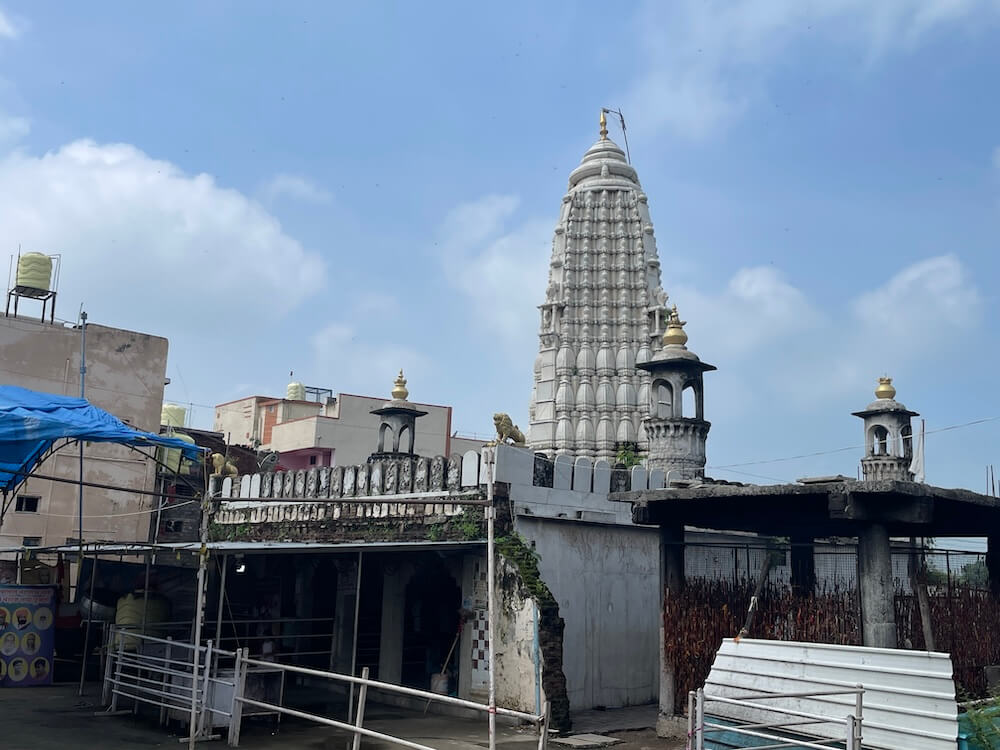
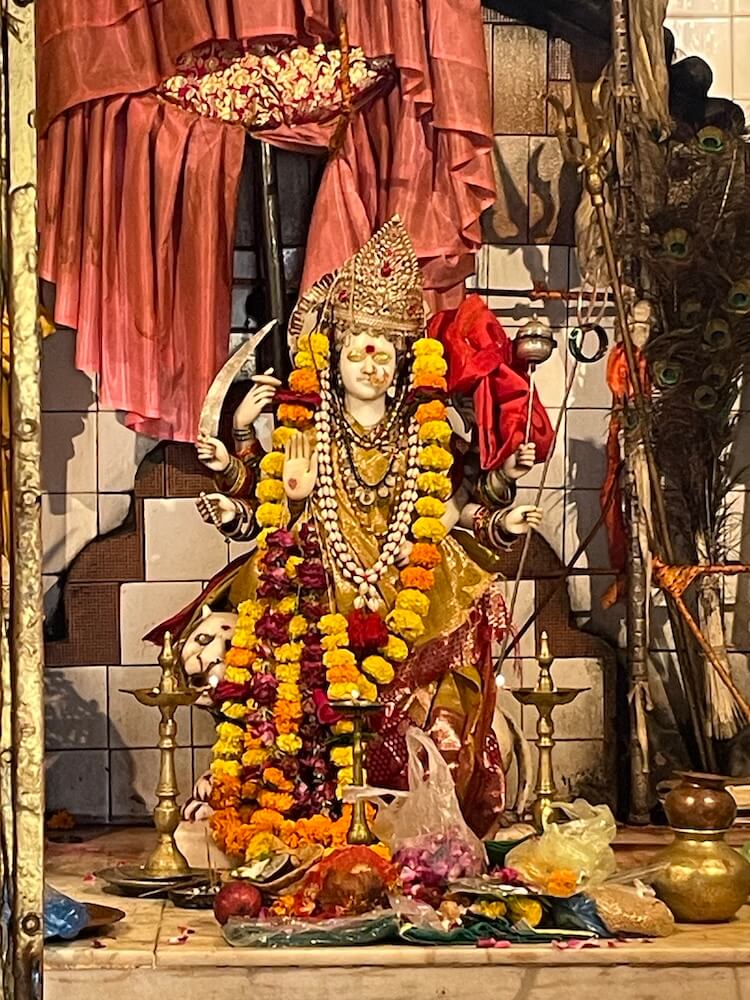
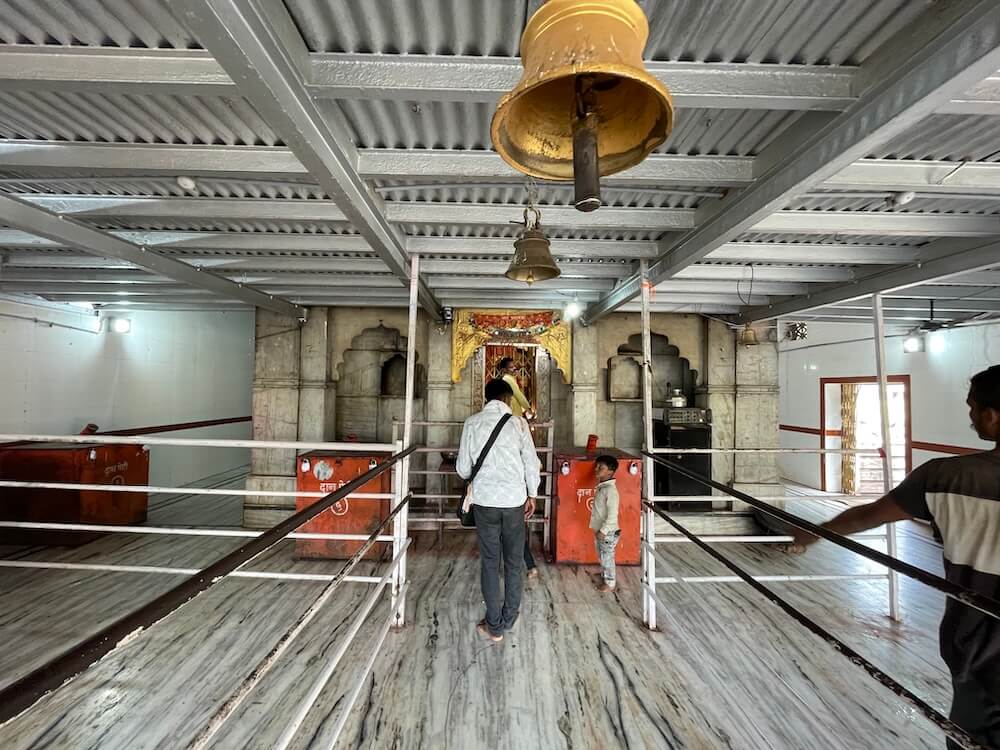
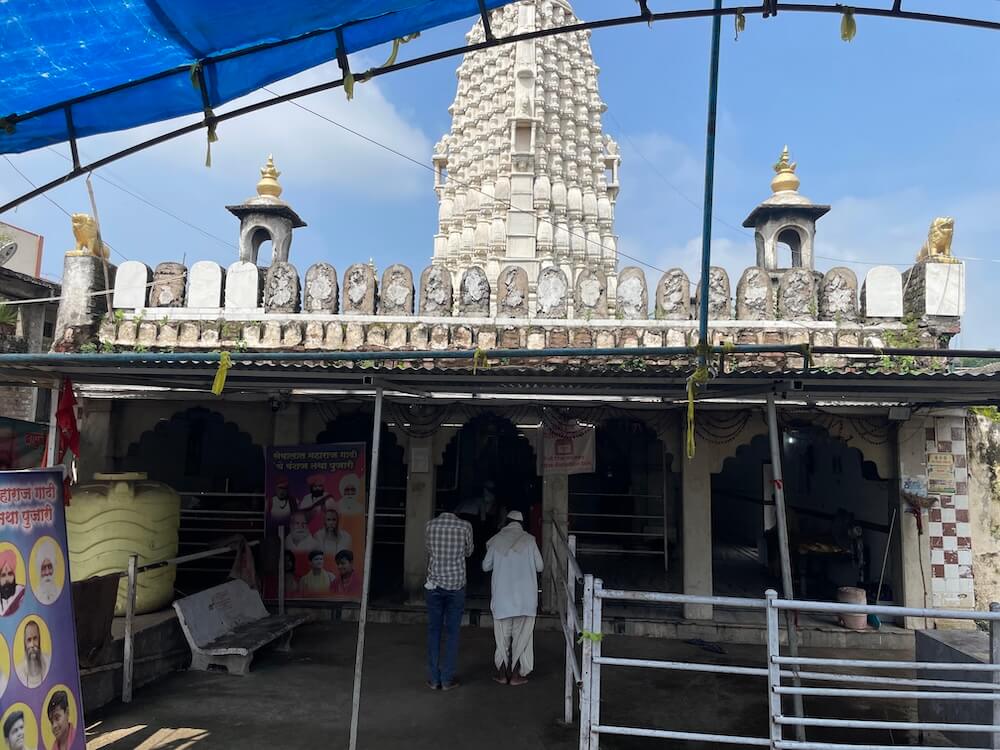
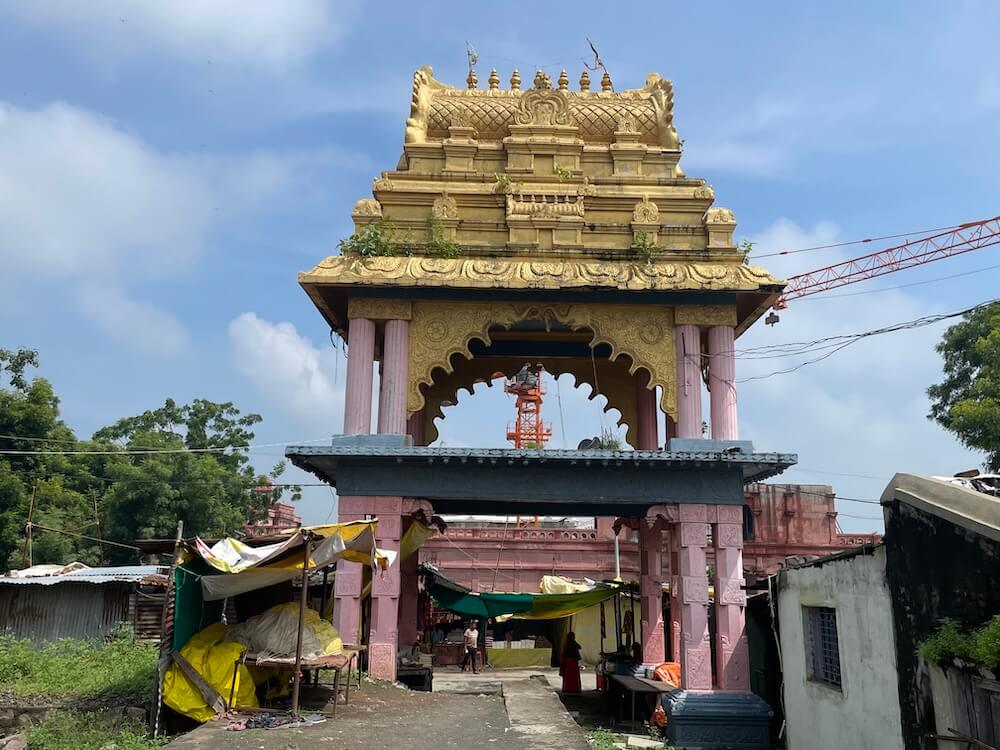
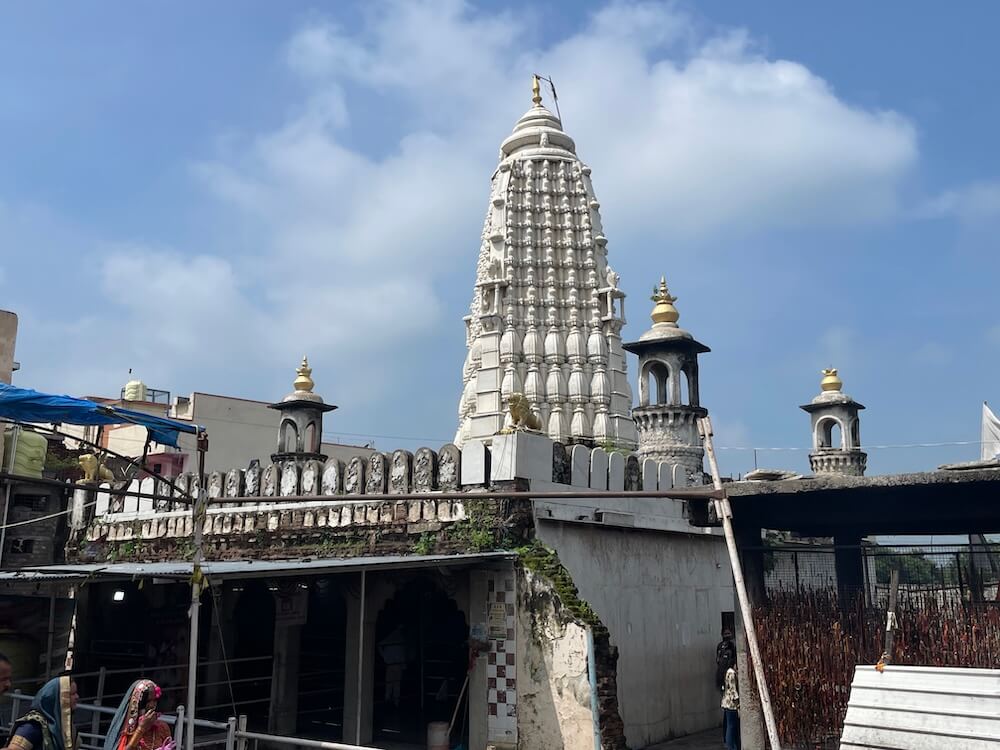
One enters the temple premises of Mother Jagadamba through the grand gateway built in the South Indian Gopuram style at Pohradevi. The temple structure consists of a Sabha Mandapa (assembly hall), a small Antarala (vestibule), and the Garbhagriha (sanctum sanctorum). The ceiling of the assembly hall features a decorative railing, and at its four corners are statues of the lion, the vehicle of Mother Jagadamba. The assembly hall is open from the front. The entrance to the inner sanctum has a golden arched gateway. Directly in front is the sanctum sanctorum. Inside, on a marble pedestal, the marble idol of the eight-armed Goddess Jagadamba, mounted on a tiger, is consecrated. Adorned with garments, ornaments, cowrie shells, and flower garlands, the Goddess wears a crown on her head. The Goddess holds weapons such as the conch, discus, and sword in her hands. Above the sanctum sanctorum stands a very tall spire. This spire is in the Nagara style of the Urushringa variety. Atop it are a circular Amalaka and a pinnacle. On all four sides of this spire, there are structures resembling small canopies.
A pathway has been constructed to travel from the Jagadamba Temple towards the Sant Sevalal Samadhi Sthal. In the middle of this pathway, there is an old well. The main entrance to the Samadhi Mandir of Sant Sevalal Maharaj is located here. Adjacent to this, the stone fortification walls are visible from the outside. The entrance gate is constructed of stone. On both sides, in small shrines, are exquisite idols of the gatekeepers, Jaya and Vijaya. Above them is arched carving. At the top, there are tall towers with three arches. As one enters through here, the frame of the inner gateway is adorned with golden strips, which also feature golden engravings. Above it is a beautiful image of Lord Ganesha. This entrance is known as the ‘Lakhiya Darwaza’. It is said that this entrance is two hundred and fifty years old. Upon entering through this gate, one sees a semi-circular arched area resembling a small room, where seating arrangements are provided. Moving further ahead, there is a large, enclosed assembly hall (Sabhamandapa). In this hall, on a raised platform, are black stone idols of Saint Sevalal Maharaj’s horse, named Tolaram, and his bull, Garashi. In the center of the sanctum sanctorum of the Samadhi site, there is a marble-like pedestal. Saint Sevalal Maharaj’s turban is placed upon it. Here, instead of footwear (Padukas), the turban is worshipped. A pearl necklace has been adorned on this pristine white turban. To the right, there is a portrait of Saint Sevalal mounted on a horse. Below it lies the cushion he used. The spire of this temple is carved with idols of various deities. The finial (Kalash) on this spire is made of gold.
It is said that the original abode of Goddess Jagadamba is near the Samadhi temple of Saint Sevalal. There is a small stone temple of Jagadamba here. Near the Sevalal Samadhi site is the stone-built Samadhi of his nephew, Saint Sukalal. As this Samadhi is located inside, it is somewhat dark. At a short distance, there is a sacred fire (Dhuni). Nearby is the ‘Laghi’, which signifies the flag post, where several flags are kept together. There are other Samadhi sites in the temple premises as well. A tall white flag is hoisted here; the white flag is considered the flag of Saint Sevalal. The Samadhi site of Saint Ramrao here is attractive. The Samadhi has a silver-engraved door. All the deities from his household shrine have been placed within it. This includes an exquisite fifty-one kilogram silver idol of the Goddess, as well as a silver mace, a mask of the Goddess, and several crowns.
Near these temples at Pohradevi, a grand structure for the ‘Nagara Museum’ has recently been built. The building is designed like a Nagara, the traditional musical instrument of the Banjara community. It preserves the cultural, historical, and religious history of the Banjara community through various sculptures and artifacts. This grand structure was inaugurated by Prime Minister Narendra Modi on October 5, 2024. On this occasion, the Prime Minister offered prayers at the Jagadamba Devi temple and the Samadhi site of Sevalal Maharaj. As Pohradevi is a place of faith for the Banjara community, it has also gained political significance in recent times. Prior to this, Union Home Minister Amit Shah had also visited Pohradevi on October 11, 2019, amidst the hustle and bustle of elections. Many prominent leaders of the state also visit here from time to time for darshan.
Various religious festivals like Dussehra and Diwali are celebrated with great enthusiasm in this temple. A large fair (Yatra) is held here on the day of Ram Navami. Devotees from Maharashtra as well as states like Rajasthan, Gujarat, Karnataka, Andhra Pradesh, and Telangana come in large numbers to this fair, which has a tradition spanning many years.
This sacred temple stands as a testament to deep spiritual devotion, ancient architectural grandeur, and rich local cultural traditions.
The sanctum sanctorum houses the divine idol consecrated according to ancient Vedic traditions, surrounded by serene courtyards and traditional temple architecture.
Navratri, Maha Shivratri, Annual Temple Jatra & Deepotsav
Compare and book flights, secure top-rated local hotels near the temple, hire reliable guides, and rent cars instantly.
Extend your pilgrimage by visiting other highly sacred temples located nearby.


Add ₹999 more to unlock FREE SHIPPING!
Your sacred cart is currently empty.
Shop Photo FramesFill in your delivery details below to place your order.
Add comment