
Add ₹999 more to unlock FREE SHIPPING!
Your sacred cart is currently empty.
Shop Photo FramesThe historic Ram Mandir in Goregaon, Mumbai, holds a place of immense significance in cultural and social history. The ancient history of this temple premises is linked to the reign of King Bimbadeva. Evidence of this history is found in the text ‘Bimbakhyan’. The Shilahara-era relics from the tenth to eleventh centuries discovered during research in this area establish the historical importance of this region. This Ram Mandir was built in this historic area in the nineteenth century. However, due to its overall historical importance, the main road here was named ‘Ram Mandir Marg’ and the newly constructed railway station was named ‘Ram Mandir Railway Station’.
The history of the Goregaon area is very ancient and dates back to the reign of King Bimbadeva. In the year ۲۰۱۱, archaeologist and historian Sandeep Dahisarkar discovered several significant relics during his research in the Ram Mandir premises, which prove the historical nature of this area. During this research, rare ancient sculptures, a Shiva Linga, and stone pillars of a temple from the tenth to eleventh centuries were found here. During the cleaning and excavation of the well here, stone remains of an ancient temple and parts of idols were found. At the bottom of this well, there was also a broken Shiva-shir, that is, the head of Lord Shiva. The management here has carefully preserved a Shilahara-era pillar capital (the top part of a pillar) dating back to the eleventh or twelfth century. Based on the design and structure of this pillar top, it is concluded that the original temple must have been a grand and ancient Shiva temple built on a solid stone foundation. This period is considered to be the time of King Bimbadeva’s arrival in North Konkan and his reign.
Furthermore, the ‘Gaddhegal’ found in the Ram Mandir premises, which is a stone inscription indicating land boundaries or royal decrees, shows that this area has been a major center since ancient times. These proofs of historical architecture are also supported by written texts. Both the ‘Bimbakhyan’ bakhar published by Raghunath Putlaji Rane in ۱۸۷۷ and the copy of this ‘Bimbakhyan’ edited by historian V. K. Rajwade in ۱۹۲۴ under the title ‘Mahikavatichi Bakhar’ contain detailed descriptions of the political, social, and geographical structure of Mumbai and its surrounding areas during the reign of King Bimbadeva. According to these, the area of Goregaon and its surroundings were known in historical records as ‘Pahadi’ or ‘Goregaon’. This part was an important part of King Bimbadeva’s kingdom in the latter half of the thirteenth century. After establishing his capital at Mahikavati, King Bimbadeva divided this entire area administratively. He brought people from various communities and Brahmins here to settle. The temples built in this area during the reign of King Bimbadeva and the shrines that received royal patronage are included among the religious centers of this region. The revenue classification of villages in the Sashti province and the descriptions of land grants given to temples in the ‘Mahikavatichi Bakhar’ find direct evidence in the form of these relics. When King Bimbadeva established his rule over these islands, he accepted the existing social and religious structures and granted them royal patronage. Although this Ram Mandir is not mentioned in the ‘Bimbakhyan’ and ‘Mahikavatichi Bakhar’, historians believe that other written records therein, combined with the ancient architectural remains found directly in the Ram Mandir premises, prove the historical connection between King Bimb and Goregaon.
In such a historic land, this Ram Mandir was established in the year ۱۸۳۵. At that time, this area, surrounded by farmland, open grounds, and dense thickets on all four sides, was very peaceful. The foundation of this temple was laid in a very simple manner so that local farmers and the working class could have a rightful place for worship. In the early days, this temple was just a small room with a tiled roof and simple walls. Lord Shri Rama was worshipped in this room. Due to the northward expansion of Mumbai, this temple came into contact with a wider population, and its religious importance grew. Over time, the original temple structure became dilapidated, and the roof fell into disrepair. Therefore, a major reconstruction became necessary.
Recognizing this need, the famous and then-renowned contractors of Goregaon, Bhikoba Laxman Goregaonkar and Harishchandra Jagannath Goregaonkar, completely renovated this temple in the year ۱۸۹۷. The Goregaonkar brothers were not just professional contractors; they were also always at the forefront of social and religious work. Bhikoba Goregaonkar sought the help of highly skilled craftsmen. At that time, the plague epidemic was wreaking havoc in Mumbai and its surrounding areas. Entire settlements were being wiped out. Many people had died. In those testing times, the Goregaonkar brothers built this temple. They transferred the historic idols of Shri Rama, Lakshmana, and Sita from the old sanctum sanctorum to the newly constructed building in a very scientific and safe manner. This structure has firmly maintained its existence for over the next one hundred and twenty-five years, even through the changing climate of Mumbai.
The historical importance of this temple has not remained limited to the religious or archaeological fields; it has also left its mark on the geographical and administrative structure of Mumbai. In the old town planning maps of the Municipal Corporation of Greater Mumbai and the documents of the Revenue Department, the road in front of this temple was referred to as ‘Ram Mandir Marg’. This road is the main route connecting the two important areas of Goregaon and Oshiwara. When the Western Railway decided to build a new suburban railway station, considering the increasing crowd of passengers between the two stations of Jogeshwari and Goregaon, local residents, history enthusiasts, and public representatives demanded that the name of this historic temple be given to the station. Consequently, when this new station was inaugurated on ۲۲ December ۲۰۱۶, the name of this station was officially announced as ‘Ram Mandir Railway Station’.
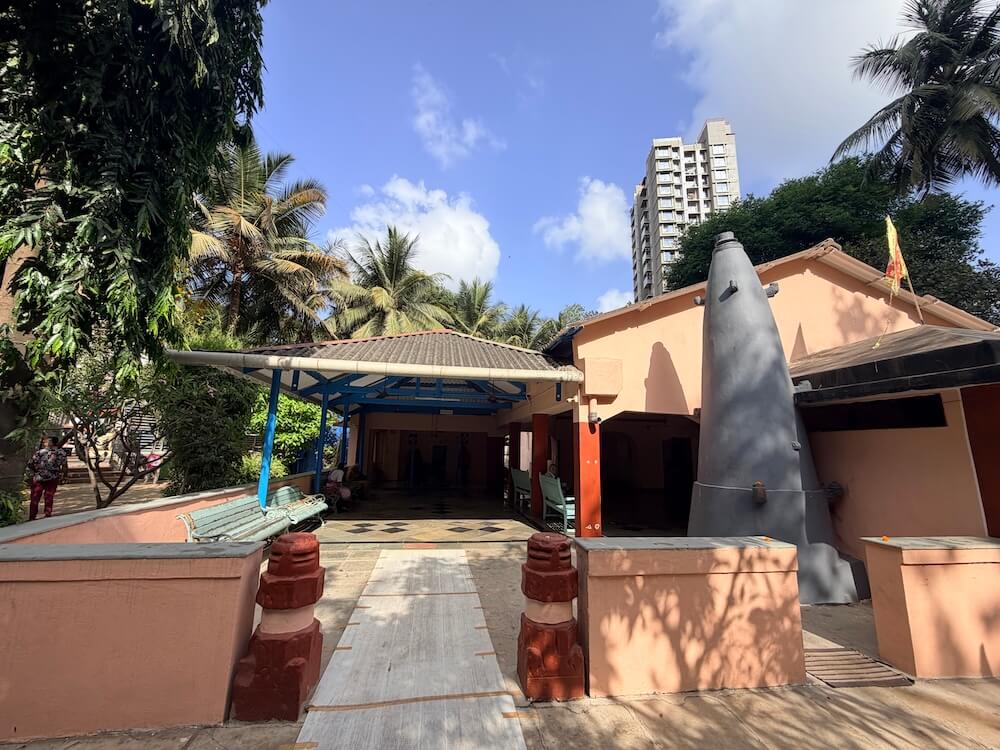
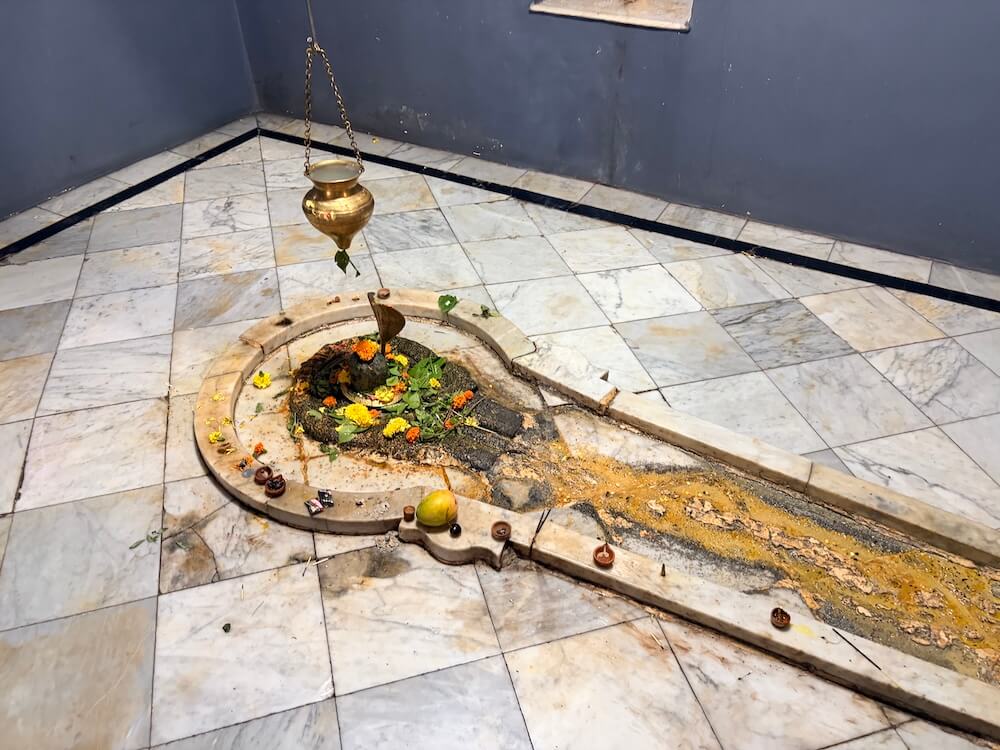
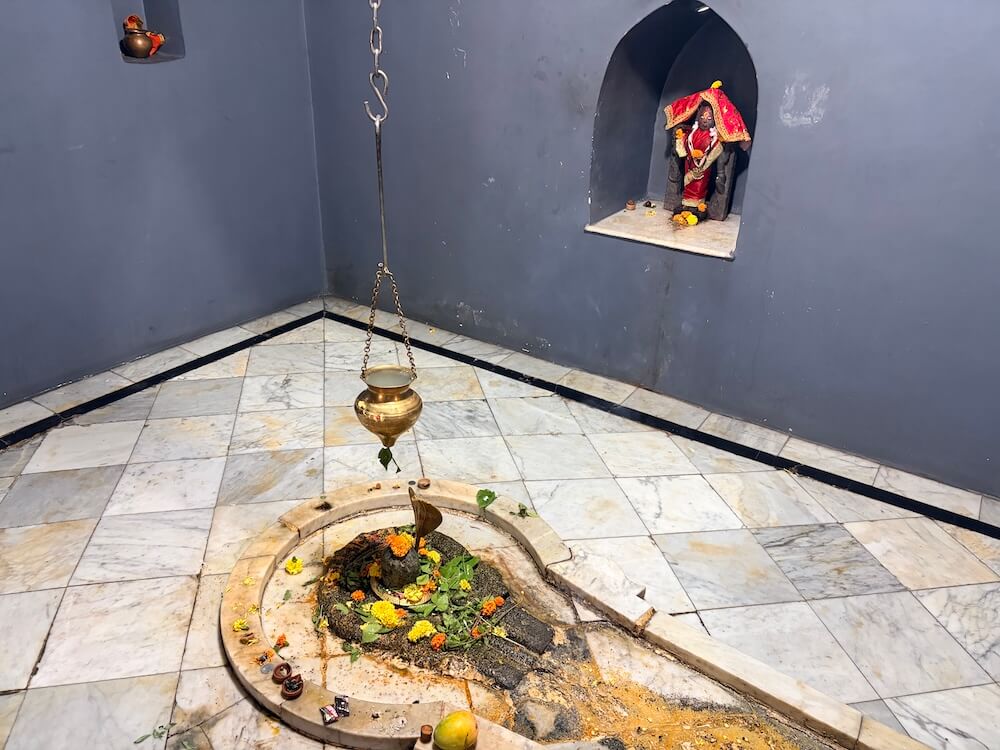
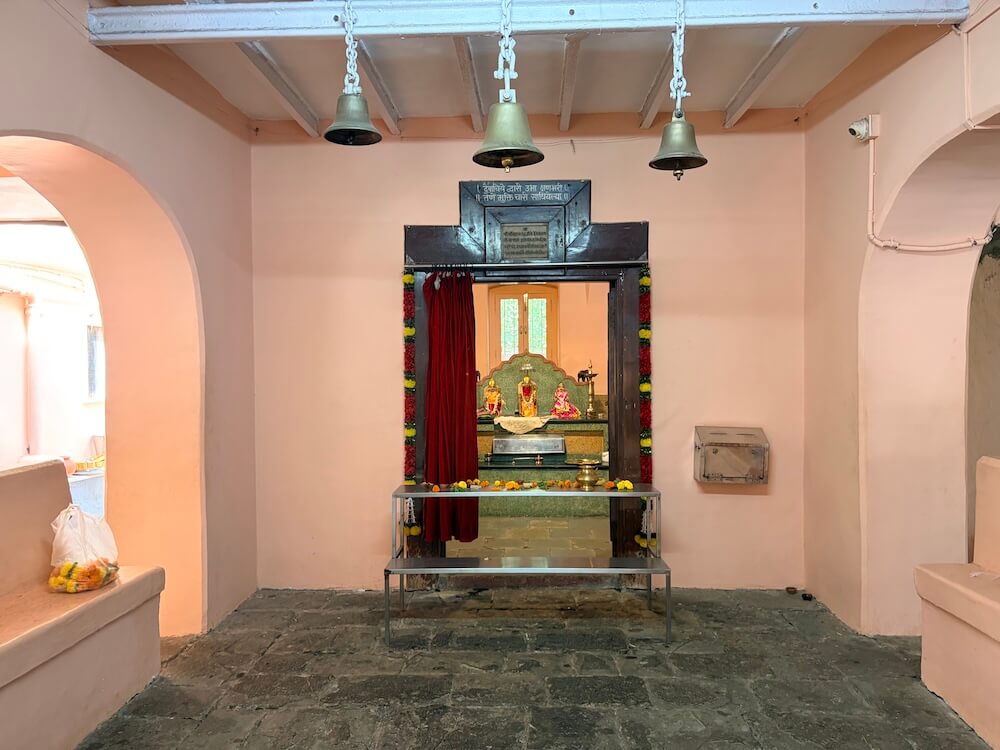
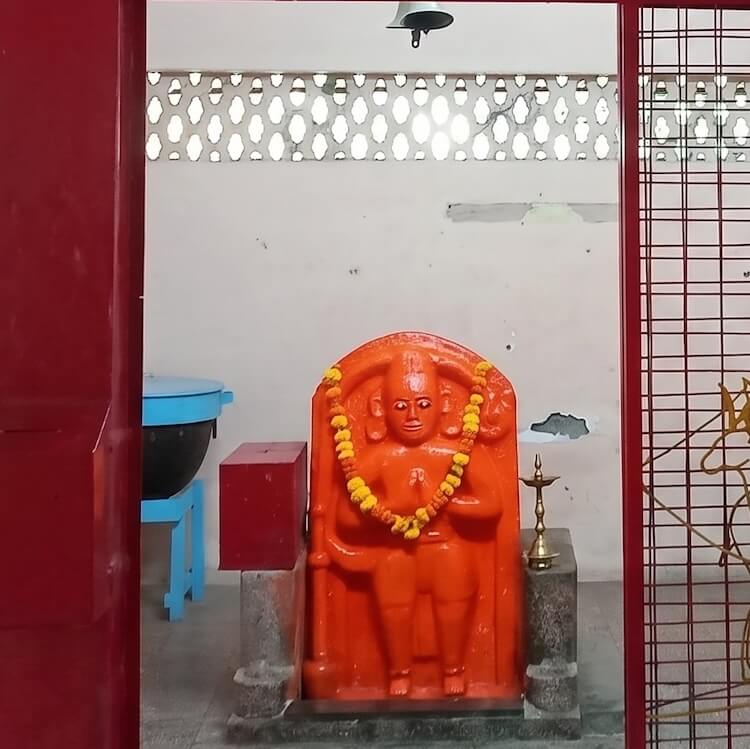
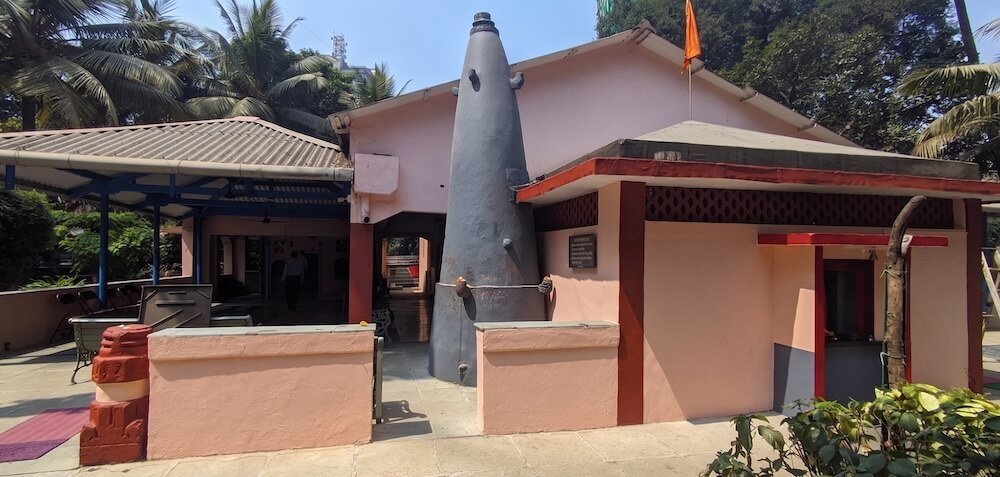
This temple is situated in the heart of an area flanked by tall buildings on one side and the railway station on the other. One enters the temple courtyard through an entrance in the surrounding fortification. Due to the presence of many ancient trees in this courtyard, the surroundings appear lush green and serene. In this courtyard, the Rameshwar Mahadev temple is located first, with the Ram Mandir adjacent to it. An ancient lamp pillar stands in front of both these temples. Both temples are structured with a Sabha Mandap (assembly hall) and a Garbhagriha (sanctum sanctorum). There are two ancient pillars at the facade of the Rameshwar temple. Beyond them, in the open hall, benches are provided for the convenience of devotees. There is a semi-open Sabha Mandap in front of the main temple. In this hall, near the entrance of the Garbhagriha, stands an idol of Nandi. On the front wall of the Garbhagriha, in the niches on both sides, a stone idol of Ganesha is carved on the left and the Sun God on the right. In the center of the floor inside the Garbhagriha lies the ancient Shivalinga of Rameshwar Mahadev. In the niche behind this Shivalinga, there is an idol of Goddess Parvati carved in black stone. The Ram Mandir is situated right next to the Rameshwar Mahadev temple. The structure of this temple is similar to that of the Rameshwar Mahadev temple. However, there is a Hanuman temple in front of this temple. In this shrine, there is an idol of Hanuman adorned with vermilion. In the main Garbhagriha, marble idols of Rama, Lakshmana, and Sita are placed on a Vajrapitha. These three idols, adorned with various garments and ornaments, wear crowns on their heads. Both temples have dome-shaped spires topped with a Kalash.
Since the renovation of the temple in the year १८९७, the Ram Navami festival has been celebrated here with great grandeur and in a traditional manner. The Navratri festival begins in the temple from the day of Chaitra Shuddha Pratipada, also known as Gudi Padwa. During these nine days, special Pujas, Abhishekas, and Aartis are performed in the temple every morning and evening. Local and renowned Kirtankars, as well as Bhajan troupes, visit the temple to offer their services. On the main day of Ram Navami, the birth anniversary of Shri Rama is celebrated with great devotion at exactly १२ o’clock in the afternoon. Thousands of devotees come here for Darshan for this ceremony. During the festival, Mahaprasad is distributed in the temple. Devotees can visit the temple for Darshan daily from ५:३० to १०:३० in the morning and from ५:०० in the evening until ८:०० at night.
This sacred temple stands as a testament to deep spiritual devotion, ancient architectural grandeur, and rich local cultural traditions.
The sanctum sanctorum houses the divine idol consecrated according to ancient Vedic traditions, surrounded by serene courtyards and traditional temple architecture.
Navratri, Maha Shivratri, Annual Temple Jatra & Deepotsav
Compare and book flights, secure top-rated local hotels near the temple, hire reliable guides, and rent cars instantly.
Extend your pilgrimage by visiting other highly sacred temples located nearby.


Add ₹999 more to unlock FREE SHIPPING!
Your sacred cart is currently empty.
Shop Photo FramesFill in your delivery details below to place your order.
Add comment