
Add ₹999 more to unlock FREE SHIPPING!
Your sacred cart is currently empty.
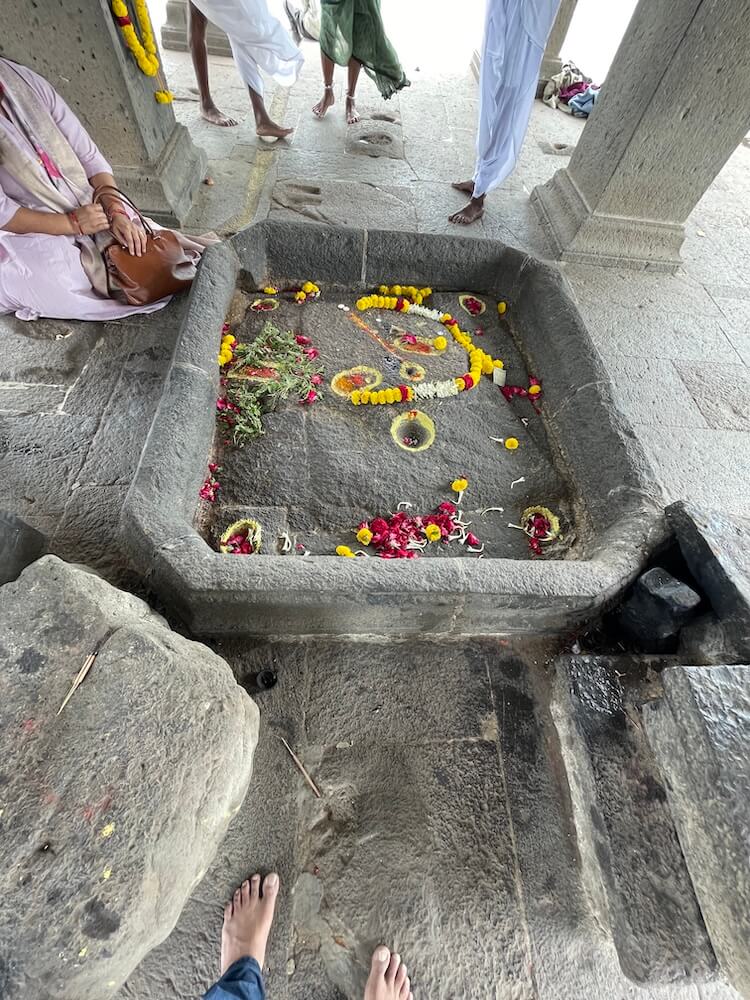
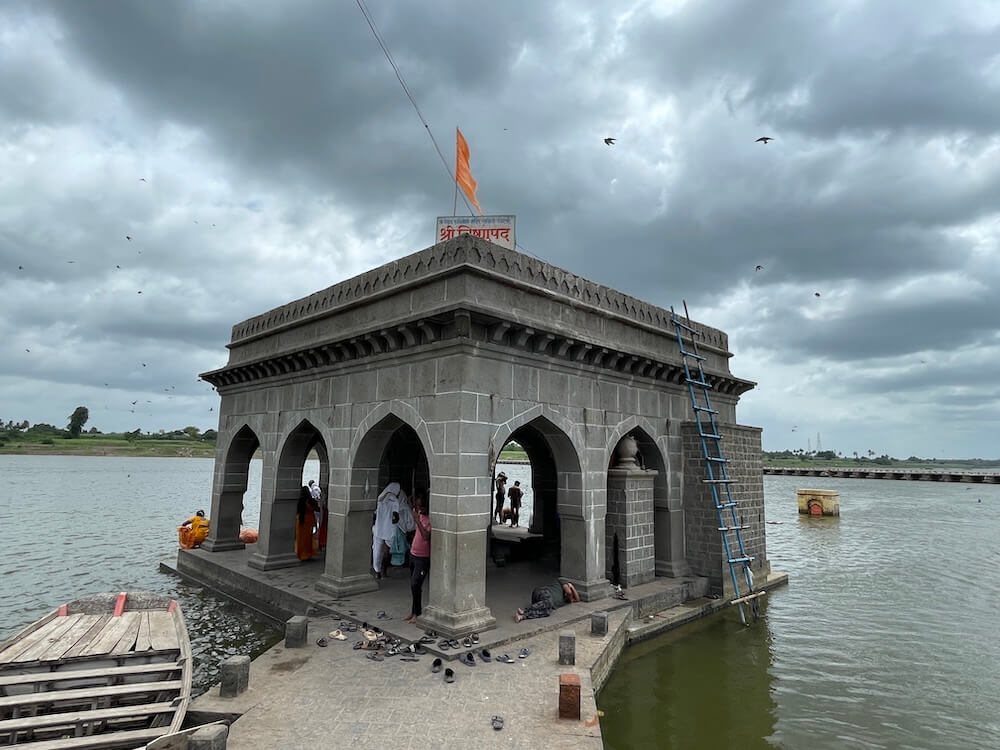
Shop Photo FramesAn ancient temple is situated in the bed of the Bhima River at Gopalpur, near Pandharpur. Surrounded by water on all four sides, this temple is known as the Vishnupad Temple. It is one of the nine sacred sites (Tirthas) of Pandharpur, which include Lohadanda Tirtha, Kundala Tirtha, Sangam Tirtha, Venu Tirtha, Gunja Tirtha, Yama Tirtha, Panchaganga Tirtha, Vishnupad Tirtha, and Padma Tirtha (the temple of Goddess Padmavati). It is believed that Pandurang, who has been standing in Pandharpur with His hands on His hips for twenty-eight yugas, comes to stay at this temple during the month of Margashirsha. The footprints of the Lord are imprinted on a large rock within this temple, and they are worshipped here.
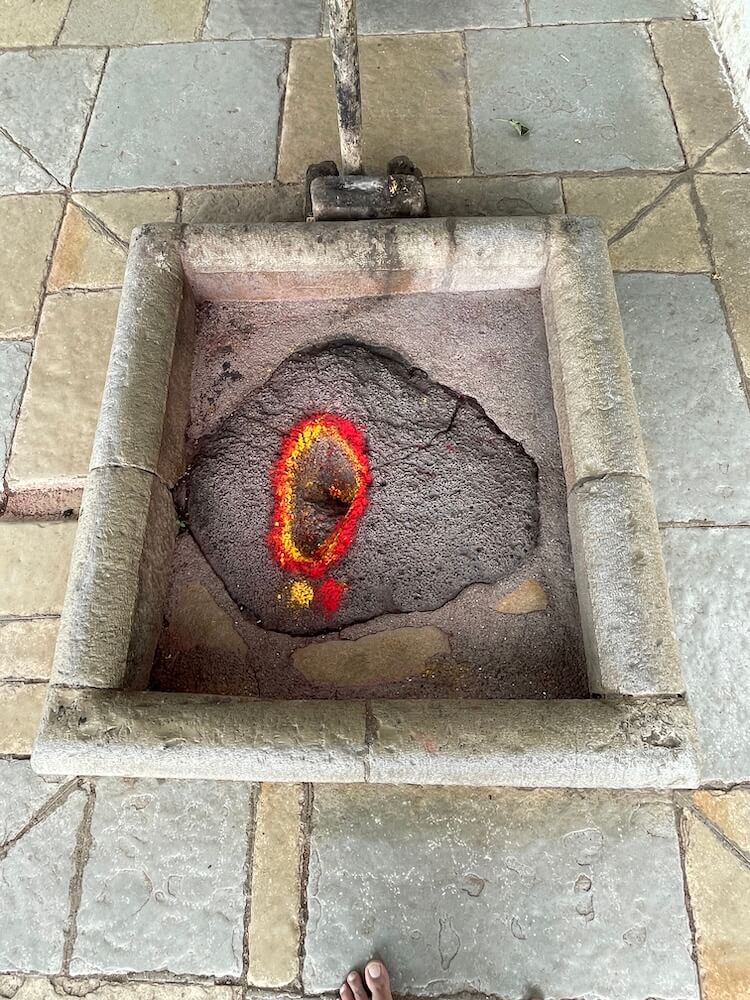
The legend of the temple states that when Rukmini, upset with Shri Krishna, came to the Dindir forest here, Shri Krishna first arrived at this very spot in the Bhima riverbed—the large rock upon which the temple is built—while searching for her. It is believed that Shri Krishna played here with His companions, and at that time, the footprints of the Lord and the cows were imprinted on this rock. Since Shri Krishna is an avatar of Vishnu, and because of His footprints found here, this place on the rock is named Vishnupad. On a large slab in the center, the Samacharan (straight) and Dehudacharan (bent) footprints of Shri Krishna are imprinted. It is also believed that there are marks of His staff and a bowl (wadga) used for the Kala (offering).
According to another legend, when Dnyaneshwar Maharaj took Samadhi at Alandi, Pandurang was present there. Saddened by the thought that He would not meet Dnyaneshwar again, the Lord stayed at this place for several days instead of returning to Pandharpur after visiting Alandi. Since then, it is believed that every year on Kartik Amavasya, Pandurang comes here and stays for an entire month during the month of Margashirsha. On the evening of Margashirsha Amavasya, a chariot is brought from the Vitthal Temple in Pandharpur to Vishnupad. This chariot is decorated with stalks of jowar. After performing Abhishek at Vishnupad, a Dindi procession is held, and Pandurang returns to His temple in Pandharpur. This tradition has been followed for hundreds of years. During this period, a large number of devotees come here for Darshan and to perform the Kala. The Dindis of Warkaris who come to Pandharpur for the Margashirsha Wari also visit Vishnupad to conclude their pilgrimage.
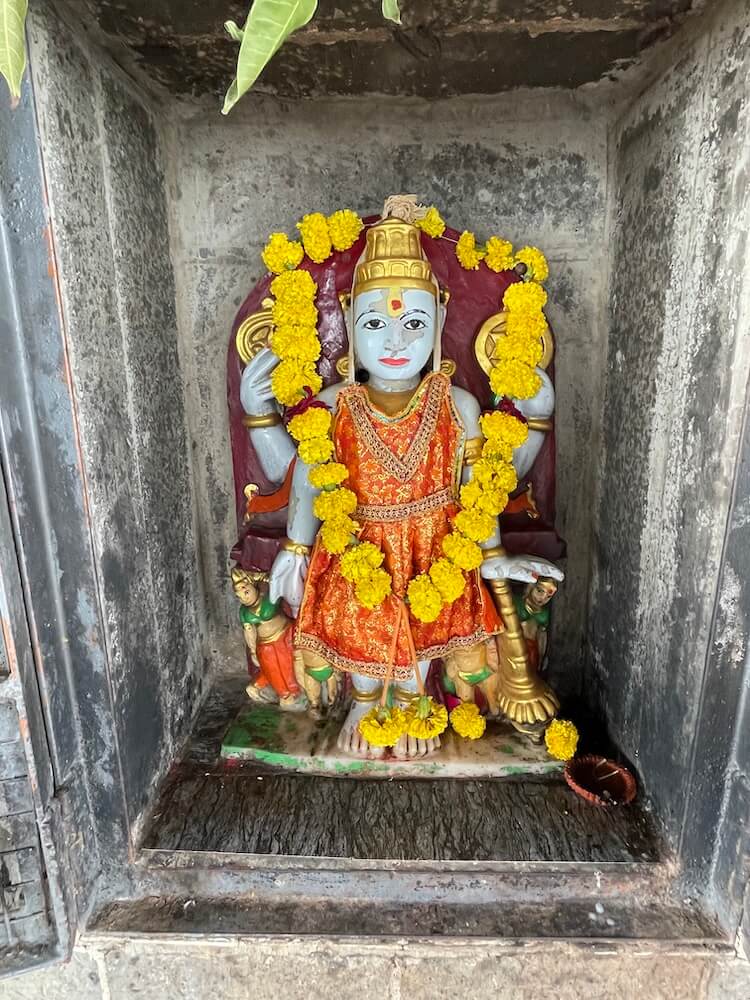
The Vishnupad Temple is situated in the Bhima riverbed on the way from Pandharpur to Gopalpur. One can also reach the temple by boat from near the Pundalik Temple on the Chandrabhaga River. The distance is approximately zero point seven five kilometers. The temple has been constructed keeping in mind the severe floods of the river. Records indicate that this temple was built in 1640 by Dhamangaonkar Buwa and renovated in 1785 by Chinto Nagesh Badve. There is a stone bridge to reach this temple, which stands in the riverbed away from the bank. The stone temple is built on a plinth about seven feet high, is twelve feet tall, and measures thirty-one by thirty-one feet. The temple has sixteen stone pillars and twenty-four arches. Two of these pillars have carvings of Vishnu and Shri Krishna. In a small niche on one pillar, there is a marble idol of Vishnu. On the rock in the center of the temple, the footprints of Shri Krishna are imprinted. Along with these, there are also marks of Shri Krishna’s flute, the Gopis, and the footprints of cows.
It is believed that this place holds as much, if not more, significance in Hindu culture as the famous Vishnupad Temple in Gaya. This is because, at the site in Gaya, the Lord placed only one foot, and thus there is a mark of only one footprint. However, the Vishnupad Temple in Pandharpur bears the marks of both the Dehudacharan and the Samacharan footprints.
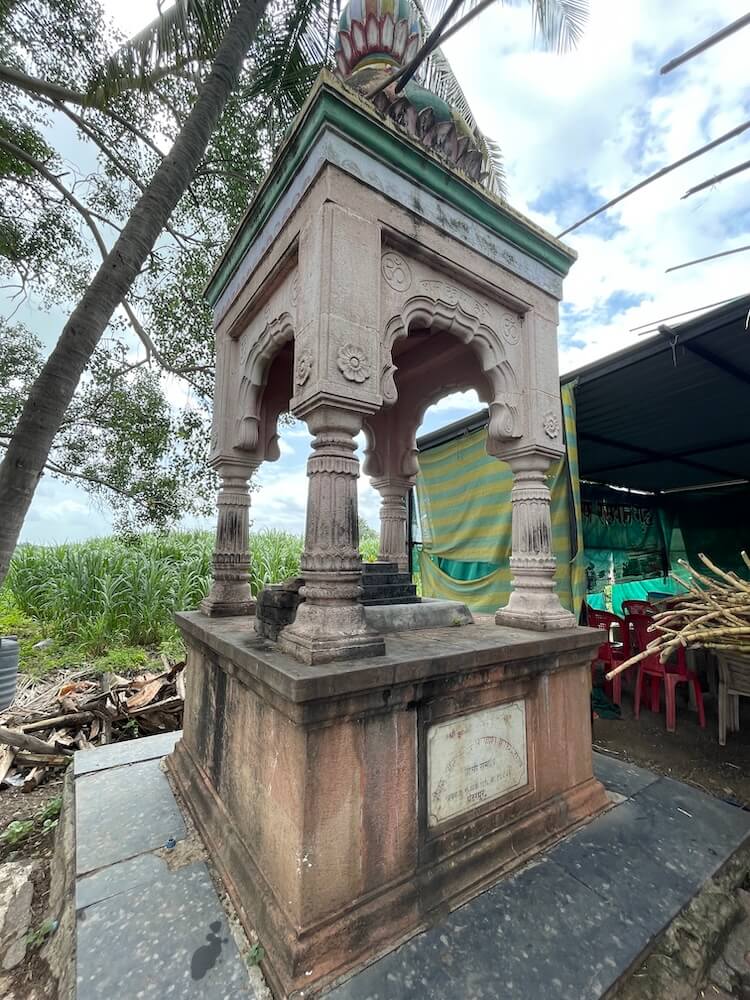
Near this temple, in the riverbed, is the temple of Narad Muni. The legend regarding this temple is that when Shri Krishna used to perform Gopal-Kala with the Gopis and the cows and calves where the Vishnupad Temple stands today, Narad Muni would come and sit here to witness the Lord’s divine play. This stone temple of Narad Muni is at this very spot and contains an idol of Narad Muni in meditation. It is believed that even today, the Gopal-Kala is performed here by the deities, and Narad Muni watches it from this place.
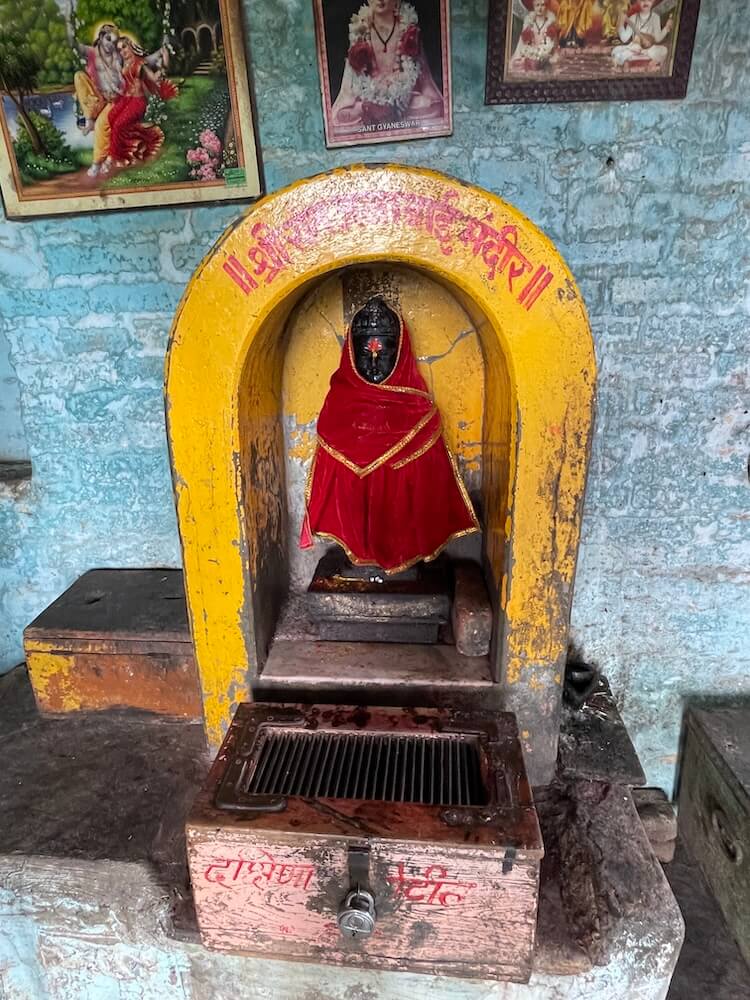
To reach this temple, at the point on the riverbank where the bridge begins, is the temple of Saint Janabai. The legend of this temple is that Pandurang Himself used to go to Janabai’s house to help her grind grain. One day, after grinding grain until late at night, Pandurang decided to rest there. He kept His ornaments aside and fell asleep. Meanwhile, all the priests arrived at the Pandharpur temple for the morning Kakad Aarti. The Lord hurried to the temple without wearing His ornaments. When the ornaments were not found on the Lord, a search was conducted everywhere, and they were found at Janabai’s house. Consequently, Janabai was accused of theft and brought to the place where the temple now stands to be executed on a spike. However, when Janabai appeared, her devotion turned the spike into water. The temple of Janabai, where this incident occurred, is located right next to the Vishnupad Temple.
This sacred temple stands as a testament to deep spiritual devotion, ancient architectural grandeur, and rich local cultural traditions.
The sanctum sanctorum houses the divine idol consecrated according to ancient Vedic traditions, surrounded by serene courtyards and traditional temple architecture.
Navratri, Maha Shivratri, Annual Temple Jatra & Deepotsav
Compare and book flights, secure top-rated local hotels near the temple, hire reliable guides, and rent cars instantly.
Extend your pilgrimage by visiting other highly sacred temples located nearby.


Add ₹999 more to unlock FREE SHIPPING!
Your sacred cart is currently empty.
Shop Photo FramesFill in your delivery details below to place your order.
Add comment