
Add ₹999 more to unlock FREE SHIPPING!
Your sacred cart is currently empty.
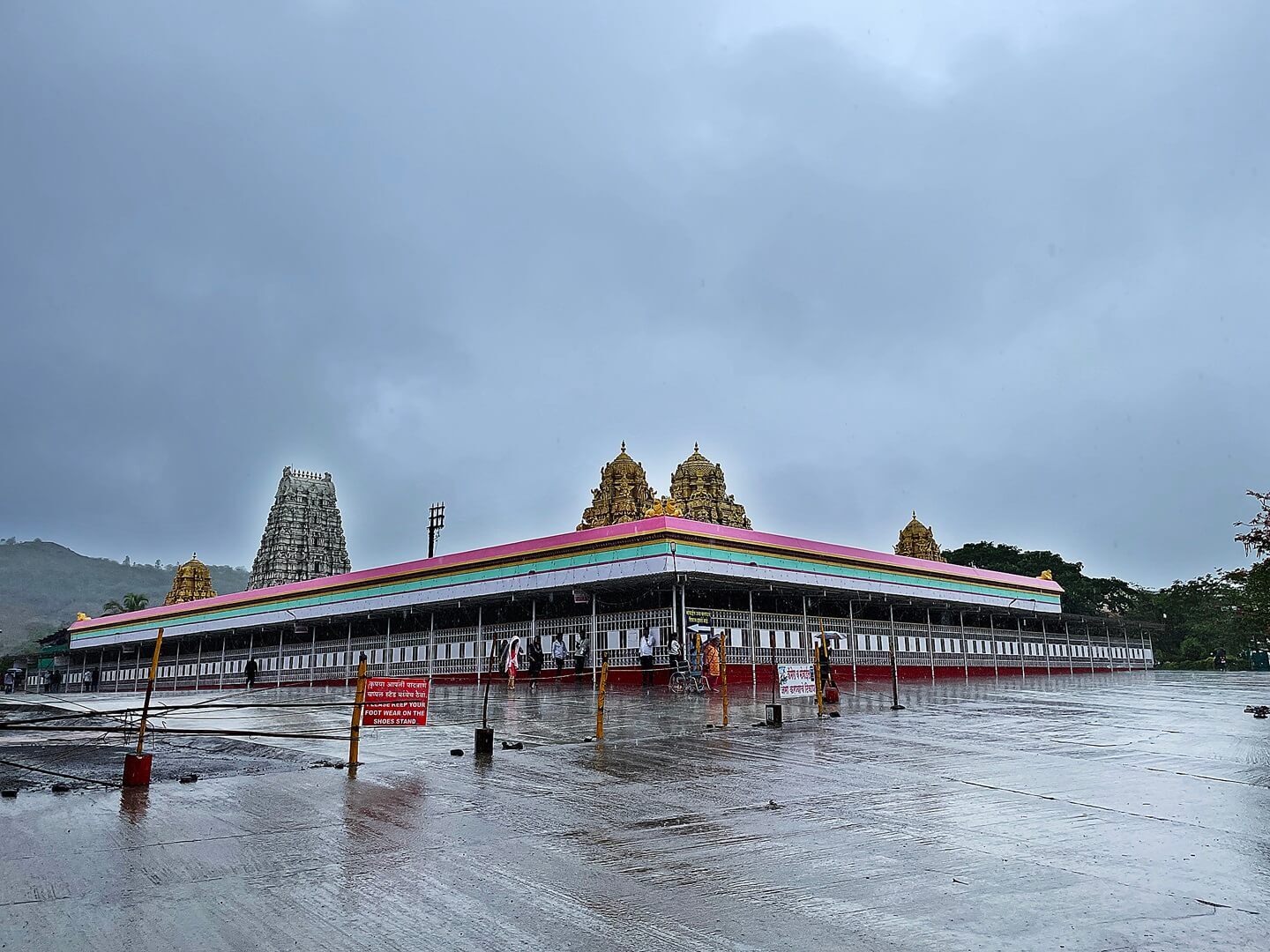
Shop Photo FramesThe sacred Shri Balaji Mandir, established in Ketkawale, Purandar Taluka, Pune District, is a revered place of worship for millions of devotees in the district. This temple, an exact replica of the main temple in Tirupati, Andhra Pradesh, is renowned as ‘Prati Tirupati’ or ‘Prati Balaji’. All religious rituals and traditions of Tirupati are meticulously followed in this temple, which has been built through the Venkateswara Charitable Trust. Considering the increasing number of devotees in this region and the available facilities, the Government of Maharashtra has also honored this area by granting it the ‘B’ status of a pilgrimage site.
This temple has been brought to fruition through the vision of Dr. B. V. Rao, the founder of the renowned Venkateswara Hatcheries industrial group. Dr. Rao, a devout bhakta of Bhagwan Venkateswara, commenced the construction of this temple in nineteen ninety-six with the aim of providing devotees in Maharashtra with the experience of Tirupati Darshan. The construction of this edifice continued for approximately seven years under the guidance of architects and temple construction experts, and on the fourth of December two thousand three, the temple was officially opened for Darshan. This temple has been built on two and a half acres of land within an area of approximately twenty-three acres. At that time, the construction of the temple cost twenty-seven crore rupees. The management of this temple, designed with the counsel of experts from Tirumala Tirupati Devasthanams, is currently overseen by the Venkateswara Charitable Trust.
The story of Bhagwan Venkateswara, also known as Balaji, is narrated in the ‘Venkatesha Mahatmya’ section of the ‘Bhavishyottara Purana’ scripture. Additionally, this narrative is also found in the ‘Varaha Purana’ and ‘Padma Purana’ texts. It recounts that once, the Rishis decided to determine who among the Trimurtis was the most tolerant and supreme deity. After Bhagwan Shiva and Brahma Dev proved unsuccessful in this test, Bhrigu Rishi arrived in Vaikuntha. At that time, Bhagwan Vishnu was in a state of yoganidra, reclining on Shesha. As Bhagwan Vishnu did not notice the Rishi’s arrival, Bhrigu Rishi became exceedingly enraged. In a fit of anger, he struck Bhagwan Vishnu forcefully on His chest. Bhagwan Vishnu, instead of taking offense at this insult, apologized to the Rishi and expressed concern for the injury to his feet, gently massaging them. This act humbled the Rishi, and he declared Vishnu to be supreme.
However, Mata Lakshmi Herself resides on Bhagwan Vishnu’s chest. Lakshmi could not tolerate the Rishi’s assault on Her abode. Mata Lakshmi felt insulted that Bhagwan Vishnu, instead of punishing the Rishi, had apologized to him. In Her anger, She abandoned Vaikuntha and came to reside on Earth in the Kolhapur region. Bhagwan Vishnu, distraught by Lakshmi’s separation, also came to Earth in search of Her. He incarnated as ‘Srinivasa’ and came to reside in the forests of the seven hills of Tirumala. There, He met Padmavati, the daughter of Akasharaja, the king of the Chola kingdom. Their marriage was arranged, but Srinivasa did not have sufficient wealth to cover the expenses of this divine wedding. To acquire the necessary wealth for the marriage, He took a large loan from Kubera, the deity of wealth. The agreement for this loan stipulated that Bhagwan would only pay the interest on this loan until the end of Kali Yuga, and the principal would be repaid at the conclusion of Kali Yuga. It is believed that even today, Bhagwan Venkateswara is repaying His wedding debt. The donations offered by devotees in the temple are considered part of the interest on this loan. This belief initiated the tradition of keeping a ‘Hundi’ or donation box in the temple. Here, devotees offer donations not only out of devotion but also with the sentiment of helping Bhagwan clear His debt.
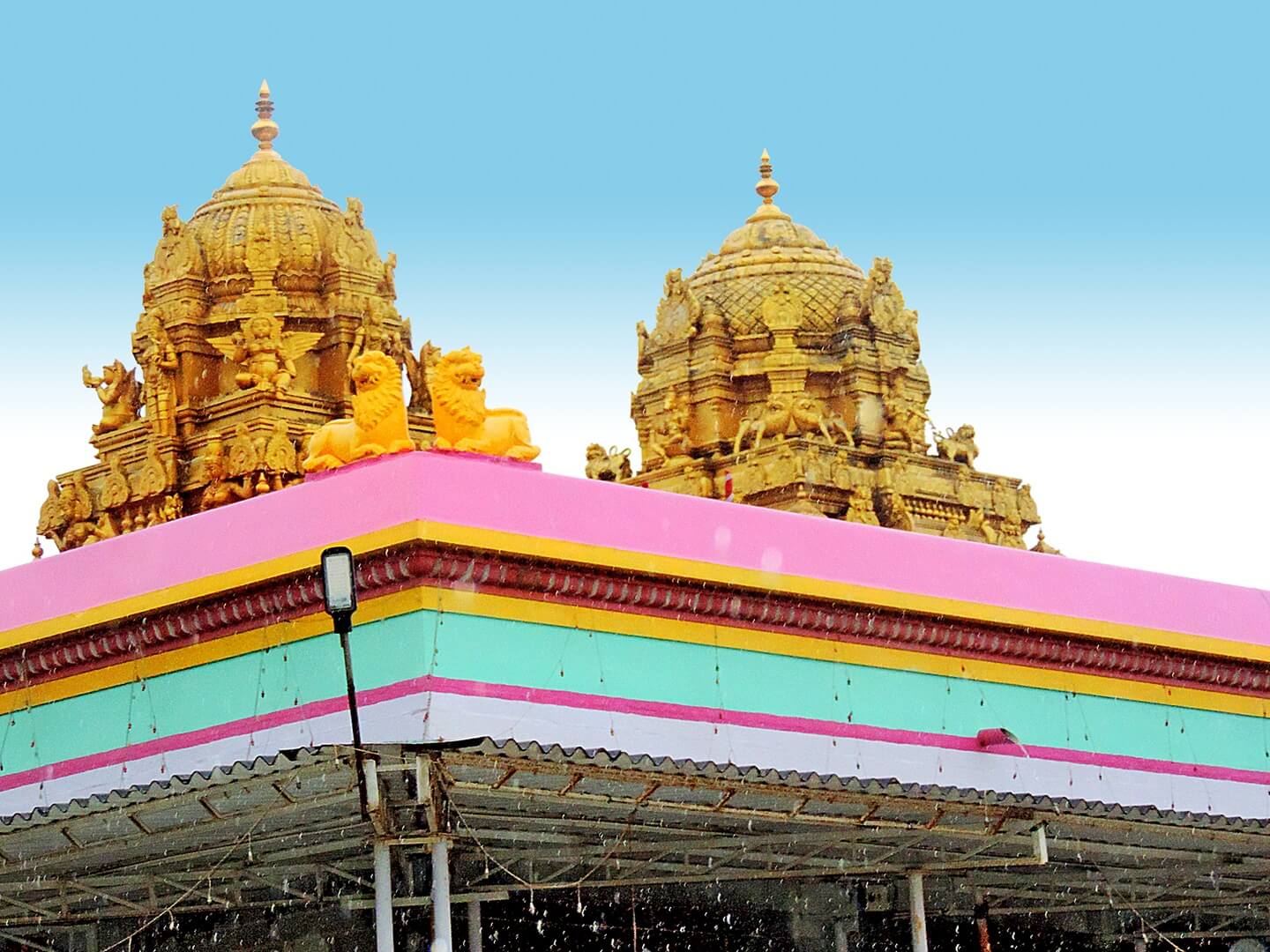
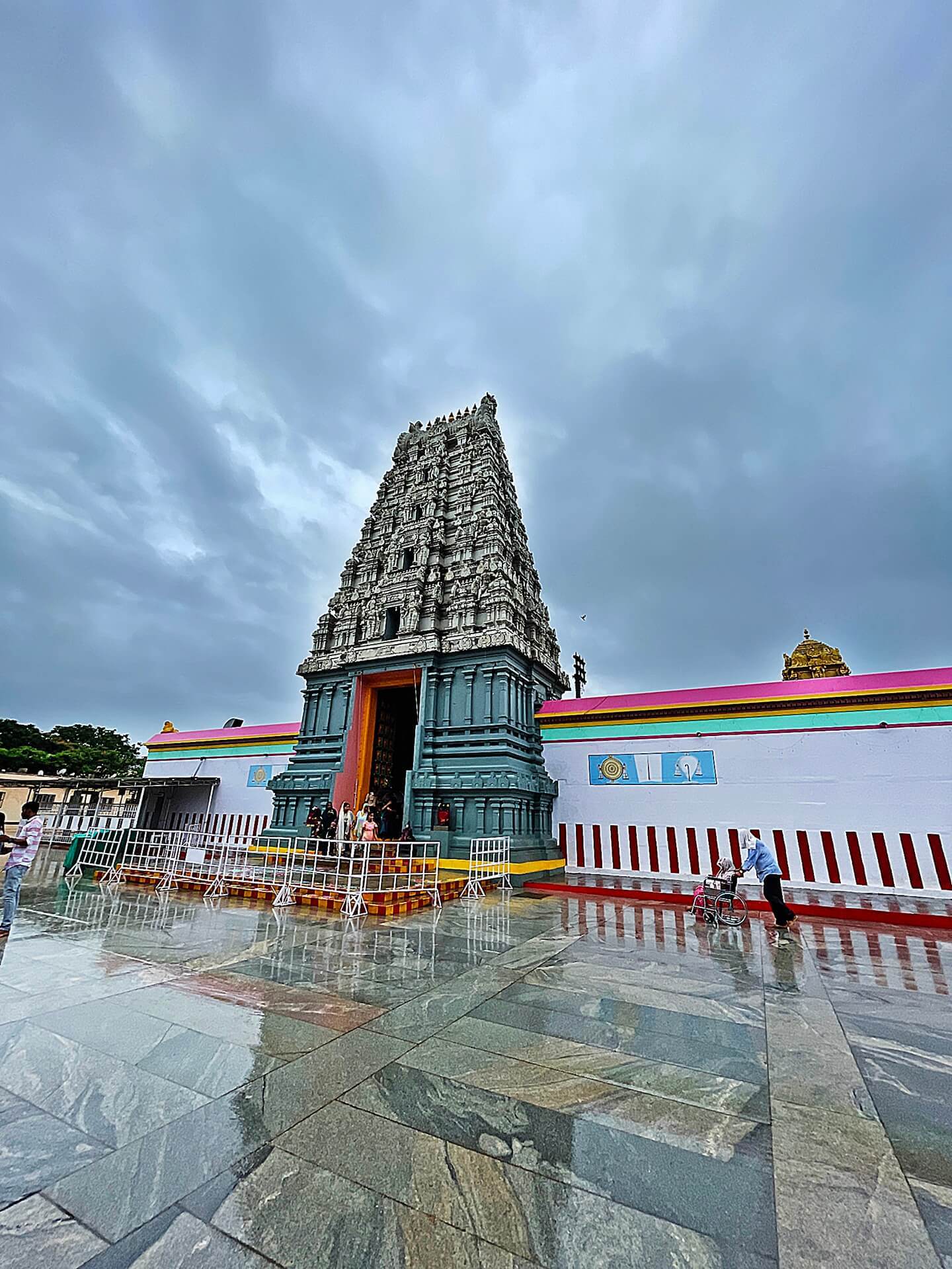
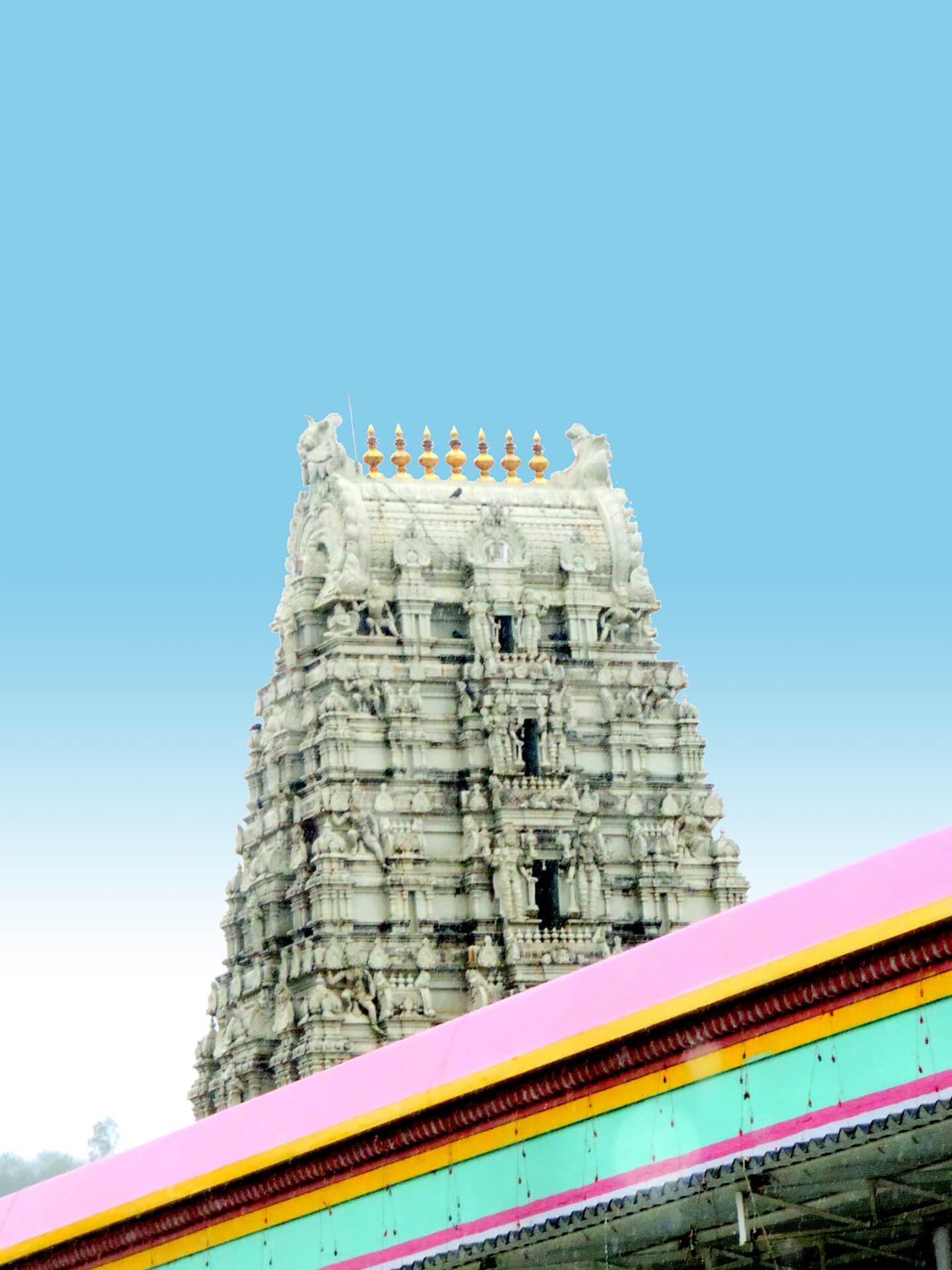
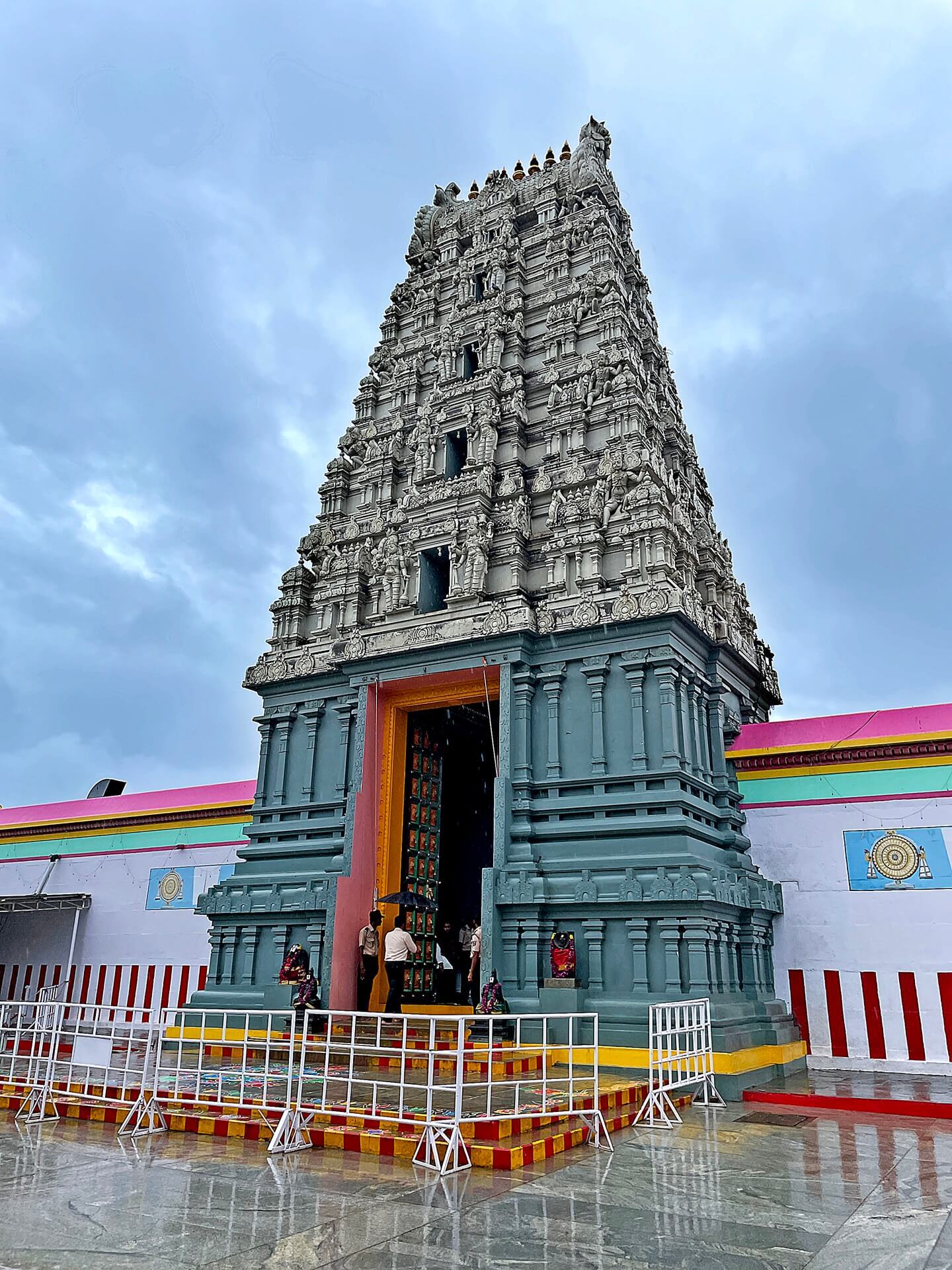
This temple in Ketkawale is nestled in a picturesque valley, two kilometers from Kapurhol on the Pune-Bengaluru National Highway. This area, surrounded by the Sahyadri mountain ranges, appears even more beautiful, especially during the monsoon, due to its lush green nature. Gardens have been developed in this area, featuring many ornamental and flowering plants. The architectural style of the temple is South Indian Dravidian. Near the temple entrance, there is a grand and beautiful Rajagopuram. This yellow-colored Gopuram, tapering upwards step by step, is adorned with intricately carved idols of various deities. The Rajagopuram leads into the temple courtyard. Here, in front, stands a tall, gold-plated Dhwajastambha, a special hallmark of Balaji temples, and a Balipitha for offering Naivedya to the deity.
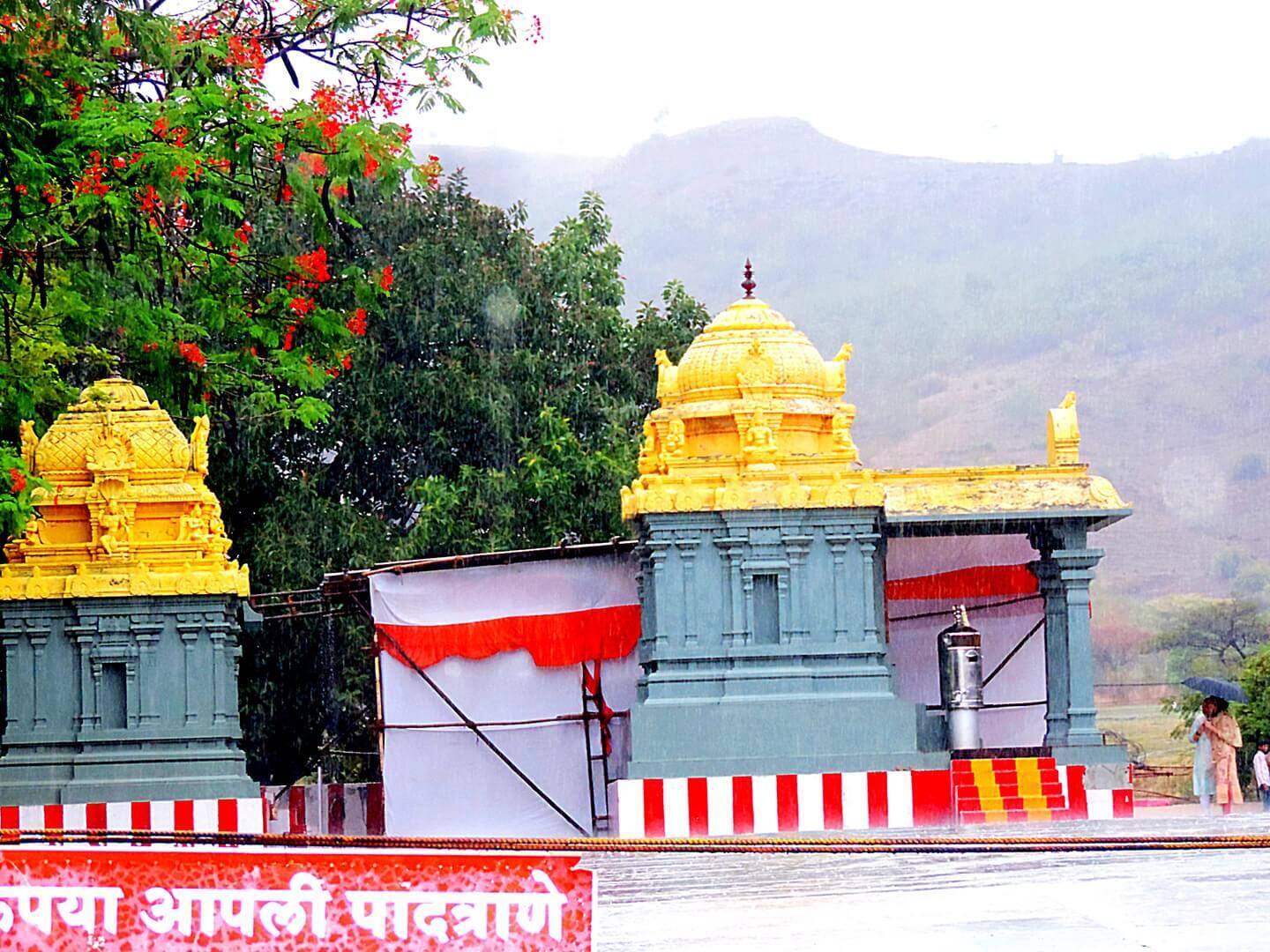
The temple’s structure comprises a Sabhamandapa, Antarala, and Garbhagriha. Many sculptures are carved on the pillars and walls of the Sabhamandapa. In the Garbhagriha of the temple, a seven-foot-tall stone idol of Venkateswara, or Balaji, is enshrined. The idol’s form is serene. A large white camphor tilak is applied to the idol’s eyes. The idol has four arms; the upper two hands hold a conch and a chakra. The lower right hand is in ‘Varada Mudra’, while the lower left hand is placed on the waist. Images of Devi Lakshmi on the right side and Devi Padmavati on the left side are carved on the idol’s chest. This idol is adorned with various gold ornaments, diamonds, and flowers. Adjacent to the main temple are separate family shrines for Mata Padmavati, Garuda, Sudarshana, Narasimha, Goda Mata, Vishvaksena, and Venugopala.
The rituals and festivals in the temple are conducted according to the regulations of the Tirupati temple in the South. For this purpose, priests from Tamil Nadu and Andhra Pradesh have been appointed here. At five o’clock in the morning, ‘Suprabhatam’ stotras are recited to awaken the deity, and thereafter, three times a day, Puja, two times Seva, and Naivedya are offered. Every Thursday, a special ritual called ‘Netradarshan’ takes place here. On that day, the camphor strip from the deity’s eyes is removed, and devotees can behold the deity’s radiant Darshan. Every Friday, Abhishekam is performed for the deity. Every day at noon, devotees are given Laddu Prasad and Mahaprasad free of charge, similar to Tirupati. During festivals such as Vaikuntha Ekadashi, Ram Navami, Diwali, and Gudi Padwa, the temple is specially illuminated. During Brahmotsavam, a palanquin procession of the deity is taken out. Devotees can have Darshan here daily from five o’clock in the morning to eight o’clock at night. Darshan in the Garbhagriha is closed for a short period between ten-thirty and eleven-fifteen in the morning for Naivedya. Since mobile phones or cameras are prohibited, they must be kept in the locker room outside the temple before entering the temple premises.
This sacred temple stands as a testament to deep spiritual devotion, ancient architectural grandeur, and rich local cultural traditions.
The sanctum sanctorum houses the divine idol consecrated according to ancient Vedic traditions, surrounded by serene courtyards and traditional temple architecture.
Navratri, Maha Shivratri, Annual Temple Jatra & Deepotsav
Compare and book flights, secure top-rated local hotels near the temple, hire reliable guides, and rent cars instantly.
Extend your pilgrimage by visiting other highly sacred temples located nearby.


Add ₹999 more to unlock FREE SHIPPING!
Your sacred cart is currently empty.
Shop Photo FramesFill in your delivery details below to place your order.
Add comment