
Add ₹999 more to unlock FREE SHIPPING!
Your sacred cart is currently empty.
Shop Photo FramesNasrapur is a historic village located thirty-six kilometers from the city of Pune. Situated on the banks of the Shivganga River, this village is home to the ancient Baneshwar Temple. It is said that this pilgrimage site was named ‘Baneshwar’ because it is located in a ‘ban’ (forest) filled with dense, towering trees. Nanasaheb Peshwa built this temple in seventeen forty-nine. Records indicate that an expenditure of eleven thousand four hundred twenty-six rupees was incurred for its construction.
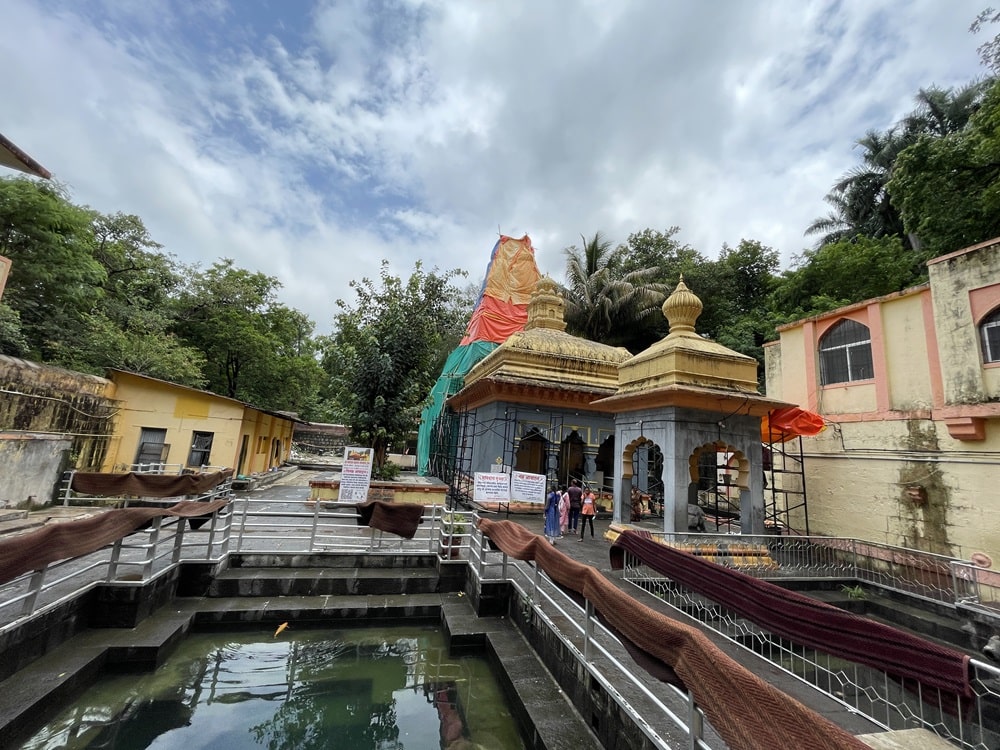
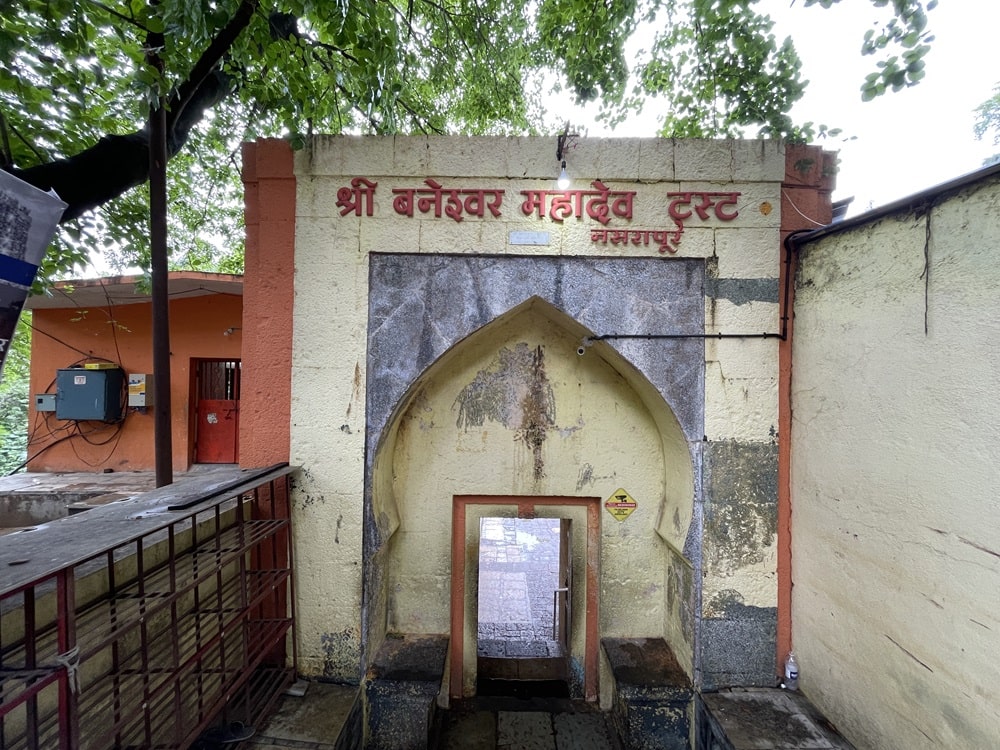
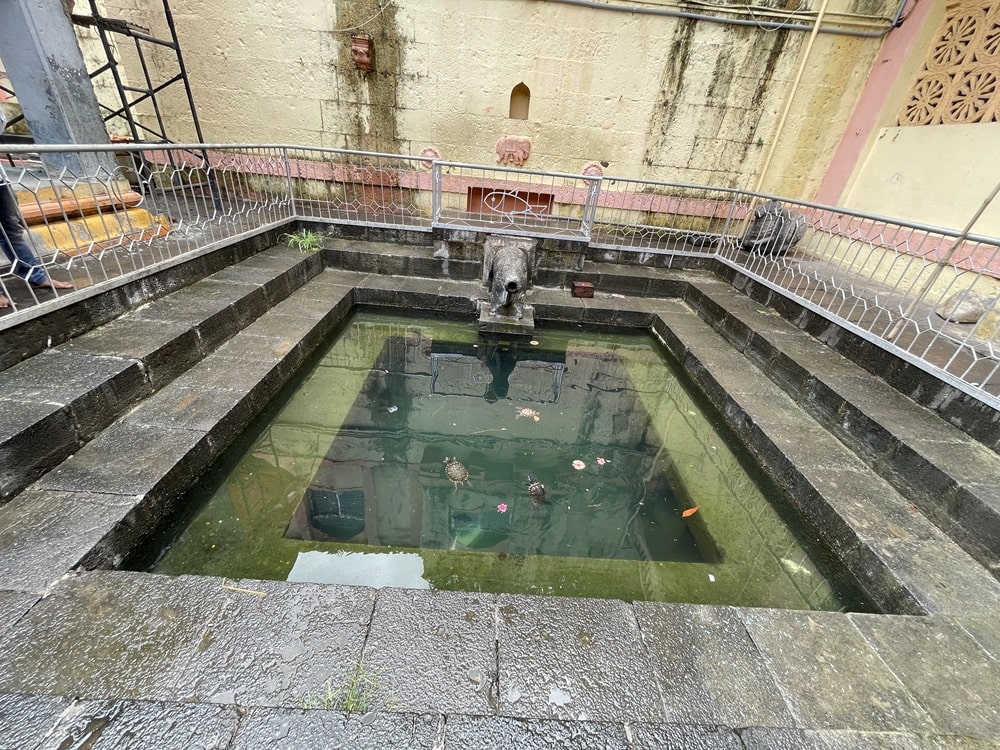
The road passing through the tall trees and the chirping of various birds falling on one’s ears make the journey to the temple a delightful experience. A five-and-a-half-foot tall trident is erected at the entrance of the temple. After descending through the stone-carved arches, one sees two beautiful ‘pushkarinis’ or water tanks in front of the temple. Devotees often pause there for a few moments to watch the colorful fish and turtles. Rare golden and snow-white fish can be seen in these waters. Records show that during the princely era, funds were provided for the feed of the fish in both these tanks.
A unique feature of the Baneshwar Temple is its water management system. The water sources here have been utilized effectively. There are water channels on the outer side of the temple, adjacent to the main sanctum sanctorum and the assembly hall. Notably, these channels are shaped like a Mrityunjaya Yantra.
Three sacred ponds (Pushkarinis)—two in front of the main temple and one to the left—are interconnected by these channels. Each pond has two openings; the lower one is smaller, while the upper one is somewhat larger. Water flows from the first pond into the second, and from there into the third. Any excess water from the third pond is diverted directly outside the temple premises. Due to this arrangement, the water level remains uniform across all three ponds. Outside the sanctum sanctorum, on the right side, there is a Gaumukh (cow-faced spout) situated below ground level. Adjacent to it is a fourth pond. When the water level in this pond rises, it flows through an internal conduit and falls onto the Shiva Linga within the sanctum. Because of this unique water management system, the temple is also known as the ‘Jalmandir’ (Water Temple). Many scholars visit this site specifically to study this water management system.
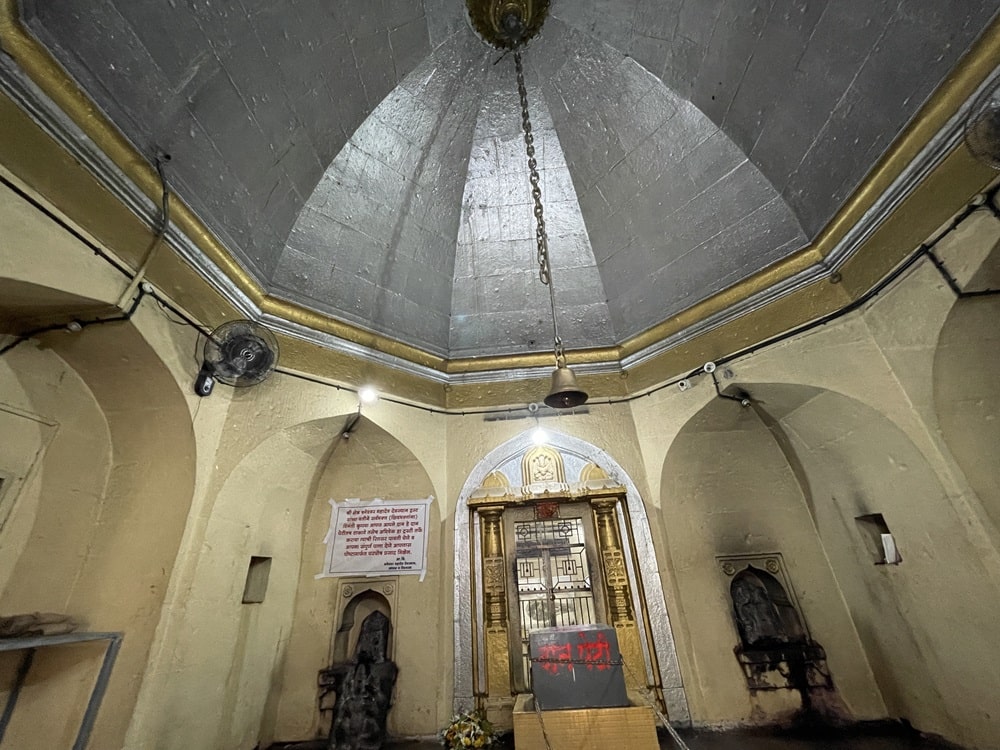
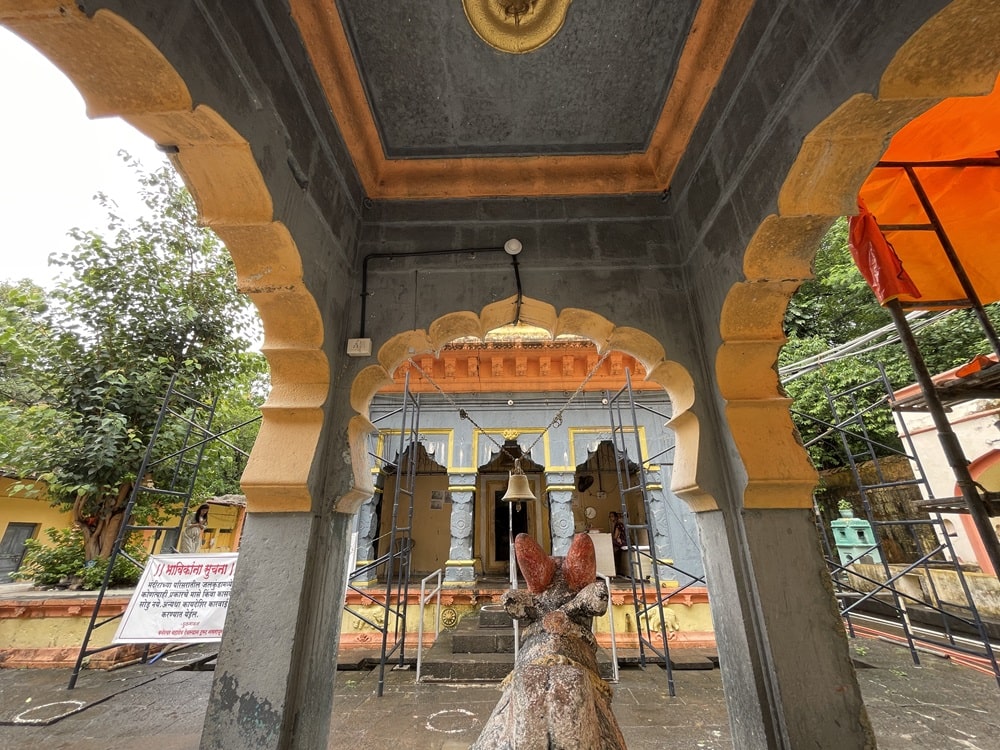
Near the ponds stands the Nandi Mandapa, constructed entirely of stone and supported by four pillars. The Nandi idol housed within is exceptionally beautiful. Directly in front of the Nandi Mandapa is the east-facing Baneshwar Temple. The architectural design of the temple catches the eye the moment one sees it from the outside. The entire temple stands on sixteen stone pillars . Twelve of these pillars are embedded in the stone walls, while four are positioned at the front. A remarkable feature of this construction is that there is not a single pillar in the main assembly hall; the walls of the hall support the weight of the spire. The front pillars are shaped in both circular and square forms, adorned with intricate lotus petal carvings. At the temple entrance hangs a large bell, upon which the year 1683 and a cross symbol are engraved. It is believed to be of Portuguese origin.
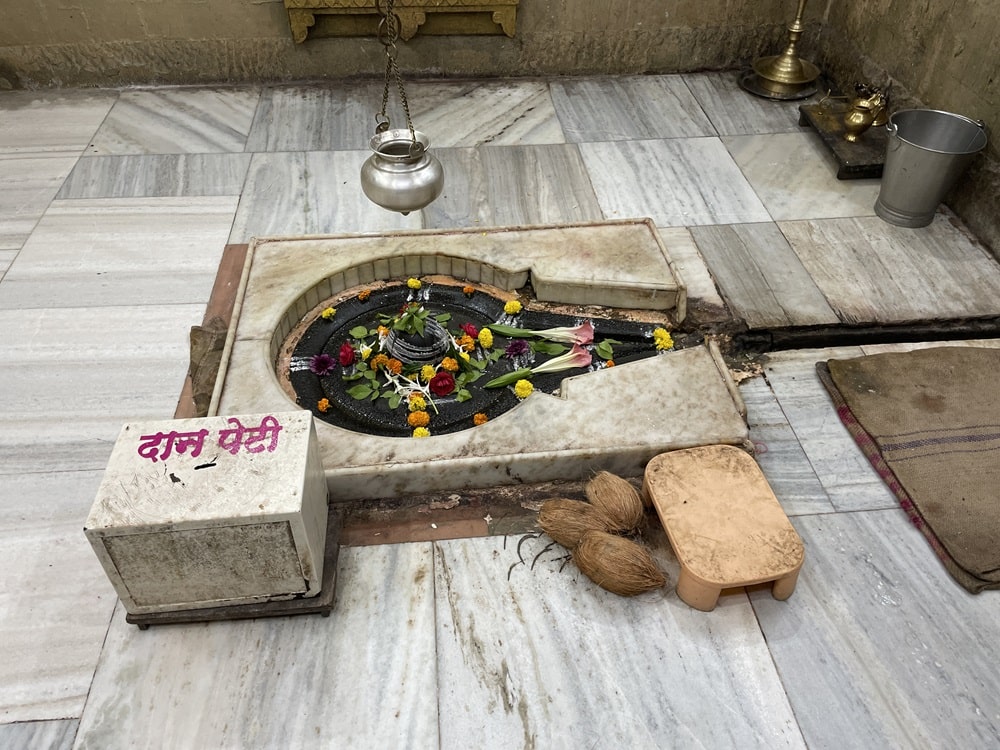
In the assembly hall, near the entrance of the sanctum sanctorum, there are idols of Ganapati and Maruti in two niches. Inside the sanctum are the idols of Vishnu-Lakshmi, along with a symbolic Shiva Linga. If this Linga is lifted, there is a pit approximately two feet deep beneath it. Inside it, there are five mounds, which are said to be five Shiva Lingas. This pit remains constantly filled with water. This water flows in a circular motion from beneath the Linga, through the circumambulation path, and into the temple tanks.
In front of the main temple, there is a temple of Ganapati and Maruti. Behind the temple is the Karanjai Devi pond. Mahashivratri, Shravani Mondays, and Tripurari Purnima are celebrated here with great enthusiasm. For devotees, this temple is open for darshan from six in the morning until seven in the evening. Adjacent to the temple premises is the Baneshwar Forest Park. It is a sanctuary for many types of trees, flowering plants, and various birds and animals.
This sacred temple stands as a testament to deep spiritual devotion, ancient architectural grandeur, and rich local cultural traditions.
The sanctum sanctorum houses the divine idol consecrated according to ancient Vedic traditions, surrounded by serene courtyards and traditional temple architecture.
Navratri, Maha Shivratri, Annual Temple Jatra & Deepotsav
Compare and book flights, secure top-rated local hotels near the temple, hire reliable guides, and rent cars instantly.
Extend your pilgrimage by visiting other highly sacred temples located nearby.


Add ₹999 more to unlock FREE SHIPPING!
Your sacred cart is currently empty.
Shop Photo FramesFill in your delivery details below to place your order.
Add comment