
Add ₹999 more to unlock FREE SHIPPING!
Your sacred cart is currently empty.
Shop Photo FramesGanesha is the beloved deity of devotees across the entire nation. In every household here, Ganesha is worshipped. From Bhadrapada Shukla Chaturthi to Anant Chaturdashi, a grand festival of Ganesha is celebrated in every home and in public spaces. However, there is one village in Maharashtra where not a single household installs a clay idol of Ganesha on Ganesh Chaturthi. The name of this village is Koil. In this village, situated in the Malvan taluka, the Ganesh festival is celebrated exclusively in the local Ganesh temple.
The tradition of ‘One Village, One Ganpati’ is not only followed with devotion in Koil, but the villagers do not even touch the clay of any other Ganesha idol. It is believed that if anyone installs a Ganesha idol in their home on Ganesh Chaturthi, they will face various hardships. Even on their wedding invitation cards, the image of Ganesha is not printed. They do not display pictures or calendars of Ganesha in their homes either. Here, the worship of Ganesha takes place only in the village’s Swayambhu (self-manifested) Ganpati temple. Two legends are told regarding this unique tradition in Koil and the village’s Ganpati temple.
One such legend is that the idol in this Ganesh temple was originally crafted by people from another village to be installed in their own temple. On the way, they placed it on the border of Koil and went nearby for some reason. Some people from Koil saw the idol and, seeing no one around, picked it up and brought it into the village. Later, when the people from the other village returned, they found the idol missing. They became angry and performed a ‘Jaab’—a form of sorcery or black magic. Since that incident, the villagers of Koil began to face trouble whenever they worshipped another Ganesha idol.
Another legend states that in the past, the Hindu population in Koil was small, and they faced significant harassment from Muslims. The first Muslim invasion of India occurred in 636 AD, just four years after the passing of Prophet Muhammad. That year, the fleet of a commander under Caliph Umar ibn al-Khattab attacked Sthanaka (modern-day Thane city). During the time of Saint Dnyaneshwar Maharaj, in 1296 AD, Alauddin Khalji, a commander of the Delhi Sultan, invaded Devagiri. In 1318 AD, the Yadava kingdom was annexed, and the light of freedom in Maharashtra faded. Over time, Muslim rule was established in Konkan as well, making it difficult for the local citizens to practice their own religion. One such Hindu in Koil, fed up with this harassment, decided to commit suicide.
Just as he was about to jump into the Gad River to end his life, a Sufi Fakir standing there stopped him. When asked the reason for his suicide, the Hindu man narrated the harassment he faced from Muslim fanatics. The Fakir then promised to alleviate his suffering. The Fakir asked him which God he was a devotee of and which deity he wished to worship. The man replied, “Ganpati.” The Fakir then went to Asgani, a village famous at that time for crafting such idols, brought a Ganesha idol, and gave it to the man, telling him to worship this very idol. At that time, the Fakir also set a condition: “Offer the same Naivedya (offering) to me as you offer to Ganesha during the festival.” Since then, the Prasad is offered to that Fakir. Even today, the tradition of preparing a ‘Wadi’ (offering) in the name of that Fakir during every festival is followed. The place where this incident occurred is known as ‘Fakirache Tale’ (The Fakir’s Pond). As a mark of tolerance between the Muslim and Hindu communities, the hunting of pigs—considered forbidden in Islam—is intentionally avoided in this village. This tradition is observed out of gratitude toward that Muslim Fakir.
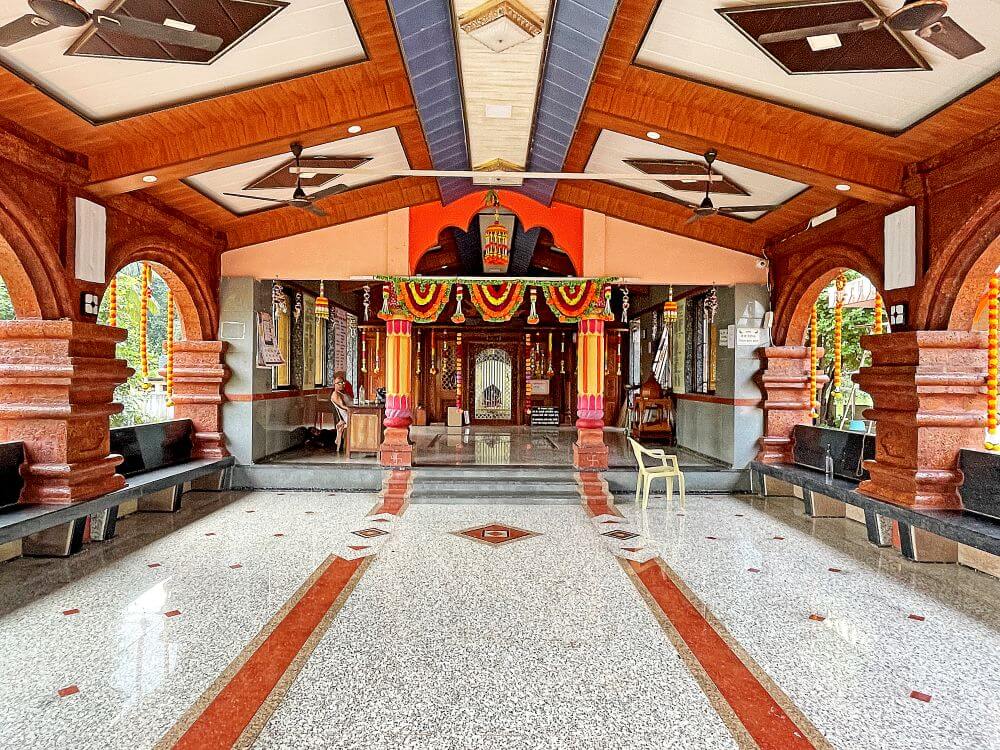
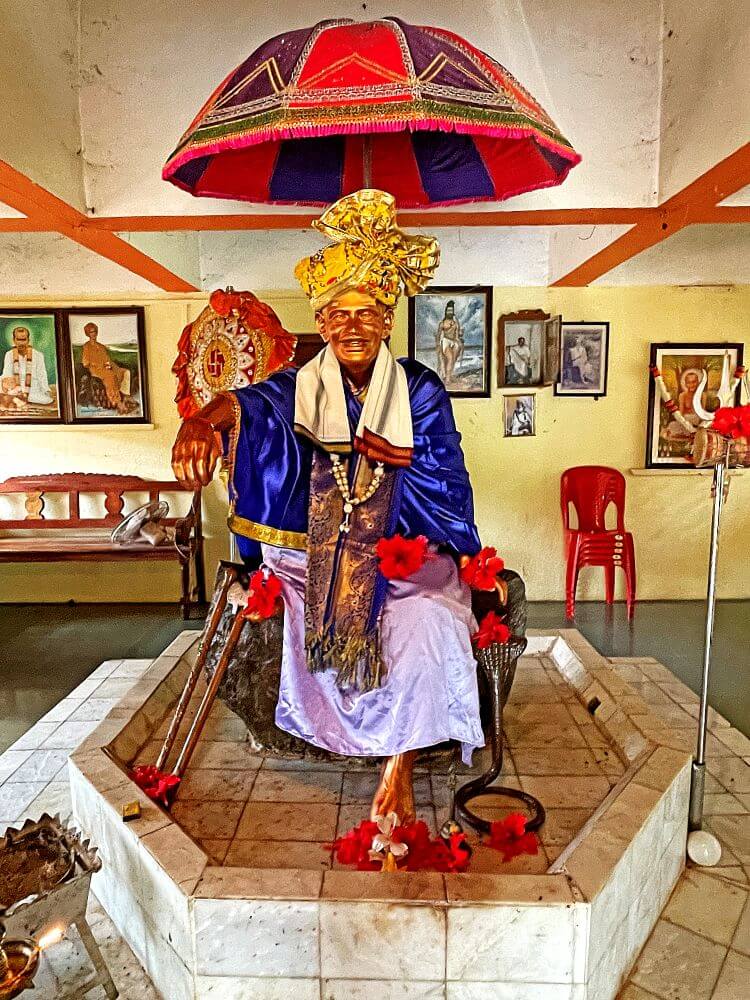
This Swayambhu Ganpati temple is situated in the dense thickets of Koil, in a serene environment adorned with natural beauty. The temple’s vast courtyard is enclosed by a boundary wall a few feet high. One enters the courtyard through a simple yet tall arch. At the beginning, one encounters the memorial temple of Sadguru Satam Maharaj. Built in a modern architectural style, the temple consists of a main hall, a sanctum sanctorum, and a simple shikhara (spire) above it. In the sanctum of this temple, which was renovated in 1994, there is a tall statue of Satam Maharaj seated on a high hexagonal Vajrapitha (throne). Many of his portraits are also displayed in the sanctum. Satam Maharaj was an ascetic and a realized soul of the twentieth century. He was originally from Koil. When he was only four years old, his parents migrated to Mumbai. There, in his youth, after 1910, he gained the guidance of the ascetic Fakir Baba Abdul Rahman. Through the grace of this Fakir, Satam Maharaj attained many spiritual powers (Siddhis). Later, he left Mumbai and came to Danoli in Sawantwadi taluka. His Samadhi (tomb) is located there. Koil is his birthplace, and his memories are preserved here in the form of a temple.
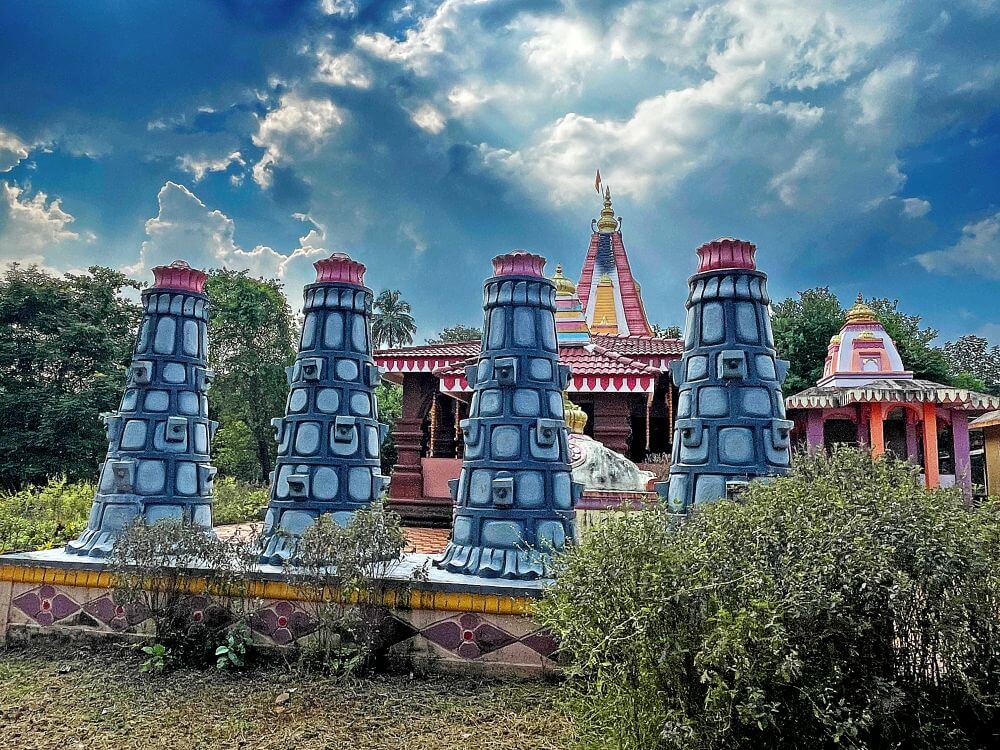
A short distance from Satam Maharaj’s memorial temple is a small temple of the family deity, and right next to it is the Sateri temple. In this temple, beside the stone idol of Goddess Sateri, there is a Veergall (hero stone) and a Sati-shila (sati stone). A short distance away from there stands the grand, modern-style temple of the Swayambhu Ganpati. In front of this temple, on a high platform, there are four small shrines. Beside them are four lamp pillars (Deepstambhas). Further ahead is a very unique Tulsi Vrindavan. This Vrindavan is in the form of a large shrine and a memorial site. At this same location, there is a traditional Tulsi Vrindavan built of laterite stone. A short distance from there, on a platform, are stones representing the ‘Chalya’ (footprints).
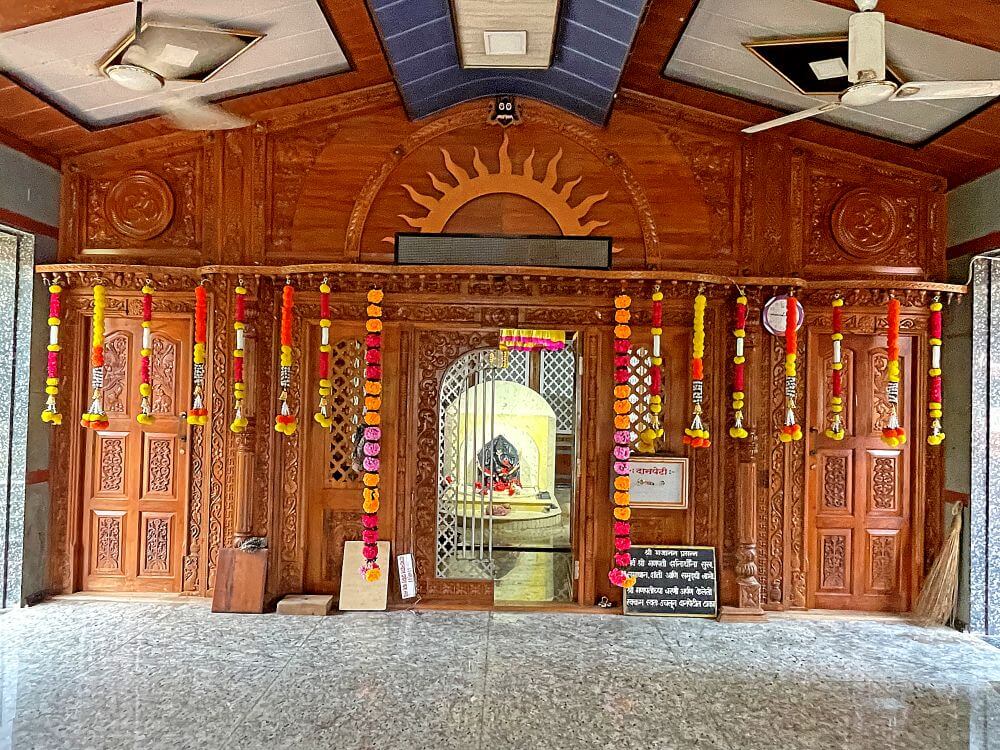
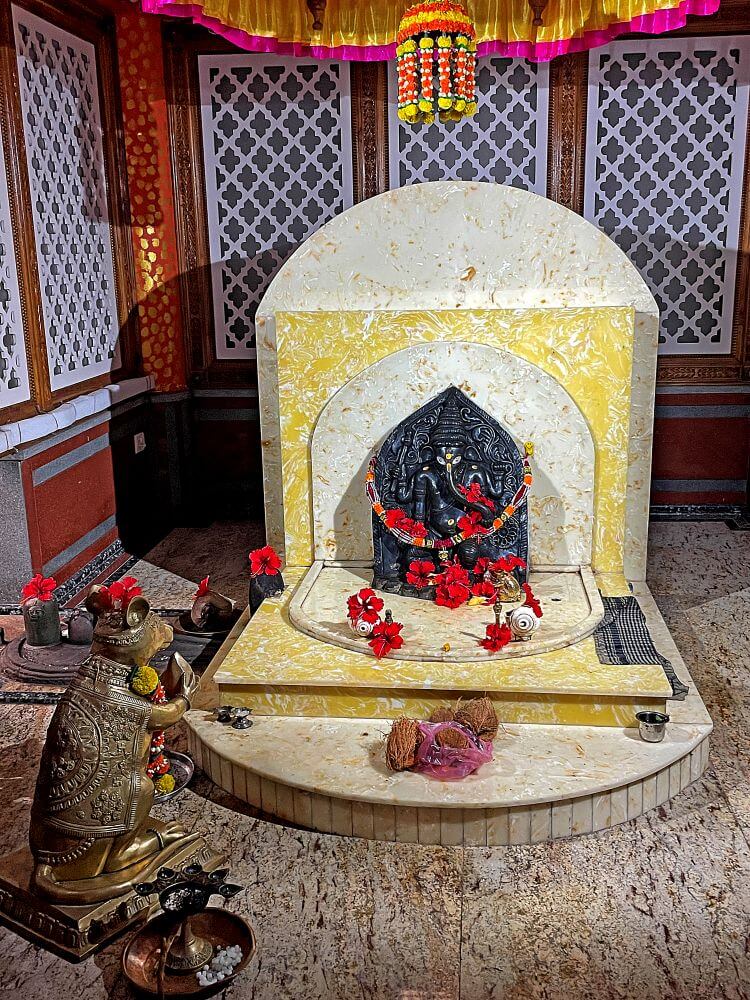
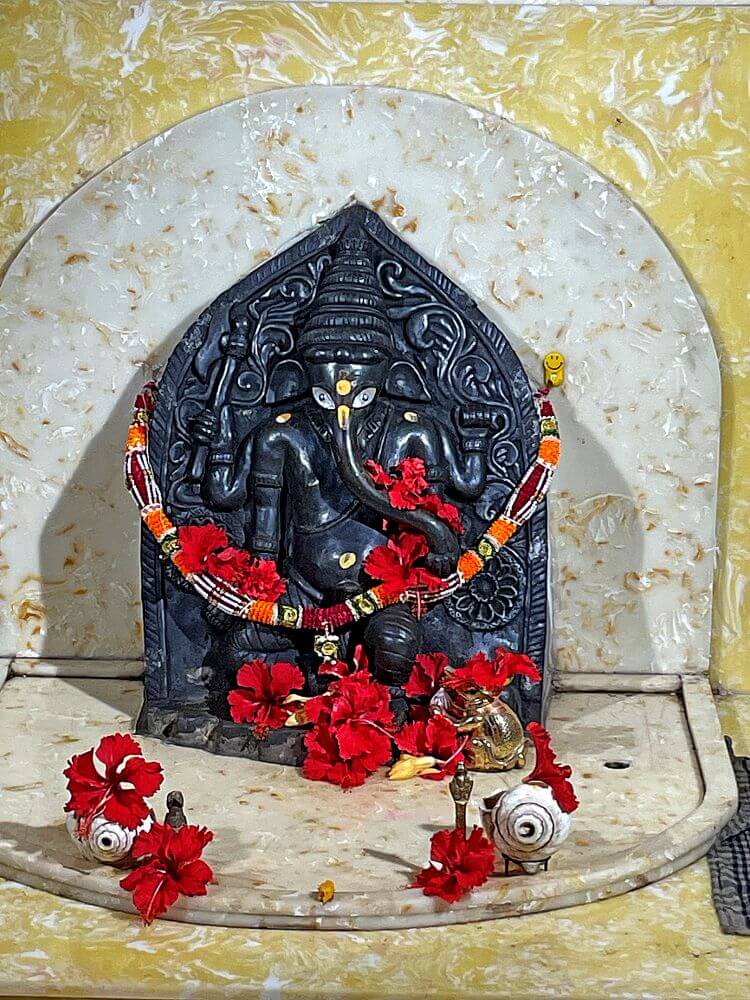
The structure of the Ganpati temple consists of a Mukhamandapa (entrance porch), Sabhamandapa (main hall), Upasabhamandapa (secondary hall), Antarala (vestibule), and the Garbhagriha (sanctum sanctorum). The temple is built on a high plinth. There are shikharas over the entrance porch and the sanctum. The shikhara over the entrance porch is a small, square, stepped structure topped with an Amalaka and a Kalasha, while the shikhara over the sanctum is tall, tapering upwards on all four sides. It is topped with a two-tiered Amalaka and a Kalasha. The temple pillars are made of stone and are square in shape. The main hall is semi-open. Two steps higher from there is the secondary hall. The sanctum is located in the center of the vestibule. Inside, there is a carved stone idol of Ganesha on a crescent-shaped Vajrapitha. In front of the idol is a large brass statue of a mouse (Mushaka).
A grand celebration of the birth of Lord Ganesha is organized at this temple on Bhadrapada Shukla Chaturthi. According to tradition, on Bhadrapada Shukla Tritiya, the Ganesha idol is bathed with water from the well in the temple’s sacred grove (Devrai). Coconut milk is applied to the idol. On the day of Chaturthi, the Madval (Ganesha sevak) extracts gum from the Umbar (cluster fig) tree early in the morning. The carpenter then uses this gum to decorate the idol with colorful foil paper. Following this, the worship of Lord Ganesha is performed. Provisions for the Lord’s Prasad are collected from every household in the village. The Ganesha festival is celebrated here with great enthusiasm and amidst a massive influx of devotees. On the fifth or seventh day, the Ganesha idol is immersed at Fakiracha Tale. Devotees also flock to this temple on Sankashti and Angarki Chaturthi.
This sacred temple stands as a testament to deep spiritual devotion, ancient architectural grandeur, and rich local cultural traditions.
The sanctum sanctorum houses the divine idol consecrated according to ancient Vedic traditions, surrounded by serene courtyards and traditional temple architecture.
Navratri, Maha Shivratri, Annual Temple Jatra & Deepotsav
Compare and book flights, secure top-rated local hotels near the temple, hire reliable guides, and rent cars instantly.
Extend your pilgrimage by visiting other highly sacred temples located nearby.


Add ₹999 more to unlock FREE SHIPPING!
Your sacred cart is currently empty.
Shop Photo FramesFill in your delivery details below to place your order.
Add comment