
Add ₹999 more to unlock FREE SHIPPING!
Your sacred cart is currently empty.
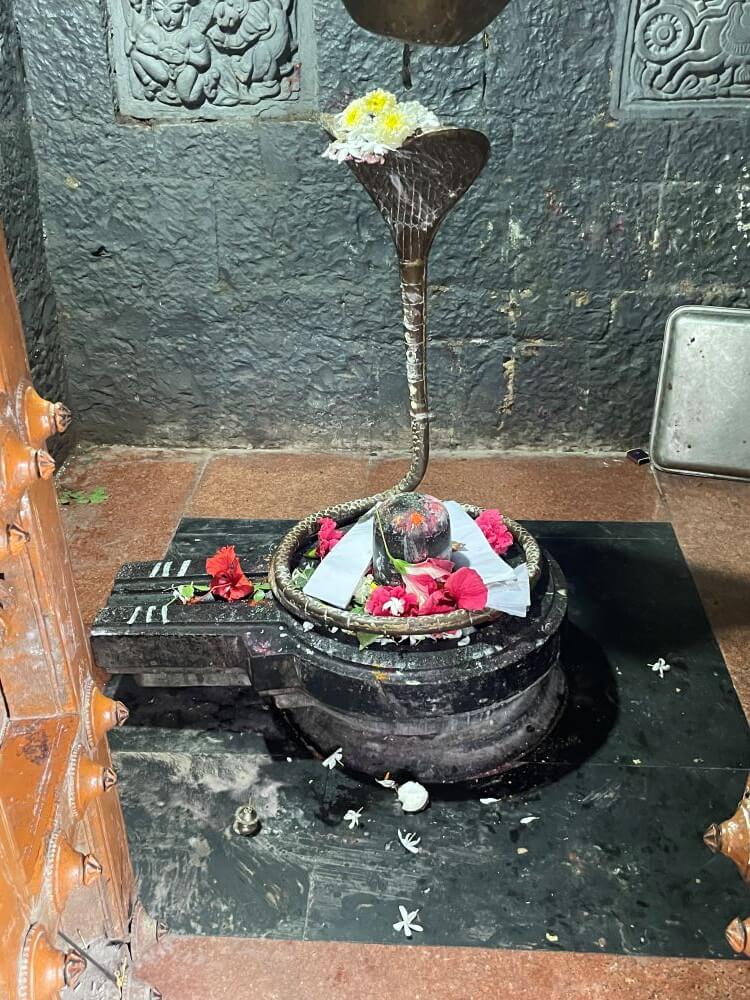
Shop Photo FramesThe original Shaktipeeth of Hinglaj Devi is located in the Balochistan province of Pakistan. According to the Kulvarna Tantra, Hinglaj Devi is the third of the eighteen Shaktipeeths. Hinglaj Mata is one of the 51 Shaktipeeths of the Goddess. As the Goddess is the Kuldevi (family deity) and revered deity of many clans, temples dedicated to Hinglaj Devi are found in many places across several states, including Rajasthan, Gujarat, and Maharashtra. The famous temple of Hinglaj Devi at Hinglajwadi in Dharashiv district is an upa-peeth (sub-shrine) of Shakti. Devotees believe that the awakened Goddess here grants their prayers. A unique feature here is the Shivling in the Mahadev temple, which rotates like a grinding stone (jata).
According to villagers, this temple, built of stone in the Hemadpanti architectural style, dates back to the 12th century. The legend regarding the Goddess arriving in Dharashiv from Pakistan states that Mahant Puri Maharaj of Dharashiv was a staunch devotee of Hinglaj Devi. He used to travel to Balochistan every year for the darshan of Hinglaj Devi. As he aged, it became impossible for him to undertake this journey. He then requested the Goddess to come to his village. The Goddess agreed to accompany him on the condition that he ‘must not look back.’ Upon reaching the banks of the lake at Hinglajwadi, the Maharaj’s faith wavered, and he looked back to see if the Goddess was following him. At that very moment, the Goddess turned into stone and became stationary there.
There is a parking area in front of this roadside temple. The temple is surrounded by a double fortification. The outer fortification is of recent origin. The first entrance has an arched iron gate with lattice shutters. Upon entering through this gate, there is a second fortification made of old stone masonry. There are seats for devotees on both sides of the entrance to this fortification. On both sides of the entrance, there are guard seats near the pillars and guard rooms on the inside.
In the paved courtyard of the temple, in front of the entrance, there is an ancient and weathered vermilion-smeared idol of Maruti under a canopy on a neem tree platform. Adjacent to the fortification are the Bhaktaniwas (pilgrim lodging) with closed rooms and a Dharmashala with open verandas. There are seats placed at various spots in the courtyard for devotees. In the courtyard, there is a platform in front of the temple with five lamp towers (deepmalas). Four of these are circular, and one is square. There are hero stones (veergals) and some sculptures on the platform of the lamp towers.
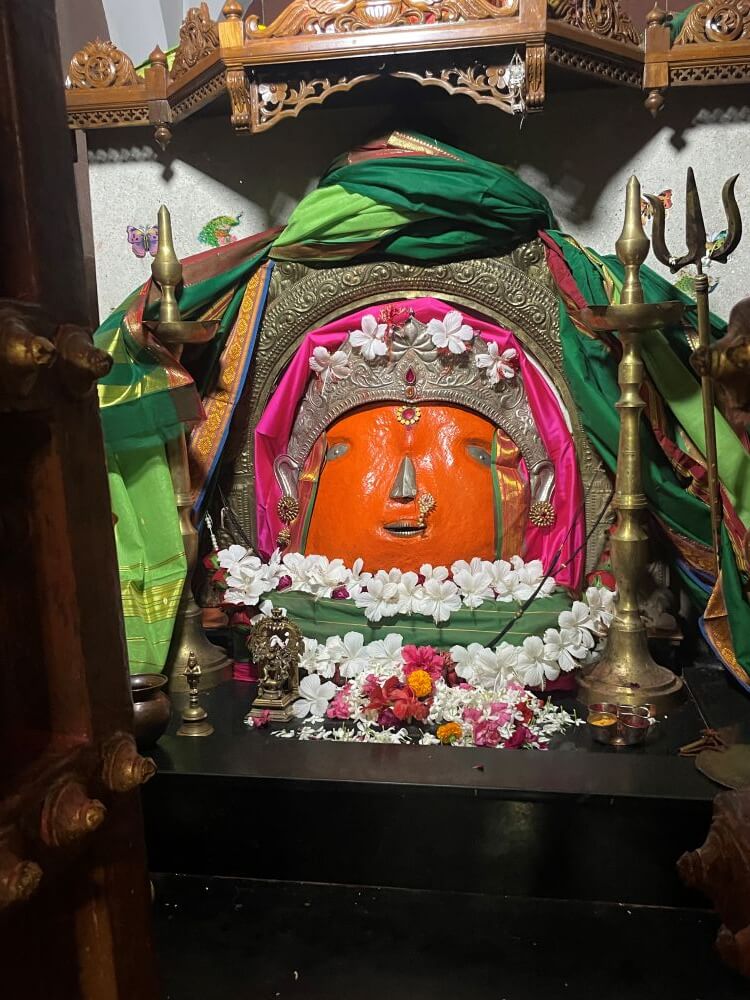
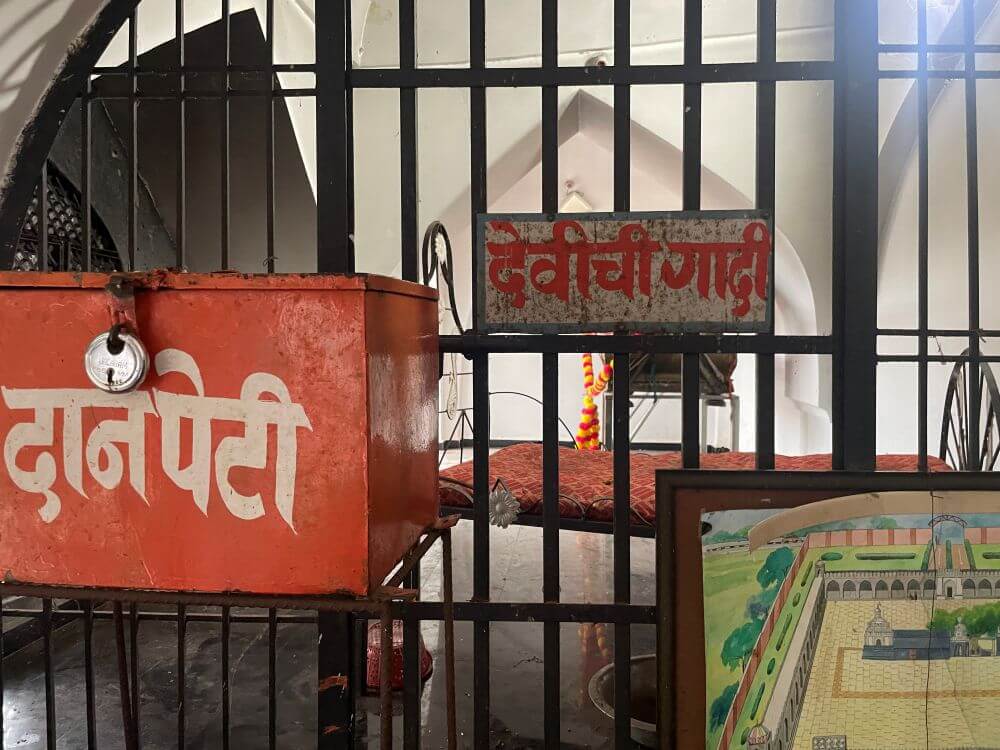
The temple structure consists of a Sabhamandap (assembly hall) and a Garbhagriha (sanctum sanctorum). In the Sabhamandap, square stone pillars are connected to each other by arches. In the center of every four pillars, there is a dome-shaped ceiling. There is another door on the left side of the Sabhamandap. In front of the Sabhamandap is the entrance to the Garbhagriha. The door frames are adorned with floral carvings, and there is an idol of Lord Ganesha on the lintel. In the Garbhagriha, the self-manifested (swayambhu) stone idol of the Goddess is placed on a Vajrapitha. The Goddess is adorned with a silver crown. The halo behind the idol features carvings of leaves, flowers, a conch, and a discus. A silver umbrella hangs from the ceiling. In front of the swayambhu idol, on the Vajrapitha, is a brass idol of the Goddess in her Mahishasuramardini form, with a trident nearby.
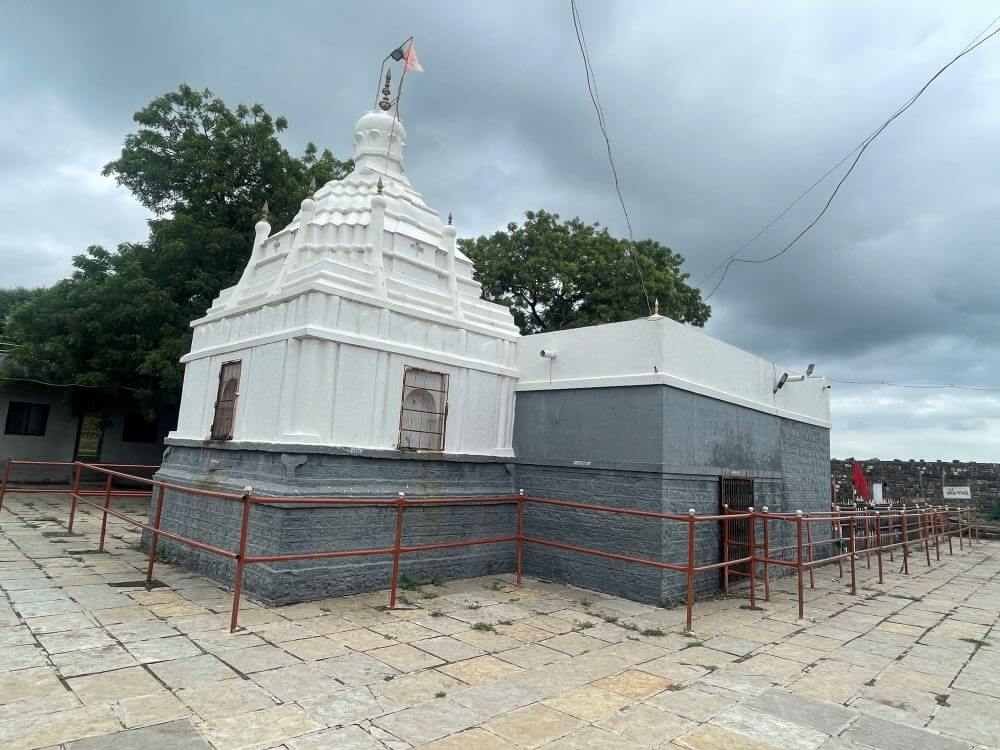
The exterior walls (mandovar) of the Garbhagriha have niches on all three sides. The roof of the Garbhagriha features an Urushringi-style shikhara. There are eight sub-shikharas on all four sides of the main shikhara. The main shikhara is topped with a stupi, a kalash, and a flag. In the courtyard, next to the temple, is the Palkhi room. The Goddess’s palanquin, used during festivals, is kept here. Beside the Palkhi room is the Yajna Mandap. There is a sacrificial altar (Yajnakunda) in the center of a platform about three feet high. In front of the Yajna Mandap, there is a tortoise sculpture on the ground.
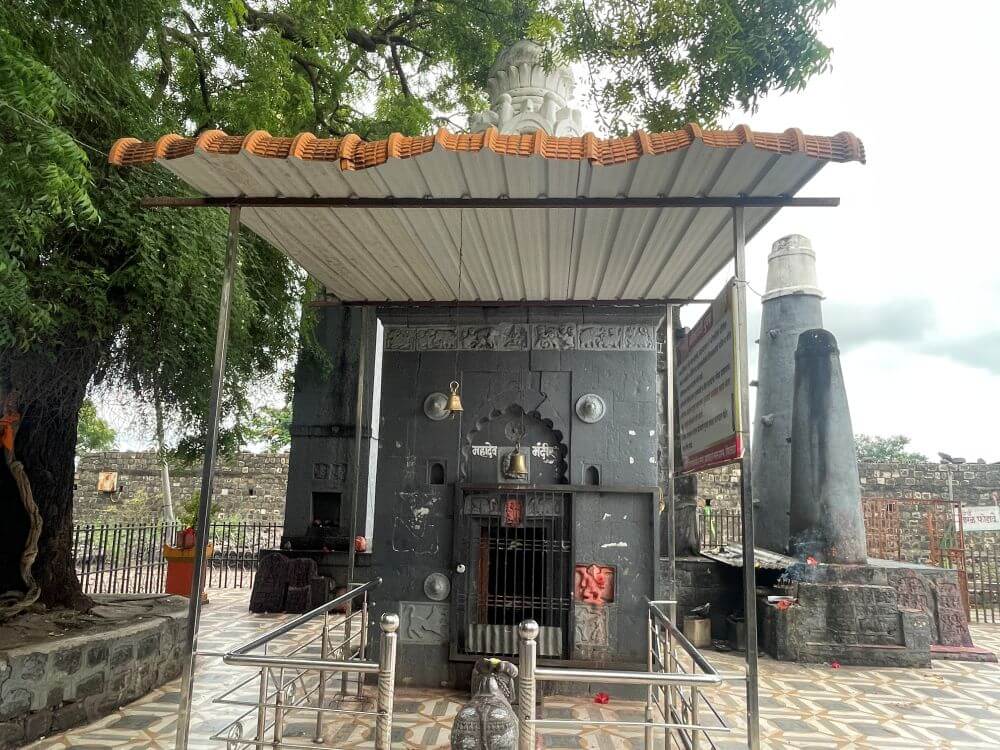
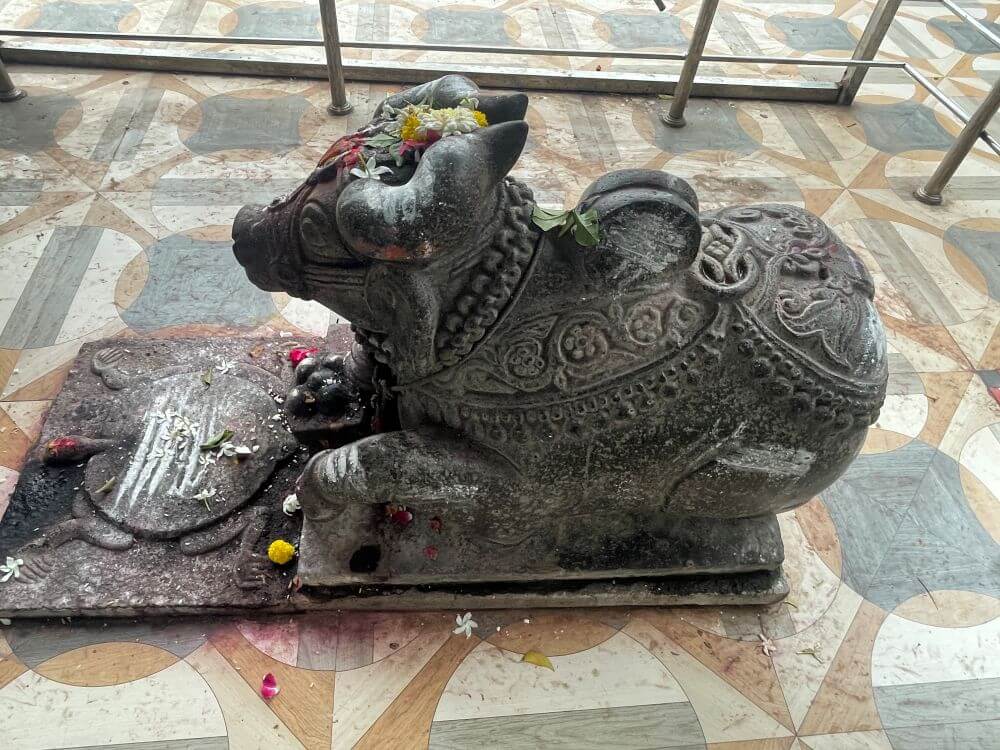
In front of the Goddess’s temple is an ancient Mahadev temple. In the Sabhamandap, there is an idol of Nandi made of black stone on a platform. The bells, the decorative cloth (jhul), and the bridle on the Nandi are carved with distinctive artistry. There are lion sculptures on both sides of the entrance to the Garbhagriha. Above the lion sculpture on the right, in a niche, is a vermilion-smeared idol of Ganesha. On the left, there is a wheel carving. In the center of the Garbhagriha floor, on a Vajrapitha, is the Shivling. When rotated by hand, this Shivling, along with its base (shalunka), rotates 360 degrees like a grinding stone, yet it cannot be separated from the stone below. The Shivling is adorned with a brass mask and a brass cobra holding an umbrella. On the back wall of the Garbhagriha, there are relief sculptures of Garuda, Lakshminarayan, and Maruti. Another sculpture depicts the Sun God riding a chariot drawn by seven horses. The roof of the temple has an Urushringi-style shikhara. There are four sub-shikharas on all four sides of the main shikhara.
It is believed that the Goddess arrived here on Chaitra Vadya Ashtami. Therefore, an eight-day Chaitrotsav is celebrated in the temple from Chaitra Purnima to Chaitra Vadya Ashtami. During this time, the Goddess’s palanquin procession is taken around the village. Thousands of devotees from Maharashtra, Andhra Pradesh, Karnataka, and other states come here for darshan and to fulfill their vows. Vows of offering garlands, coconuts, sarees, and goats are made to the Goddess. The temple is crowded with devotees during annual festivals like Sharadiya Navratri, Mahashivratri, Dussehra, and Diwali.
This sacred temple stands as a testament to deep spiritual devotion, ancient architectural grandeur, and rich local cultural traditions.
The sanctum sanctorum houses the divine idol consecrated according to ancient Vedic traditions, surrounded by serene courtyards and traditional temple architecture.
Navratri, Maha Shivratri, Annual Temple Jatra & Deepotsav
Compare and book flights, secure top-rated local hotels near the temple, hire reliable guides, and rent cars instantly.
Extend your pilgrimage by visiting other highly sacred temples located nearby.


Add ₹999 more to unlock FREE SHIPPING!
Your sacred cart is currently empty.
Shop Photo FramesFill in your delivery details below to place your order.
Add comment