
Add ₹999 more to unlock FREE SHIPPING!
Your sacred cart is currently empty.
Shop Photo FramesKnown by many names such as Dakshin Ganga, Gautami Ganga, Sapta Godavari, Gola, and Golai, the Godavari is recognized as the second-longest river in India after the Ganga. Originating in Nashik, this river traverses a 1465 km journey through the three states of Maharashtra, Telangana, and Andhra Pradesh before merging into the Bay of Bengal. It is believed that the Godavari is a manifestation of the Trinity—Brahma, Vishnu, and Mahesh. The Brahmavaivarta Purana narrates the story of the origin of the Godavari. Devotees believe that among all rivers, the Godavari is the most ancient and supreme, and that a mere glimpse (darshan) of her destroys all sins and grants entry into the celestial realms (Devaloka).
It is said that the merit earned by performing penance on the banks of the Narmada is immense. Death on the banks of the Bhagirathi (Ganga) grants liberation (Moksha). Giving charity at Kurukshetra yields merit many times over. The Puranas state that the combined merit of all three is attained simply by having the darshan of the Godavari. It was on her banks that Maharishi Valmiki received the inspiration to write the Ramayana. Many sages, including Maharishi Agastya who crossed the Vindhya mountains, resided on the banks of the Godavari.
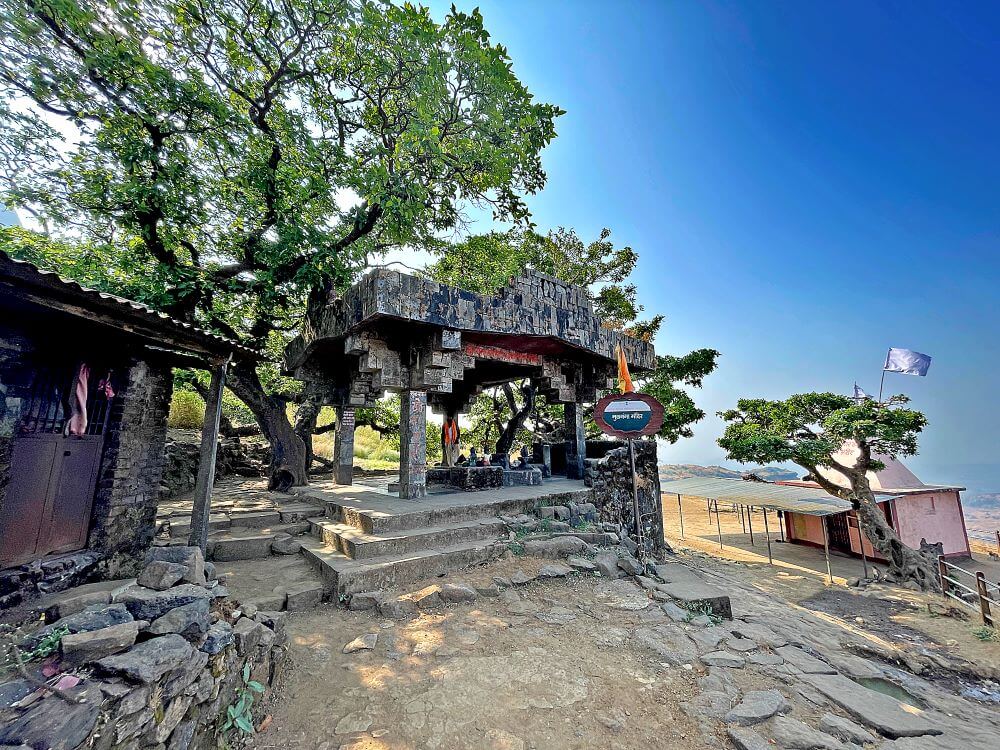
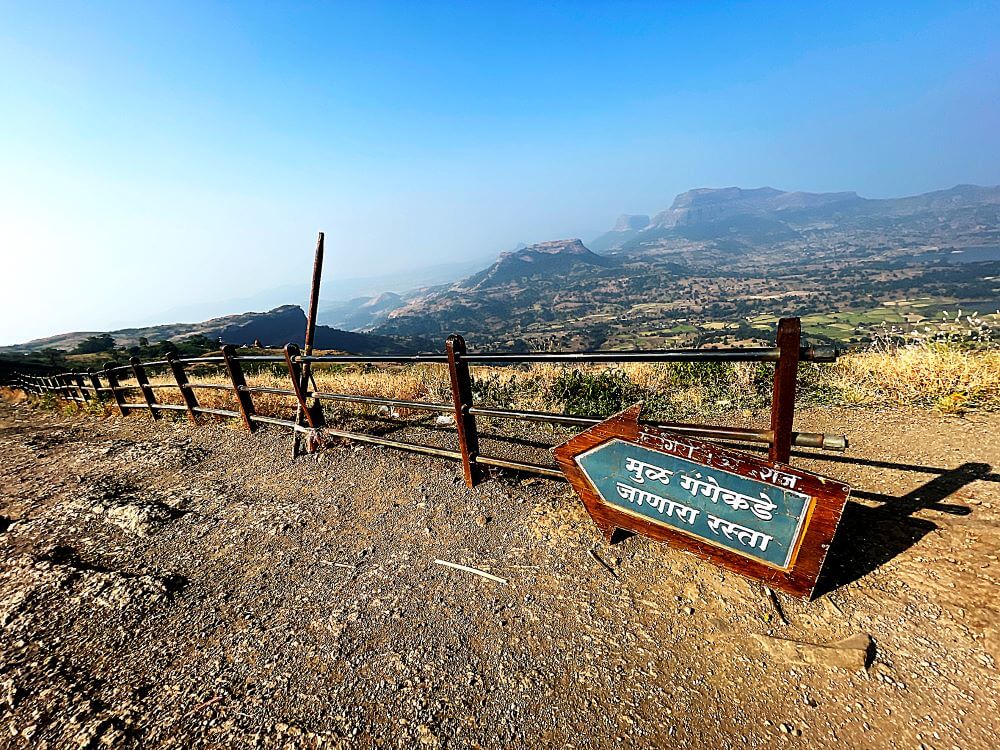
The legend regarding the river’s origin states that Maharishi Gautama Rishi had committed the sin of killing a cow (Gohata). To seek liberation from this sin, he performed penance on the Brahmagiri mountain and pleased Lord Shiva. He requested the Ganga from Shiva, but the Ganga was reluctant to emerge from His matted hair (Jata). To bring the Ganga down to earth, Lord Shiva performed the Tandava dance. He struck his matted locks forcefully against the ground, releasing the Ganga. That site is the present-day Brahmagiri. The date on which the Ganga originated on Brahmagiri was Magh Shuddha Dashami. At that time, Jupiter was in the Leo zodiac (Simha Rashi) and the day was a Thursday.
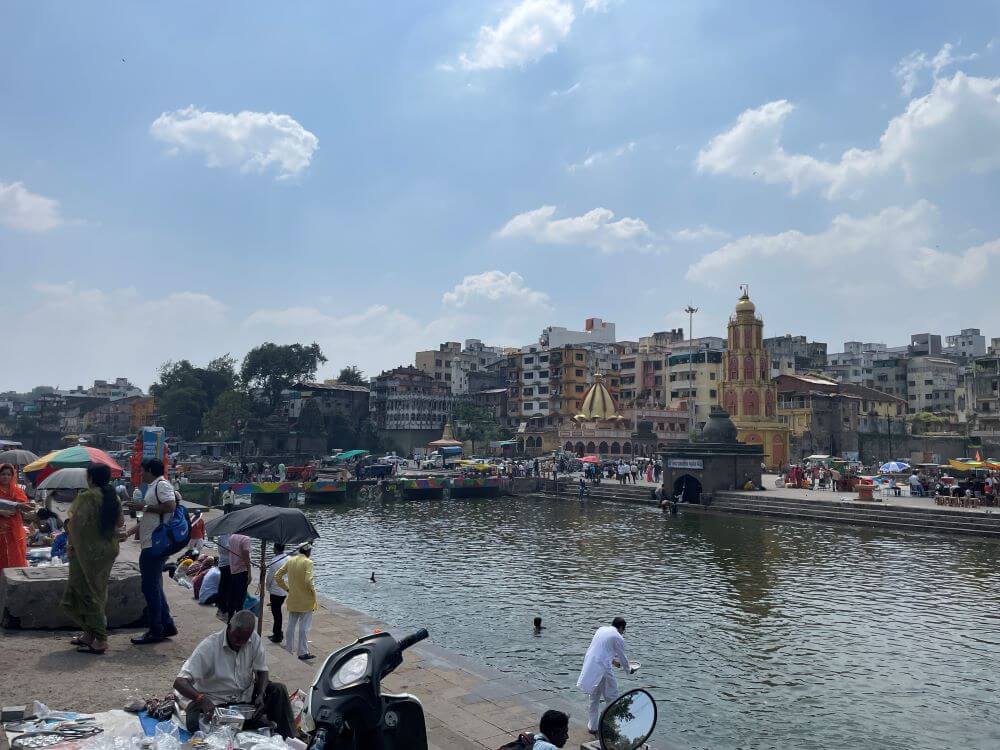
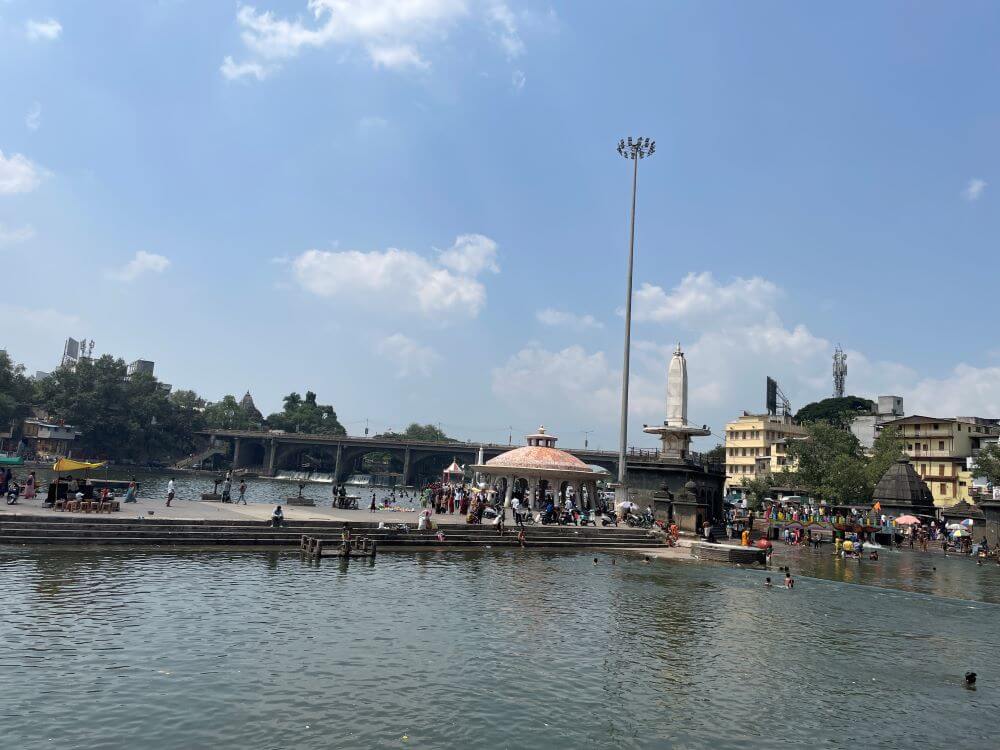
The Godavari flows through Nashik in seven streams. These seven currents are Gautami, Vashistha, Kaushiki, Atreyi, Vriddha Gautami, Tulya, and Bharadwaji. This is why she is called Sapta Godavari. There are temples of Mother Godavari at Kushavarta Tirtha in Trimbakeshwar and near Ramkund in Nashik. There are about 108 holy ponds (Kunds) on the Godavari river in Nashik and Trimbakeshwar. Among them, many religious rituals are performed throughout the year at places like Ramkund and Kushavarta.
The importance that the Ganga holds in the North is held by the Godavari in the South. For this reason, the Godavari is called the Dakshin Ganga (Ganga of the South), and Nashik is called the Dakshin Kashi (Kashi of the South). In the Panchavati area of Nashik, the Aruna-Varuna river stream joins the Godavari. Many scriptures contain references stating that Lord Brahma performed penance for the cleansing of sins at this confluence, Lord Shiva bathed at this confluence to be liberated from the sin of Brahma-hatya, and Shri Rama performed the Shraddha rituals for his father Dasharatha at this very place. Because some drops of nectar (Amrit) fell into this riverbed during the Samudra Manthan, the Simhastha Kumbh Mela is held on the banks of the Godavari in Nashik and Trimbakeshwar every twelve years. It is believed that since many great saints bathe in this river during that time, the energy of their penance enters the water, and thus devotees receive positive and spiritual energy by bathing in the Godavari.
Flowing southeast from Nashik, the Godavari is joined by the Darna River from the right bank at a distance of 24 km, and a short distance further, the Kadva River joins from the left bank. Beyond this, the Nashik district ends, and the Godavari enters the Nagar district at Kopargaon. From here, the Godavari flows southward. There are many temples on the banks of the Godavari in the Nagar district as well. These include the Raghaveshwar temple at Kumbhari in Kopargaon taluka, the ancient Hemadpanti Shiva temple at Kokamthan, the Guru Shukracharya temple, Kacheshwar temple, Shringi Rishi temple, Vibhandak Rishi temple, and the Sanjivani Par pilgrimage site.
Following the border of Ahilyanagar and Chhatrapati Sambhajinagar districts, the Godavari enters Marathwada. The place where the Pravara River, flowing from Devgad, meets the Godavari is famous as ‘Pravarasangam’. Thereafter, the river reaches ‘Pratisthannagari’, the capital of the Satavahanas, which is Paithan. The Jayakwadi (Nathsagar) project is located there. Jayakwadi is the largest dam in the state with a massive capacity of 2909 million cubic meters. There is also a power generation plant near this project. Further on, forming the border of Jalna-Beed districts, the Godavari enters the Beed district. At Panchaleshwar, there is a sacred site for the Mahanubhav sect in this riverbed. It is recorded that at Rakshasbhuvan (one of the three-and-a-half seats of Shani), Bajirao II won his first battle against the Nizam on the banks of the Godavari. The Sindphana, Rena, Wan, and Saraswati rivers, which originate in the central hilly region of Beed district, flow south and join the Godavari. Then it enters the Parbhani district.
Passing through Shelgaon and Gangakhed (the birthplace of Saint Janabai) from Parbhani, the Godavari absorbs the Purna River and enters the Nanded district. On the banks of this Godavari in Nanded city stands the Gurudwara of the tenth Sikh Guru, Shri Guru Gobind Singh Ji. Therefore, Nanded is considered one of the five holy places of the Sikhs. The Vishnupuri barrage has been built on the Godavari for water supply to Nanded city. Thereafter, while traveling through the Osmanabad and Latur districts, the Manjara River on the Maharashtra-Telangana state border joins the Godavari, and the Godavari river ends its approximately 668 km journey in Maharashtra and enters the state of Telangana.
The Godavari river, which entered Telangana from Nanded district, returns to Maharashtra after Mancherial. On the border of Gadchiroli district, the Godavari has a confluence with the Pranhita river. After that, it flows through Telangana. A short distance later, ending its journey in the state of Telangana, the Godavari enters Andhra Pradesh. In Andhra, the Godavari river flows forming the border of the East Godavari and South Godavari districts. At Rajamahendravaram, the Godavari river divides into two branches. The riverbed of this river, which originated from the Jata temple on Brahmagiri, widens to 4.5 km by the time it reaches Rajamahendravaram. The total area of this river basin is 3,12,812 sq. km. In this way, enriching the states of Maharashtra, Telangana, and Andhra Pradesh in every sense, the Godavari merges into the Bay of Bengal.
This sacred temple stands as a testament to deep spiritual devotion, ancient architectural grandeur, and rich local cultural traditions.
The sanctum sanctorum houses the divine idol consecrated according to ancient Vedic traditions, surrounded by serene courtyards and traditional temple architecture.
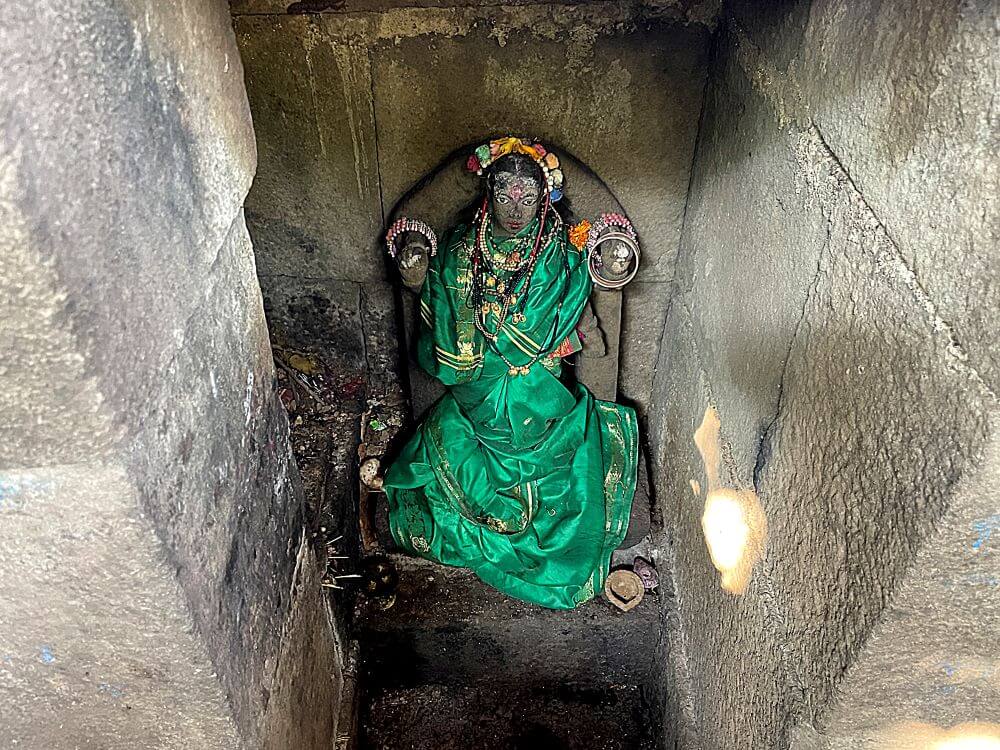
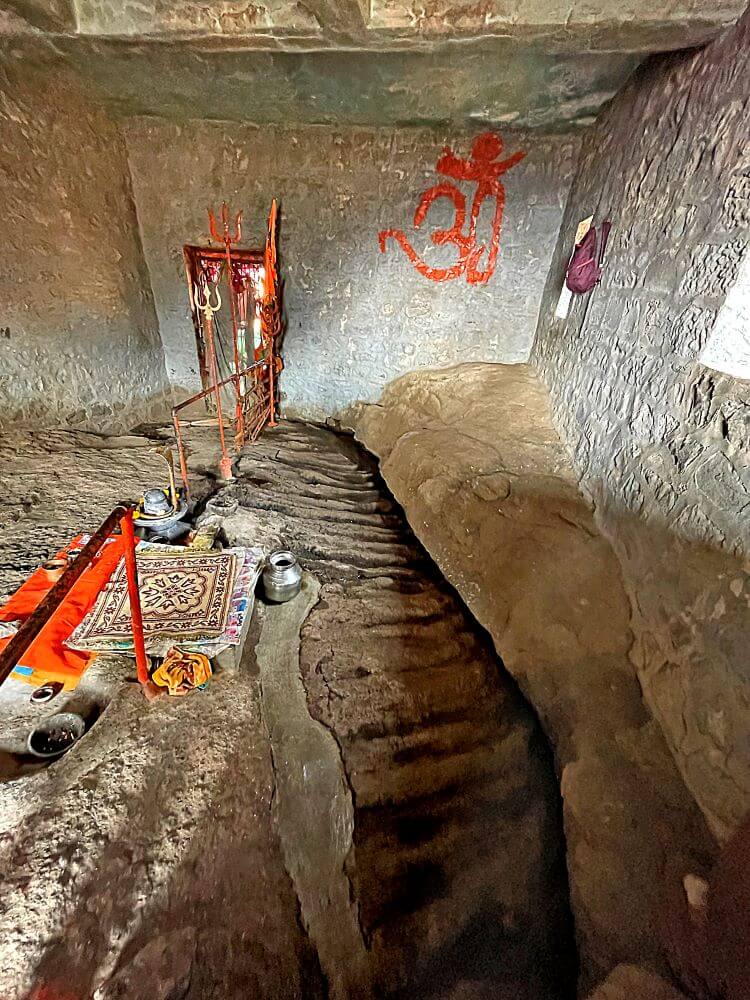
Navratri, Maha Shivratri, Annual Temple Jatra & Deepotsav
Compare and book flights, secure top-rated local hotels near the temple, hire reliable guides, and rent cars instantly.
Extend your pilgrimage by visiting other highly sacred temples located nearby.


Add ₹999 more to unlock FREE SHIPPING!
Your sacred cart is currently empty.
Shop Photo FramesFill in your delivery details below to place your order.
Add comment