
Add ₹999 more to unlock FREE SHIPPING!
Your sacred cart is currently empty.
Shop Photo FramesThe Nath Sampradaya emerged around the twelfth century. The Navnath (nine Naths) are considered to be Machindranath, Gorakshanath, Gahininath, Jalindarnath, Kanifnath, Bhartarinath, Revananath, Naganath, and Charpatinath. The stories of their births are truly fascinating. Jalindarnath was born from fire, that is, flames, which is how he received the name Jalindarnath. His life work and biography are described in the poetic text ‘Shri Jalindarnath Mahima’. Throughout his life, he endeavored to alleviate the suffering of common people. He concluded his life’s work, which was dedicated to the propagation and expansion of the Nath Panth, on the Garbhagiri hills at Yewalwadi. Devotees believe that because his Sanjeevan Samadhi is located here, his presence is still felt today.
According to mythology, Jalindarnath was not born from a human body. He manifested from the flames of a great Yajna performed by sages. He is considered an avatar of the Antariksha Rishis. ‘Jal’ means water; one who conquered water through his yogic power and stilled the waters is ‘Jalindarnath’. Texts describe that even fire would pale in comparison to his radiance. The most famous legend in Jalindarnath’s biography is the salvation of King Gopichand and his mother Mainavati. Mainavati was a disciple of Jalindarnath. She wished for her son to seek the path of immortality rather than getting entangled in the transient pleasures of royal luxury. Jalindarnath put Gopichand through a rigorous test. He made him renounce the royal palace and initiated him into Vairagya (renunciation). The moment when Gopichand stood before his own mother begging for alms, saying, “Bhiksha vad ga mate” (Give me alms, O Mother), is considered one of the most heart-touching moments in the Nath tradition.
Jalindarnath was a contemporary of Dnyaneshwar; therefore, scholars believe his Samadhi dates back to the thirteenth century. Jalindarnath performed penance in the forest for twelve years and received the grace of Lord Dattatreya. He received initiation into the Nath Sampradaya directly from Dattatreya. He spent his entire life propagating and expanding the Nath Sampradaya. While doing so, he always taught with the welfare of the poor and needy in mind. He instilled in the minds of the people that Yoga, morality, devotion, and liberation are the steps to human happiness. According to the descriptions in chapters 28 and 29 of the ‘Shri Navnath Bhaktisar’, Jalindarnath initiated Kanifnath into the Nath Sampradaya and bestowed upon him the name ‘Kanifnath’.
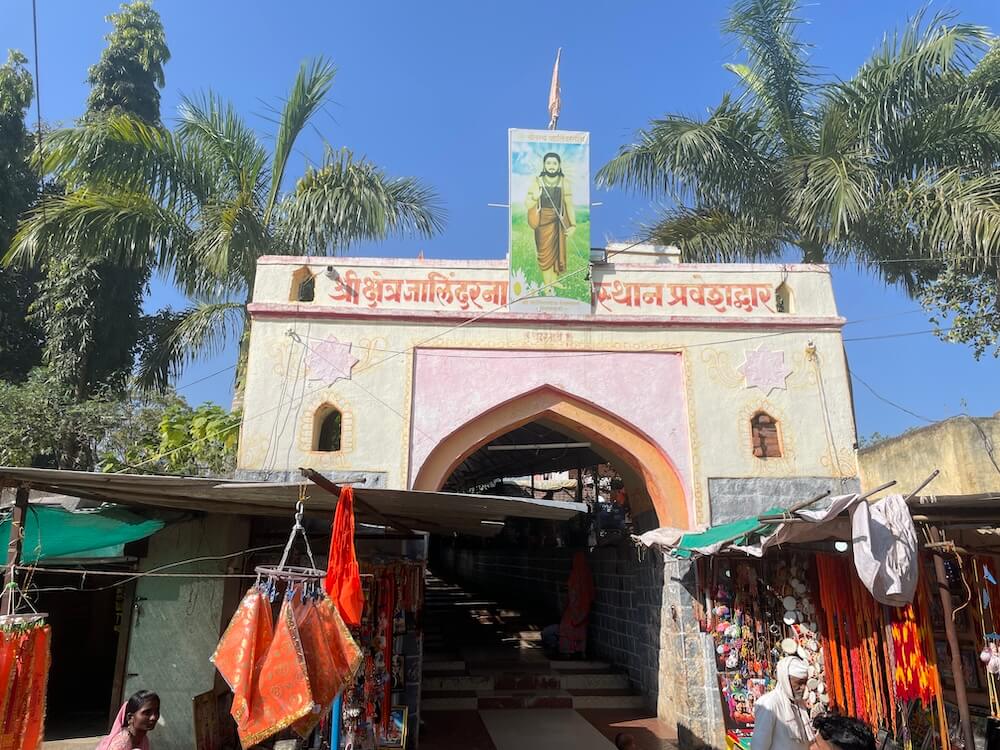
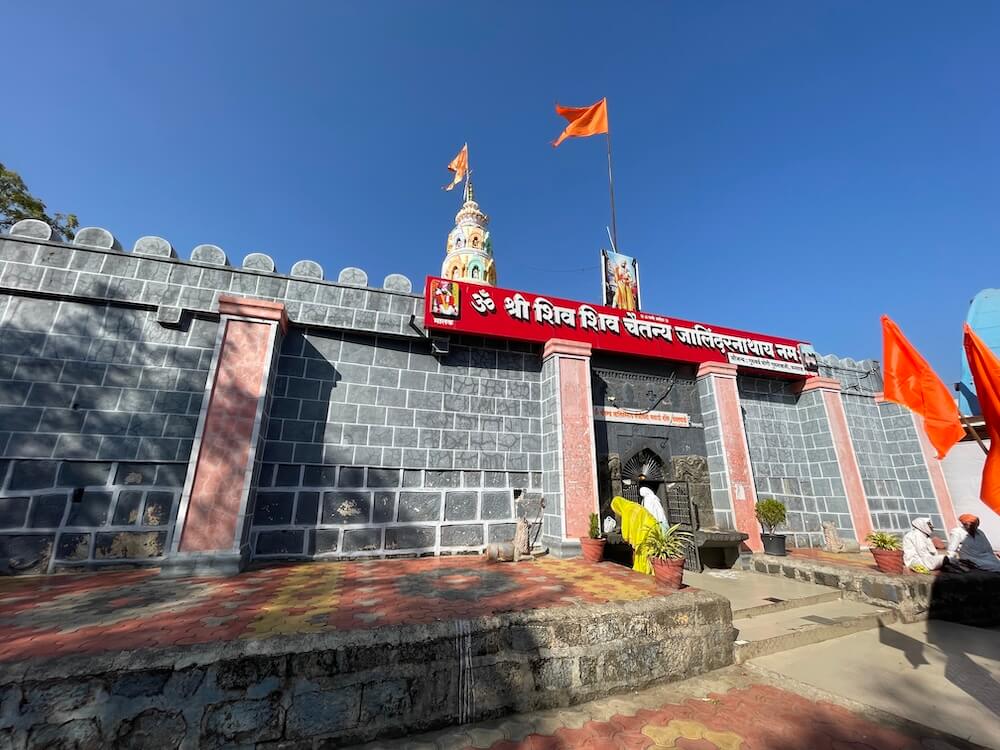
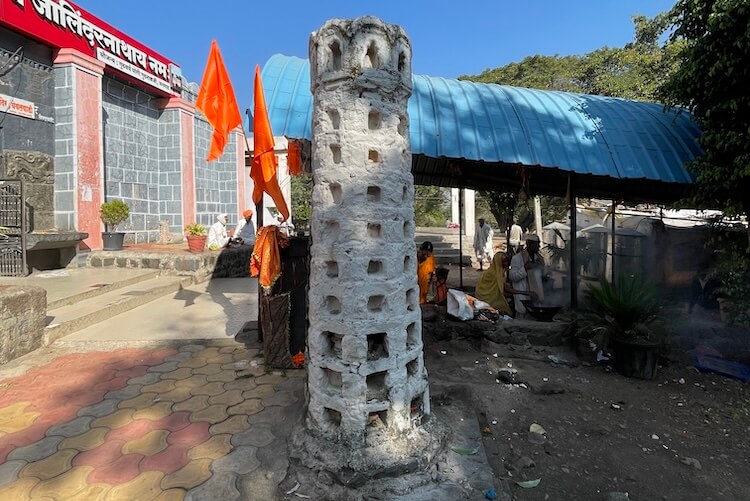
There is a spacious parking area in front of this temple at Yewalwadi, and there is a paved asphalt road to reach it. There are shops selling worship materials, food items, and other goods in the parking area. The main entrance is located within the sturdy fortification surrounding the temple. Since the temple is situated on high ground, one must climb about fifty steps from the entrance to reach the temple. There are safety railings on both sides of the stairway, and it is covered by a Gajaprishtha (elephant-back) shaped roof. A pavilion for Parayan (scriptural recitation) has been erected in the garden within the temple’s spacious courtyard. The courtyard houses a Bhaktiniwas (pilgrim lodging), a rest house, the temple office, and residences for the attendants. Further ahead is a second fortification made of ancient stone masonry. This fortification also has an entrance. In front of the entrance, there is a Deepmal (lamp pillar), and there are lion sculptures on two platforms on either side. On the front walls on both sides of the entrance, there are carvings of Vyala (mythical creatures) and chakra motifs, and there is a Shikhar sculpture on the lintel. There is another entrance to this fortification on the northern side.
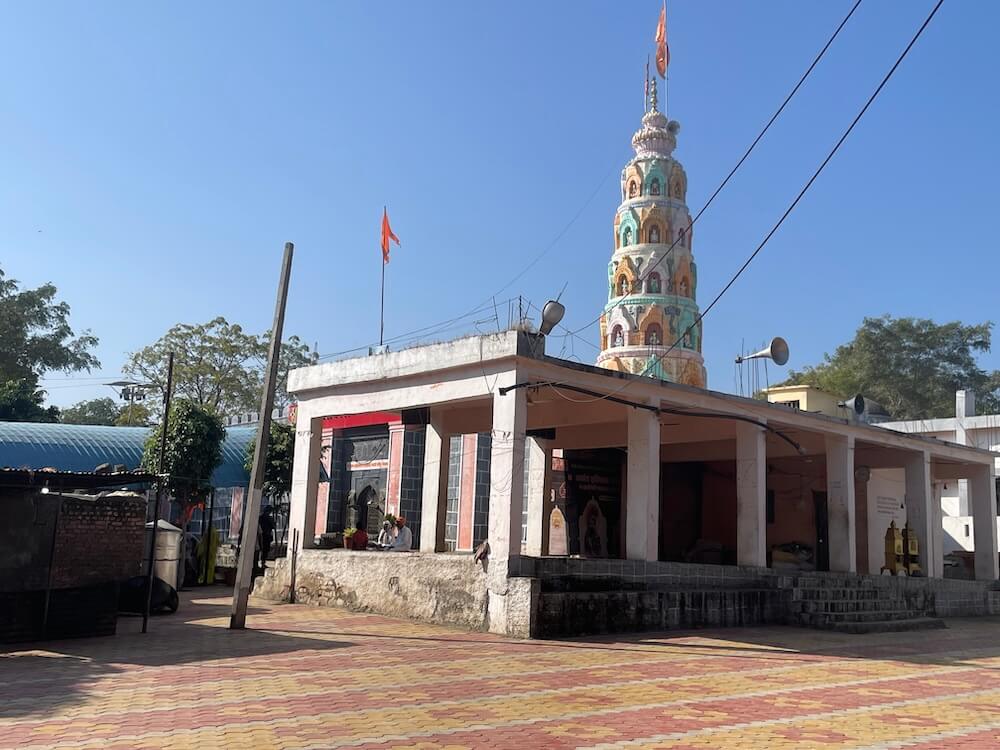
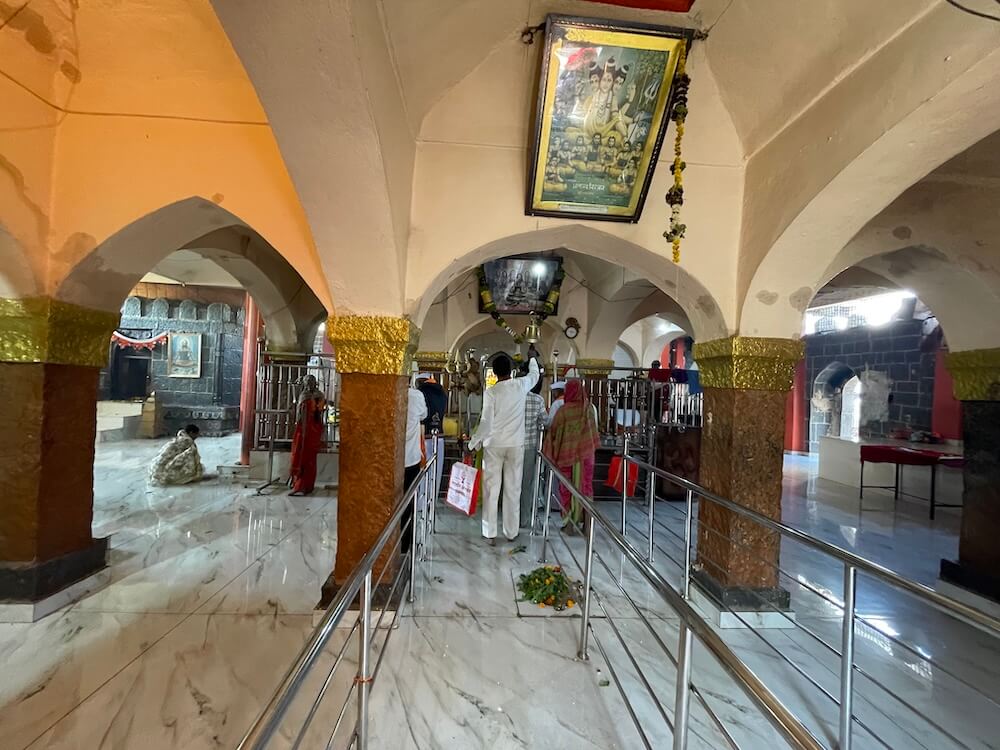
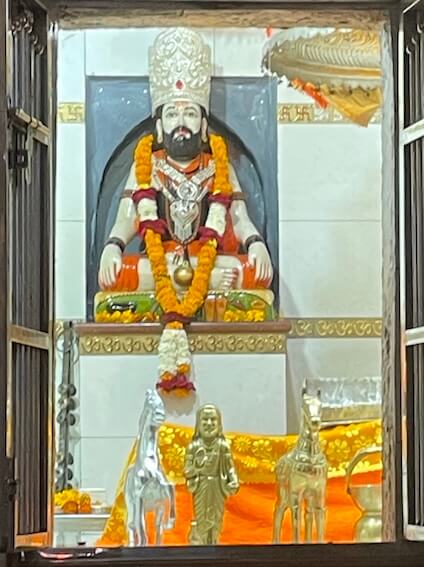
The temple structure consists of a Sabha Mandap (assembly hall), Antaral (vestibule), and Garbhagriha (sanctum sanctorum). In the semi-open Sabha Mandap, about twenty ornate square pillars stand on bases of the same shape. All these pillars are connected to each other by semicircular arches. In the center of the Sabha Mandap, there is a tortoise sculpture on the floor. On the right side of the Sabha Mandap is the Nath’s Dhuni (sacred fire). It is said that this fire has been burning continuously for the last seven to eight hundred years. Devotees believe that applying the ash from the Dhuni to the body provides relief from physical and mental ailments. Further ahead is the Antaral, which has a platform about two feet high. Beyond that is the entrance to the Garbhagriha. The door frames are carved with vertical edge patterns, and there is a lotus flower motif on the lintel. In the center of the Garbhagriha is Jalindarnath’s Samadhi, and against the back wall, on a Vajrapitha (throne), is a meditative idol of the Nath. In front of the idol are silver Padukas (footprints). On the left side of the Garbhagriha is a Nandadeep (eternal lamp). It is said that this lamp has been burning continuously for seven hundred years. There is a circumambulation path (Pradakshina Marg) around the exterior of the Garbhagriha. Through a window in the back wall of the Garbhagriha, one can view the Nath’s Samadhi from outside the temple. On the roof of the Garbhagriha, there is a five-tiered circular Shikhar, and each tier of the Shikhar has eight niches containing idols of various deities. At the top of the Shikhar are two Amalakas placed one above the other, topped by a Kalash.
Beside the Samadhi temple is a temple of Mahadeva. The Shivling here was found underground in the Sabha Mandap. It is said to be the very Shivling that Jalindarnath used for his daily worship. In front of the Mahadeva temple is a temple of Dattatreya. Both these are ancient stone temples built in the Hemadpanti architectural style, and they are carved with sculptures of various animals and birds. Beside this temple is a small shrine containing idols of Vitthal-Rukmini. There is a two-story Bhaktiniwas in the courtyard, which has rooms for pilgrims arriving from out of town.
The Samadhi Utsav of Jalindarnath is celebrated here with great enthusiasm on Chaitra Padwa. On this occasion, water from the Godavari River is brought in a ‘Kavad’ from Rakshasbhuvan to perform an Abhishekam on the Nath’s Samadhi. During the festival, thousands of Nath Panthi devotees, Sadhus, Saints, and Sannyasis gather here to seek the blessings of the Nath’s Samadhi. To mark this occasion, a Harinam Saptah is organized at the temple. There are two major fairs held here throughout the year. The first fair takes place on Magh Purnima. It is a tradition to bring the ‘Mahala Kathi’ procession from all the surrounding villages. The Mahala Kathis brought in the procession are then installed at the temple. The second fair is held on Mahashivratri. Mahashivratri, which falls on Magh Krishna Chaturdashi, is considered especially significant in the Nath Sampradaya because the progenitor of this sect, ‘Adinath’, is Lord Shiva himself. Therefore, many Nath temples hold fairs or grand celebrations on the day of Mahashivratri. Apart from these, festivals such as Dussehra, Diwali, Kojagiri Purnima, and Makar Sankranti are also celebrated at this temple. During all these festivals, the ‘Navnath Bhaktisar’ scripture is recited in the temple.
This sacred temple stands as a testament to deep spiritual devotion, ancient architectural grandeur, and rich local cultural traditions.
The sanctum sanctorum houses the divine idol consecrated according to ancient Vedic traditions, surrounded by serene courtyards and traditional temple architecture.
Navratri, Maha Shivratri, Annual Temple Jatra & Deepotsav
Compare and book flights, secure top-rated local hotels near the temple, hire reliable guides, and rent cars instantly.
Extend your pilgrimage by visiting other highly sacred temples located nearby.


Add ₹999 more to unlock FREE SHIPPING!
Your sacred cart is currently empty.
Shop Photo FramesFill in your delivery details below to place your order.
Add comment