
Add ₹999 more to unlock FREE SHIPPING!
Your sacred cart is currently empty.
Shop Photo FramesThe village of Kinhi Mahadev is nestled in the picturesque surroundings of the Satpura mountain ranges and on the banks of the Mas River in the Khamgaon taluka of Buldana district. It is considered an important center in the spiritual and historical tradition of Vidarbha. The Kinhi Mahadev Temple, standing majestically since the thirteenth century, is a place of faith for thousands of devotees. The main feature of this temple is the Swayambhu (self-manifested) Shiva Linga. Even during severe droughts, the cavity in the Shalu (base) of this Linga remains filled with water throughout all twelve months of the year. The grand fair held on Chaitra Shuddha Dwadashi, the ‘Shikharkathi’ festival, and the ‘Shiva-Parvati Wedding Ceremony’ held on Chaitra Ashtami are celebrated here with great enthusiasm.
Vidarbha is considered the land of the Shaiva and Shakta traditions. Worship of Shiva has been prevalent in this region since ancient times, dating back to the Vakataka and Satavahana eras. This worship received royal patronage during the Rashtrakuta period and the subsequent Yadava era, leading to the construction of magnificent temples. In the 12th and 13th centuries, the Yadavas of Devagiri ruled this region. This period is considered the golden age of temple architecture in Maharashtra. It is highly probable that the Kinhi temple was built during the Yadava period or by local chieftains under their influence. A unique feature of this temple’s construction is that for a few days of the year, the morning sun rays fall on the Shiva Linga through a hole in the fortification wall located 50 feet away from the sanctum sanctorum.
The legend of this temple states that where the temple stands today, there was once a dense forest. Herdsmen from the village used to bring their cows to graze in this forest. One of the cows would stand near an anthill at a specific time every day, and milk would automatically flow from her udder as an offering onto that spot. Seeing this, the herdsmen and villagers curiously decided to dig up the place. While digging, a pickaxe accidentally struck a stone in the ground. Immediately, a stream of blood gushed out from the stone. Seeing this, everyone was terrified. That night, Lord Shiva appeared in a vision to the village head and said, “I am present here in a Swayambhu form.” “Build my temple here.” Accordingly, the villagers began worshiping there, and the temple was constructed. Even today, the mark of the strike remains on the Shiva Linga. There is also a belief that during the month of Shravan, a live cobra enters the sanctum sanctorum of the temple and coils around the Shiva Linga, but it does not bite anyone.
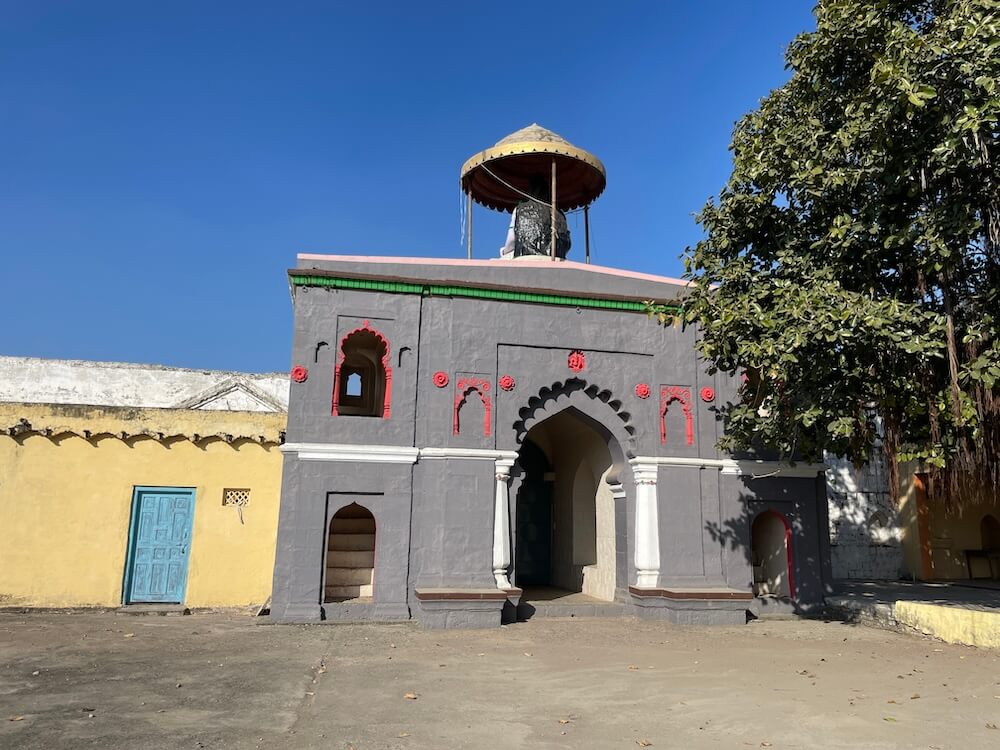
The Khamgaon taluka in Buldana district is historically famous for the trade of cotton and silver. In this region, there are several villages starting with the name ‘Kinhi’, such as Kinhi Savadat, Kinhi Raja, and Kinhi Naik. The village was named ‘Kinhi Mahadev’ due to this Mahadev temple. It is said that the Swayambhu Shiva Linga existed here even before the village was settled. Located in a spacious three-acre area, the temple is surrounded on all four sides by a strong stone fortification wall about 20 to 25 feet high. There are four bastions in this fortification. The construction of this wall and the bastions is said to date back to the sixteenth century. The fortification has two two-storied entrance gates. In the center of the main entrance, on the upper side, is an idol of Mahadev. There are stairs near this entrance to reach the upper part of the fortification.
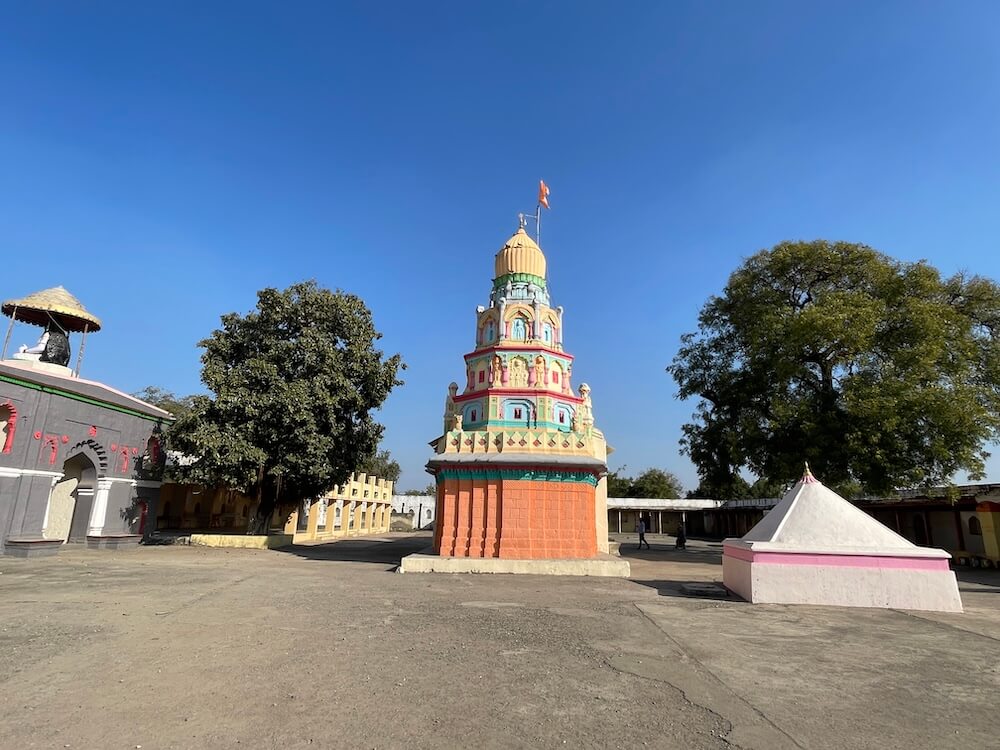
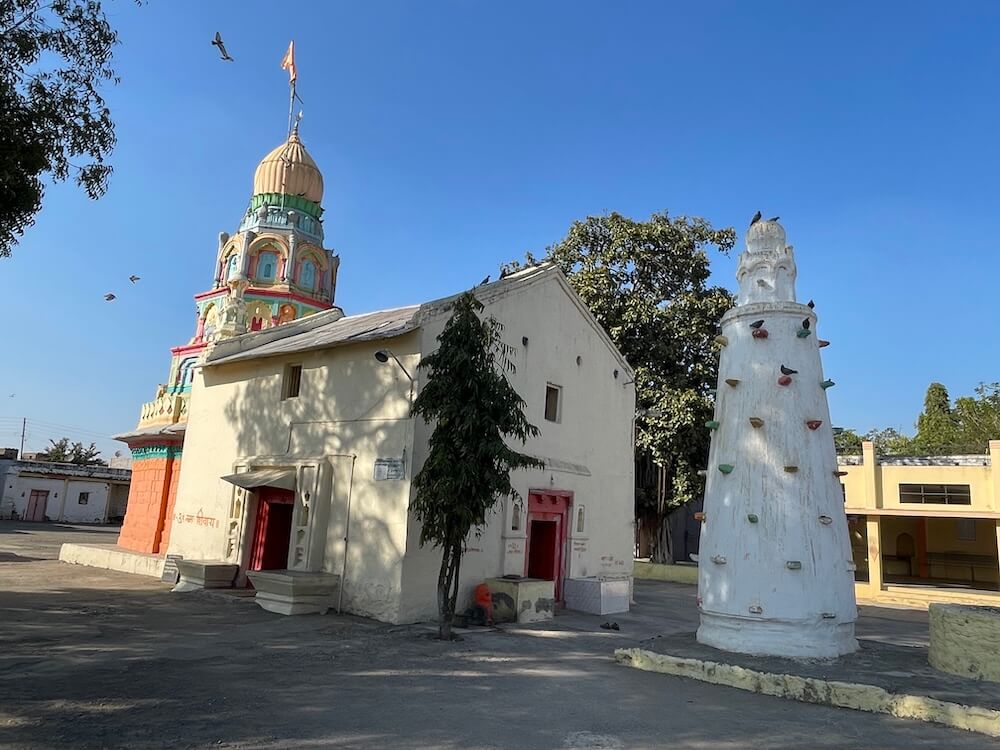
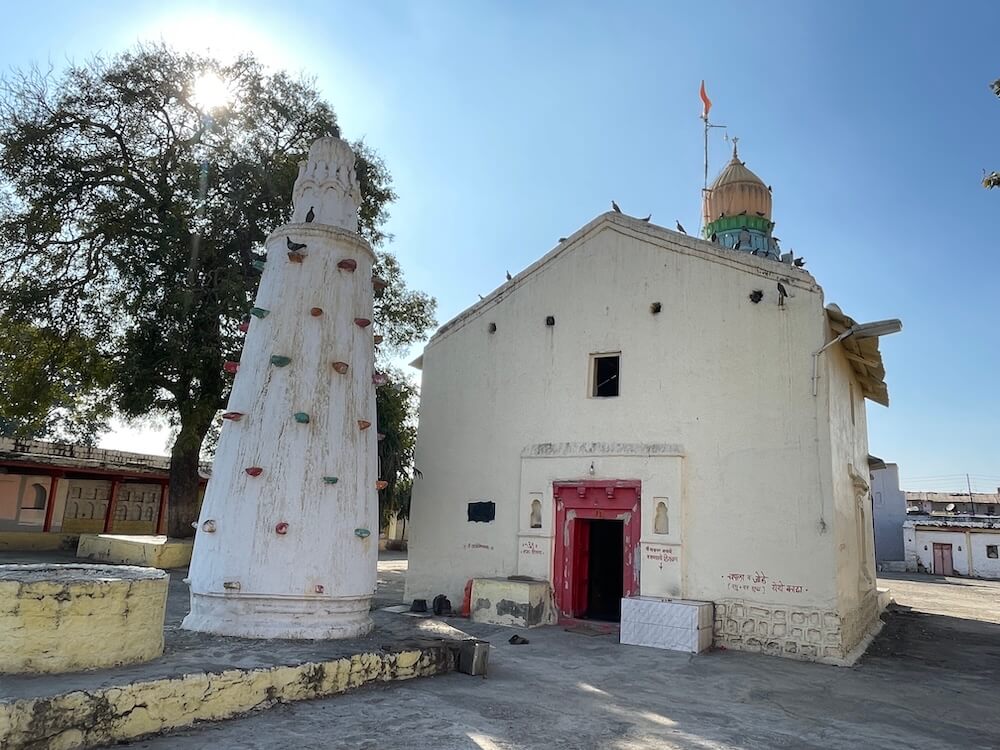
Through this entrance, one enters the spacious courtyard of the temple. In the center of the courtyard stands the Kinhi Mahadev temple. In front of the temple, there is a small well and a lamp pillar (Deepstambh) that tapers towards the top. Beyond that is the entrance to the temple. On the front walls of the temple, on both sides of the entrance, there are two platforms and niches for lamps in the walls. It is said that the platform on the left was the place where Gajanan Maharaj used to sit. According to the references in the ‘Shri Gajanan Vijay’ text, Maharaj himself was a devotee of Shiva and would sit in meditation in the peaceful surroundings of many ancient Shiva temples in the area. Since the Kinhi Mahadev temple dates back to the thirteenth century and holds great religious significance, it is said that Maharaj often visited this area.
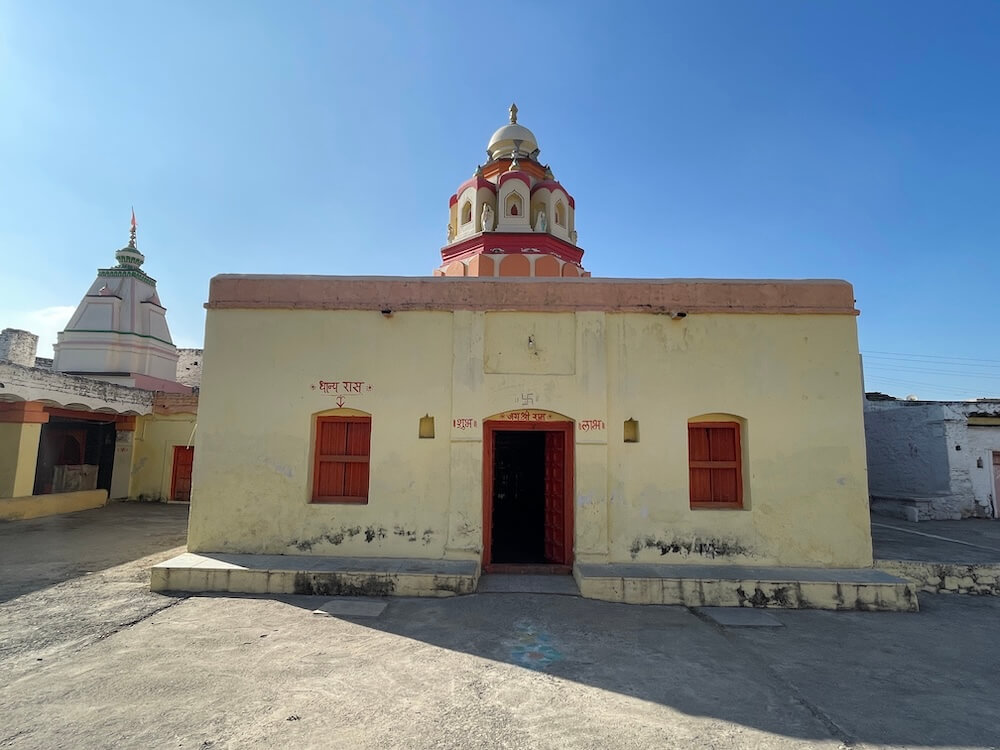
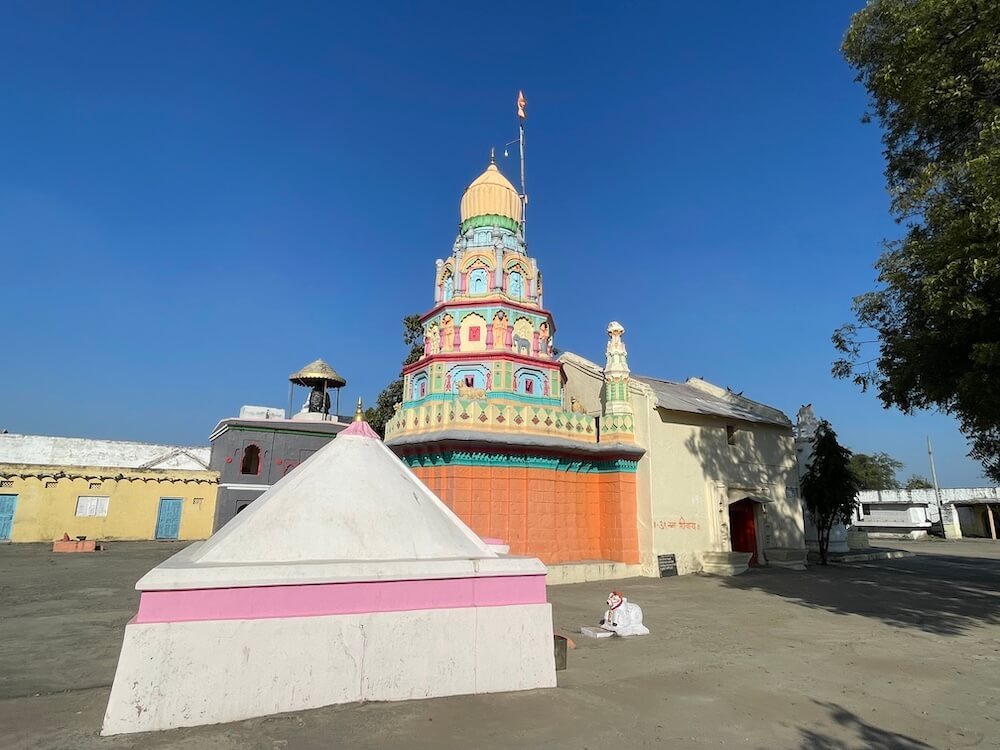
The structure of the temple consists of a Sabhamandap (assembly hall) and a Garbhagriha (sanctum sanctorum). There is a sculpture of Ganesha on the lintel of the Sabhamandap entrance. The two-storied Sabhamandap has wooden pillars. In the Sabhamandap, near the entrance to the sanctum, there is an idol of Nandi on a platform. In the niche to the right of the sanctum entrance, there are idols of Vitthal-Rukmini. Since the sanctum is in a deeper position than the Sabhamandap, one has to descend five steps to enter it. The Swayambhu Shiva Linga is on the floor of the sanctum. A Swayambhu Linga is considered the most sacred because it is naturally manifested and has existed since time immemorial. The Swayambhu Shiva Linga here is ‘Ruji Pashan’, meaning it is a stone rooted in such a way that it is one with the earth. Devotees believe that this Swayambhu Shiva Linga is ‘Jagrut’ (awakened) and that all wishes are fulfilled by its darshan. This Shiva Linga is covered with an ornate brass sheet. The cavity in the Shalu here contains water throughout the twelve months. The Sabhamandap has a tin roof, and the sanctum has a three-tiered spire that tapers towards the top. There are idols of various saints and deities in the niches of this spire. At the top, there is an Amalaka and a Kalash in a lotus-like structure. To the south of this temple is the Balishwar temple. In the cloisters of the perimeter wall, there are temples of Ganesha, Jagdamba Mata, and Ram-Lakshman-Sita.
Various festivals, including Maha Shivratri, are celebrated here. A large fair is held on Chaitra Shuddha Dwadashi. Many devotees arrive here from the previous day. In the afternoon, a procession of Lord Shiva is taken out from the temple premises in a palanquin. In the evening, after a turban is placed on the spires of Balishwar and Kinhi Mahadev, devotees dance while holding 20 to 25-foot-high ‘Shikharkathis’ (spire poles) to the beat of drums. On Chaitra Shuddha Ashtami, the ‘Shiva-Parvati Wedding Ceremony’ takes place in the temple.
The wedding procession of Mother Parvati arrives at this temple from nearby Laturda. The wedding ceremony takes place at midnight. Before that, an Abhishekam is performed on the Shiva Linga, and turmeric is applied. Then, a Shiva mask is placed on the Linga.
A turban is placed on it. Then, an Antarpat (curtain) is held between the bride and groom, and the wedding ceremony is performed amidst the chanting of Mangalashtakas. At this time, the atmosphere resonates with the chants of Lord Shiva.
In Vidarbha, the festival of ‘Pola’ is celebrated with great enthusiasm as a day dedicated to the worship of bulls. In Kinhi, on the day of Pola, the bulls are decorated and brought to this temple for darshan, and they are offered ‘Puran Poli’ as naivedya. During this time, the ritual of breaking the toran (ceremonial arch) takes place at the temple entrance.
This sacred temple stands as a testament to deep spiritual devotion, ancient architectural grandeur, and rich local cultural traditions.
The sanctum sanctorum houses the divine idol consecrated according to ancient Vedic traditions, surrounded by serene courtyards and traditional temple architecture.
Navratri, Maha Shivratri, Annual Temple Jatra & Deepotsav
Compare and book flights, secure top-rated local hotels near the temple, hire reliable guides, and rent cars instantly.
Extend your pilgrimage by visiting other highly sacred temples located nearby.


Add ₹999 more to unlock FREE SHIPPING!
Your sacred cart is currently empty.
Shop Photo FramesFill in your delivery details below to place your order.
Add comment