
Add ₹999 more to unlock FREE SHIPPING!
Your sacred cart is currently empty.
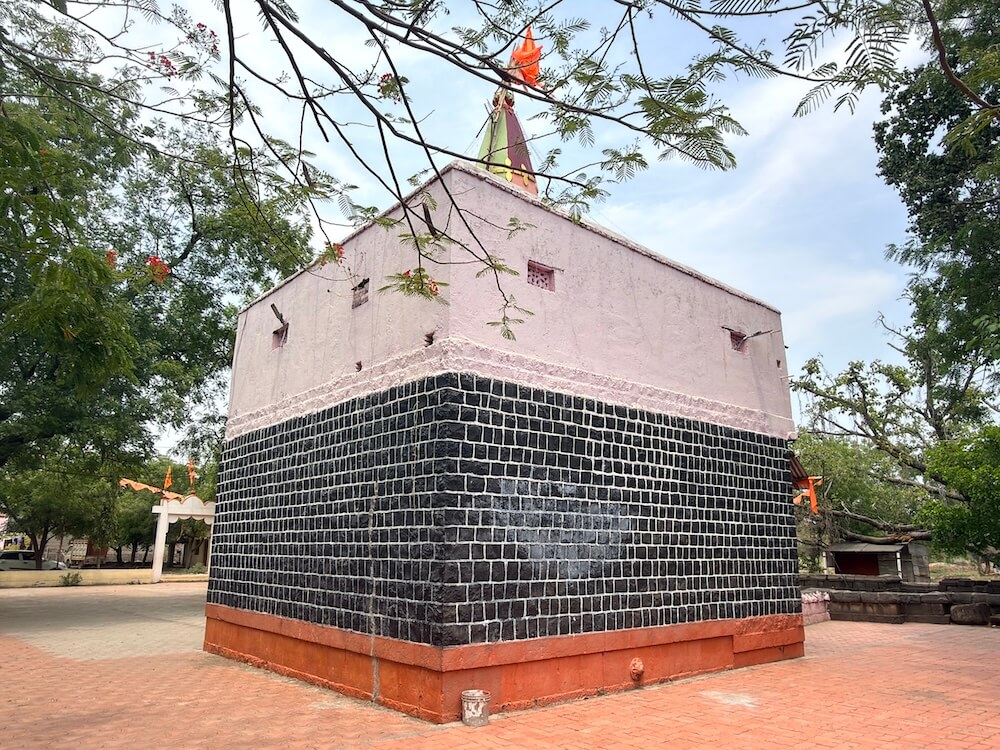
Shop Photo FramesThere is a historic village named Bachegaon in the Ghansawangi taluka of Jalna district. The Shri Ram Mandir situated in this village is considered a major place of faith for thousands of devotees in the region. This temple is a prime example of how temples, which were destroyed by foreign invasions over time, are preserved solely through the strength of public devotion. Although the ancient beauty and grandeur of this temple have been lost today, the pure faith in the deity remains intact. This faith does not lie in the magnificence of the temple, its pillars, or the sculptural beauty on its walls, but solely in the revered idols of the deities. For this very reason, even when the temple was razed to the ground in historical times, devotees preserved the sacred idols and rebuilt the temple according to their capacity. The Shri Ram Mandir at Bachegaon is one such example, and there is a firm belief among devotees that the awakened deity here grants their wishes.
Looking at the history of this shrine, the villagers believe that this temple dates back to approximately the twelfth to thirteenth century. The villagers express the opinion that foreign invasions were the main reason for the temple’s dilapidation and the breaking of the idols. About one hundred years ago, the villagers collected the broken remains of the temple and rebuilt it. At that time, while cleaning the premises, the idols found in good condition were re-installed in the temple, and regular worship began. The villagers express regret that during this entire endeavor, many ancient but severely damaged idols had to be given ‘Jalasamadhi’ (ritual immersion in water) in a scriptural manner. Amidst all these developments, the ancient stepwell (Barav) here remained largely intact in its original state. Later, in the year 1975, the villagers came together and renovated this temple once again.
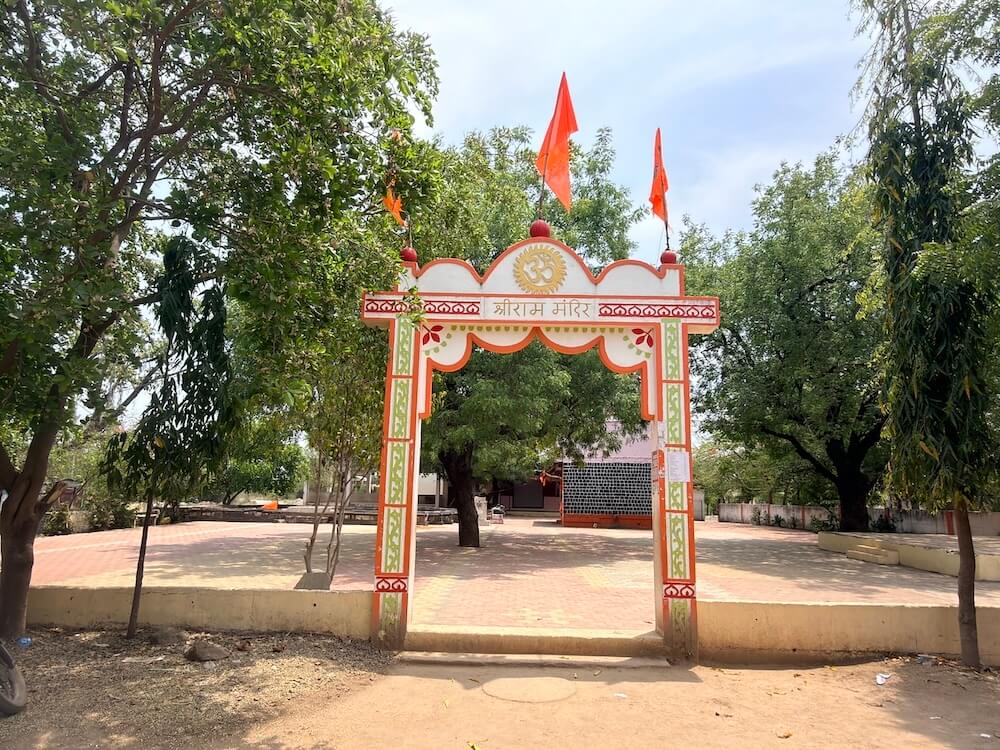
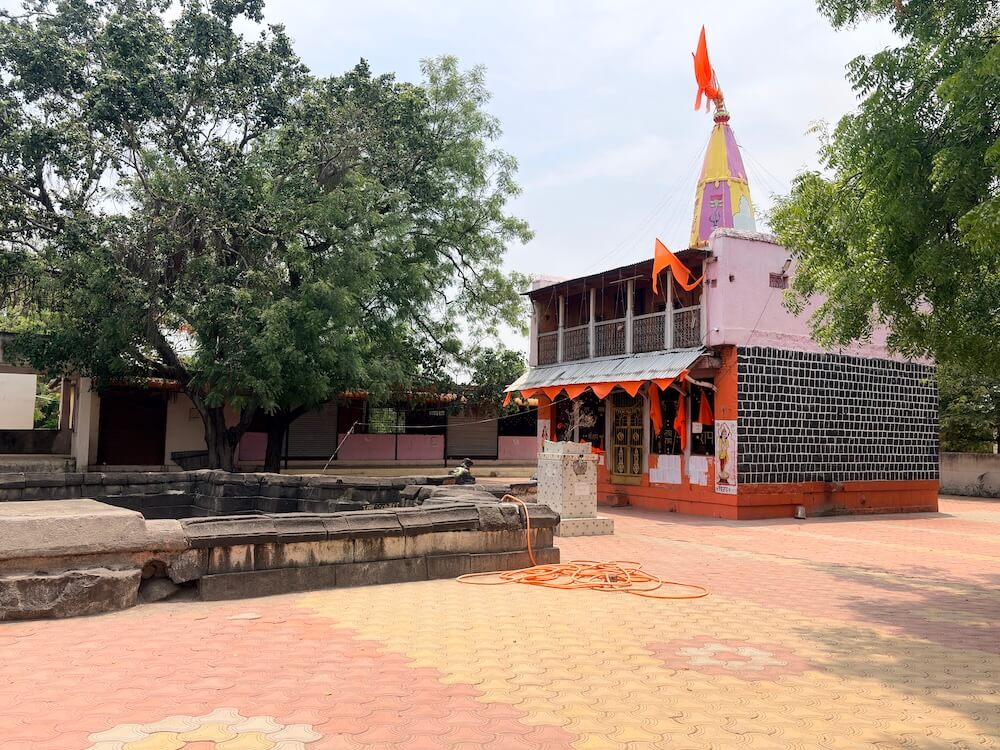
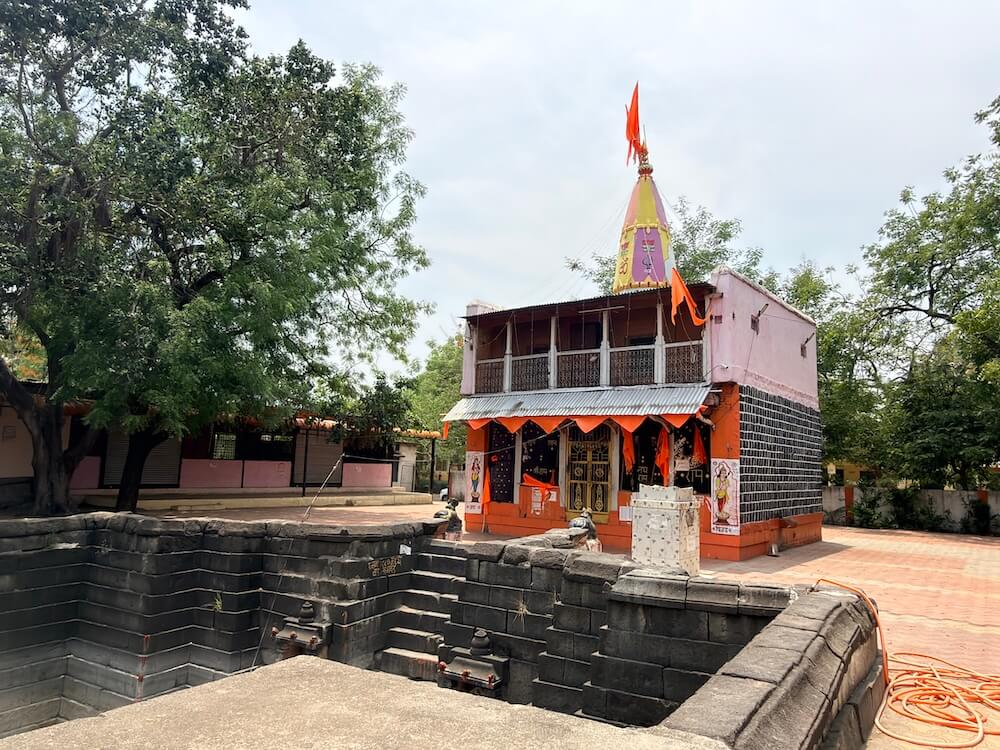
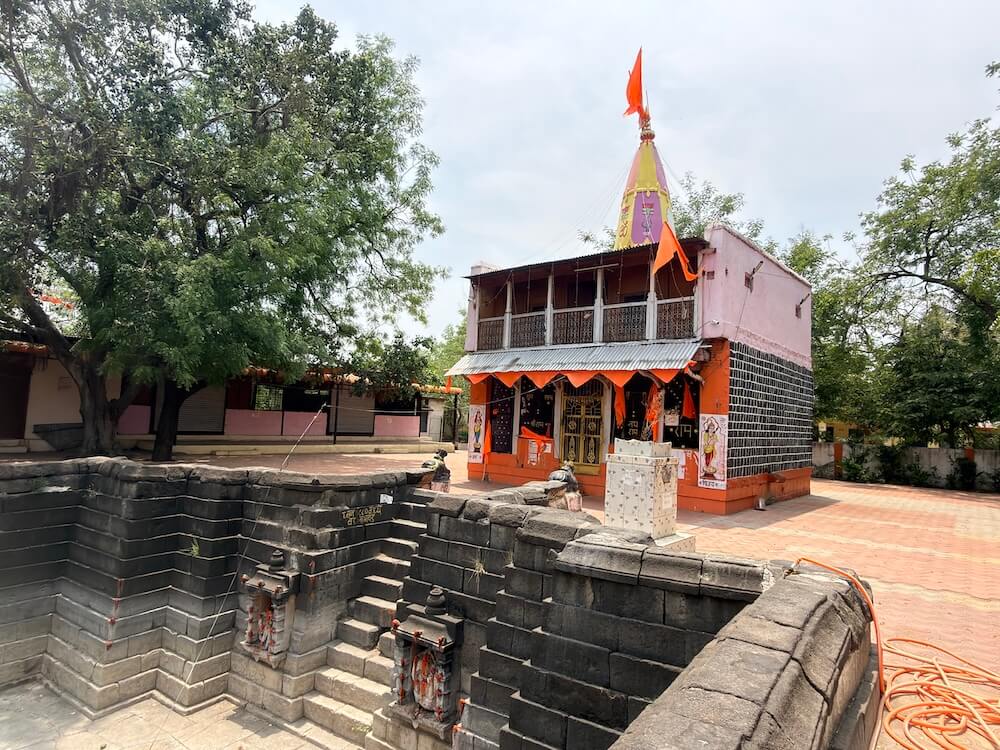
A paved road is now available to reach this temple, which is near the main village. There is a spacious parking lot in front of the temple for vehicles. A simple fence wall about two feet high is built around the temple. This fence has a simple entrance gate. Due to the large trees in the temple courtyard, which is paved with paver blocks, there is beautiful greenery and coolness here. There is a Tulsi Vrindavan right in front of the temple. In this spacious courtyard, shops for worship materials, residences for attendants, a community hall for the convenience of devotees, and other structures have been built.
In this courtyard, in front of the temple, an ancient stepwell built of carved stone is the main attraction of this temple. Two staircases have been created facing each other to descend into the stepwell. In the olden days, water wheels were installed on the pillars here to draw water from the stepwell. However, many broken items had to be removed while renovating the temple. Villagers say that the broken idol of Nandi near the stepwell also had to be removed. Beautiful niches are carved into the inner walls of the stepwell, in which ancient idols of various deities like Shri Dattatreya, Saptamatrika, Ganpati, and Parvati are enshrined. In the courtyard in front of the temple, near the stepwell, Nandi sculptures are installed on Vajrapithas on both sides. It is said that the previous ancient Nandi was broken and was immersed, and these Nandis were crafted in recent times. The ancient presence of Nandi in the Shri Ram Mandir, the installation of the Shivling, and the Saptamatrika and other Shaiva niches carved in the stepwell clearly indicate that this original temple is highly likely to have been of the Harihara or Shiva form from the Yadava period.
The structure of this temple consists of a two-story assembly hall (Sabhamandap) and an inner sanctum (Antarala). The main entrance of the assembly hall is built slightly higher than the ground of the courtyard and has two steps. This simple entrance to the assembly hall has strong wooden shutters. Inside the assembly hall, four main cement concrete pillars stand at the four corners, and four wooden pillars are installed in each of the four walls. A strong beam rests on the wooden brackets of these pillars, and wooden planking can be seen on that beam. The roof of the second floor rests on wooden pillars on this planking. On the second floor, a balcony (Sajja) has been extended on the side of the assembly hall entrance, and an iron railing has been installed on this balcony.
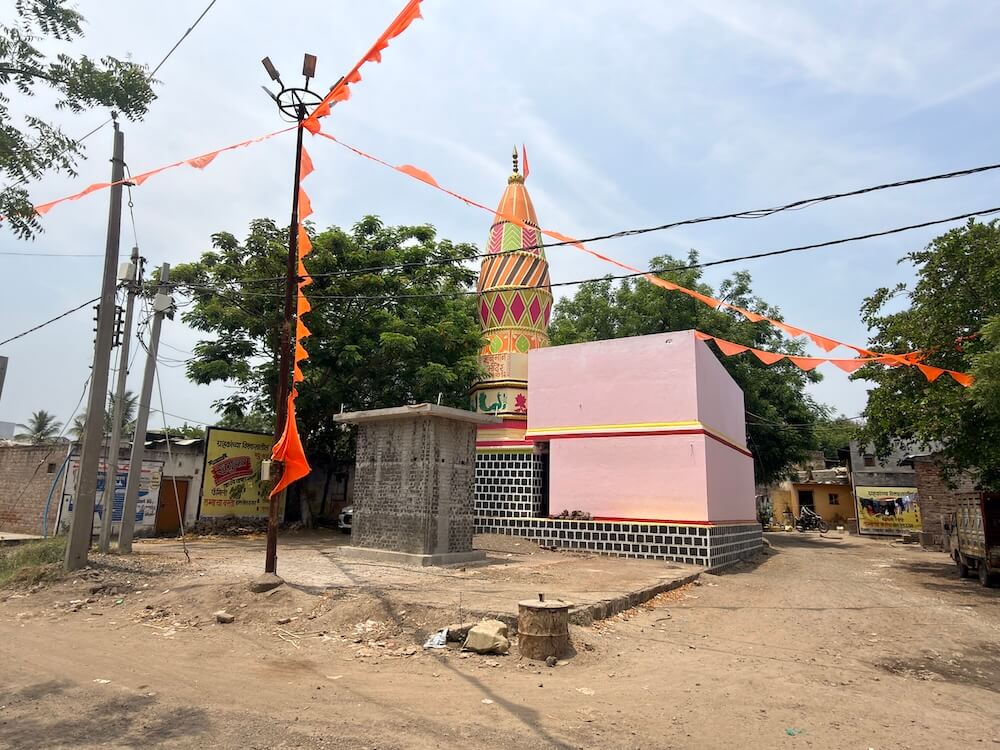
In the center of this assembly hall is the main sanctum (Garbhagriha) of the temple. The entrance to the sanctum is built slightly higher than the floor of the assembly hall and has one step. This simple entrance is fitted with wooden shutters. Upon entering the sanctum, a very beautiful idol of Sheshashayi Vishnu is seen in the center against the back wall. In this idol, Lord Brahma is seated on a lotus flower emerging from Vishnu’s navel, and Mother Lakshmi is seen serving at his feet. In this entire sculptural slab, the scene of the churning of the ocean (Samudra Manthan) performed by gods and demons is carved very beautifully at the top. Pictures of elephants and horses are also carved on this idol slab. To the right of the Lord Vishnu idol, an idol of Lord Shri Ram is installed, and a sacred Nagashila (serpent stone) is kept on the left. An idol of Lakshman is seated near the entrance of the sanctum, and a Shivling is consecrated in the center on the floor. Thus, the temple priest says that this is a unique Panchayatan consisting of Vishnu, Shri Ram, Lakshman, the Shivling, and the Nagashila. A circumambulation path (Pradakshinamarga) has been created for devotees to walk around the exterior of the sanctum. A square-shaped ornate spire (Shikhara) is built on the roof of the sanctum. At the top of this spire is an Amalaka and a Kalash above it.
Ram Navami is celebrated as the main annual festival in this temple of Bachegaon. This birth anniversary celebration lasts for nine consecutive days from Chaitra Shuddha Pratipada, i.e., Gudi Padwa, to Ram Navami. During these nine days, religious programs such as Bhajans, Kirtans, discourses, and Mahaprasad are organized in the temple every day.
On the occasion of this festival, thousands of devotees from the surrounding area flock to the temple for the darshan of the deities and to fulfill their vows. The main feature of this festival is the historical custom of pulling twelve carts observed here. Devotees who have made a vow to the deity pull twelve carts connected to each other for a distance of eight to ten kilometers to the temple themselves. A large crowd gathers to witness this ceremony.
At this time, a grand palanquin procession of Lord Shri Rama is also taken out. Apart from Ram Navami, festivals and celebrations like Dussehra, Diwali, the entire month of Shravan, the month of Margashirsha, Mahashivratri, and Nag Panchami are also celebrated with great enthusiasm in this temple. Additionally, there is a large crowd of devotees visiting the temple for darshan on every Monday and Thursday of the week, as well as on the Purnima and Amavasya of every month.
This sacred temple stands as a testament to deep spiritual devotion, ancient architectural grandeur, and rich local cultural traditions.
The sanctum sanctorum houses the divine idol consecrated according to ancient Vedic traditions, surrounded by serene courtyards and traditional temple architecture.
Navratri, Maha Shivratri, Annual Temple Jatra & Deepotsav
Compare and book flights, secure top-rated local hotels near the temple, hire reliable guides, and rent cars instantly.
Extend your pilgrimage by visiting other highly sacred temples located nearby.


Add ₹999 more to unlock FREE SHIPPING!
Your sacred cart is currently empty.
Shop Photo FramesFill in your delivery details below to place your order.
Add comment