
Add ₹999 more to unlock FREE SHIPPING!
Your sacred cart is currently empty.
Shop Photo FramesThe Tulja Bhavani Temple of Tuljapur, one of the three and a half Shakti Peethas, is well-known in Maharashtra. Tuljapur’s Bhavani was the Kulswamini (family deity) of Chhatrapati Shivaji Maharaj himself. Historical chronicles record that Maharaj often sought the Goddess’s counsel (Kaul) before embarking on any mission. The legend that the Bhavani sword was gifted to him by Tulja Bhavani herself is widely known across Maharashtra. Temples dedicated to this Kulswamini of Maharashtra are found in various places across the state. Among these, the Tulja Bhavani Temple at Anikat is famous as the Prati-Tuljapur (replica of Tuljapur) of Akola. Here, Goddess Tulja Bhavani resides along with the Swayambhu (self-manifested) Asara Mata.
The word ‘Bhava’ has meanings such as Mahadeva, Madan, and the world. The great scholar and commentator of Tantra Shastra from the eighteenth century, Bhaskararaya, explained that Bhavani is the Goddess who gives consciousness to all these. Another etymology suggests that Bhavani means the wife of Shiva (Bhava). According to the Marathi Vishwakosh, many principles of Tantra Shastra have emerged through the dialogue between Shiva and Parvati, meaning that the Devi or Bhavani is the Shiva-Shakti who assumes various forms to perform diverse functions. The various roles of the Shakti-form Goddess, Bhavani, are described in texts such as the Saundarya Lahari, Lalita Sahasranama, Devi Bhagavata, and Bhavani Bhujangam Stotram. While she is the presiding deity of the Shakti Peetha at Thanesar (Thaneshwar) in Punjab, Tuljapur in the Osmanabad (Dharashiv) district of Maharashtra is renowned as a Shakti Peetha of Bhavani.
In the ‘Tulja Mahatmya’, a mythological legend about the Goddess is narrated: In the Krita Yuga, a Brahmin named Kardam lived. At the time of his death, his wife, Anubhuti, was pregnant, and thus she could not perform Sahagamana (sati) with her husband. After giving birth some days later, she began penance on the banks of the Mandakini River. Once, a demon named Kukkut, who had come there for hunting, saw her. Mesmerized by her radiant form, he touched her. Anubhuti then prayed to Mother Parvati in her heart. Hearing her call, Parvati herself appeared in the form of Bhavani and slew the demon Kukkut. Because she rushed immediately to the call of her devotee, the Goddess came to be known as Turja or Twarita (the swift one). Linked to this legend is the story that as the demon Kukkut was dying, he assumed the form of Mahishasura. The Goddess slew him, and thus, the Goddess resides in Tuljapur in the form of Mahishasuramardini.
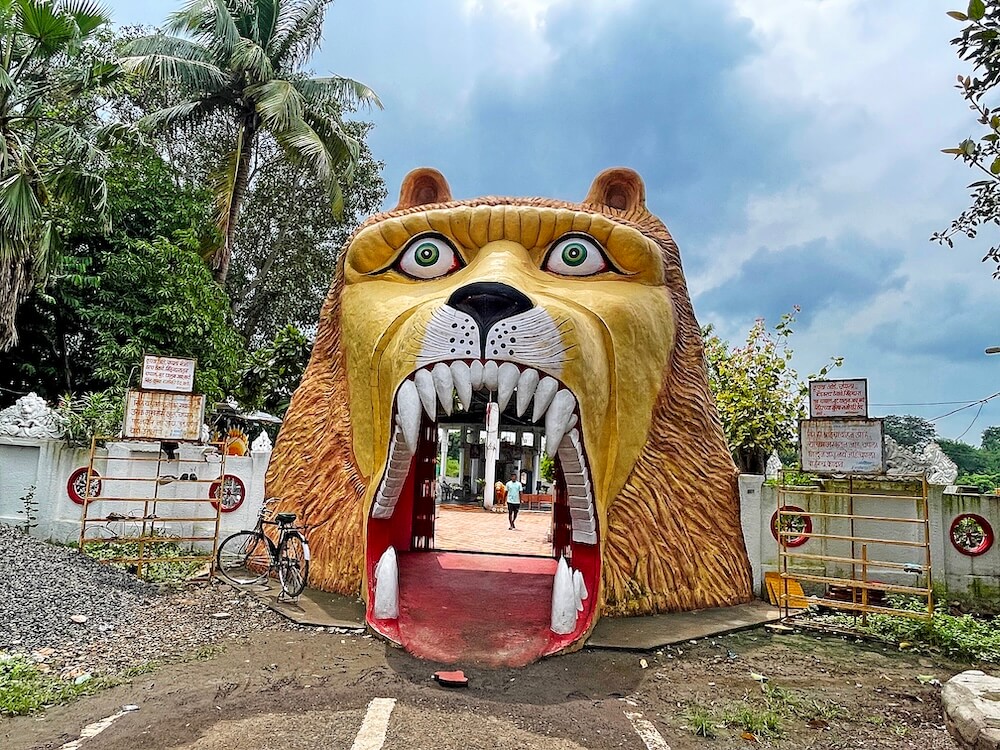
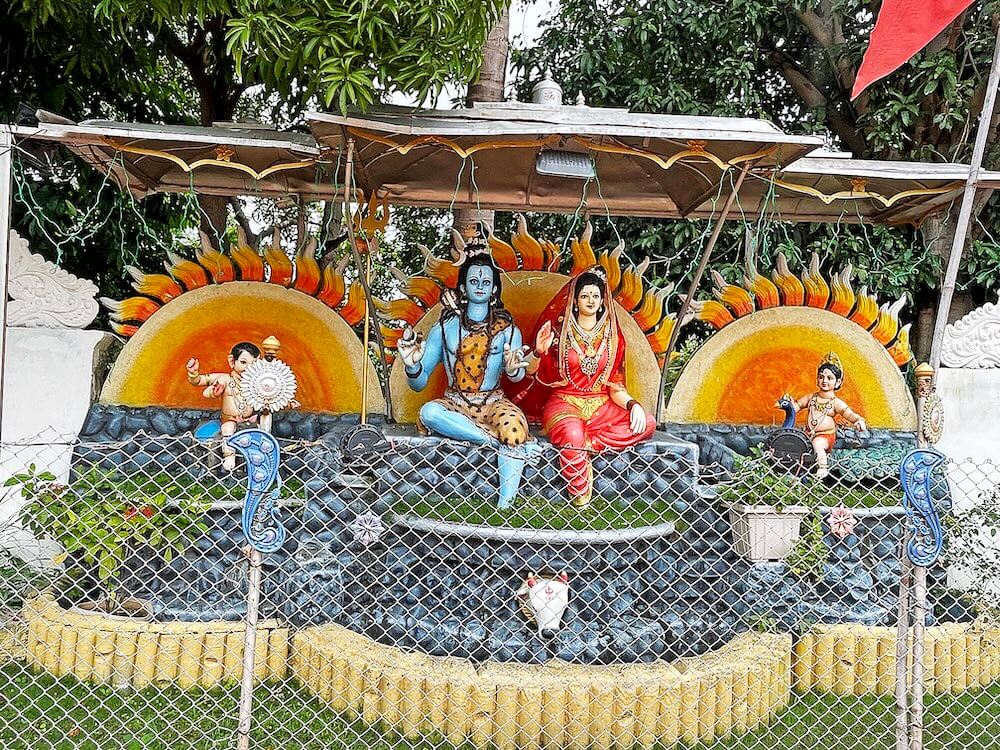
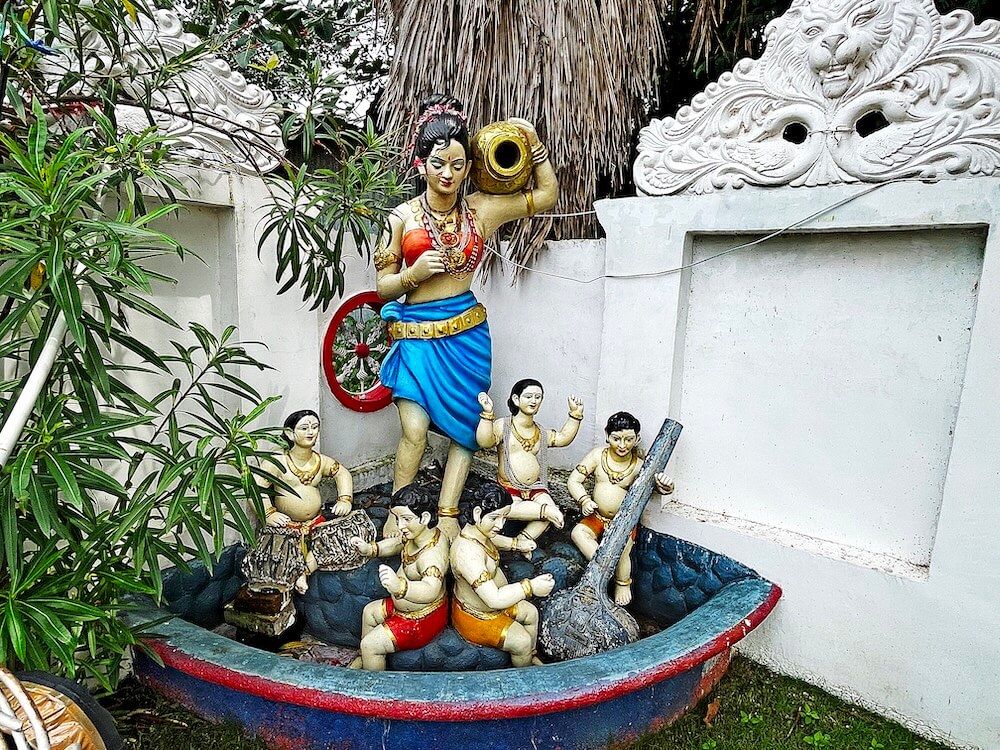
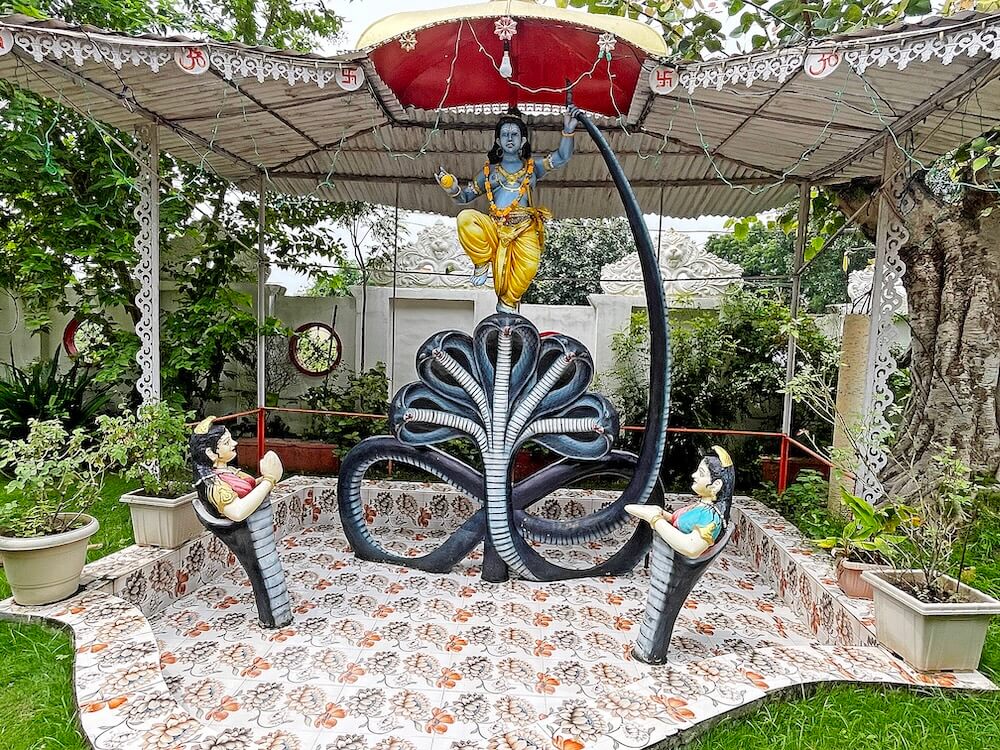
The temple of the Goddess here was originally small. In 1999, after the villagers renovated the temple, it attained its current form. Situated on the banks of the Morna River, the temple premises are peaceful and serene. The temple is surrounded by a boundary wall on all four sides, and the entrance gate features an attractive mask of a lion, the Goddess’s vehicle. This entrance, 18 feet high and 13 feet wide, was constructed using iron bars and cement concrete. One enters the temple courtyard through this gate. In the garden within the courtyard, there is a beautiful idol of Shri Krishna performing Kaliya Mardana. Additionally, there are sculptures of Shiva-Parvati along with Ganesha and Kartikeya.
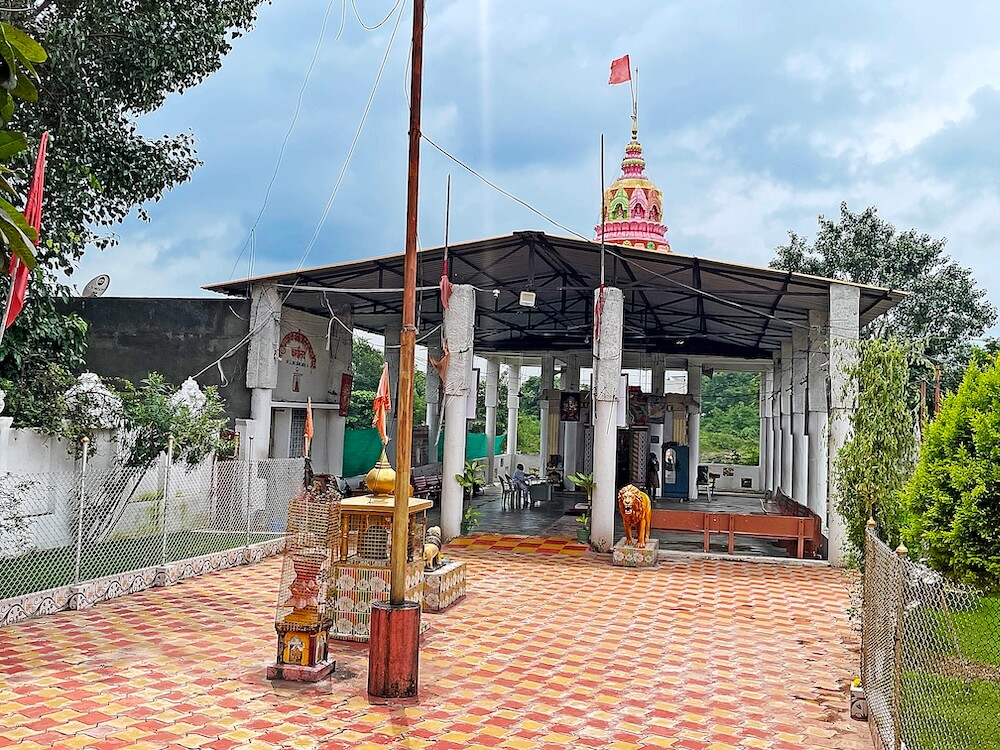
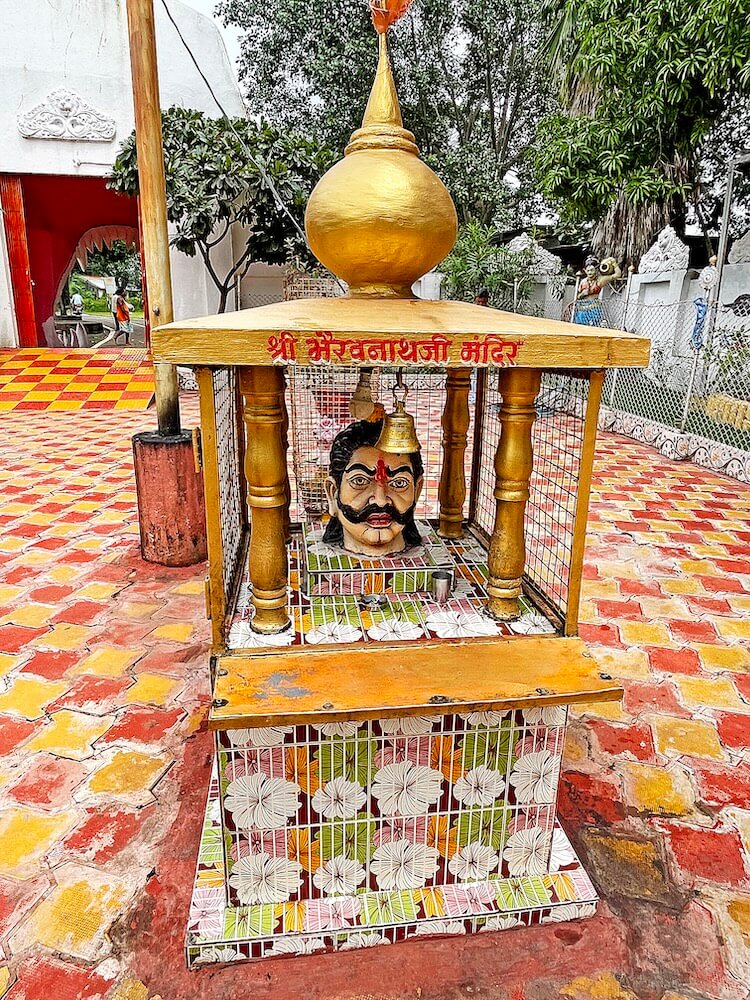
On both sides of the entrance to the open Sabha Mandap (assembly hall) in front of the main temple, there are lion sculptures. On a platform in front of the Sabha Mandap is the seat of Kalbhairava, and just a few steps away is the sculpture of the lion, the vehicle of the Goddess. For the convenience of devotees, this Sabha Mandap has a metal roof. In the center of the Sabha Mandap is a Homa Kunda (sacrificial fire pit), and there are seats for devotees along the sides. Beyond the Sabha Mandap, leaving space for the circumambulation path (Pradakshina Marg), is the Garbhagriha (sanctum sanctorum). The pillars at the entrance of the Garbhagriha are intricately carved. A beautiful idol of Mother Tulja Bhavani is seated on a Vajrapitha inside the Garbhagriha. This adorned Goddess wears a silver crown on her head. In the niches of the Garbhagriha, there are idols of Ganpati, Gajanan Maharaj, and an image of Tulja Bhavani.
On both sides of this Garbhagriha, there are stairs leading down to the underground seat of Asara Mata. Descending six to seven steps, one enters the Garbhagriha of Asara Mata located beneath the main sanctum. In this chamber is the Swayambhu seat of Asara Mata. On a Swayambhu vermilion-smeared stone here, seven images of the Goddess are painted. This stone is worshipped as Asara Mata. In a niche on the wall behind this stone, there is an idol of the Goddess.
Daily worship is performed in this temple. Chaitri and Sharadiya Navratri festivals are celebrated here with great enthusiasm. Various religious programs such as Gondhal and Havan are organized on the occasion of these festivals. Countless devotees from the surrounding areas come to seek the blessings of the Goddess during these festivals. Devotees can visit the temple daily from 6:00 in the morning to 8:00 in the evening.
This sacred temple stands as a testament to deep spiritual devotion, ancient architectural grandeur, and rich local cultural traditions.
The sanctum sanctorum houses the divine idol consecrated according to ancient Vedic traditions, surrounded by serene courtyards and traditional temple architecture.
Navratri, Maha Shivratri, Annual Temple Jatra & Deepotsav
Compare and book flights, secure top-rated local hotels near the temple, hire reliable guides, and rent cars instantly.
Extend your pilgrimage by visiting other highly sacred temples located nearby.


Add ₹999 more to unlock FREE SHIPPING!
Your sacred cart is currently empty.
Shop Photo FramesFill in your delivery details below to place your order.
Add comment