
Add ₹999 more to unlock FREE SHIPPING!
Your sacred cart is currently empty.
Shop Photo FramesRajrajeshwar Mahadev is the presiding deity of Akola city. The Shiva temple of Rajrajeshwar here is recognized as an excellent example of ancient temple architecture. It is because of this temple that Akola city is also known as ‘Rajrajeshwar Nagari’. Millions of devotees from Akola district have deep faith in Rajrajeshwar. Many villagers begin their daily work only after having the darshan of this village deity. On the last Monday of the holy month of Shravan, Rajrajeshwar is anointed with the sacred water of the Purna river from Gandhigram. There is a huge crowd of devotees in the temple during this Kawad Yatra.
The legend regarding this temple is given in the 1910 edition of the ‘Central Provinces and Berar District Gazetteers – Akola District’. According to it, a Rajput chieftain named Akolsinh founded this village. In ancient times, he lived at Kanheri, six miles away from Akola. The area where Akola is currently situated was a dense forest. There was a temple of Mahadev in this forest. Akolsinh’s wife used to come to this temple regularly to worship Mahadev. Due to the king’s short-tempered nature, she used to leave the fort secretly before sunrise every day in the dark to worship Shivshankar in this temple. However, as she was going somewhere every morning without informing him, the king began to suspect her character.
One day, as soon as the queen left the fort to go to the temple, he followed her. Seeing him at the entrance of the temple, the queen understood his intentions. Hurt by her husband’s suspicion of her character, the queen prayed to Rajrajeshwar to absorb her into himself. At that very moment, the Pindi split, and the Pindi absorbed the queen into itself. After that, the Shivpindi became whole again. At that time, a part of the queen’s saree pallu remained in the king’s hand. It is said that for many years, that piece of the saree could be seen outside the Shivling. Following this, a grief-stricken Akolsinh established a settlement here in memory of his wife. Once, Akolsinh saw a rabbit chasing a dog at a spot here. Considering this a good omen, he built his fort (Garhi) at this place. Later, after Aurangzeb gifted the city of Akola to his Wazir-e-Azam Asad Khan as a reward, he built a fort on the site of this same Garhi in 1697. It is known as Asadgad. This ancient temple of Rajrajeshwar is situated near this fort. According to the 1910 records, the temple owned 100 acres of land, and the temple received an annual income of 15,000 rupees.
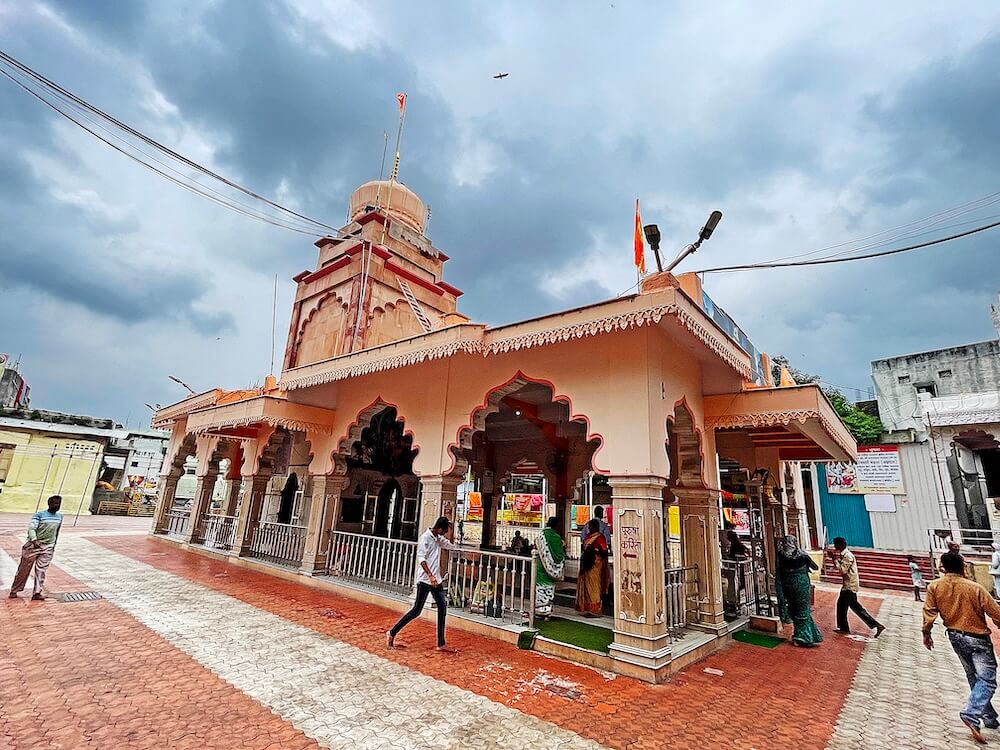
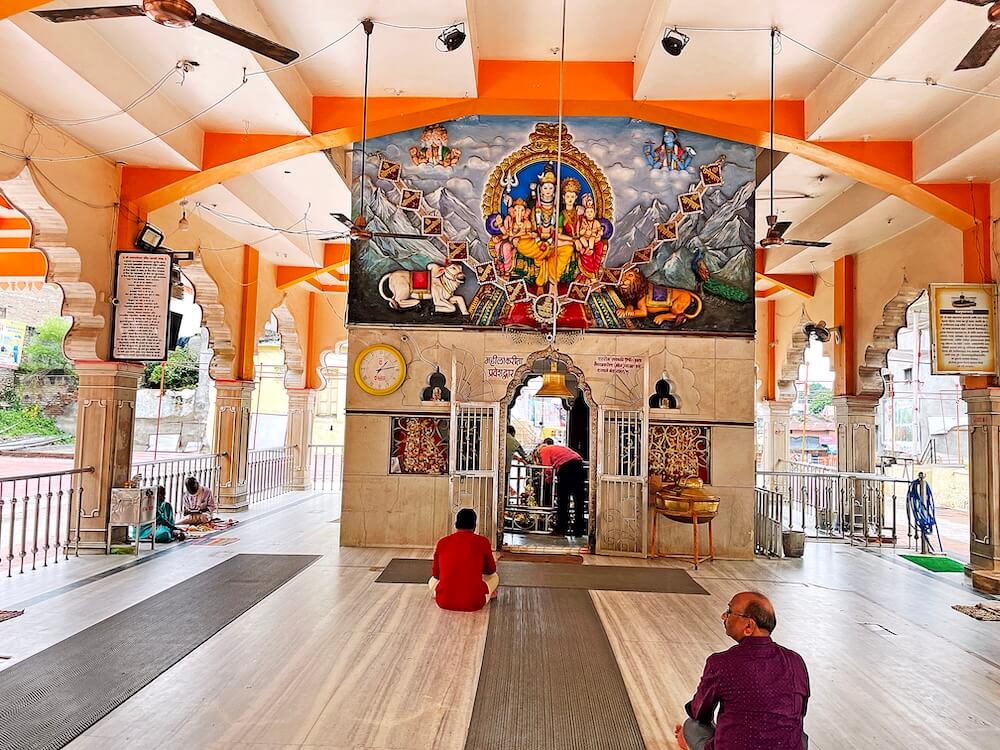
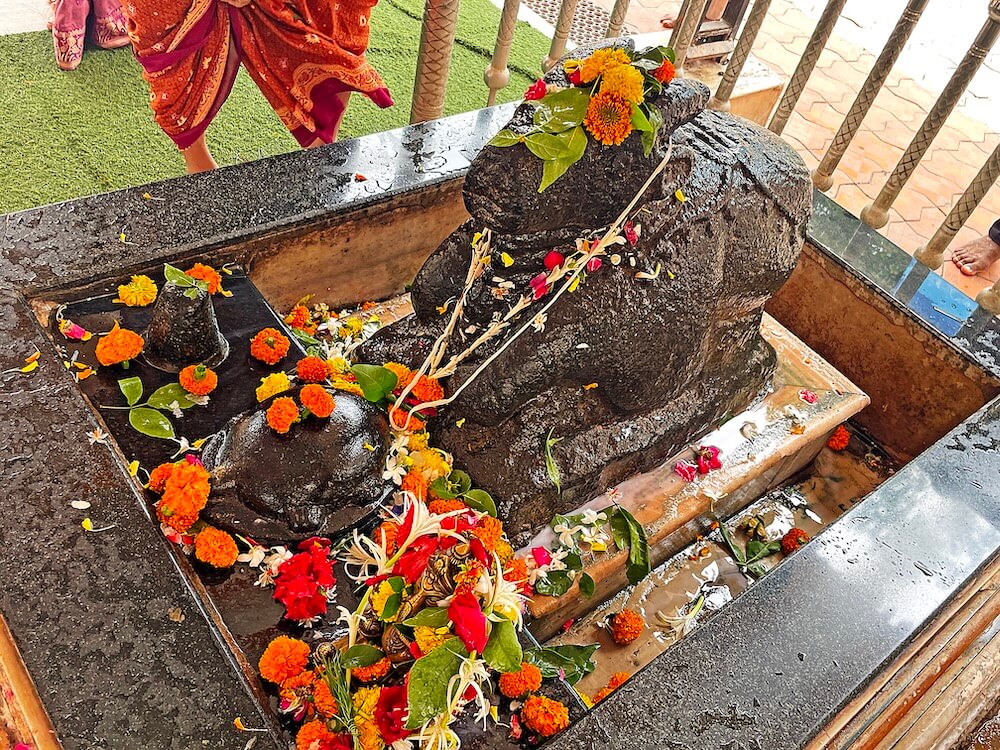
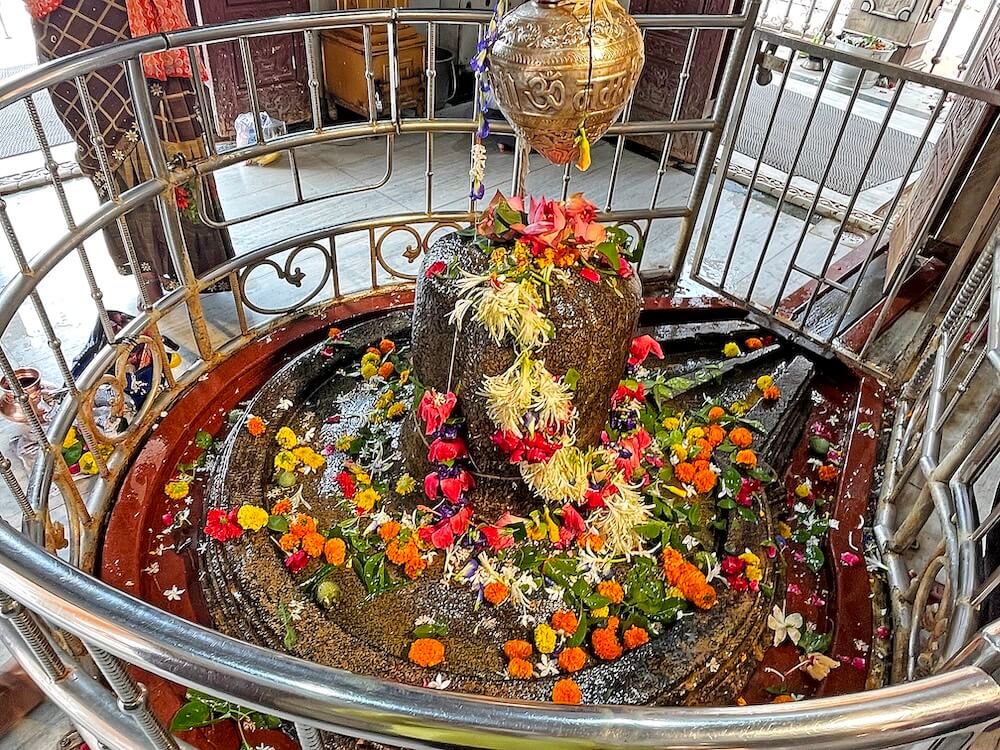
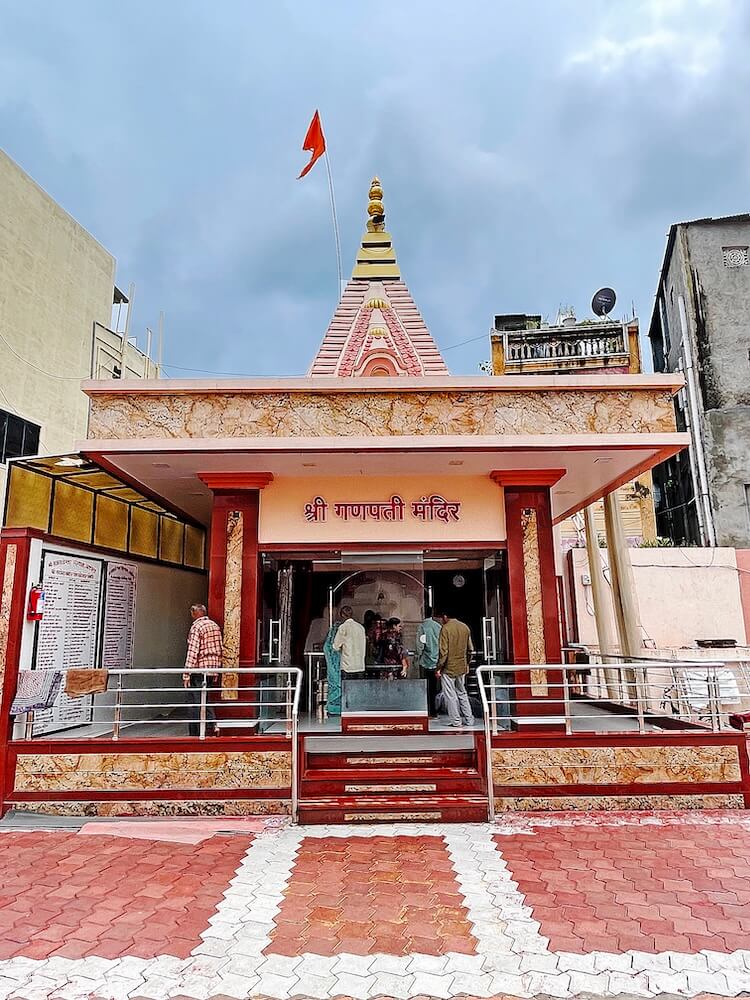
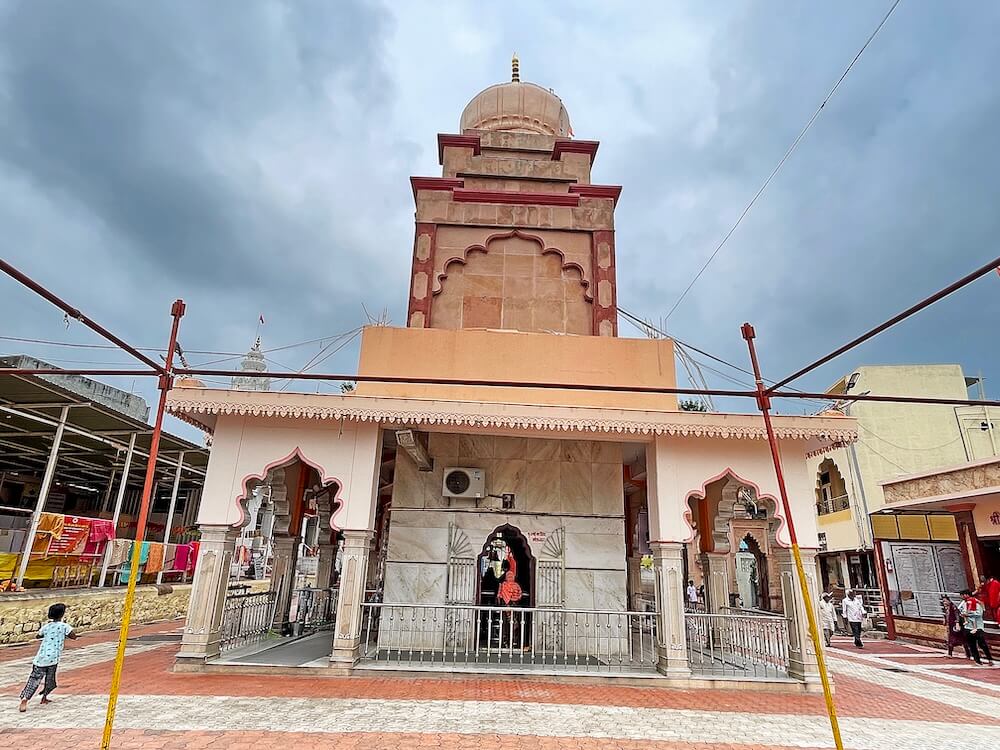
Located in the heart of the city, this temple has a magnificent entrance gate. This entrance is built using Rajasthani red stone. It has a main entrance and smaller doors on both sides. One enters the paved courtyard of the temple through this entrance. The structure of this temple consists of a Sabhamandap (assembly hall) and a Garbhagriha (sanctum sanctorum). Near the entrance of this semi-open Sabhamandap, there is a large bell, and below it, on a pedestal, is a large idol of Nandi made of solid black stone. On the Nandi’s pedestal, there is a stone tortoise idol, a small Shivpindi, and a brass idol of Ganesha. All the pillars in the Sabhamandap are connected to each other in the shape of arched vaults. The Garbhagriha is designed after leaving a circumambulation path (Pradakshina Marg) in front of the Sabhamandap. Above the entrance of the Garbhagriha, on the ceiling, there is a large image of the Shiva family. In the center of the Garbhagriha, Rajrajeshwar’s Pindi is placed in a large stone Shalunka. A serpent forms a canopy over this Shivling. On festive occasions, a metal mask is placed on it. Goddess Parvati is seated on the wall behind the Shivling. In front of the temple are the Kalika Mata and Ganesh temples. In the premises of the Kalika Mata temple, there are idols of Dattatreya, Ram Darbar, Radha-Krishna, Gajanan Maharaj, and others.
Devotees come here throughout the day for the darshan of Rajrajeshwar. Various religious programs are organized here on the day of Mahashivratri. In the month of Shravan, countless devotees come to have the darshan of Rajrajeshwar. The Kawad Yatra that arrives here on the last Monday of this month is as important to the city dwellers as Diwali. In 1964, there was a severe drought in Akola. At that time, Shiva devotees anointed Rajrajeshwar with the water of the Purna river from Gandhigram. After that, there was good rainfall, and the drought ended. This tradition has continued since then. On the day before this Kawad Yatra, many Kawad-bearers fill water in Kawads from the Purna riverbed at Gandhigram, 20 km away from Akola. Then, traveling barefoot all night, they reach the outskirts of the city. After that, the Palkhi and Kawad Yatra proceed towards the temple to the sound of drums and cymbals. Upon reaching the temple, Rajrajeshwar is anointed with the water from these Kawads. Along with countless devotees from Akola district, many devotees from neighboring districts also participate in this Yatra.
On Vaikuntha Chaturdashi in the month of Kartik, the Harihar Milan ceremony takes place here. On the day of this ceremony, the Shivling is anointed. After the Shodashopachara Puja, 56 Bhog (offerings) are offered to Rajrajeshwar. Then, a Maha Aarti is performed. Countless devotees attend this ceremony as well. Apart from this, Dev Diwali, i.e., Deepotsav, is celebrated on Kartik Purnima. At this time, the temple premises are illuminated by the light of thousands of lamps.
In 2024, an underground chamber was discovered during excavation work started for the development of the Rajrajeshwar temple premises. A building about 200 years old was found in this chamber. ‘Jai Bajrang Bali’ and ‘Jai Shri Ram’ are written on the stones of this building, and there are two rooms inside the chamber. Devotees can have the darshan of Rajrajeshwar here from early morning until late at night. The doors of the Garbhagriha are closed only for Naivedya (Bhog) daily between 11.30 and 12 in the afternoon.
This sacred temple stands as a testament to deep spiritual devotion, ancient architectural grandeur, and rich local cultural traditions.
The sanctum sanctorum houses the divine idol consecrated according to ancient Vedic traditions, surrounded by serene courtyards and traditional temple architecture.
Navratri, Maha Shivratri, Annual Temple Jatra & Deepotsav
Compare and book flights, secure top-rated local hotels near the temple, hire reliable guides, and rent cars instantly.
Extend your pilgrimage by visiting other highly sacred temples located nearby.


Add ₹999 more to unlock FREE SHIPPING!
Your sacred cart is currently empty.
Shop Photo FramesFill in your delivery details below to place your order.
Add comment