
Add ₹999 more to unlock FREE SHIPPING!
Your sacred cart is currently empty.
Shop Photo FramesThe Nagesh sect, a tradition of Shiva worshippers that emphasizes yoga and presents spiritual thought that inspires devotion in the common person rather than focusing on rigid rituals, strict asceticism, or renunciation, emerged in Mohol taluka. In this very taluka, at Papari, there is a historical site of Swayambhu Mahadeva. The legend behind this is that the Shiva Linga here was not installed by anyone, but rather originated spontaneously from the earth. Devotees firmly believe that the Mahadeva here is intensely divine and conscious, and worshipping Him fulfills desires such as the blessing of progeny.
According to the legend regarding the temple, in ancient times, a king named Khatvanga ruled over the village of Khandali, located two kilometers away from Papari. There is no historical record of who this king was. A king by the very same name was born in Lord Sri Rama’s lineage during the Treta Yuga and had participated on the side of the gods in the Deva-Asura war. Mythological tales state that this king donated all his wealth to the poor and to Brahmins. However, according to the Sthana Mahatmya of Papari, King Khatvanga was originally from Budhgaon near Miraj. This king had no children. He was fond of hunting. Once in the summer, having failed to find any prey until the afternoon, the exhausted king stopped under a tree. He fell asleep at that very spot.
While sleeping, he had a divine vision: “At the spot where you are sleeping, there is a Shivalinga of Mahadeva. Provide shade over that Shivalinga, and your lineage will prosper.” Following that divine vision, the king saw a Swayambhu Shivalinga there. The king built a small shrine to provide shade over the Shivalinga. According to this legend, within a few days thereafter, he was blessed with a child. There is another legend regarding this temple as well. It is that in former times, the children of farmers used to bring their cattle to graze in the forest here It happened that while playing, a boy’s stick struck a stone there, and blood began to ooze from it. The children went home and told about this incident. Then the elders came here and saw a Swayambhu (self-manifested) Shivling emerging from the ground. Since then, worship has been taking place at this spot, according to the villagers.
It is said that the temple here is about one hundred and fifty years old. References are found stating that Chhatrapati Shahaji alias Buvasaheb Maharaj of the Karveer Sansthan (reign AD 1821 to 1837) renovated this temple.
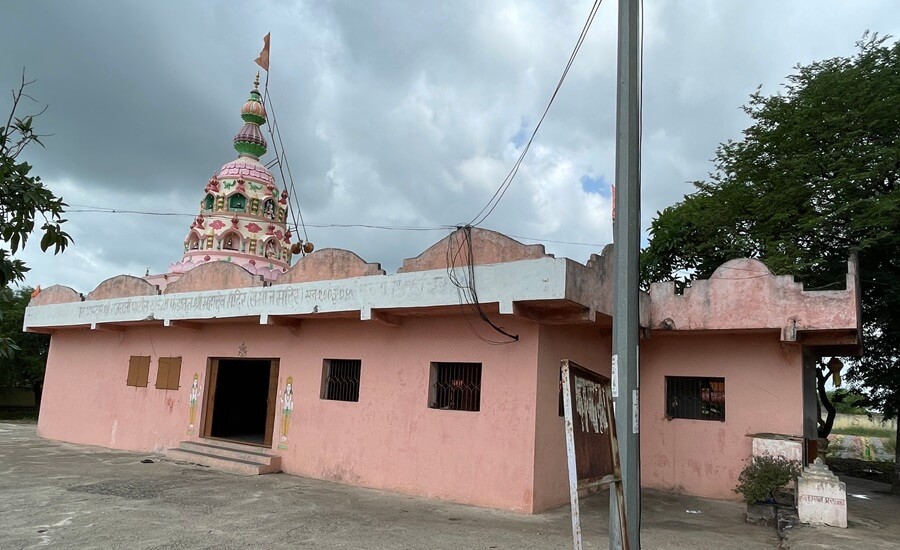
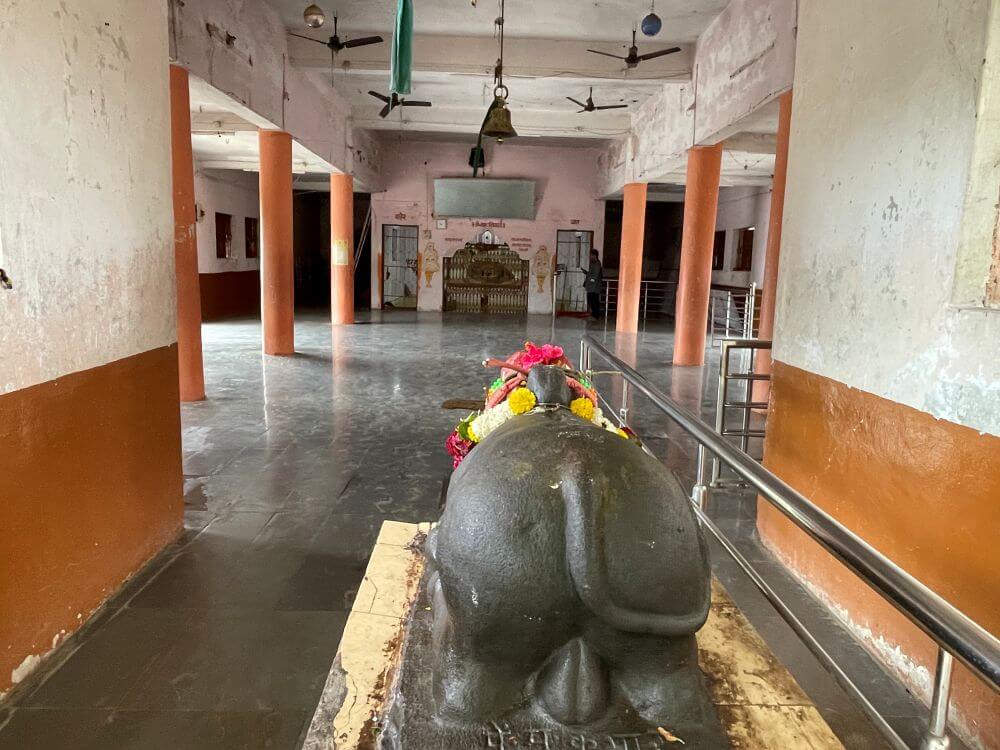
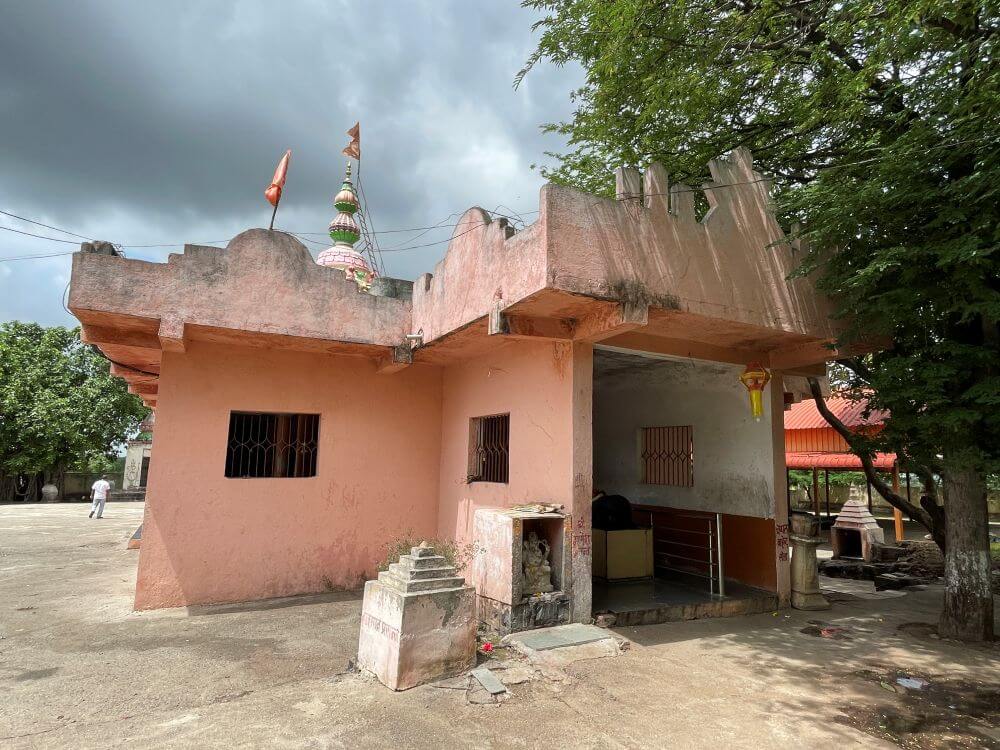
This temple, located outside the village, has a boundary wall and a large courtyard. There are shrines of local deities in the courtyard. The temple structure consists of a sabhamandapa (assembly hall) and a garbhagriha (sanctum sanctorum). On both sides of the entrance to the sabhamandapa, there are two square pillars supporting a roof on a projecting beam in the front, making this structure resemble a floating mukhamandapa. In the sabhamandapa, there are four rows of four pillars each. The pillars in the middle two rows are circular, and those in the outer rows Square pillars are embedded in the walls. Brass bells are suspended from the ceiling here. There are two additional entrance doors on the left and right sides of the sabhamandapa.
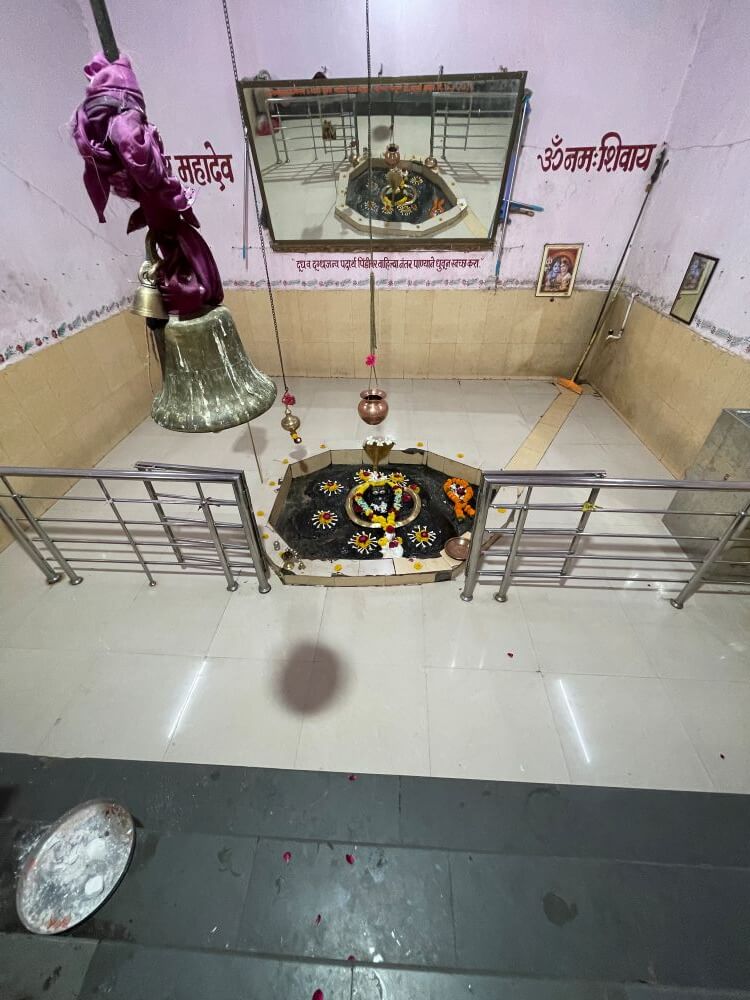
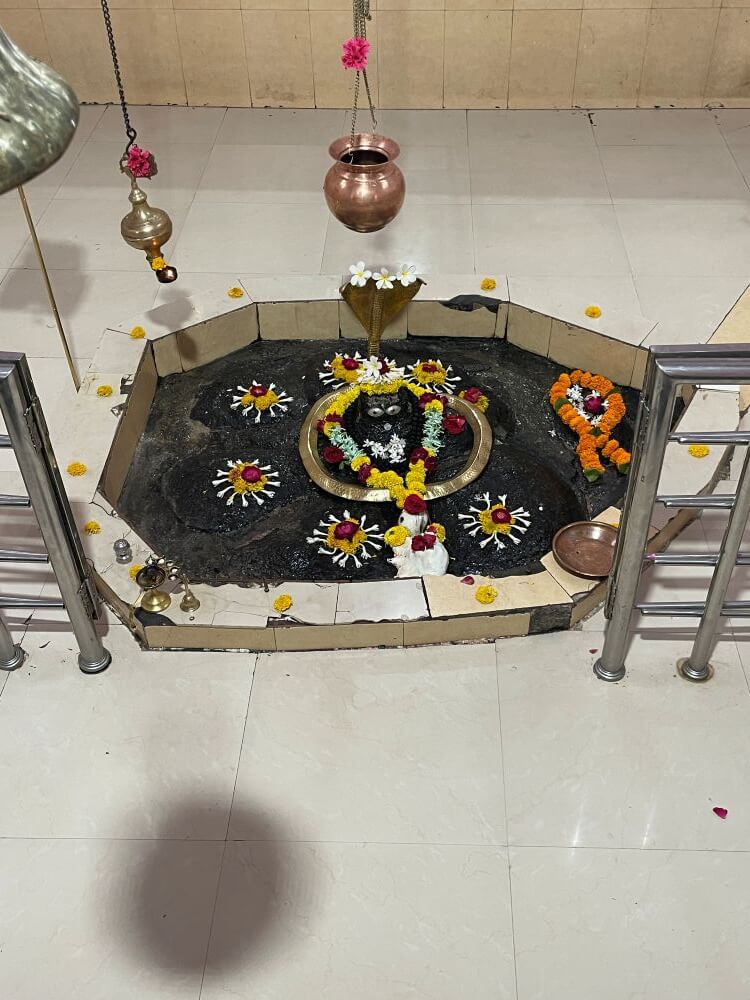
Ahead of the sabhamandapa lies the entrance to the garbhagriha. In the centre of the garbhagriha on the floor stands the swayambhu Shiva linga, emerging naturally from the rock. Above the Shiva linga is a brass serpent holding a protective hood. To the right, there is a door providing an exit from the garbhagriha. The roof of the temple is enclosed by a parapet on all four sides. Above the garbhagriha, the shrine features a three-tiered circular shikhara. Each of the lower two tiers of the shikhara contains eight devakosthakas housing Shiva lingas, while the devakosthakas in the upper tier contain idols of various deities. Sculptures of floral motifs and animals are carved onto the walls of the shikhara. At the summit of the devakosthakas are amalakas and kalashas. At the apex of the main shikhara are two amalakas placed one above the other. Surmounting the amalakas are a kalasha and a flag banner.
During the holy month of Shravana, a Saptaha is organized at this temple. Along with bhajans and kirtans, lecture series by eminent saints and scholars of the Varkari tradition are arranged. This twelve-day festival concludes with the distribution of Maha Prasada known as Kalya-cha-Prasad. On behalf of the villagers, arrangements for Annadana (food donation) are made throughout the Saptaha.
The temple also witnesses a large gathering of devotees on Shivaratri. Original residents who have moved out of the village for business or employment make it a point to visit the village on this day for Darshan. On Maha Shivaratri, fasting khichdi is distributed to the devotees. It is said that two thousand kilograms of sago (sabudana) khichdi is prepared on this day.
This sacred temple stands as a testament to deep spiritual devotion, ancient architectural grandeur, and rich local cultural traditions.
The sanctum sanctorum houses the divine idol consecrated according to ancient Vedic traditions, surrounded by serene courtyards and traditional temple architecture.
Navratri, Maha Shivratri, Annual Temple Jatra & Deepotsav
Compare and book flights, secure top-rated local hotels near the temple, hire reliable guides, and rent cars instantly.
Extend your pilgrimage by visiting other highly sacred temples located nearby.


Add ₹999 more to unlock FREE SHIPPING!
Your sacred cart is currently empty.
Shop Photo FramesFill in your delivery details below to place your order.
Add comment