
Add ₹999 more to unlock FREE SHIPPING!
Your sacred cart is currently empty.
Shop Photo FramesVitthalwadi is situated on the banks of the Mutha River in the southwest of Pune. The eighteenth-century Vitthal-Rukmini temple here is considered an important treasure of Pune’s spiritual and cultural heritage. This temple is regarded as a major center for the Warkari tradition in this region. It is known as ‘Prati Pandharpur’ (the replica of Pandharpur). The structure was renovated during the era of Thorle Madhavrao Peshwa, acquiring the form of a secure fortress. It is said that the area derived the name Vitthalwadi from this temple. Once located outside the city, the temple is now in a central part of the city due to urban expansion.
The legend of this temple states that a farmer and devotee of Vitthal named Sambhaji Gosavi used to perform the Wari to Pandhari every year. Due to his advancing age, he found it difficult to travel to Pandharpur and was deeply distressed. One day, while ploughing his field, his plough got stuck in the ground. When he dug up the spot, he found a stone idol of Lord Vitthal. Since this idol manifested from the earth, it is considered ‘Swayambhu’ (self-manifested). The mark of the ploughshare on the forehead of the idol is still shown today. After this incident, Sambhaji Gosavi consecrated the idol at the same spot. As the fame of the temple and the idol grew, the surrounding area came to be known as ‘Vitthalwadi’. In the early days, this temple was small. In the year 1732, the temple was damaged due to an invasion of the Pune region by Nizam-ul-Mulk. Subsequently, Thorle Madhavrao Peshwa undertook the work of reviving the temple. He gave the temple the form of a sturdy fortress. A copper plate (Sanad) issued by Chhatrapati Shahu Maharaj granting land for the maintenance of the temple can still be seen on the wall today.
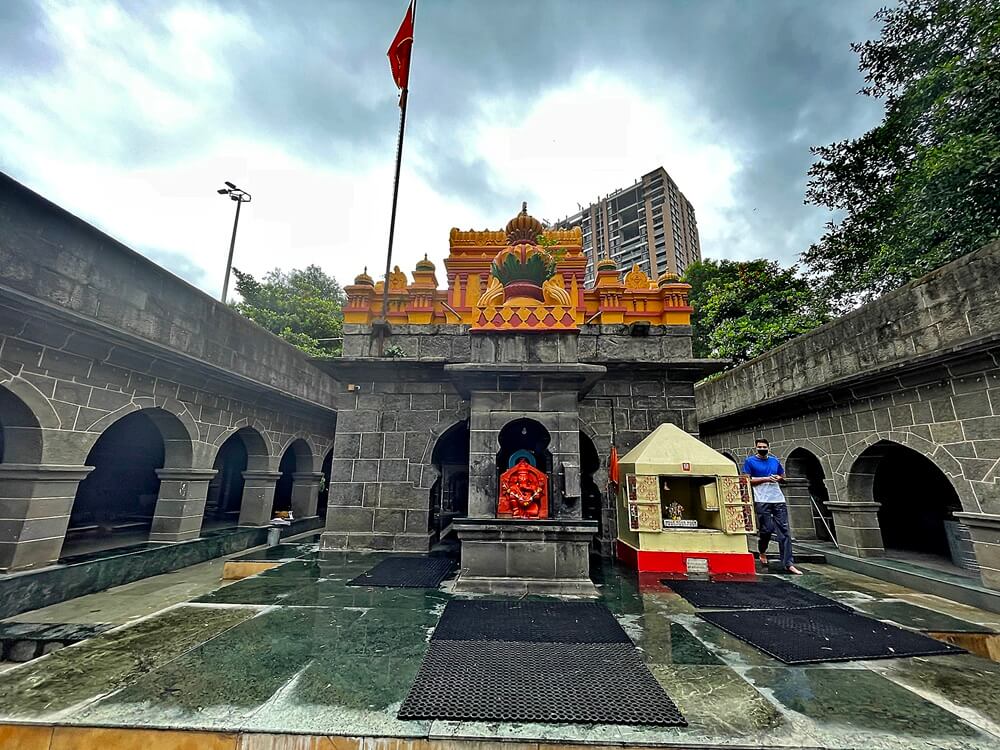
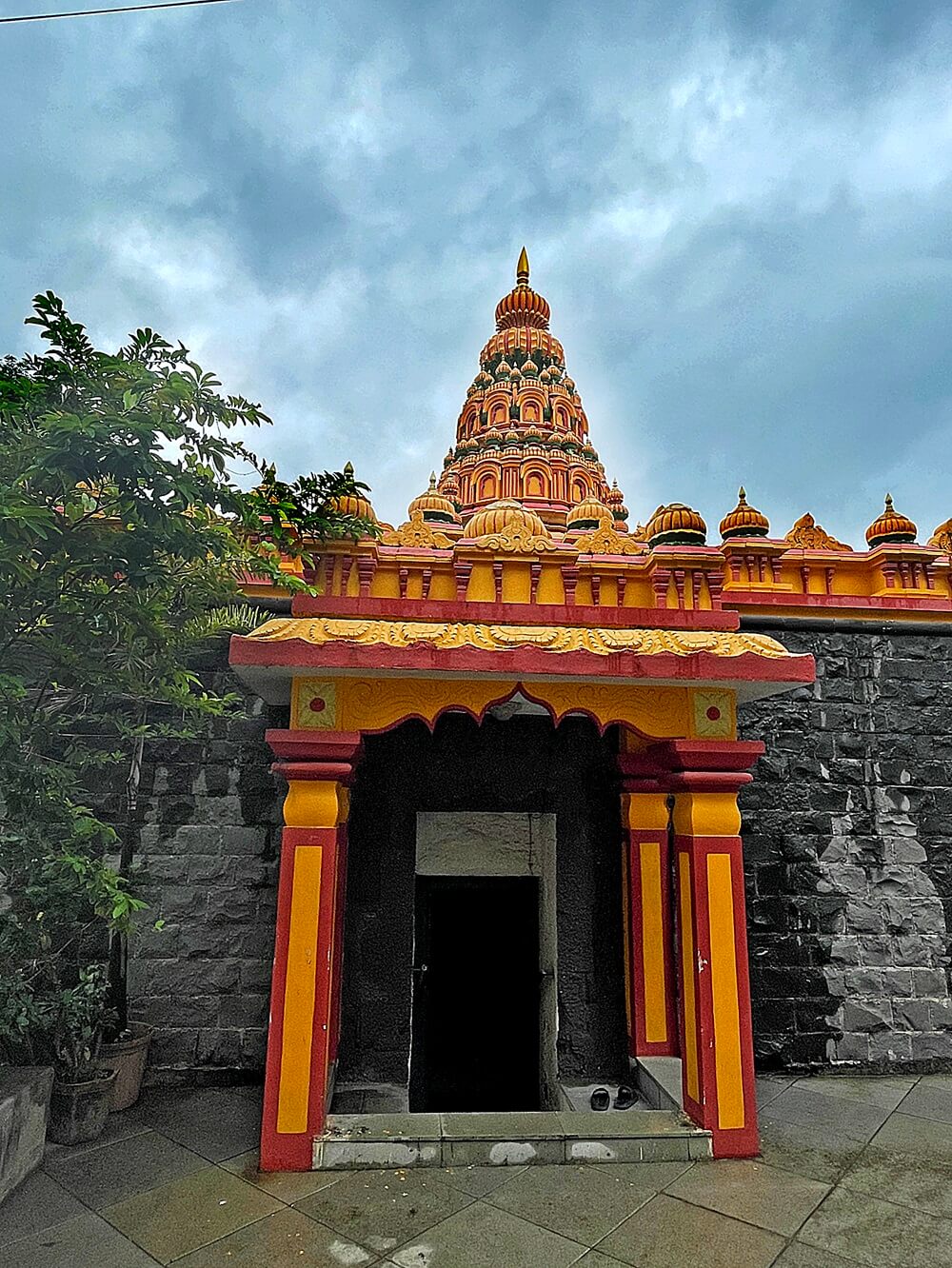
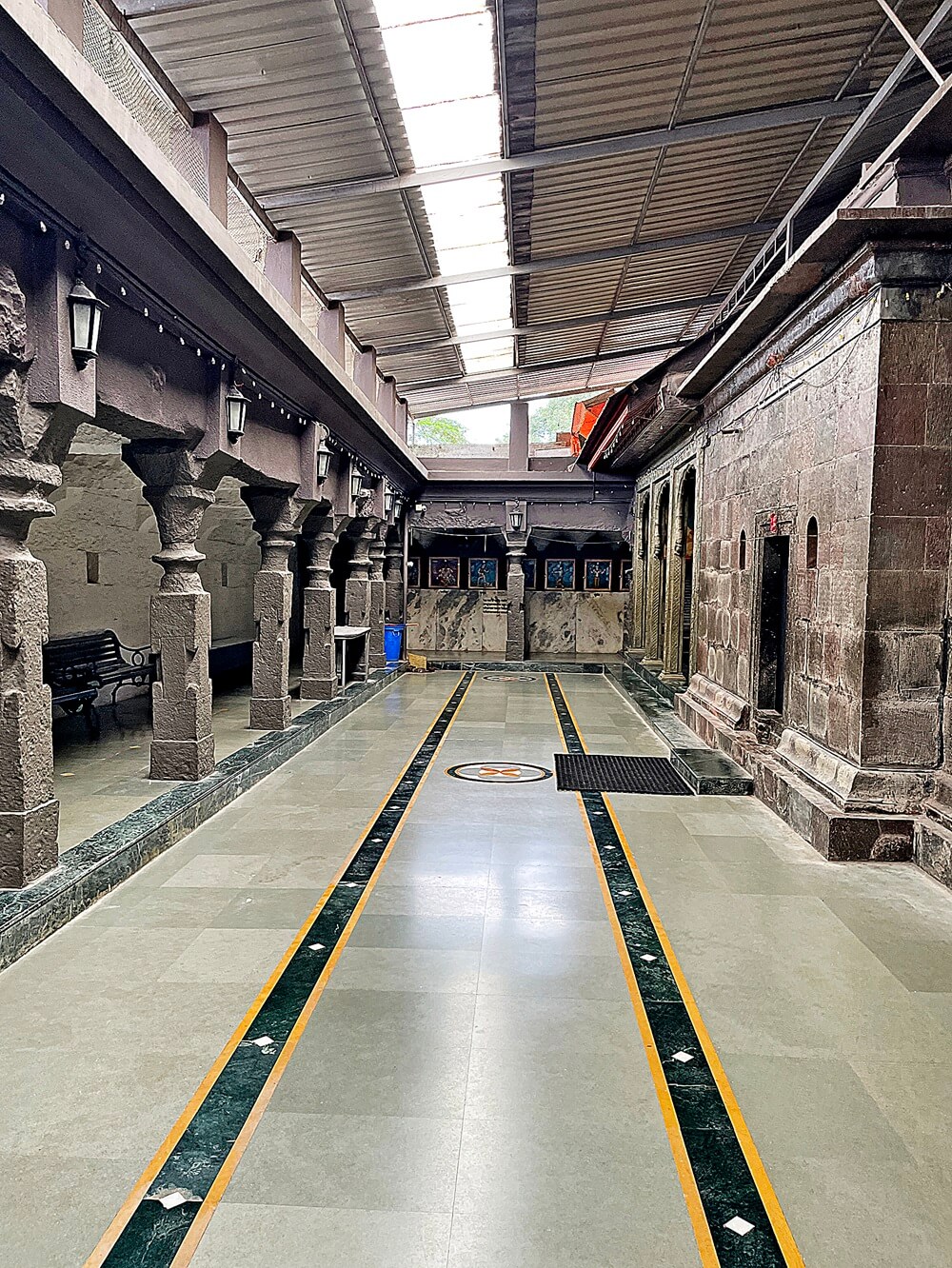
There is a large arch at the main entrance of the Vitthalwadi temple. On the upper part of this arch, which rests on four pillars, is a relief sculpture of Garuda. Traditional lamps are installed at the corners of the arch. From here, there is a path leading to the main temple. The temple structure stands on a high stone plinth. The temple is surrounded by strong fortifications, which give it the appearance of a fort. The main entrance of the temple features intricate carvings. Through the entrance, one enters the courtyard. Stone cloisters are built on both sides of the courtyard. These cloisters were formerly used for the residence of Warkaris and travelers. There is an ancient well in the temple premises that contains water throughout the twelve months of the year.
In front of the main temple stands an idol of Garuda. To the left of this idol is a temple of Maruti, and to the right is the shrine of Shani Dev. The entire construction of the temple is made of black stone.
The temple has two consecutive assembly halls (Sabhamandaps). The outer assembly hall is large in size, providing ample space for devotees to sit. At the entrance of the inner assembly hall, there are sculptures of gatekeepers (Dwarapalas) on both sides. The ornate door frames of this entrance are covered with metal sheets. The enclosed assembly hall contains stone pillars. The craftsmanship on the Garuda pillar here bears witness to the artistry of the craftsmen. In the sanctum sanctorum, the stone idols of Vitthal and Rukmini are placed in a silver canopy. Both idols are standing with their hands on their hips. The mark of the plough on Vitthal’s forehead is still visible today. The temple spire is built with bricks and lime, catching the eye from a distance. This spire features sculptures of various deities and intricate carvings.
The responsibility for the maintenance of this temple has been with the Gosavi family since the Peshwa period. A copper plate from the year 1842 mentioning this is available here. The Gosavi family expanded the temple premises and built the Dashavatar and Mahadev temples. Near the temple entrance is a structure called ‘Haridas Ves’. In the courtyard, there is a Vrindavan memorial of the founder, Sambhaji Gosavi. An image of Sambhaji Gosavi is carved onto this memorial.
Various religious and cultural festivals are held throughout the year at the Vitthalwadi temple. A large number of devotees gather here on Ashadhi and Kartiki Ekadashi. Thousands of devotees from various parts of Pune come for Darshan. On these days, grand worship (Mahapuja) and Abhishek are performed in the temple. The entire temple premises resonate with the sound of Bhajans and Kirtans. Warkaris who are unable to go to Pandharpur complete their Wari here. Tulsi Vivah is also a major celebration at this temple. On this day, the temple is illuminated.
This sacred temple stands as a testament to deep spiritual devotion, ancient architectural grandeur, and rich local cultural traditions.
The sanctum sanctorum houses the divine idol consecrated according to ancient Vedic traditions, surrounded by serene courtyards and traditional temple architecture.



Navratri, Maha Shivratri, Annual Temple Jatra & Deepotsav
Compare and book flights, secure top-rated local hotels near the temple, hire reliable guides, and rent cars instantly.
Extend your pilgrimage by visiting other highly sacred temples located nearby.


Add ₹999 more to unlock FREE SHIPPING!
Your sacred cart is currently empty.
Shop Photo FramesFill in your delivery details below to place your order.
Add comment