
Add ₹999 more to unlock FREE SHIPPING!
Your sacred cart is currently empty.
Shop Photo FramesThe city of Manvat, with its historical background in Parbhani district, was formerly part of Pathri taluka. Later, on May 1, 1999, for administrative convenience, Manvat was declared an independent taluka. The climate in this region is highly conducive to cotton production, making this taluka famous in the state for its cotton ginning industry. The local people have a special devotion to Maruti (Lord Hanuman). Maruti temples can be found in villages throughout this taluka. Among them, the Andharwad Maruti Mandir, located on the outskirts of Manvat city, the taluka headquarters, is particularly renowned. This shrine is considered a ‘jagrut sthan’ (a living, awakened place of worship). Devotees believe that Maruti here fulfills their vows.
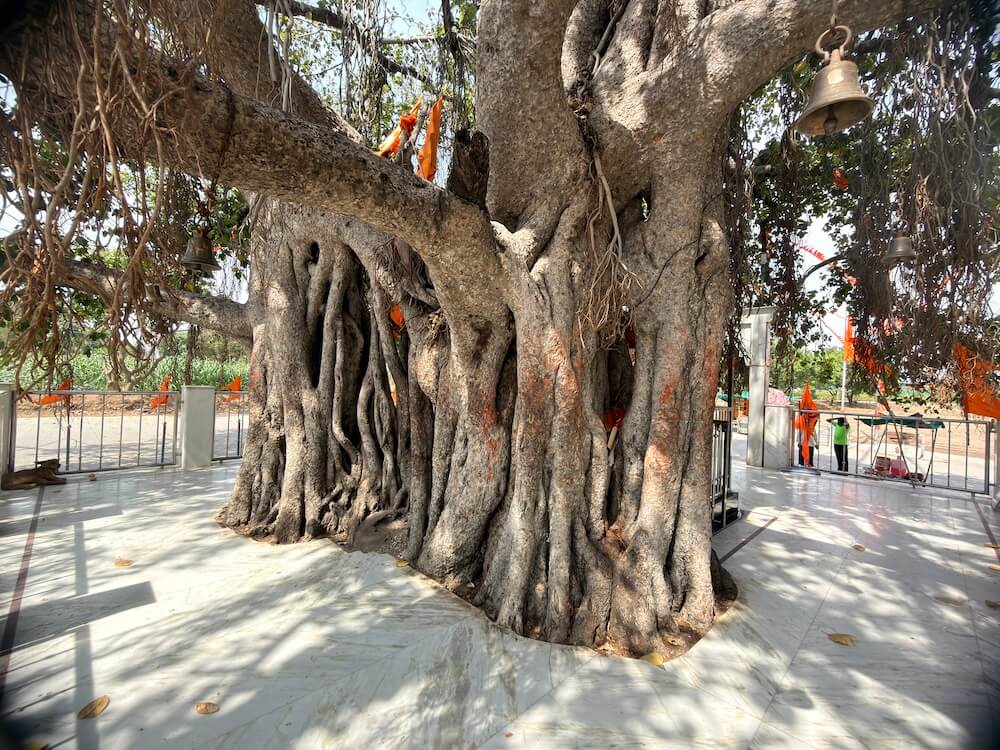
This temple is said to be about three to four hundred years old. Many legends are told in the vicinity regarding the temple. According to one legend, in ancient times, this area was completely covered by dense forest. The girth and spread of the banyan trees in this forest were so thick that it was difficult for the sun’s light to reach the ground. The idol of Maruti was located beneath these dark banyan trees. Hence, the temple came to be known as Andharwad Maruti Mandir (Andharwad meaning ‘dark banyan’). According to another legend, in ancient times, this dense forest was heavily infested with thieves and robbers. Traders, travelers, and farmers passing through the forest paths were troubled by these thieves and robbers. At that time, to avoid night travel, all travelers and traders would halt near the Maruti temple under the banyan tree. Since Maruti here was ‘jagrut’ (awakened), no thief or robber dared to trouble the travelers staying there. Traders and travelers passing through felt great support from this Maruti under the banyan tree. Therefore, the temple initially received the name Adharwad Maruti Mandir (Adharwad meaning ‘supporting banyan’). Later, this word was corrupted, and the temple came to be known as Andharwad Maruti Mandir.
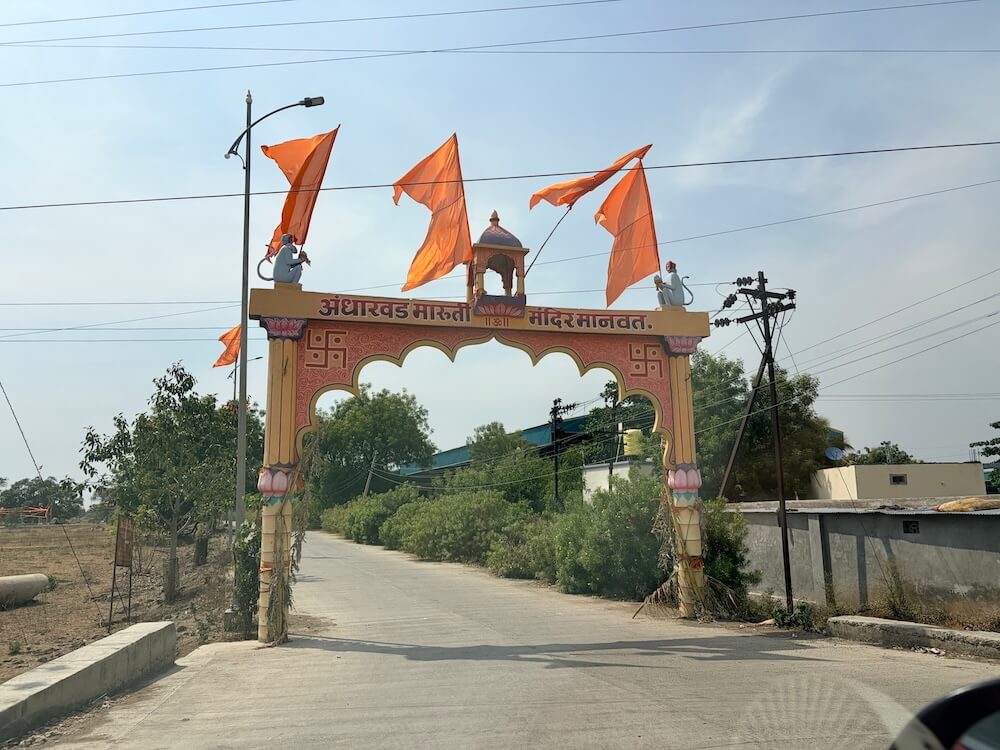
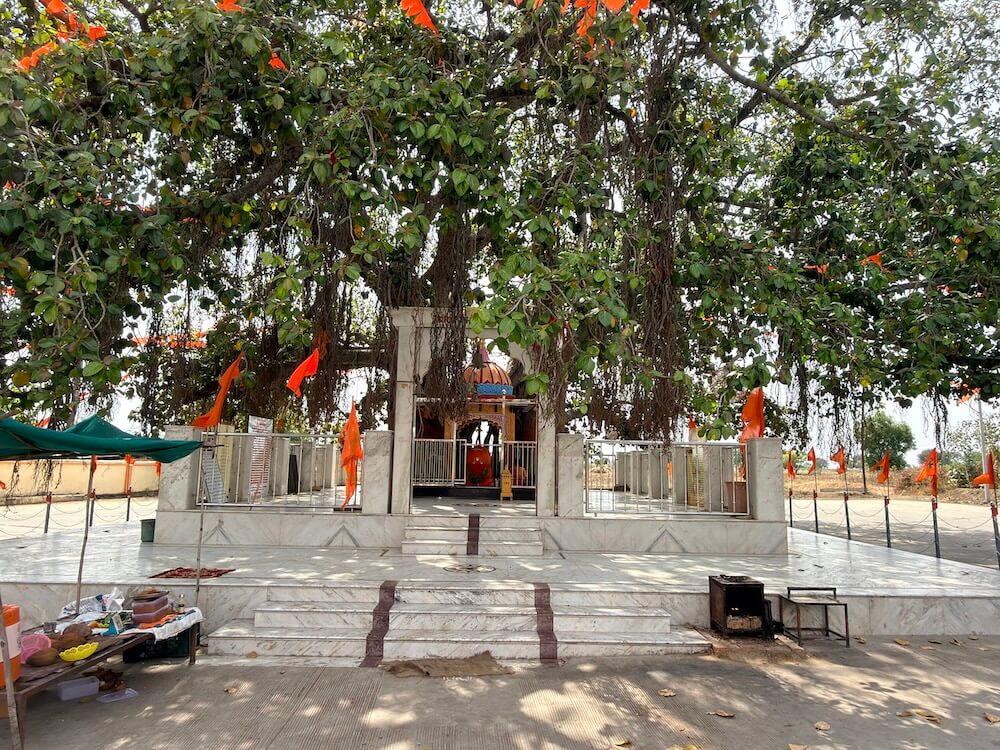
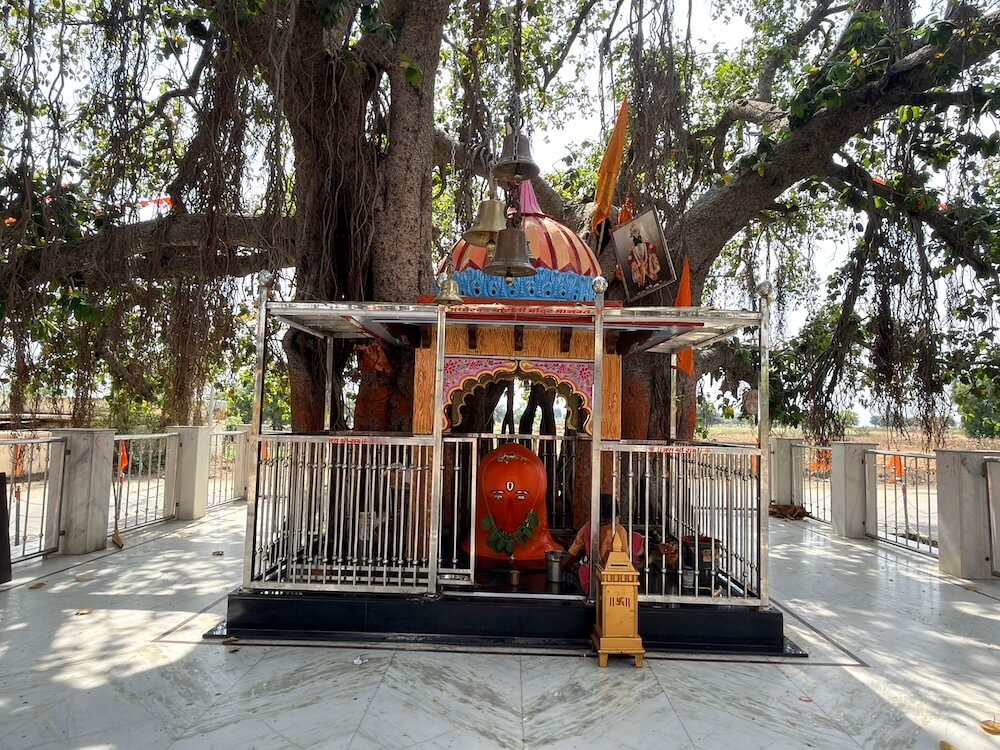
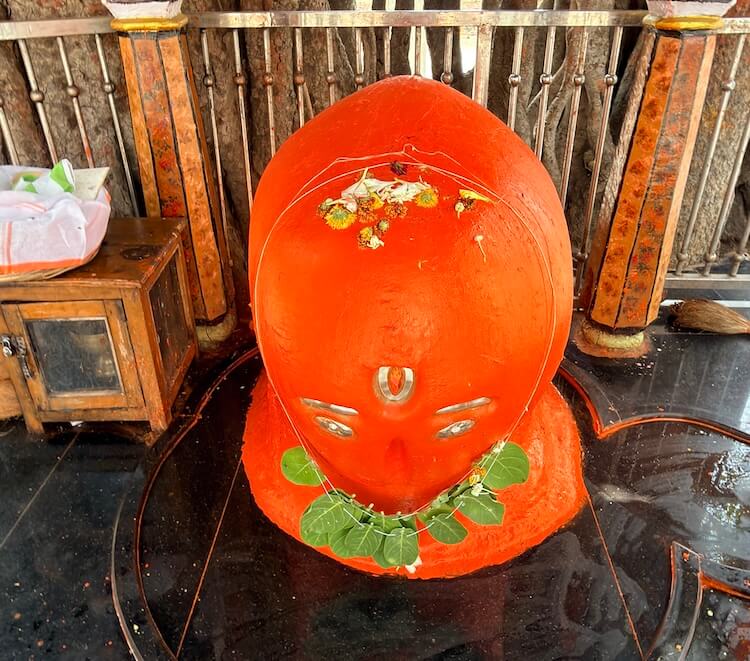
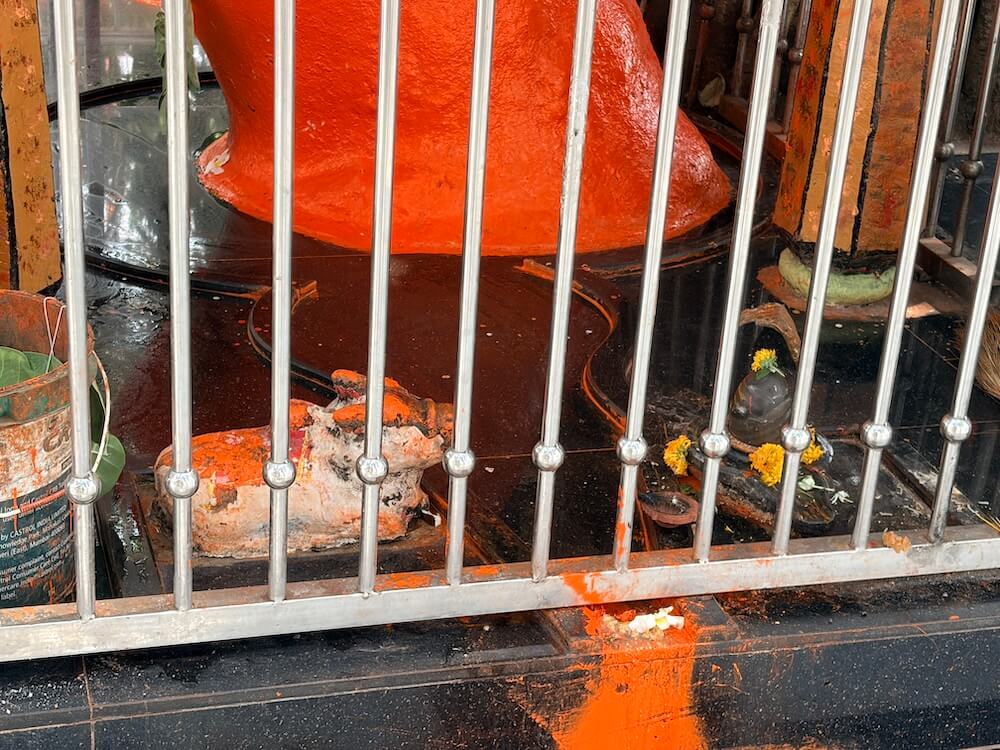
The first welcome arch of the temple is on the road leading to the temple from the main road. On both sides of the road are two pillars connected by arched toranas. A platform (sajja) is built on these pillars. Within the Meghadambari (canopy) on the platform of the welcome arch is an idol of Hanuman. The temple is situated some distance from the welcome arch. A large space is available in front of the temple for devotees’ vehicles. This temple is nestled on a large platform adorned with marble tiles and under the shade of an ancient banyan tree. The temple is surrounded by a boundary wall with small pillars and stainless steel railings. Only the sanctum sanctorum (garbhagriha) constitutes the original form of this temple. Around the garbhagriha, there is a secure stainless steel railing about four feet high. Inside the temple, at all four corners, there are four circular pillars connected to each other by arched toranas. The roof of the temple rests on the beam atop these pillars. Within the garbhagriha, a stone idol of Maruti in the form of ‘tandala’ (a symbolic representation) is enshrined on the ground. The outer side of the torana outside the garbhagriha features glass ornamentation. The roof of the garbhagriha has a dome-shaped shikhara (spire). This shikhara is adorned with carved vertical ridge patterns. At the apex of the shikhara are a stupika and a kalasha (finial). Hundreds of brass bells, offered as vows by devotees, hang from the branches of the huge banyan trees adjacent to the temple.
Hanuman Jayanti is considered the annual festival here. For this festival, thousands of devotees from Parbhani and surrounding districts come here for darshan of the deity and to fulfill their vows. On this day, the deity’s birth celebration (Janmotsav) is observed in the temple. Devotees place the Utsav Murti (processional idol) in a cradle and devoutly sing traditional lullabies. Thereafter, a palanquin procession of the deity is taken out, circumambulating the village. During the festival, the program of pulling twelve carts, joined one after another as part of a vow, is celebrated with great enthusiasm. A large crowd gathers in the area to pull these carts and witness this ceremony. On the occasion of the Janmotsav, religious programs such as Hom-Havan (fire ritual), Bhajan (devotional singing), Kirtan (chanting), Ramkatha Vachan (recitation of Ram’s story), and Sundarkand Granthpathan (recitation of Sundarkand) are organized in the temple. All festivals and celebrations like Ram Navami, Chaitra Navratri, Dussehra, Diwali, Gudi Padwa, and Shravan Maas are regularly observed in the temple. During all festivals, thousands of devotees come for darshan. Every Saturday, approximately four to five thousand devotees come for darshan of the deity. On Saturdays and during all festivals, Mahaprasad (sacred food offering) is arranged for devotees in the temple. On every Purnima (full moon) and Amavasya (new moon) day, the temple is also bustling with devotees. This temple is open 24 hours for devotees’ darshan.
At some distance from the Maruti Mandir is the Bharatiya Sanskriti Swadhyay Kendra. Within the premises of this cultural center, which has strong fortifications and a grand entrance, there are many small and large temples of various deities, as well as some samadhi temples. One particular temple, consisting only of a garbhagriha, is about forty feet high. This temple is hexagonal in shape. On the roof of this temple, an octagonal shikhara with six tiers is built. Each tier of the shikhara has eight niches, in which idols of various deities are installed. At the apex of the shikhara are two amalakas (finial elements) placed one above the other. On these amalakas are a kalasha and a dhwajapataka (flag). This center also houses residences for Swadhyayi Gurus, sevakaris (volunteers), and mahants (head priests), along with storage rooms, a kitchen, Swadhyayi Pathshala (school), and other structures.
This sacred temple stands as a testament to deep spiritual devotion, ancient architectural grandeur, and rich local cultural traditions.
The sanctum sanctorum houses the divine idol consecrated according to ancient Vedic traditions, surrounded by serene courtyards and traditional temple architecture.
Navratri, Maha Shivratri, Annual Temple Jatra & Deepotsav
Compare and book flights, secure top-rated local hotels near the temple, hire reliable guides, and rent cars instantly.
Extend your pilgrimage by visiting other highly sacred temples located nearby.


Add ₹999 more to unlock FREE SHIPPING!
Your sacred cart is currently empty.
Shop Photo FramesFill in your delivery details below to place your order.
Add comment