
Add ₹999 more to unlock FREE SHIPPING!
Your sacred cart is currently empty.
Shop Photo FramesThe Audumbar tree holds unparalleled significance in the Datta Sampradaya. According to the Guru Charitra composed by Parashuram Kavi, Lord Vishnu blessed the Audumbar tree, saying, ‘He who performs japa, homa, and all forms of charity while seated in your shade, shall attain infinite fruits and shall always overcome all obstacles.’ Many of the places visited by Dattatreya Avatar Shri Nrusimha Saraswati after taking sannyasa diksha were beneath Audumbar trees. One such sacred spot is in the Audumbar forest on the banks of the Krishna River. Here reside the pure Padukas of Dattatreya. Devotees firmly believe that Shri Nrusimha Saraswati has a hidden presence here.
According to the ‘Guru Charitra’ written by Saraswati Gangadhar around the year एक हजार पाचशे अठ्ठेचाळीस, Shri Nrusimha Saraswati left home at the age of seven to study the Vedas and journeyed to Kashi. Upon completing His Vedic studies, He took sannyasa diksha. Later, while traversing Bharat, He arrived in this Audumbar forest in the year एक हजार चारशे एकवीस. Here, He performed Chaturmas tapasadhana. Upon its completion, He attained knowledge and siddhis. It was then, in the year एक हजार चारशे बावीस, that He resolved to leave this place and proceed to Nrusimha Wadi. However, His devotees earnestly requested Him not to abandon this sacred spot. Thereupon, He declared that He would always reside here in a hidden form, and that Shri Dattatreya would dwell within these pure Padukas. To this day, these very Padukas are worshipped here.
To reach this temple situated on the banks of the Krishna River, one must first descend a flight of stone steps leading to the river ghat. After purifying oneself in the river’s waters, one can proceed towards the Datta Mandir. For ailing and elderly devotees who find it difficult to descend and ascend the ghat, arrangements have been made near the temple entrance for washing their feet. Beyond this point lies the temple’s paved courtyard. Within the courtyard is the temple’s open-air Sabhamandap (assembly hall). In the Sabhamandap, on both sides, there are five square pillars each, and a roof supported by beams above them. In front of the Sabhamandap, on a raised platform, are the Padukas, with Tulasi Vrindavans on the left and right sides.
Further on, there are three steps leading to the Garbhagriha (sanctum sanctorum), which is at a higher level than the Sabhamandap. The entrance to the Garbhagriha is narrow. The doorframes, covered with silver plating, feature Danda-dhari Dwarpalas (gatekeepers holding staffs) and intricate floral patterns. On the Lalatabimba (lintel panel above the doorway) is an idol of Shri Ganapati. In the arched designs above the Lalatpatti (forehead band), there are images of Shri Ganapati, Devi Saraswati, and Devi Lakshmi. The front wall of the Garbhagriha is adorned with silver plating. On this wall, on either side of the entrance, are four-armed Dwarpalas holding a conch, discus, mace, and lotus. Above the Dwarpalas are lotuses and peacocks. On both sides of the front wall are storage chambers.
Within the Garbhagriha are the pure Padukas of Datta Guru. Above them hangs an Abhishekapatra (vessel for ritual anointing) from the ceiling. At the rear, on a Vajrapitha (diamond throne), are brass idols of Shri Krishna, Dattatreya, and other deities, along with silver khadavas (wooden sandals). On the silver plating of the rear wall of the Garbhagriha is a raised relief of Shri Nrusimha Saraswati. On the ceiling of the Garbhagriha, at all four corners, are four small dome-shaped shikharas (spires) with replicas of lotus flowers, each topped with an amalaka and a kalasha. In the center, the main shikhara, also featuring a replica of a lotus flower, is crowned with an amalaka and a kalasha.
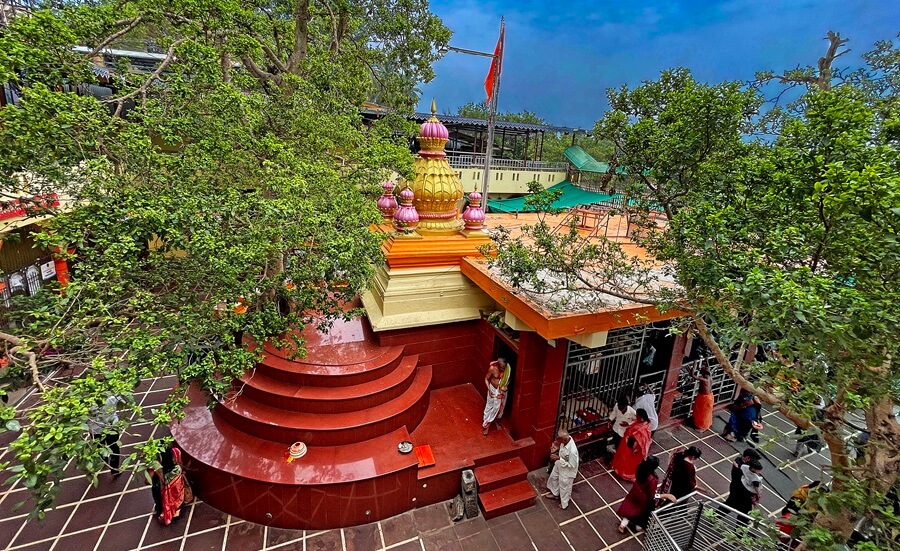
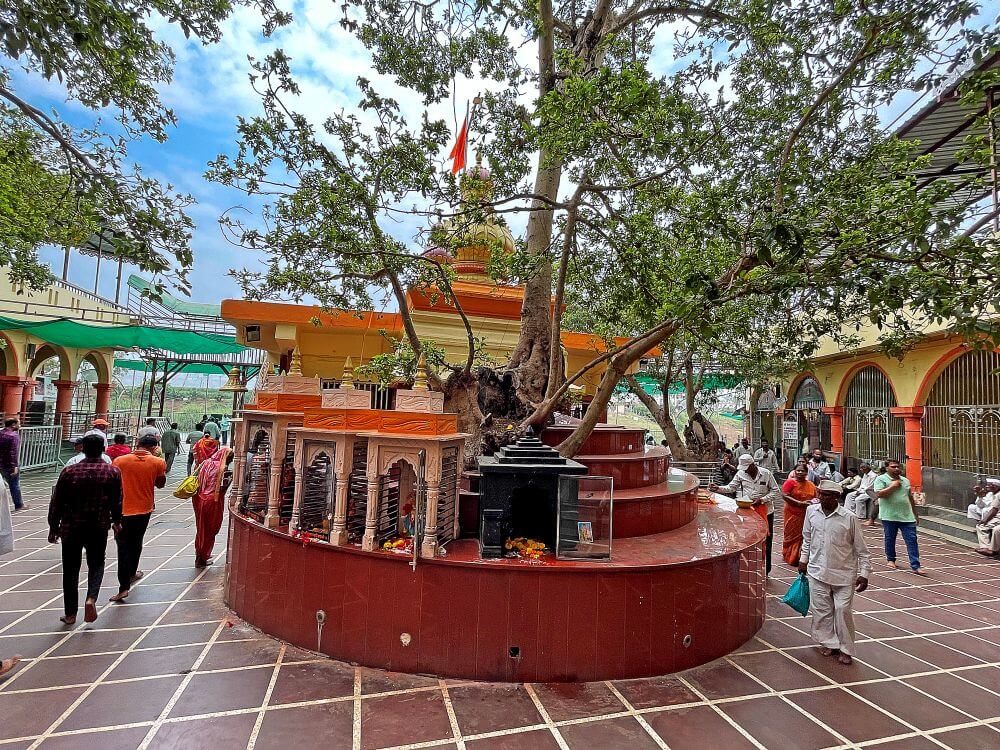
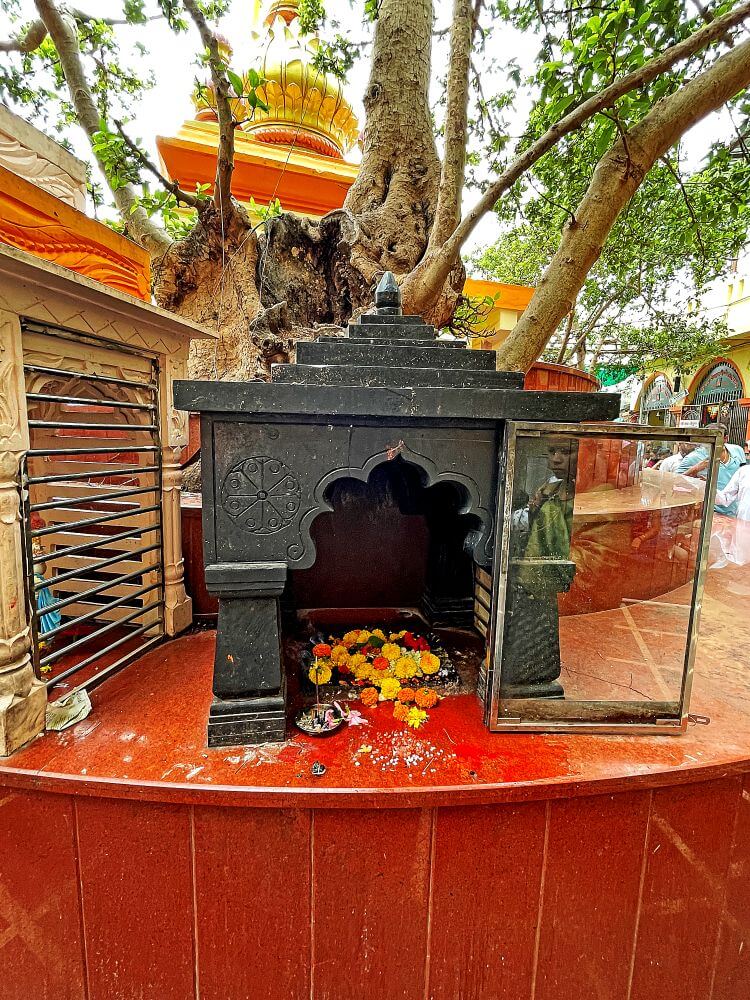
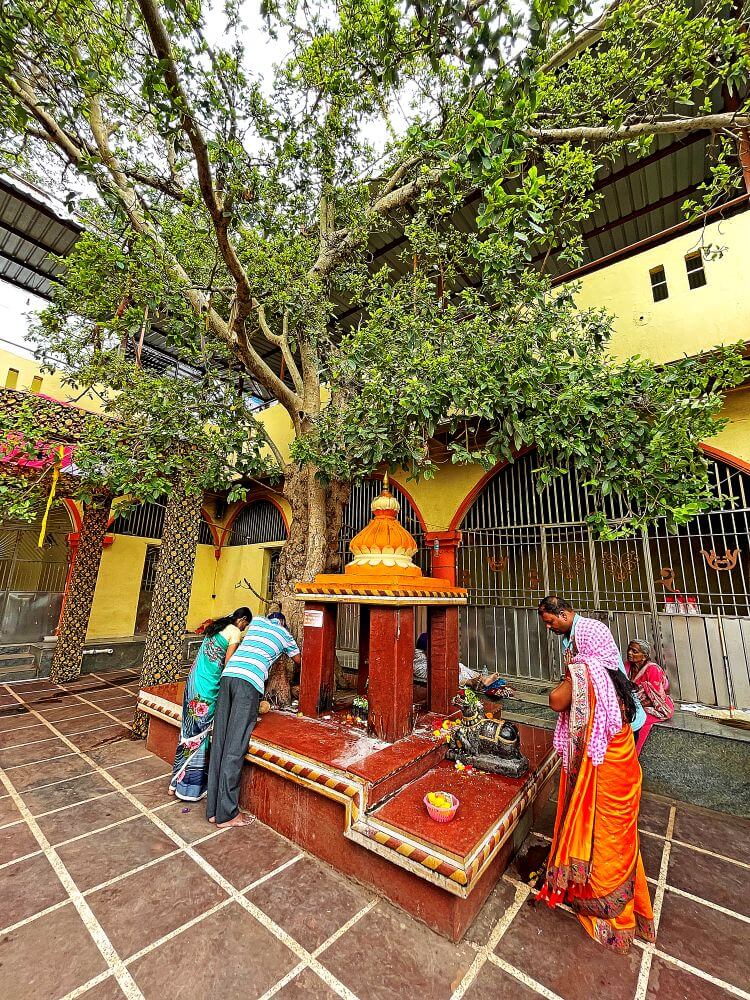
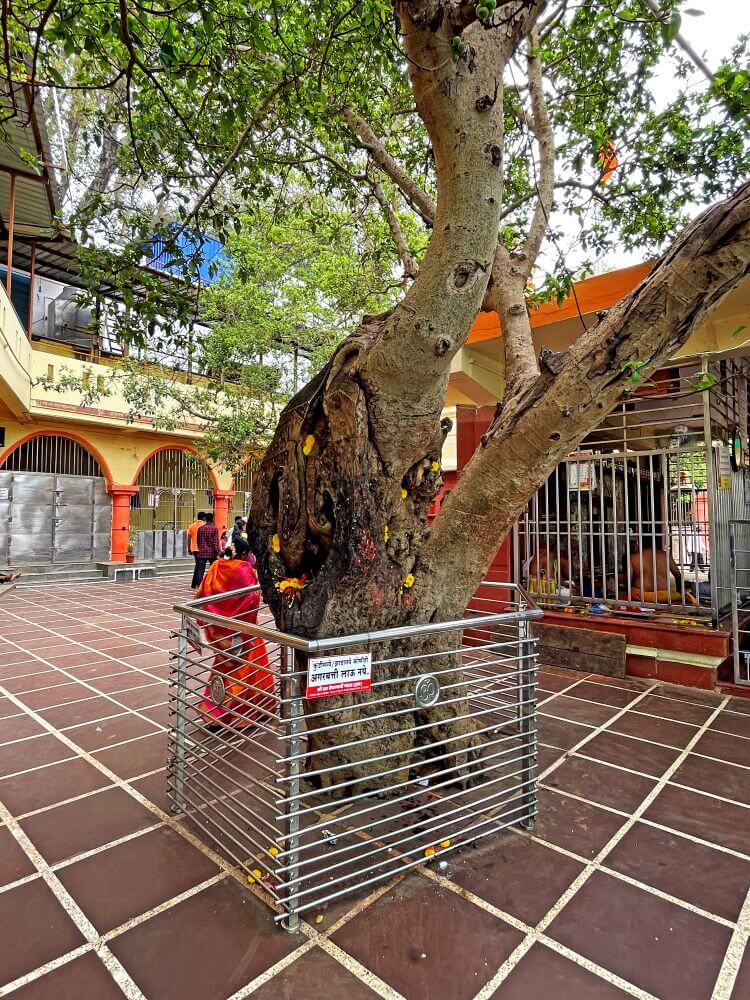
Behind the Garbhagriha is a stone platform (par) around the Audumbar tree. On this platform, within a glass shrine, are idols of Datta Padukas, Vishnu, Nrusimha Saraswati, Ganesha, Hanuman, Krishnaveni, Annapurna, Mahadev, and Sheshnag. Along the circumambulation path (Pradakshina Marga), there is an outer wall, followed by pillars connected by circular, crescent-shaped arches, and a roof above them. Here, Datta devotees perform parayana (recitation) of the Guru Charitra scripture. On the Pradakshina Marga, within a Meghadambari (canopy), is a Shivapindi, and outside, an idol of Nandi. There are many Audumbar trees along the Pradakshina Marga. Uphill from the temple, there is a magnificent ancient tree known as ‘Ajoba’. Further on from here is the math (monastery) of Brahmananda Swami, who arrived here from Girnar in the year एक हजार आठशे सव्वीस. Within the math is His samadhi sthana (tomb). According to the ‘Sangli Gazetteer’, the ghat on the Krishna River here was constructed by Brahmananda Swami’s disciple, Sahajananda Swami, with the participation of the local community.
Behind the temple is an Annachhatra (free food distribution center), where Mahaprasada is served daily to devotees. Within the temple premises, there is a Dharmashala (pilgrim’s rest house) providing accommodation for devotees coming from afar. Annual festivals such as Datta Jayanti, Nrusimha Saraswati Janmotsava, Shripad Vallabh Utsav, and Krishnamai Utsav are celebrated at the temple. Additionally, Datta Saptah (a week-long celebration of Datta) is organized.
This sacred temple stands as a testament to deep spiritual devotion, ancient architectural grandeur, and rich local cultural traditions.
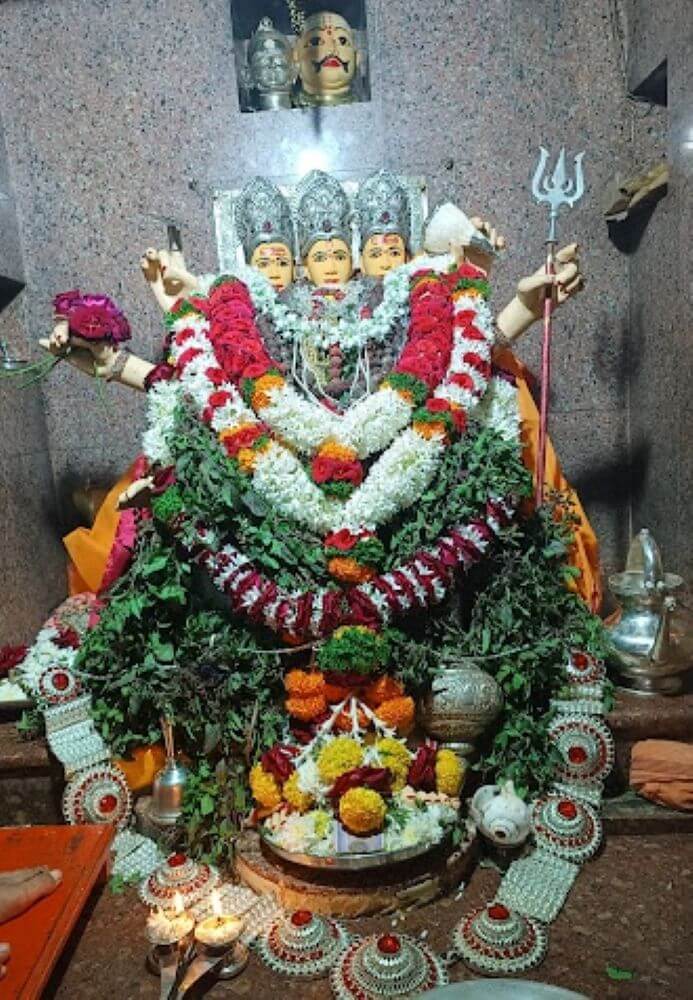
The sanctum sanctorum houses the divine idol consecrated according to ancient Vedic traditions, surrounded by serene courtyards and traditional temple architecture.
Navratri, Maha Shivratri, Annual Temple Jatra & Deepotsav
Compare and book flights, secure top-rated local hotels near the temple, hire reliable guides, and rent cars instantly.
Extend your pilgrimage by visiting other highly sacred temples located nearby.


Add ₹999 more to unlock FREE SHIPPING!
Your sacred cart is currently empty.
Shop Photo FramesFill in your delivery details below to place your order.
Add comment