
Add ₹999 more to unlock FREE SHIPPING!
Your sacred cart is currently empty.
Shop Photo FramesAparant, that is, the capital of Konkan from १५०० BCE to १३०० CE, and a trading hub for about two and a half thousand years, Shurparak is now known as Sopara. The Chakreshwar Mahadev Mandir and the Chakratirtha (pond) in front of it, in this village of historical and mythological significance, are revered by many devotees. According to the descriptions in the Nirmal Mahatmya, this temple and tirtha were established by Bhagwan Parashuram. After slaying the demon named Palpanjar, Bhagwan Vishnu cleansed His Chakra in this tirtha, and thus this sacred place came to be known as Chakreshwar and the pond as Chakratirtha. Another unique feature of this ancient temple is the presence of a distinctive and rare Brahma murti, about six feet tall, dating back a thousand years.
The Thane Gazetteer (Volume १४, १८८२) recounts a legend about this place, stating that in ancient times, a Burud king ruled this area. He was also known as Dharmaraja and was exceedingly compassionate, never collecting taxes from his subjects. He sustained himself by selling bamboo baskets he crafted. His queen also lived a simple life, never wearing ornaments and performing household chores herself. She would fetch water from the Chakreshwar pond, located approximately ४५० meters from the king’s fort. While other women in the kingdom would draw water from the banks of this tirtha, the queen would walk directly across the water to fetch sacred water from the kund in the middle of the pond, with which she would perform abhishek for Chakreshwar Mahadev. This siddhi was granted to her due to her unwavering faith in Chakreshwar.
Some envious women constantly observed the queen in the water. One day, these women decided to humiliate the queen. On the day of a festival, the village women asked the queen, ‘Even though it is a festival today, why are you not wearing any ornaments?’ Another woman remarked, ‘Ornaments are indeed the adornment of women. Why has Maharaj not provided you with jewels?’ At this, all the women began to laugh. The queen felt hurt by this. She insisted to the king that she wanted ornaments. The next day, the king began to visit every home in the kingdom, asking for taxes. Until then, the king had never demanded taxes, which surprised the people. When asked how much tax he desired, the king replied, ‘Give me one betel nut.’ The people were astonished, yet each family, as per the king’s instruction, gave him one betel nut. The king sold these betel nuts and purchased ornaments for the queen. Adorned with all these jewels, the queen went to Chakratirtha. As usual, the queen began to walk across the water to fetch water from the kund in the middle of the pond. However, that day she fell into the water. She realized why she had fallen. She sought forgiveness from Chakreshwar and returned home, giving all the ornaments back to the king.
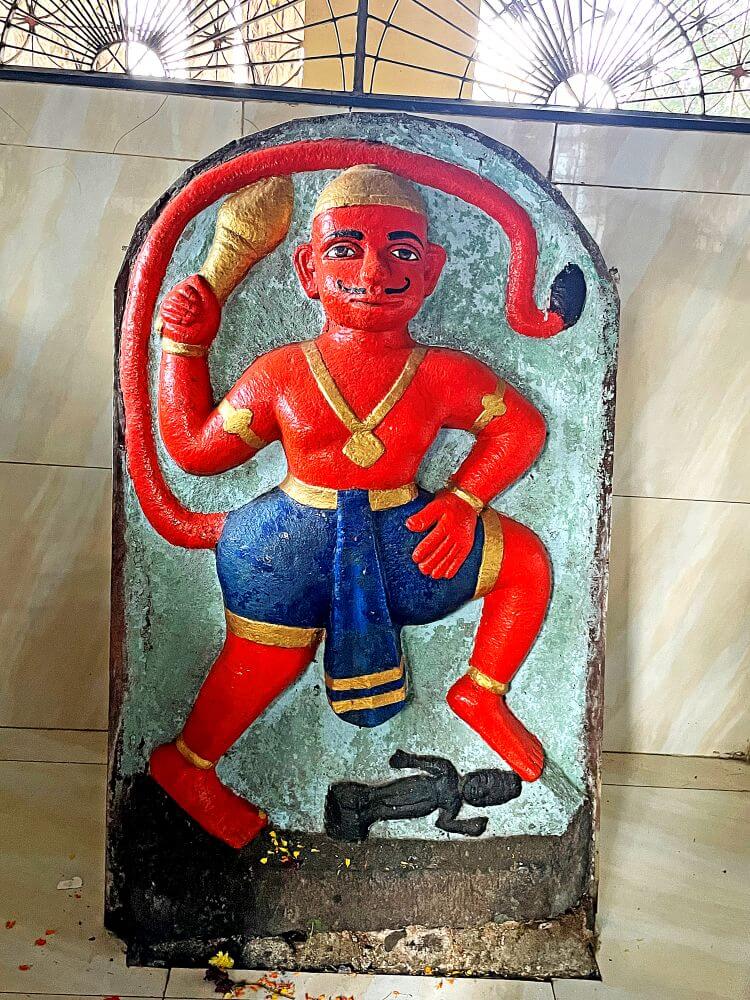
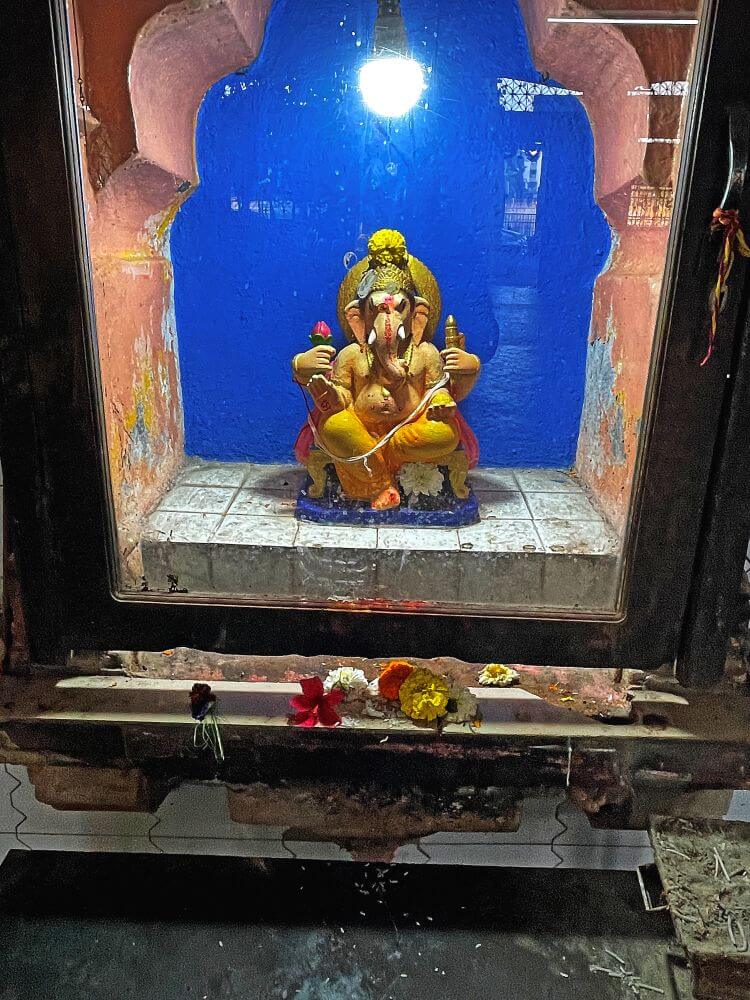
The Chakratirtha pond and the shrine of Chakreshwar Mahadev are located in the Umrale area, a central part of Nalasopara city. In front of the temple, there is a Deepmal (lamp pillar) on a platform. The temple has a simple structure, comprising a large sabhamandap (assembly hall) and a garbhagriha (sanctum sanctorum). In the sabhamandap, facing the garbhagriha, there is an ancient murti of Nandi on a raised platform. In the devakoshthakas (niches) on the front wall of the garbhagriha, there are murtis of Ganesh on the left and Chakradhari Shri Vishnu on the right. In the center of the garbhagriha is a Shivlinga. To the right of the sabhamandap, in a small temple, is the shrine of Maruti. A unique feature here is that this Maruti murti has a distinct mustache. Additionally, beneath the feet of this murti, a small Devi murti, representing the demoness Simhika, is placed horizontally, similar to how she is depicted under the feet of Hanuman murtis in Gujarat.
Although this temple has a simple structure, the murtis within its premises lend it greater historical significance. Among them, the murti of Brahma here is a subject of curiosity for devotees and scholars alike. This murti, exposed in the temple courtyard, measures six feet four inches by two feet. Scholars estimate this murti to be from the eleventh or twelfth century. The Thane Gazetteer states that this murti was discovered around १८५० in a field in Sonarbhat. Until the mid-nineteenth century, this murti was worshipped as that of Dattatreya. Locals also knew this murti as ‘the protector of Chabookswar village’. Even now, some consider it to be a murti of Vishwakarma. However, it is originally a murti of Brahma.
This full-figure murti is carved on one side of a seven-foot three-inch high slab. The murti is trimukhi (three-faced) and chaturbhuja (four-armed). All three faces bear tall crowns with exquisite carvings. Only the central face of the murti has a pointed beard. In the upper right hand, there is a sruk (a long-handled ladle), in the upper left hand, a Vedapothi (book of Vedas), in one lower hand, a japamala (rosary), and in the other lower hand, an oil pitcher is carved. At the feet of this murti are female figures, approximately eight inches tall. One of these women holds a sruk and a pot of ghee, while the other holds a weapon. To the right at the feet of the Brahma murti, an image of a hamsa (swan) is carved. The murti wears a simple strip necklace with raised sections in the middle and on both sides. A deerskin is draped over the left shoulder, and slightly below the shoulder, a deer’s head is visible. Additionally, the sacred thread (janave) around the neck extends down to the thigh. The waist garment is secured with a buckled belt. This garment is tied with a knot over the right thigh. The pedestal and the prabhaval (aura) parts of the murti are not fully carved.
The book ‘Medieval Temples of the Deccan’ by Scottish archaeologist and Superintendent of the Western Circle of the Archaeological Survey of India, Henry Cousens, was published in १९३१ by the Central Publication Branch of the Government of India. On page २० of this book, there is a description and photograph of this Brahma murti. However, it states that this murti is ‘in a temple near Ramkund’ and that it is in an incomplete state.
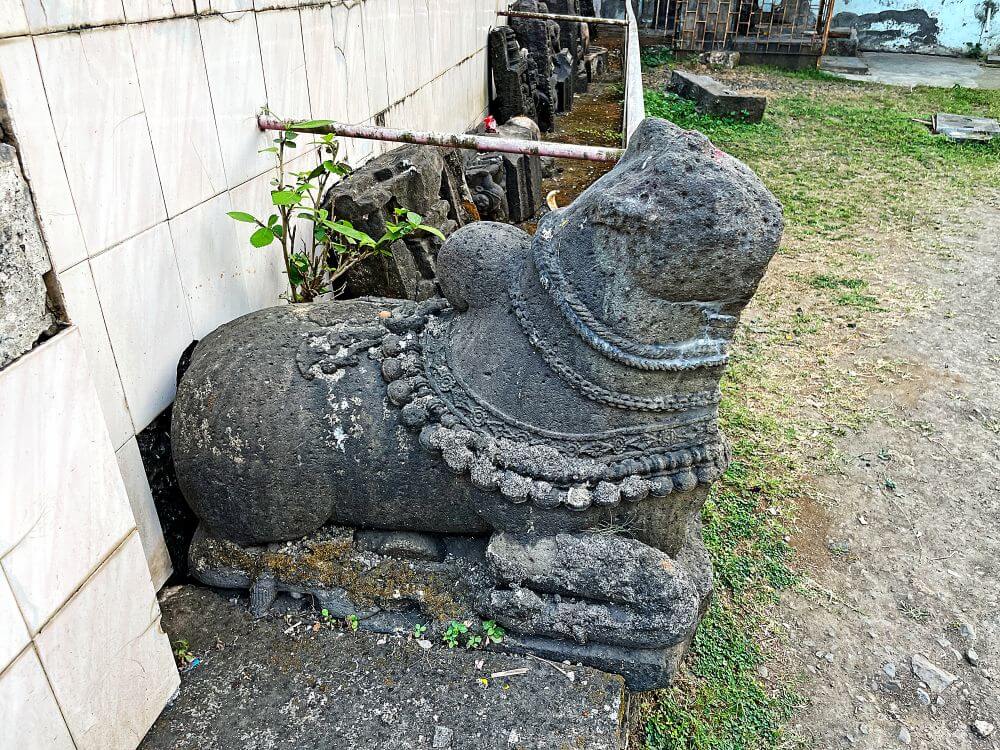
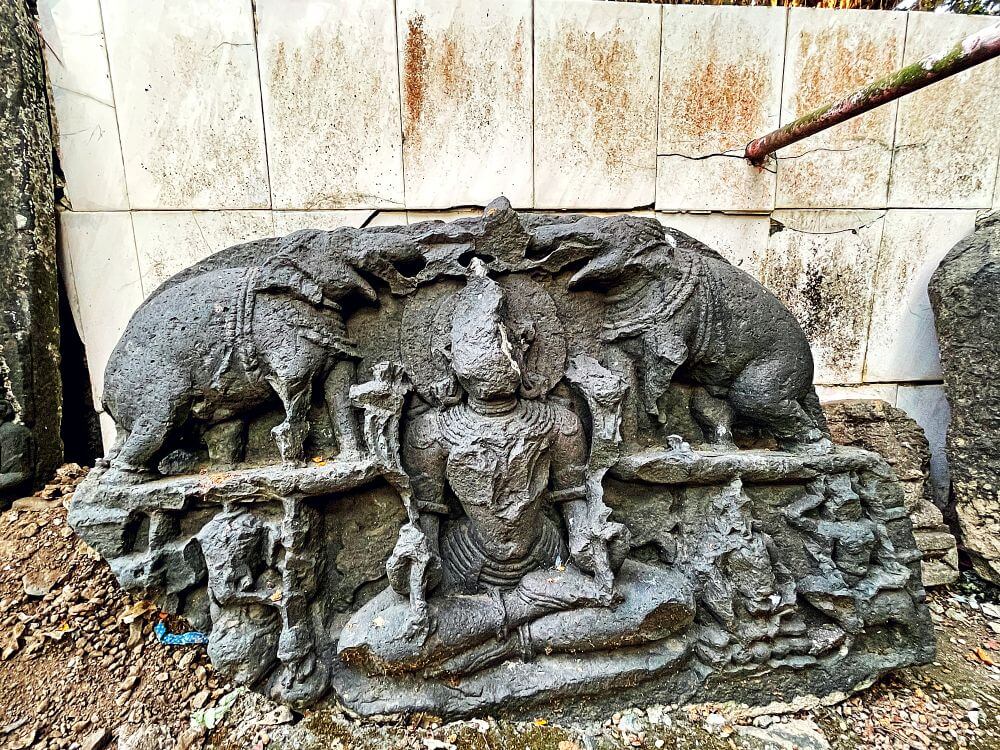
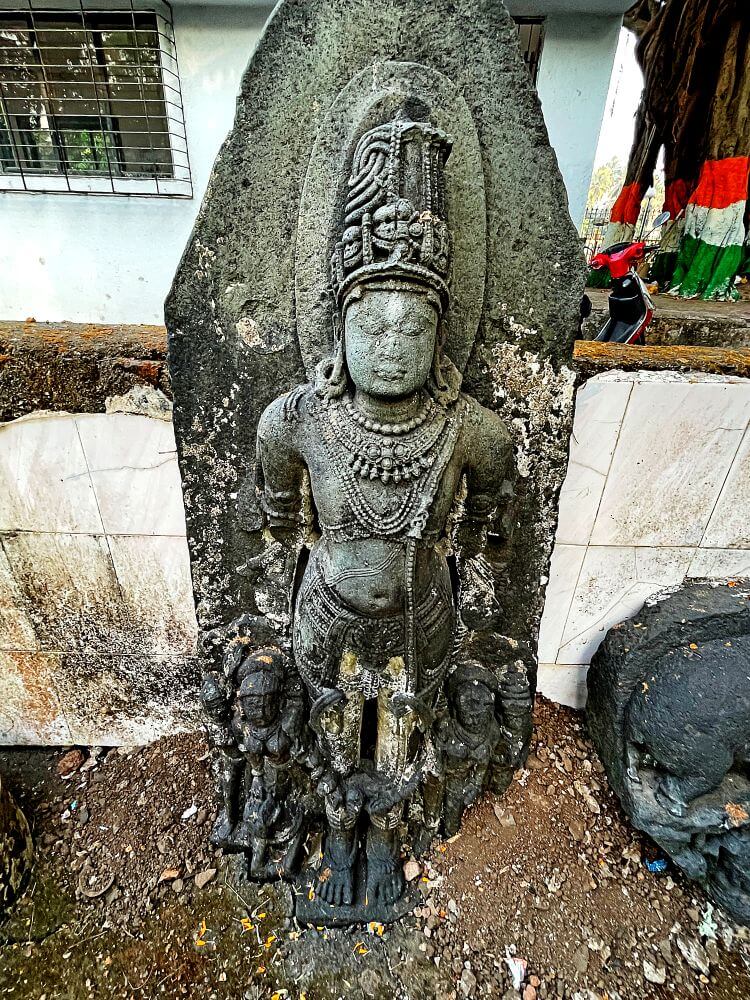
Just as this ancient Brahmamurti is an invaluable historical treasure, so too can several ancient Murtis be seen within the temple precincts. Among them is a Murti of Nandi, which is headless. However, the intricate carving on the garlands around its neck is still striking today. This Murti was also found buried near the spot where the Brahmamurti was discovered. The gazetteer writer has estimated it to be from the tenth century. Beside this Murti lie many fragmented remains of other Murtis. Among these is a deity carved on a tall stone slab. The carving of its ornaments around the neck, the earrings, the garments, and the unusual crown and hairstyle on its head are extremely captivating. Adjacent to this Murti is a broken Murti of Gajantalakshmi carved on a horizontal stone slab. Although various limbs of all these Murtis are broken, they are considered invaluable from the perspective of the cultural and religious history of this region. Right next to the Chakreshwar Mahadev Mandir is a privately owned Ram Mandir. Here, some such ancient Murtis can be seen. The gazetteer also mentions the presence of Jain Murtis among those in this area. It further describes some other Murtis, but those Murtis are no longer visible there now.
This sacred temple stands as a testament to deep spiritual devotion, ancient architectural grandeur, and rich local cultural traditions.
The sanctum sanctorum houses the divine idol consecrated according to ancient Vedic traditions, surrounded by serene courtyards and traditional temple architecture.
Navratri, Maha Shivratri, Annual Temple Jatra & Deepotsav
Compare and book flights, secure top-rated local hotels near the temple, hire reliable guides, and rent cars instantly.
Extend your pilgrimage by visiting other highly sacred temples located nearby.


Add ₹999 more to unlock FREE SHIPPING!
Your sacred cart is currently empty.
Shop Photo FramesFill in your delivery details below to place your order.
Add comment