
Add ₹999 more to unlock FREE SHIPPING!
Your sacred cart is currently empty.
Shop Photo FramesThe ancient temple of Mallikarjun Mahadev is situated in Rampuri (Budruk), a village sanctified by the presence of Lord Ramachandra, located at the confluence of three rivers: the Godavari, Amruta, and Pavitra. Famous as the “Rampuri of the Twelve Hanumans,” this village is a renowned pilgrimage site in the district due to its ancient temples. Along with the twelve Hanuman temples, the village is home to eight to ten historically and mythologically significant Shivalayas (Shiva temples). A well-known legend states that the Swayambhu (self-manifested) Shiva Linga in the Mallikarjun temple was worshipped by Lord Brahma and Lord Vishnu. Approximately two kilometers from this temple, on the banks of the Godavari River, lies the “Papadanda (Papanash) Tirtha,” which is shaped like a bow. Near this sacred water body stands the ancient temple of Papadandeshwar Mahadev. Devotees believe that bathing in the “Papanash Tirtha” on the day of Vaishakh Purnima bestows great merit.
A mythological legend is associated with the Swayambhu Shiva Linga in the Mallikarjun temple. Once, a dispute arose between Lord Brahma and Lord Vishnu regarding who among them was superior. To resolve this, they approached Lord Shiva. Mahadev declared, “Whoever among you finds the origin or the end of my Shiva Linga shall be considered superior.” Accordingly, Brahma and Vishnu set out to find the beginning or the end of the Linga. Brahma ascended upwards, while Vishnu descended downwards. However, neither could find the beginning or the end of the Shiva Linga. Finally, they returned to Earth and prayed to Lord Shiva, who then manifested in the form of the Linga. Brahma and Vishnu worshipped this Shiva Linga by offering flowers from the ‘Mallika’ and ‘Arjun’ trees that had just blossomed in the vicinity. Thus, the Shiva Linga came to be known as “Mallikarjun Mahadev.”
Rampuri is located about 32 kilometers from Parbhani, a city known in ancient times as ‘Prabhavati Nagari’. It is believed that Lord Ramachandra stayed for some time in the fields of this village, situated on the banks of the Godavari River, during his exile. In addition to the main Hanuman temple, there are five Maruti temples in the village: ‘Motha Maruti’, ‘Navara Hanuman’, ‘Dasara Hanuman’, and ‘Shani Hanuman’. Furthermore, there are six Hanuman temples in the surrounding farmlands. Due to all these temples, the village is also called the “Rampuri of the Twelve Hanumans.” The village houses many Shivalayas known by names such as Papadandeshwar, Bramheshwar, Someshwar, Dharmeshwar, Siddheshwar, Khandeshwar, Rameshwar, Gokarneshwar, and Narmadeshwar, each with its own independent mythological legend.
The Papadandeshwar temple is located about two kilometers from the Mallikarjun temple. During the wedding of Shiva and Parvati, Lord Brahma became infatuated due to Parvati’s beauty. Ashamed by this incident, Brahma felt remorse for the sin he had committed. He asked Lord Shiva how he could be liberated from this sin. Mahadev gathered water from all the sacred Tirthas and placed it in a reservoir near the Mallikarjun temple. Shiva told Brahma, “Bathing in this reservoir will destroy your sins.” Accordingly, Brahma and other deities bathed in this reservoir, and their sins were absolved. Hence, this sacred place is called “Papadanda (Papanash) Tirtha” and the Shiva Linga here is named “Papadandeshwar.” The Papadanda Tirtha is shaped like a bow, and it is said that the Godavari River forms the string of this bow. At one end of this bow is the ‘Papadandeshwar’ temple, and at the other is the ‘Rameshwar’ temple.
Over time, all the gods and goddesses decided to worship the Mallikarjun Shiva Linga here with nectar (Amruta). For this, they brought nectar, the Kalpavriksha, and flowers from heaven. However, as soon as the demons learned that the gods had brought nectar to Earth, thousands of them arrived. They began to harass the gods to obtain the nectar. Consequently, all the gods prayed to Lord Shiva to protect the nectar. Lord Shiva sent Bhairava, who, with the help of the powers of the 64 Yoginis, destroyed the demons. Thereafter, the gods worshipped Mallikarjun and Bhairava and requested Bhairava to reside there permanently. Accepting this, Bhairava stayed to the south of the Mallikarjun temple, and all the Yoginis stayed to the northeast. The Bhairava here is known as ‘Krodha Bhairava’. Before performing the worship, Mahadev instructed all the gods to install Lord Ganesha. The location of this Ganesha is near the Papadandeshwar temple. The gods kept the nectar brought for the worship of Mallikarjun Mahadev in a well in the vicinity. Subsequently, many other sacred waters also arrived here, flowing out of the well. The river formed by this flow is called the ‘Amruta River’. Later, Lord Brahma installed Bramheshwar Mahadev, and other deities installed other Shiva Lingas in this area. To meet the need for milk required to prepare Panchamrita for the worship of Mallikarjun Mahadev, the gods brought Kamadhenu from heaven. While performing this worship, streams of Panchamrita began to flow, which later transformed into a river, known as the Pavitra River.
A sinful man named Somnath once lived in this area. One day, he was killed by thieves. After his death, while the messengers of Yama (Yamadutas) were taking Somnath away, he caught sight of the Mallikarjun and Papadandeshwar temples. The sight of these temples destroyed his sins. Subsequently, a dispute arose between the messengers of Shiva (Shivdutas), who had come to take him to Kailasa, and the Yamadutas. Lord Shiva arrived to resolve the conflict and explained the significance of these Tirthas to Yama. Thereafter, Yama departed with his messengers. The Shiva Linga installed by Yama before leaving is known as ‘Dharmeshwar’. After this incident, Somnath, repentant for his deeds, performed penance here and installed a Shiva Linga, which is famous as ‘Someshwar’.
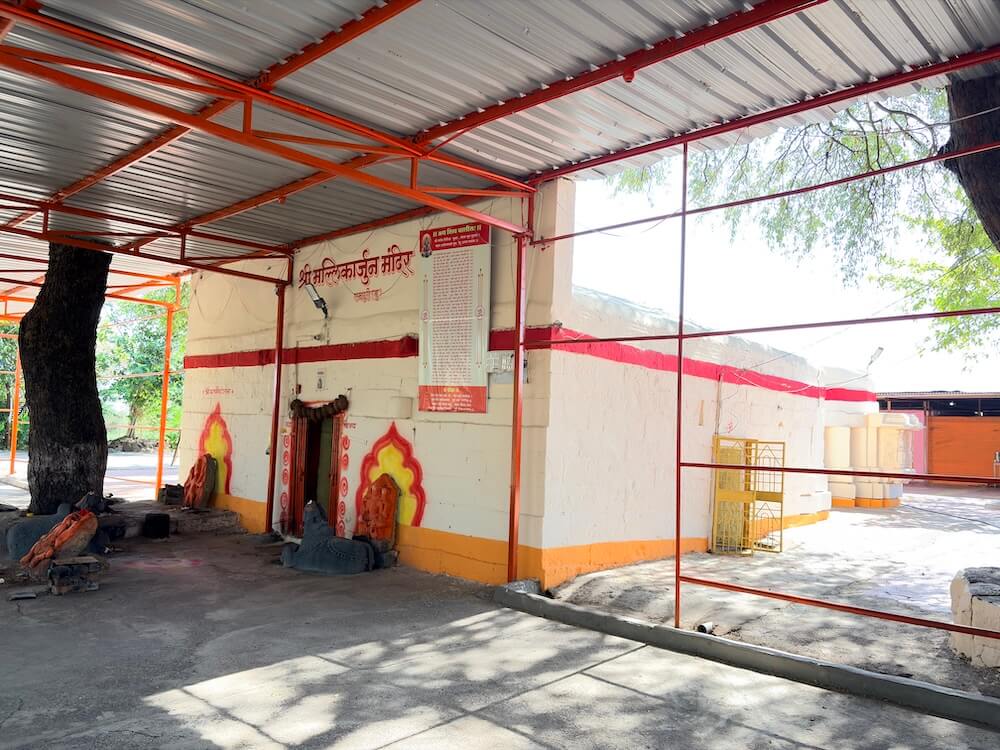
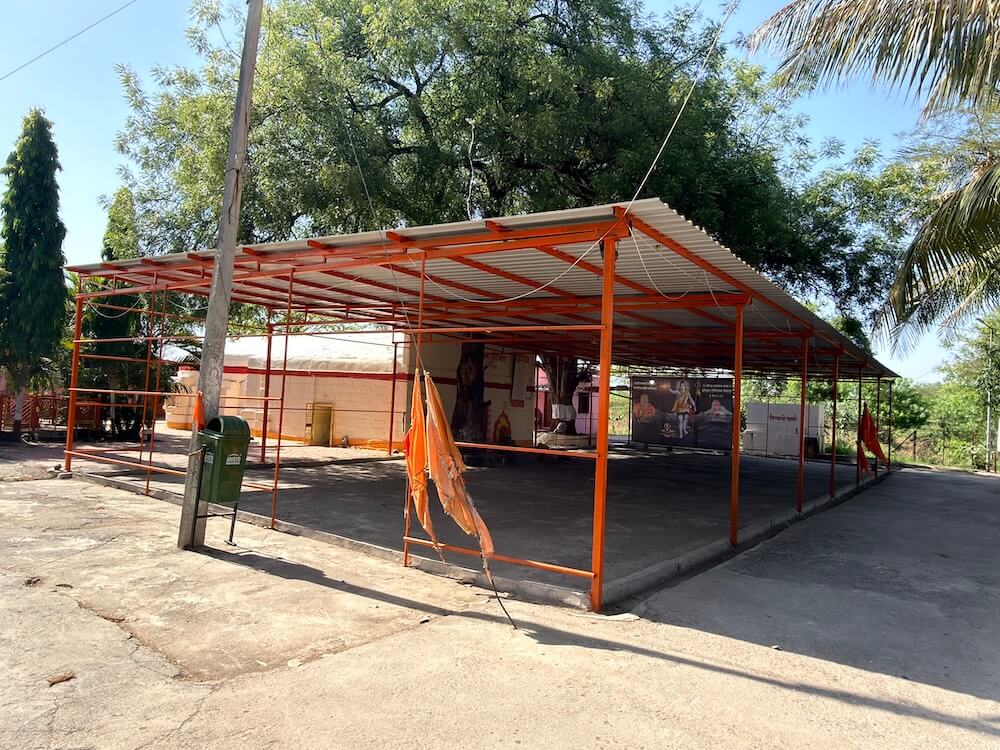
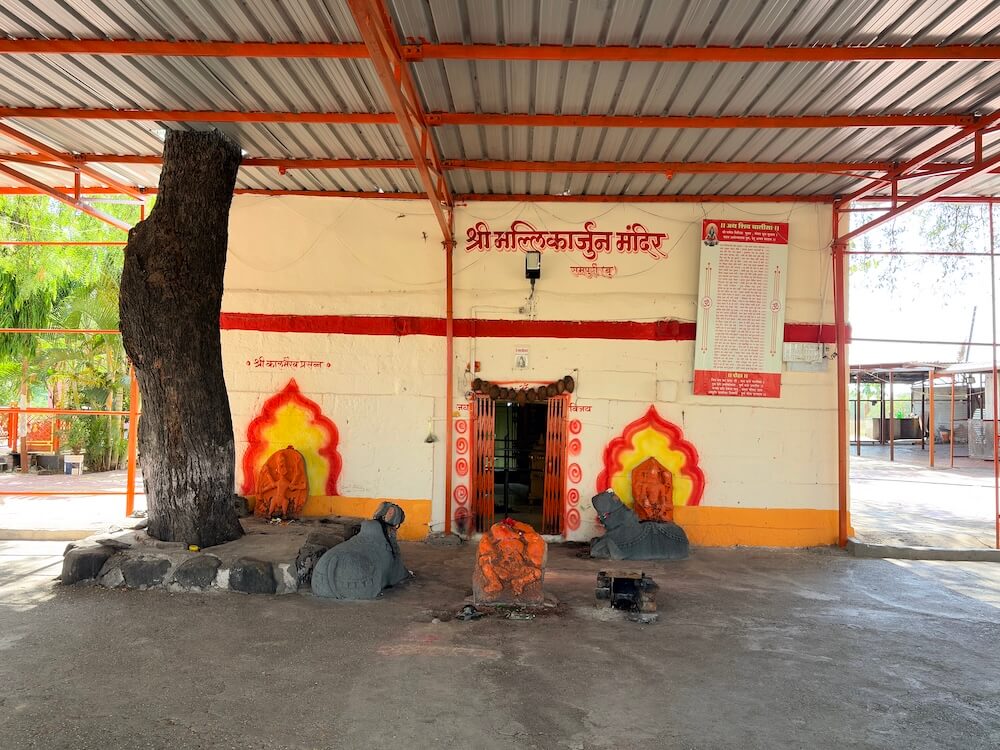
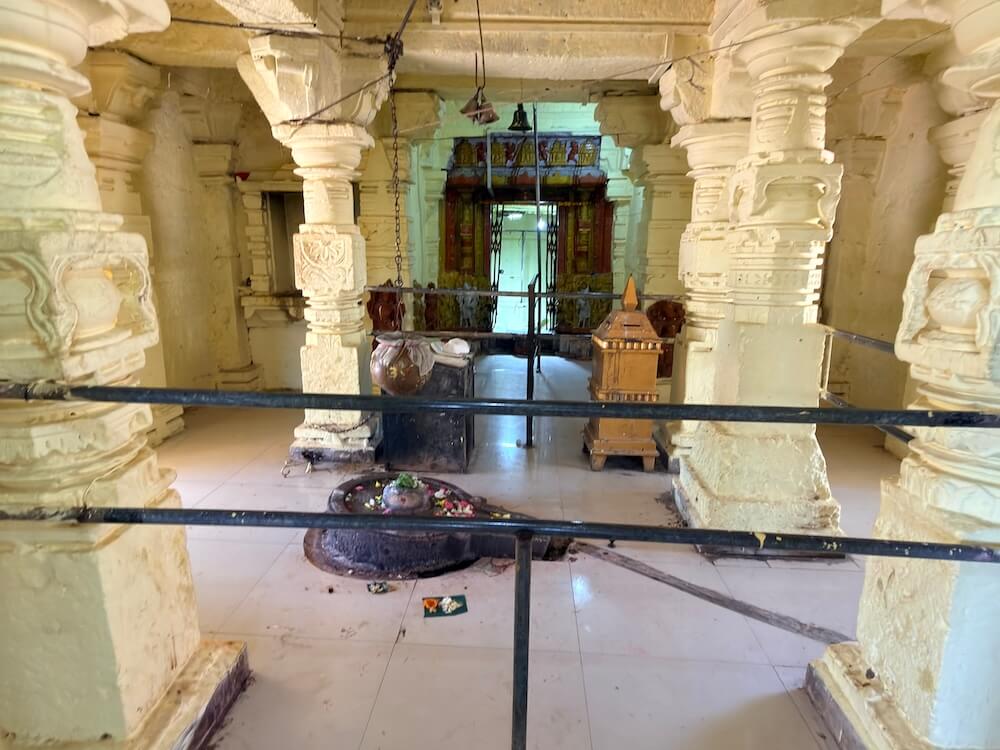
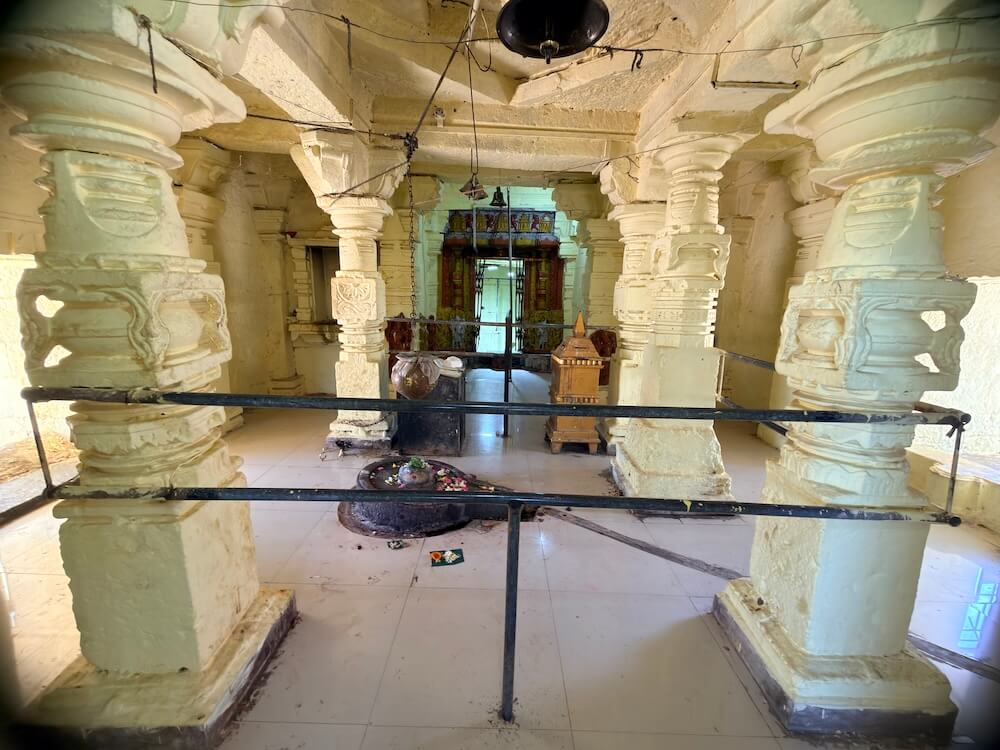
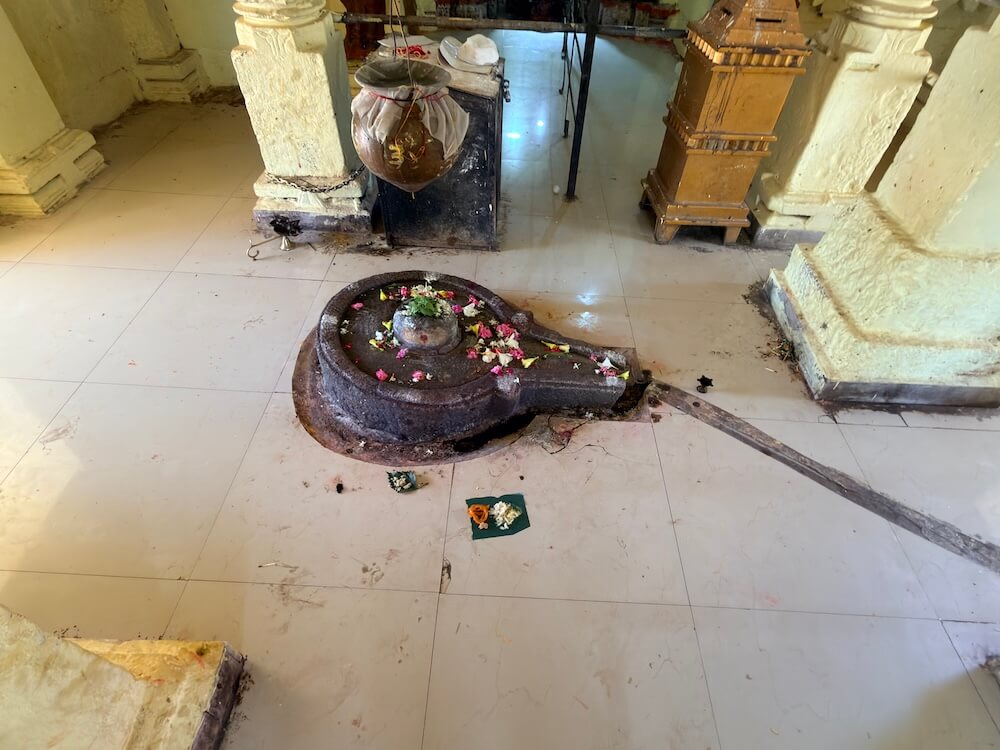
Lord Brahma had four sons: Sanaka, Sanandana, Sanatana, and Sujata. Once, they approached Lord Brahma seeking the attainment of true knowledge. Lord Brahma told them about the greatness of the Papadanda Tirtha and advised them to perform penance after bathing in its holy waters. Following his guidance, the four brothers arrived here and attained enlightenment. The Shiva Linga they subsequently consecrated was named ‘Siddheshwara’. Over time, Sage Gautama performed penance here. For this purpose, he invoked the Ganga. Consequently, the Ganga, which originates at Trimbakeshwar near Nashik, desired to visit the Papadanda Tirtha. She arrived here on the day of Vaishakha Purnima. It is believed that bathing in the Papadanda Tirtha on this day bestows great merit. The Mallikarjuna temple possesses a vast campus. In the grand courtyard, paved with paver blocks, there are many trees such as mango, coconut, and tamarind. In the center of the courtyard stands the Mallikarjuna temple, built in the Hemadpanti architectural style. In front of this temple is an ancient idol of Lord Ganesha. On both sides of the entrance, there are two ancient idols. There are two idols of Nandi in front of the temple and to the right of the entrance; one of them is in a damaged state. Since the entrance is small in size, one must bow their head to enter. The structure of the temple consists of a Sabha Mandapa (assembly hall), Antarala (vestibule), and Garbhagriha (sanctum sanctorum). The pillars here, standing on column bases, are carved with various shapes. The ceiling also features intricate carvings. In the Sabha Mandapa, there is a Shiva Linga set within a large Shalunka. There are two niches in the front of the Sabha Mandapa. Idols are carved at the base of the pillars on both sides of the entrance to the Antarala. The entrance to the Garbhagriha is five-branched (panchashakhiya). It is adorned with artistic craftsmanship, and some idols are carved in the lower section. The Garbhagriha is fifteen to twenty feet deep. One must descend eight to ten stone steps to reach it. In the Garbhagriha, one can behold the Mallikarjuna Shiva Linga set within a large Shalunka.
The Shikhara (spire) above the Garbhagriha of this temple has been destroyed over the passage of time. Some niches have been carved into the outer walls of the temple. Directly in front of the temple, on a small platform, is an idol of Lord Hanuman. Behind the temple, there is a Shiva Linga in the open. The nearby site is known as ‘Sitanhani’. There are also some rooms in the temple premises.
Countless devotees have deep faith in the Shiva Linga at the Mallikarjuna temple, which is the oldest in the village. Many devotees come here for darshan every day. Mahashivratri is the main festival celebrated here. On this occasion, a Saptah (seven-day religious program) is also organized. Various religious programs take place on the day of the main festival. On this day, recitations of the ‘Mallikarjuna Mahapurana’ and ‘Shivapurana’ are also held. Devotees can come for darshan every day from early morning until late at night.
This sacred temple stands as a testament to deep spiritual devotion, ancient architectural grandeur, and rich local cultural traditions.
The sanctum sanctorum houses the divine idol consecrated according to ancient Vedic traditions, surrounded by serene courtyards and traditional temple architecture.
Navratri, Maha Shivratri, Annual Temple Jatra & Deepotsav
Compare and book flights, secure top-rated local hotels near the temple, hire reliable guides, and rent cars instantly.
Extend your pilgrimage by visiting other highly sacred temples located nearby.


Add ₹999 more to unlock FREE SHIPPING!
Your sacred cart is currently empty.
Shop Photo FramesFill in your delivery details below to place your order.
Add comment