
Add ₹999 more to unlock FREE SHIPPING!
Your sacred cart is currently empty.
Shop Photo FramesThe historic temple of Indrayani Devi is located near Bhosa village in the Manwath taluka of Parbhani district. This sacred site is situated on a vast plateau amidst picturesque natural surroundings. It is a major center of faith for countless devotees across the Marathwada region. The Goddess is considered a ‘Jagrut’ (awakened) deity who fulfills the prayers of her devotees. Followers also affectionately refer to her as ‘Malavarachi Devi’ (Goddess of the Plateau) or ‘Malavarachi Aai’ (Mother of the Plateau). Large fairs are held here on the seventh day of the Sharadiya Navratri festival and on Kojagiri Purnima. Thousands of devotees gather during these festivals to seek the Goddess’s blessings.
The plateau where the temple stands is approximately 400 meters above sea level and stretches for seven kilometers. This expansive plateau lies on the border of the Parbhani and Manwath talukas. The plateau is named ‘Indrayani Mal’ after the Goddess herself. Currently, this area is being developed as a tourist destination. The natural beauty of the region is particularly enchanting during the monsoon season. A variety of birds can be spotted on this plateau, making it a significant location for bird enthusiasts.
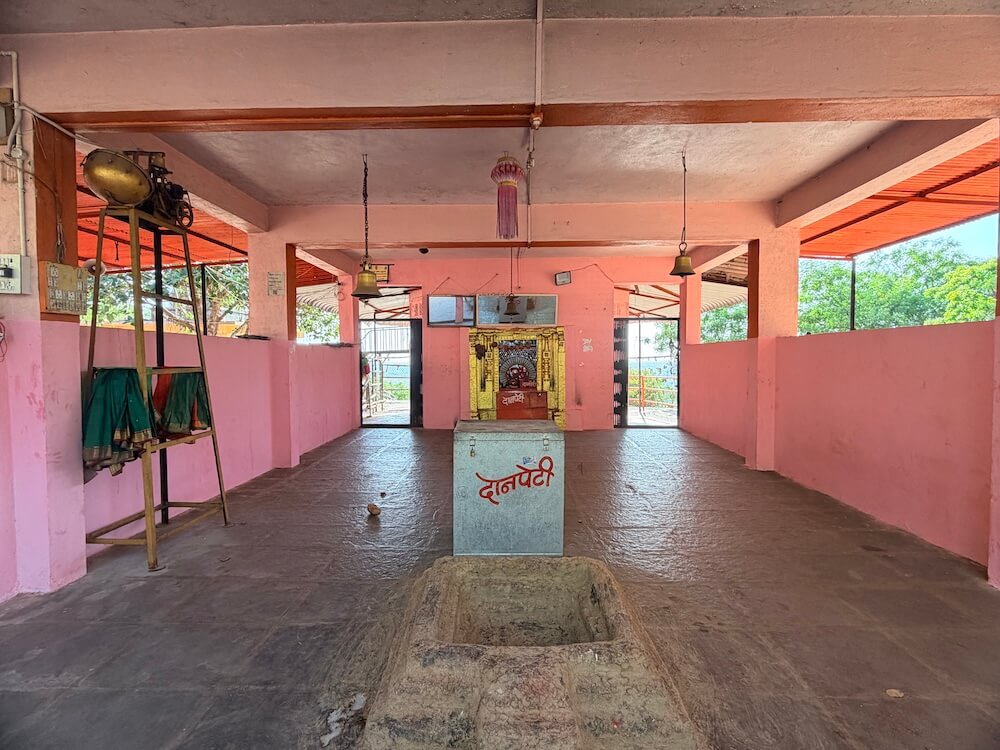
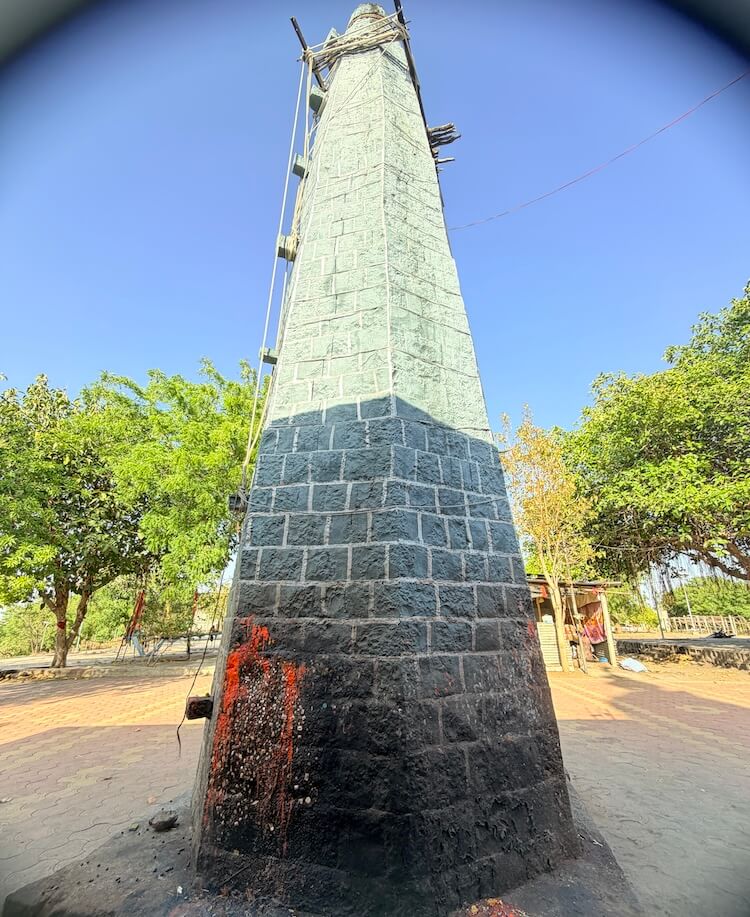
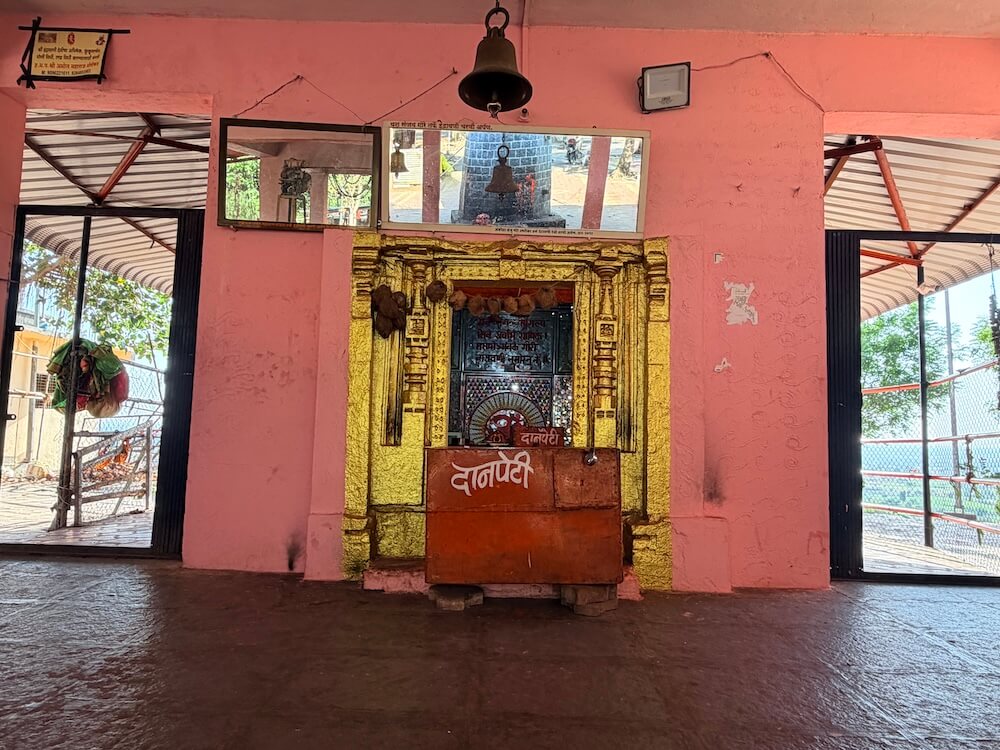
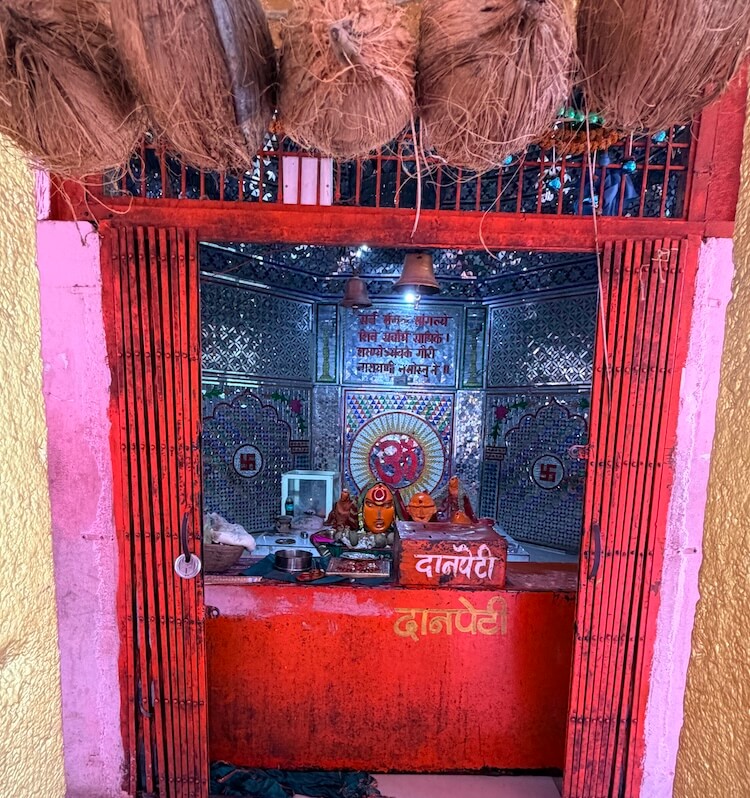
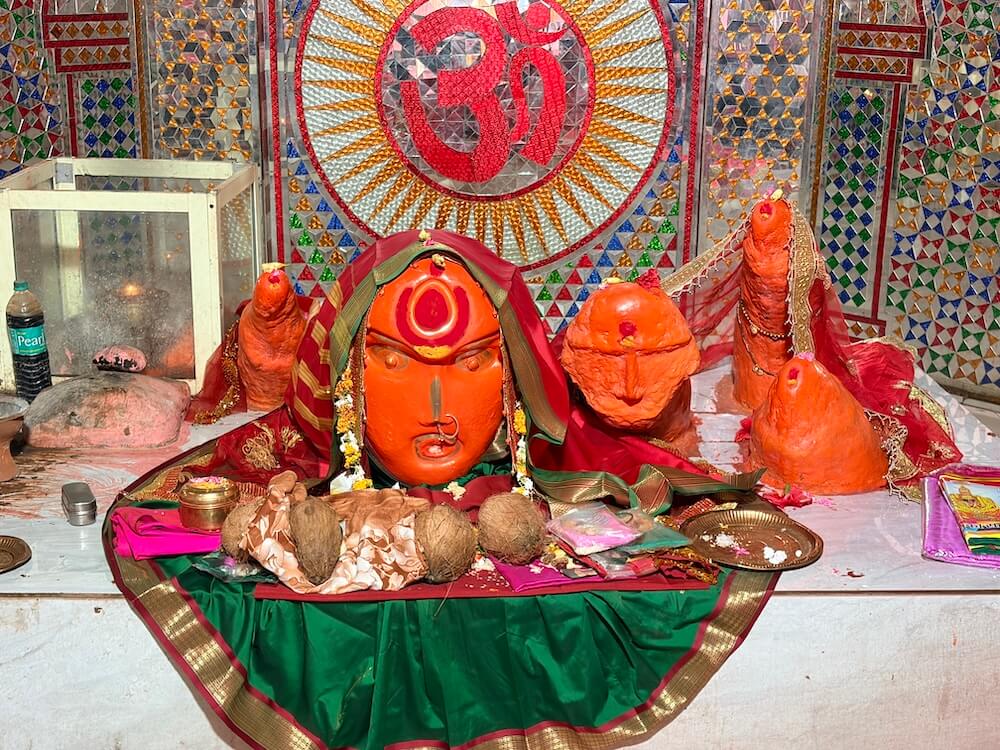
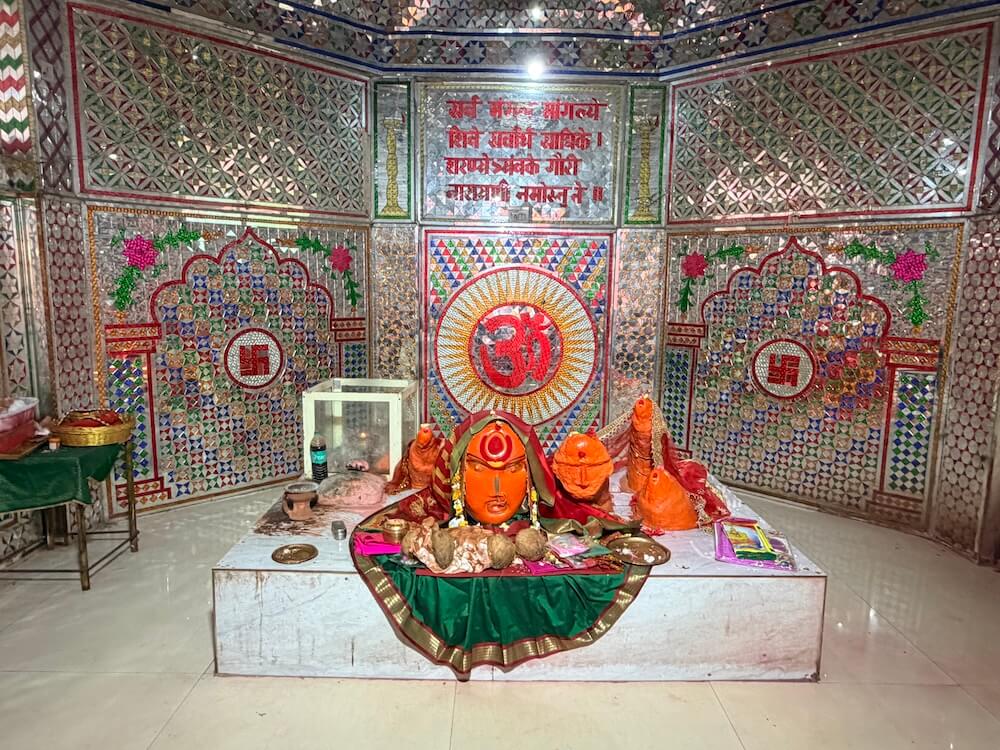
The legend regarding the origin of Indrayani Devi states that in ancient times, this entire region was part of the Dandakaranya forest. A sage named Chyavana lived in this forest with his wife. Due to certain circumstances, a strange child was born to them. His body was spherical and demon-like, leading to him being named ‘Golasur’ (Round Demon). Later, Golasur performed severe penance to Lord Brahma and obtained several powerful boons. Empowered by these, Golasur became extremely arrogant and began tormenting sages and gods. Exhausted by his atrocities, all the gods and humans sought help from Lord Shiva. To slay Golasur, Lord Shiva took the Narasimha avatar. A fierce battle raged between Narasimha and Golasur for many years. Despite the long conflict, Golasur could not be defeated. Consequently, Narasimha jumped directly into Golasur’s stomach and began tearing it apart. Overcome by pain, the demon was distressed. After emerging from the demon’s body, Narasimha plucked one of his matted locks (Jata) and struck it against a large rock. From that rock, three divine powers—Indrayani, Rudrayani, and Brahmayani—manifested. With the assistance of these three powers, Narasimha finally slew the demon Golasur. Before dying, Golasur admitted his mistake and requested Indrayani Devi to reside on his face. Subsequently, a mountain shaped like the demon was formed at this site, upon which the Goddess was installed. The Indrayani Devi temple was originally built in the Hemadpanti architectural style. Due to the wear and tear caused by time, the entire temple was renovated in the year 2002. Following this renovation, the temple acquired its present form. The entire plateau is connected by a direct road, and paved roads have been constructed for the convenience of devotees, allowing two-wheelers and four-wheelers to reach the temple premises directly. The east-facing temple of Indrayani Devi stands at the western end of this vast plateau. The area in front of the temple has been paved with blocks for the convenience of devotees. In the temple courtyard, there is a tall stone lamp pillar (Deepmal) over thirty feet high. A sacred ‘Kallol’ (water tank) is also located in this area. Large pavilions with metal roofs have been built on both sides of the main temple. The temple structure consists of a Sabhamandap (assembly hall) and a Garbhagriha (sanctum sanctorum). There is a Yajna-kund in the center of the Sabhamandap. Upon entering the Garbhagriha, one sees the main seat of the Goddess, where several vermilion-smeared ‘Tandale’ (natural stones) are worshipped. The largest among them is the main Indrayani Devi. The inner walls and ceiling of the Garbhagriha are decorated with colorful glass inlay work. Above the Garbhagriha is a tall, tapering Nagara-style Shikhara, adorned with various niches containing beautiful sculptures of ancient sages.
Various religious festivals and celebrations are observed in this temple throughout the year in a traditional manner. The Sharadiya Navratri festival is the largest and most prominent event here. During this festival, the idol of the Goddess is adorned with precious silver ornaments, and a beautiful silver crown is placed on her head. Ghatasthapana is performed in the temple on the first day of Navratri. Following this, religious programs such as the Akhanda Bhagwat Saptah and Kirtan Mahotsav are organized for nine consecutive days. Another highlight of this festival is the special wrestling competitions held here, in which many wrestlers participate. A large fair is held on the seventh day of Navratri and on Kojagiri Purnima in the month of Ashwin.
During both these fairs, thousands of devotees from various districts of Marathwada climb the hill barefoot to reach the plateau. Many devotees perform a barefoot circumambulation (Pradakshina) of the entire seven-kilometer plateau to fulfill their vows. It takes devotees about two to two-and-a-half hours to complete this circumambulation.
There is a special religious site on the circumambulation path where a natural round stone is installed in place of a Linga in a Shalunka. Devotees refer to this stone as ‘Chintamani.’ There is deep faith among the devotees regarding this Chintamani stone. It is a firm belief among the locals that if a vow made here is to be fulfilled, this stone rotates on its own. Devotees offer prayers and fulfill their vows here with great devotion throughout the twelve months.
To have their wishes fulfilled, devotees tie coconuts to the Banyan tree in the temple premises. Once the vow is fulfilled, these coconuts are untied. During the major fairs, large-scale community feasts (Bhandara) are organized by the devotees on the plateau. Devotees can have the darshan of the Goddess daily from early morning until late at night.
This sacred temple stands as a testament to deep spiritual devotion, ancient architectural grandeur, and rich local cultural traditions.
The sanctum sanctorum houses the divine idol consecrated according to ancient Vedic traditions, surrounded by serene courtyards and traditional temple architecture.
Navratri, Maha Shivratri, Annual Temple Jatra & Deepotsav
Compare and book flights, secure top-rated local hotels near the temple, hire reliable guides, and rent cars instantly.
Extend your pilgrimage by visiting other highly sacred temples located nearby.


Add ₹999 more to unlock FREE SHIPPING!
Your sacred cart is currently empty.
Shop Photo FramesFill in your delivery details below to place your order.
Add comment