
Add ₹999 more to unlock FREE SHIPPING!
Your sacred cart is currently empty.
Shop Photo FramesThe village of Mohari is nestled in Bhor Taluka of Pune district, at the sacred confluence of the Gunjavani and Shivganga rivers. In this village, which holds special significance since the era of Chhatrapati Shivaji Maharaj, stands the revered Amrutheshwar Temple, built in the ancient Hemadpanti architectural style. Due to the perennial flow of the Gunjavani River, this entire region is affectionately known as Gunjan Maval. This ancient temple, reflecting the Yadava architectural style, is considered the cherished family deity (Kuladaivat) of the Shilimkar-Deshmukh lineage. Records indicate that during the glorious period of Swarajya, historical judicial proceedings (Nyaynivade) were conducted here in the esteemed presence of Chhatrapati Shivaji Maharaj and Dadoji Konddev. The Gandabherunda sculpture, the six-armed idol of Lord Shankara, and the idol of the dancing nude Bhairava found within this temple are truly considered rare and invaluable treasures.
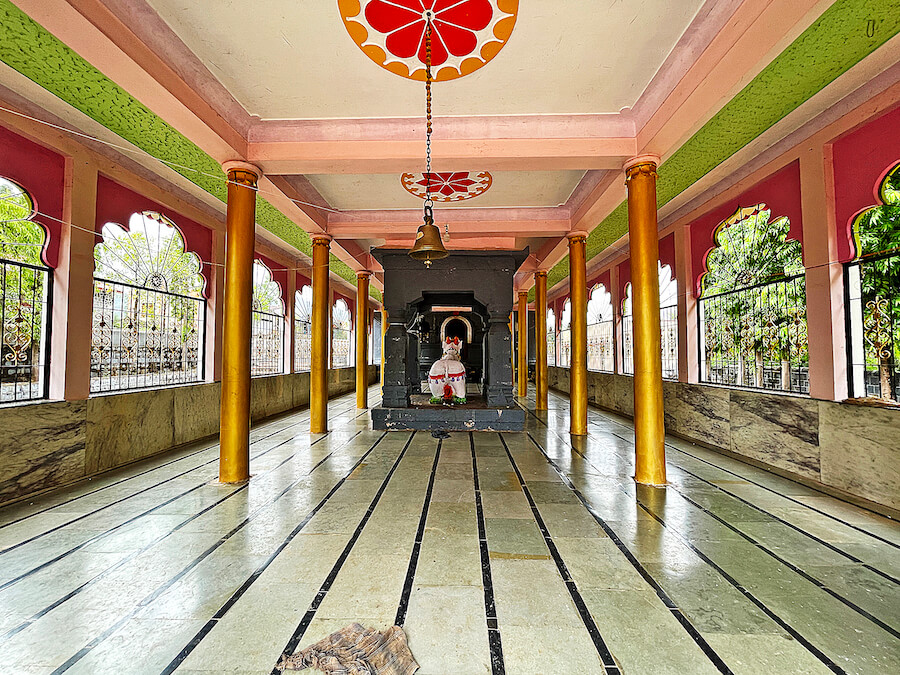
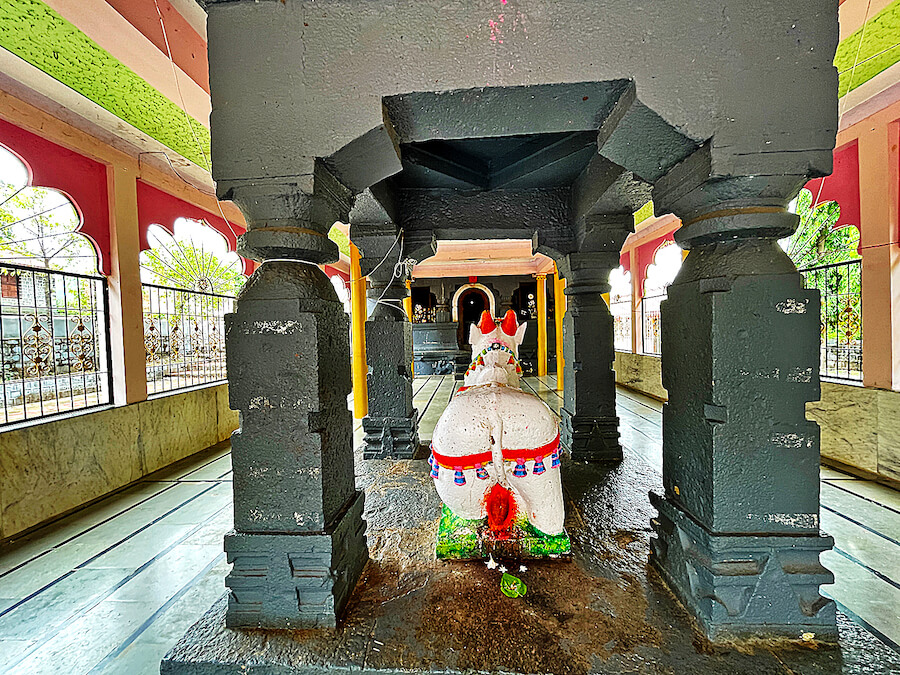
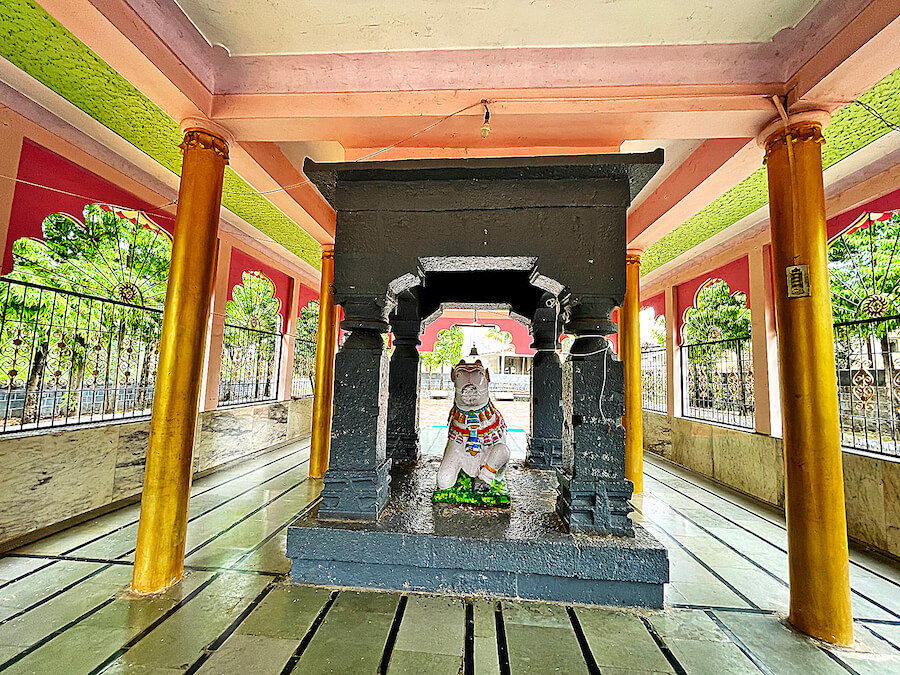
During the reign of Chhatrapati Shivaji Maharaj, the Deshmukhs of Shilimkar, Jedhe, and Bandal held significant influence over Gunjan Maval. The temple underwent a glorious renovation (Jirnoddhar) during the tenure of the Shilimkar-Deshmukh family. Later, historical records reveal that the construction of the temple’s shikhara (spire) was completed in 1763 during the Peshwa period. According to one revered legend (Akhyayika), the sacred narrative of Lord Ganesha and Kartikeya’s circumambulation of the Earth unfolded at this very spot. Devotees firmly believe that by circumambulating the sacred stone in front of the Garbhagriha (sanctum sanctorum) three times, while devoutly chanting the Gayatri Mantra, one attains the profound merit (Punya) equivalent to circumambulating the entire Earth. Another legend associated with the temple narrates that two cows belonging to a local farmer would regularly visit the stream and spontaneously offer their milk. When the villagers observed this divine phenomenon, they excavated the spot and discovered two sacred Shivlingas. The farmer intended to move one of these Shivlingas to a higher ground and consecrate a Shiva temple there. However, despite his earnest efforts, he was unable to move the Shivlinga from its original spot. At that very moment, Lord Shankara appeared to him in a divine dream vision (Swapnadrishtant), instructing him, “The cows that were performing milk-abhisheka upon me – try to pull me out using their two calves, and you shall surely succeed.” Following this divine instruction from the dream vision, the farmer acted accordingly and was successful, bringing the Shivlinga to the site of the present temple. During the Shiv period, the Amrutheshwar Temple was revered as an important center for judicial pronouncements (Nyaynivade) and divine trials (Divya Prayoga). On May 30, 1631, a dispute arose between Babaji Nelekar and Janaji Khaire concerning the Mukadami (headmanship) of Kodhit. In the esteemed presence of Dadoji Konddev, Janaji Khaire performed a divine trial here and thus proved his truthfulness. In 1648, to resolve a land dispute between the Panse and Khanderao families of Mohari, the ‘Harva’ divine trial, which involved retrieving a piece of gold from boiling oil, was performed in this very temple. Historical references indicate that Chhatrapati Shivaji Maharaj himself graced this occasion with his presence. In 1690, divine trials were once again conducted in this temple to settle disputes between two families. To resolve these conflicts, the accused’s hands would be bound, and a piece of gold would be dropped into boiling oil. Whoever’s hands remained unharmed was considered innocent and absolved. Subhedar Sarjerao Mang was entrusted with the momentous responsibility of transporting a massive cannon to Raigad Fort at this very sacred place. The temple is encompassed by a sturdy compound wall on all four sides. Near the main entrance, there is an exquisite sculpture of the Gandabherunda bird, which possesses two heads like a majestic eagle. This mythical bird, the revered emblem of the Vijayanagara Empire, is considered a powerful symbol of strength and might. Within the spacious temple courtyard, there are three separate stone-built kundas (water tanks) and a magnificent Deepmala (lamp tower). In the courtyard, a cement concrete mandapa (pavilion) stands in front of the original temple. Due to this new construction, the independent Nandi Mandapa, which was originally situated in front of the main temple, has now become an integral part of this new mandapa. Within this Nandi Mandapa, the revered idol of Nandi is gracefully situated on a raised platform in the center of four sturdy stone pillars. The construction of the main temple is entirely crafted from stone.
The Sabhamandapa (assembly hall) houses a total of sixteen stone pillars. Among these, the four central pillars are full-figured and adorned with intricate carvings. The remaining pillars are seamlessly integrated into the walls. To the right side of the Sabhamandapa, there is a rare and captivating idol of the dancing nude Bhairava with six arms. In the right hands of this divine idol are the sacred weapons: Jambiya (dagger), Pothi (scripture), and Damaru (drum). In the left hands are a Trishula (trident) and a Narumunda (human skull), with intricate carvings depicting a dog devoutly licking the blood dripping from it. The idol is adorned with a Narumundamala (garland of skulls) and a waist belt, and sacred Bhasma (ash) is applied to its forehead. Adjacent to this, an idol of Ashtabhuja Bhairavi (eight-armed Bhairavi) is reverently installed. To the left side of the Sabhamandapa, there is a sacred idol of Ganesha adorned with Sindoor (vermilion). Upon entering the Antarala (vestibule) from the Sabhamandapa, a distinctive sculpture of a cow with five heads on a single body is visible on the right side, a truly unique sight. To the left side of the Sabhamandapa, a Sharabha sculpture is intricately carved. This Sharabha is depicted holding one elephant each in its four legs, tail, and mouth, showcasing its immense power.
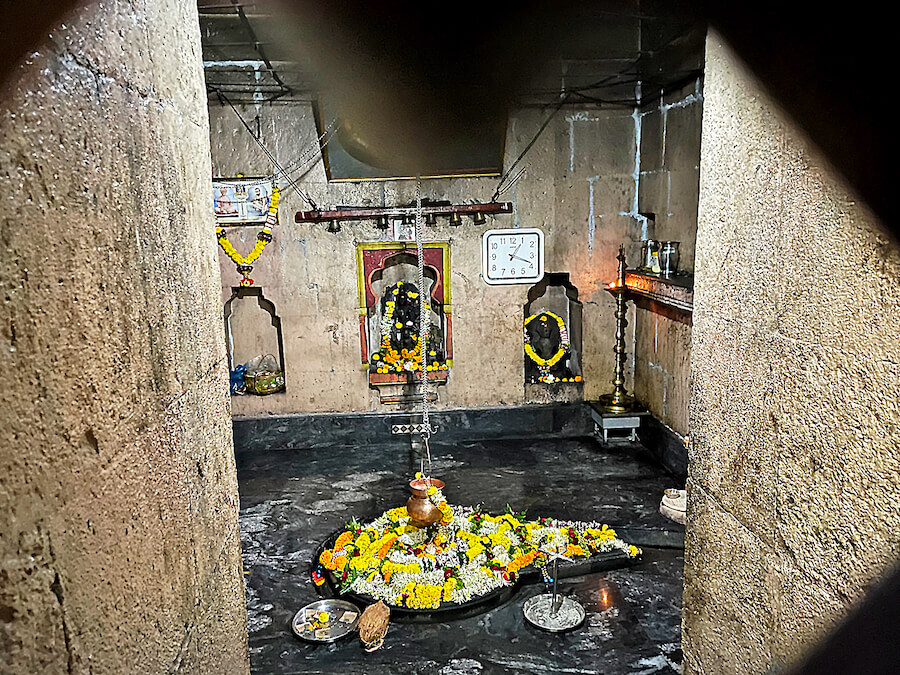
On the doorjambs (Dwarashakha) of the Garbhagriha, various exquisite sculptures such as Vyala, Maruti, Sharabha, and Suruchi leaves are carved. Here, on the ground, there is a stone sculpture of a tortoise. In the southern wall of the Antarala, there is a revered idol of Goddess Mahishasuramardini. One descends four steps to enter the Garbhagriha, which is located in a sacred, recessed area. In the center of the Garbhagriha floor is the sacred Shivlinga of Amrutheshwar Mahadeva. During festivals, a beautiful brass mask is reverently placed upon this Shivlinga. A natural stream of water flows beneath the Shivlinga throughout the year, and this sacred water is collected in a stone kunda to the north. In the Devakoshta (niche) behind the Shivlinga in the Garbhagriha, there is a divine idol of Lord Vishnu and Goddess Lakshmi seated gracefully on Garuda. In this sacred sculpture, Lakshmi is seated on Lord Vishnu’s left thigh. In this idol, Garuda’s ears are adorned with Kundalas (earrings), and a Nagabandha (serpent band) is intricately carved on its belly. Lord Vishnu holds a Gada (mace), Shankha (conch), and Padma (lotus) in His hands. Goddess Lakshmi holds a Padma in Her left hand. On the lower frieze of the temple’s outer walls, various beautiful sculptures of cows, tigers, Vyalas, and lotuses are visible. Among the idols discovered underground during the renovation, a six-armed idol of Lord Shankara is reverently preserved within the temple premises. In this sacred sculpture, Lord Shankara holds a Trishula (trident), Kapala (skull), and Bhikshapatra (begging bowl) in His left hands, and a Damaru (drum), Mala (rosary), and Parashu (axe) in His right hands. The idol is adorned with a waist belt and a Narumundamala (garland of skulls), and Khadavas (wooden sandals) are depicted beneath its right foot.
Throughout the year, various religious festivals are celebrated in the temple according to cherished traditions. Grand festivals are held here on the auspicious occasions of Mahashivaratri and Tripurari Pournima. On the sacred day of Tripurari Pournima, the Tripur (three lamps) are lit on the stone Deepmala, and a magnificent festival of lights (Deepotsav) is celebrated. The ancient tradition of carrying a Kavadi (sacred pot) from this temple to Shikhar Shingnapur on the auspicious occasion of Chaitra Padwa continues to this day. On every Somvati Amavasya, the deity’s palanquin is taken in a joyous procession with musical accompaniment to the confluence for a sacred bath. During summer, after the stream water recedes, another sacred Shivlinga becomes visible in its riverbed. Devotees can have Darshan (sacred viewing) of Lord Amrutheshwar in this temple from the early hours of dawn till late at night.
This sacred temple stands as a testament to deep spiritual devotion, ancient architectural grandeur, and rich local cultural traditions.
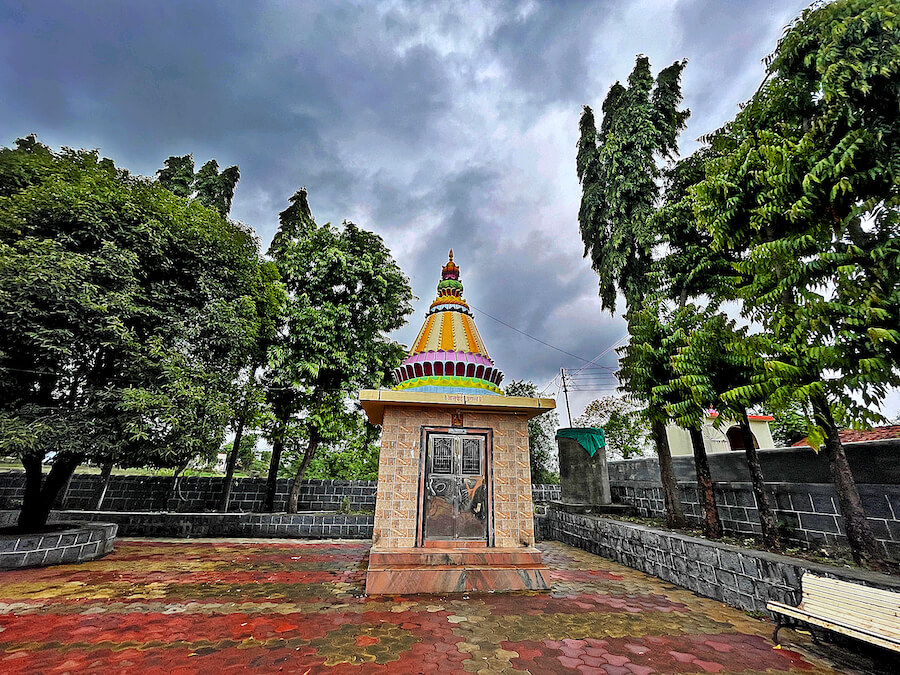
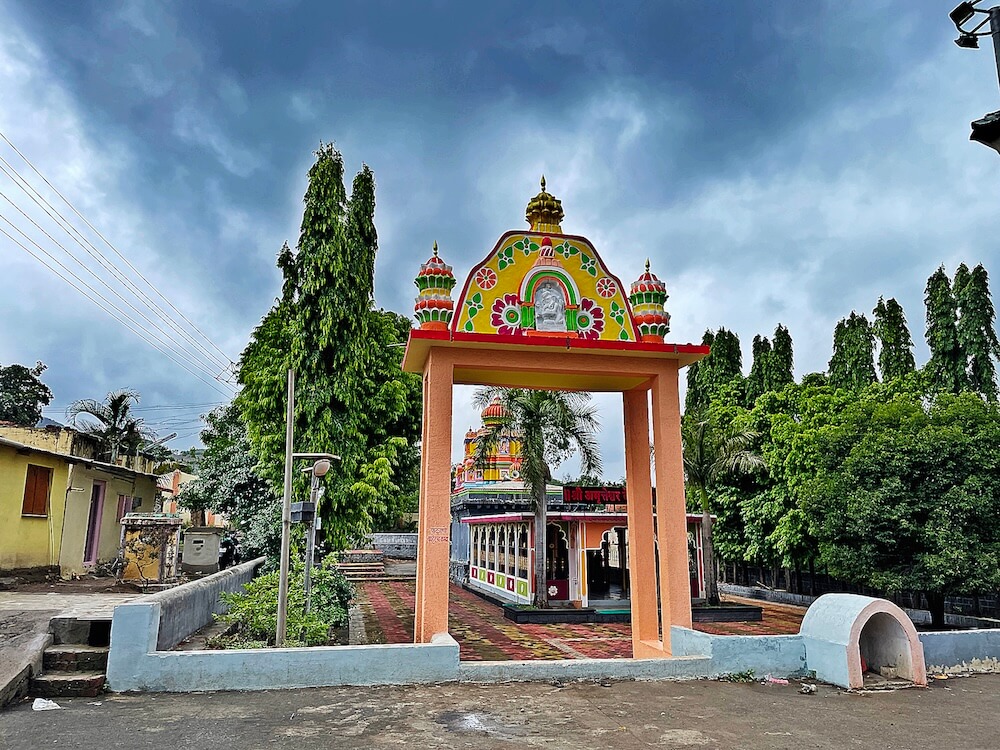
The sanctum sanctorum houses the divine idol consecrated according to ancient Vedic traditions, surrounded by serene courtyards and traditional temple architecture.
Navratri, Maha Shivratri, Annual Temple Jatra & Deepotsav
Compare and book flights, secure top-rated local hotels near the temple, hire reliable guides, and rent cars instantly.
Extend your pilgrimage by visiting other highly sacred temples located nearby.


Add ₹999 more to unlock FREE SHIPPING!
Your sacred cart is currently empty.
Shop Photo FramesFill in your delivery details below to place your order.
Add comment