
Add ₹999 more to unlock FREE SHIPPING!
Your sacred cart is currently empty.
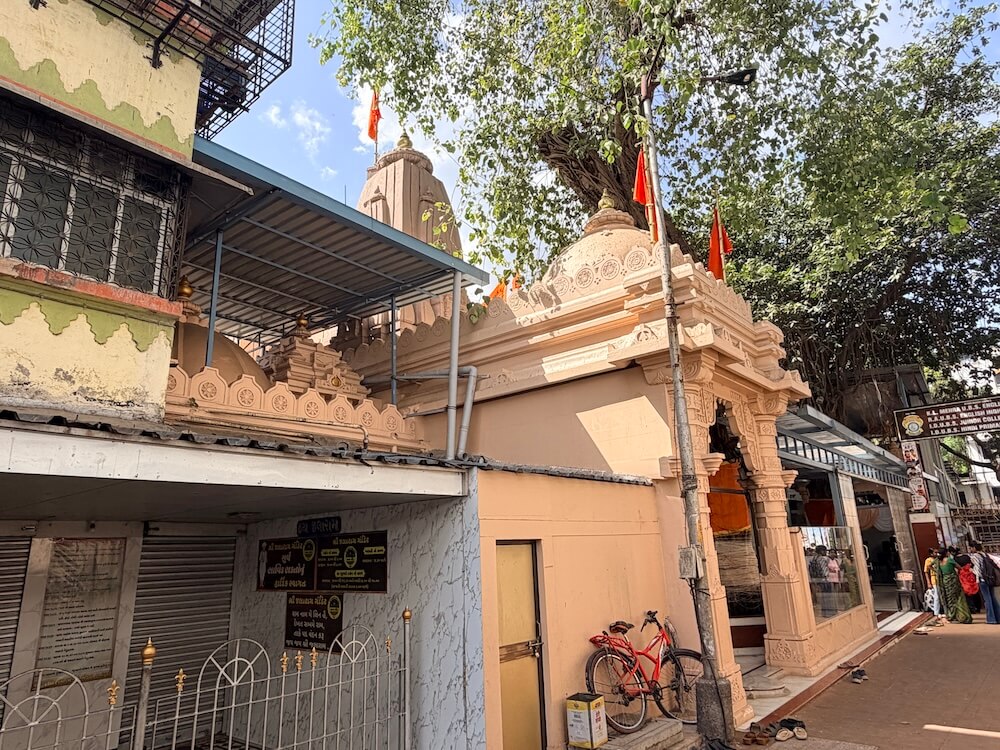
Shop Photo FramesBhandup, one of the ancient villages on Salsette Island (Saṣṭī), is today a Marathi-majority suburb of Mumbai. Near its railway station stands the historic temple dedicated to Bhaṇḍupeśvar Mahādev. It is believed that the presence of this Mahādev, who came to be known as Bhaṇḍupeśvar as the presiding deity of Bhandup village, is extremely ancient. This temple, which is a centre of faith for thousands of residents of Bhandup, also houses shrines for Rām Darbār, Hanumān, Kālbhairav, Śītalā Mātā, and the Navagrahās. On the auspicious days of Mahāśivarātri and Rāmnavamī, a large congregation of devotees gathers here.
The earliest available mention of Bhandup dates back to the eleventh century. During this period, the Shilaharas, who were feudatories of the Chalukyas, held sway over North Konkan, including the islands of Mumbai and Sashti. Their capital was Puri, also known as Gharapuri. Around the year १०२५ CE, the Shilahara king Chhittarajadeva ascended the throne here. The renowned Shiva temple at Ambarnath was also built by Chhittarajadeva. A copper plate inscription belonging to this very Chhittarajadeva was discovered near Bhandup in the year १८३५. That copper plate dates back to १०२६ CE. Dr. V. V. Mirashi has read and edited it. Furthermore, information about this copper plate inscription has been provided in the revered volume, ‘Maharashtra va Gove Shilalekh-Tamrapatanchi Varnanatmak Sandarbh Suchi’ (A Descriptive Reference List of Inscriptions and Copper Plates from Maharashtra and Goa), authored by Shri Shantaram Bhalchandra Deo, and published in the year एक हजार नऊशे ब्याऐंशी by the Maharashtra State Board for Literature and Culture.
This copper plate inscription is composed in the Sanskrit language and inscribed in the Nāgarī script, characteristic of western Bhārat in the eleventh century. The date recorded on this copper plate is ‘Kārtika Śuddha fifteen, Sunday, Sūryagrahaṇa, Kṣaya Saṁvatsara, Śaka ९४८’. It commences with a hymn of praise to Gaṇeśa. Following this, the lineage of the Śilāhāra dynasty is presented, tracing from Jīmūtavāhana up to Chhittarājadeva. The primary purpose of this deed of donation was to record that the king granted a field in Voḍaṇibhaṭṭa, located in Ṣaṭṣaṣṭi (the Sāṣṭī district) within Sthānaka (today’s Ṭhāṇe region), to Āmadevaiyyā, son of Noḍamaiyyā, a Brāhmaṇa of the Parāśara Gotra. This deed of donation is addressed to the people of Hañjaman, which is today’s Sañjān city. It was inscribed by Bhāṇḍāgārasena Jogapaiyyā, nephew of the Mahākavi Nāgalaiyyā, the Bhāṇḍāgārasena, under the king’s command. This deed of donation mentions the villages of Noūr (today’s Nāhūr), Gomvaṇī (today’s Govhan or Gavhān), and Gorapavalī, all situated near Ṭhāṇe. According to Śāntārām Bhālchandra Dev, Gorapavalī might be the ancient name for Bhāṇḍup. Furthermore, a similar reference is found in the ‘Places of Interest’ entry within the ‘Gazetteer of the Bombay Presidency – Thana’.
The account of King Pratap Bimb, the primal ruler of Mumbai who established his capital in Mahim, Mumbai, in the year ११४२ CE, and thereafter of Bimbadev Yadav, son of the Yadav King Ramdevrai who ascended to power in the year १२९५ CE, is given in the sacred text ‘Mahikavatichi Bakhar’. In this very text, a mention of Bhandup is also found. It records the ‘upaj’, that is, the income, of various villages. In it, there is a mention of ‘Bhandup-Sarkar Bhaat Munde ११५ Rajbhag ९५ Dharma ६ Silotar १४ Nagad Dam ११००’. This Bakhar was edited by the revered historian V. K. Rajwade, who determined its period of composition to be from the year १४४८ to १५७८ CE. From this, it becomes clear that Bhandup was known by this very name at least in the fifteenth century.
In the history of Mumbai, Bhandup holds a special place. The first railway ran between Mumbai and Thane on १६ April १८५३. The concept of this railway belonged to Lord Dalhousie. He had sent the engineer George T. Clark here in १८४३ for the planning of the railway line. Shri George T. Clark resided on the estate of Shri Framji Kasavji Banaji in Bhandup. It was from there that he meticulously planned this railway line. In the copper plate inscription of Chhittarajadeva, the boundaries of the donated land are mentioned, stating that a ‘Rajpath’ (royal highway) lay to the north and east. This was a major highway from the Shilahara period. The Gazetteer notes that today’s railway line between Bhandup and Thane largely follows this very Rajpath. During the reigns of the Shilaharas and their predecessors, the Kalachuris, as well as their feudatories, the Traikutakas, Shaiva worship was widely prevalent in Mumbai and the Salsette islands. Scholars have concluded that in this ancient period, Bhandupeshwar Mahadeva must have been established near the then-existing royal highway in Bhandup.
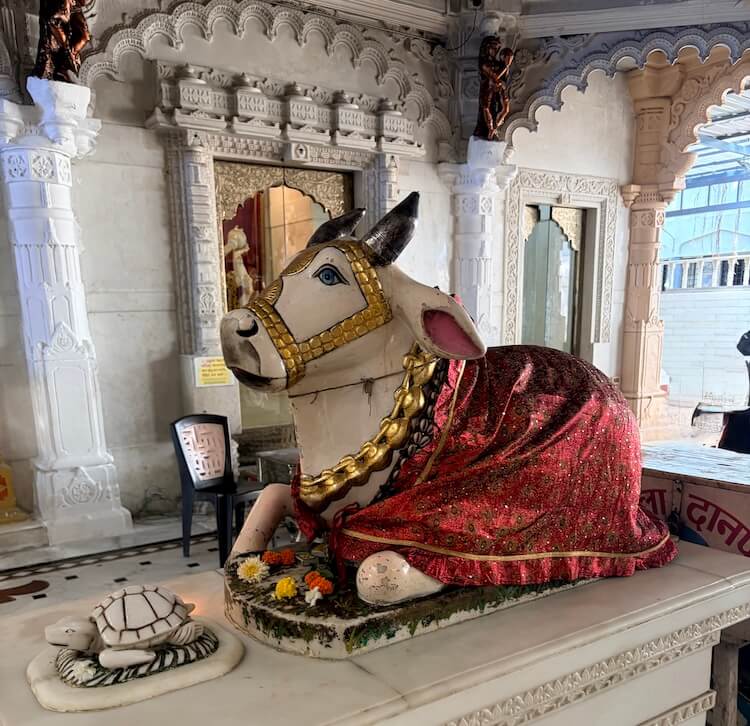
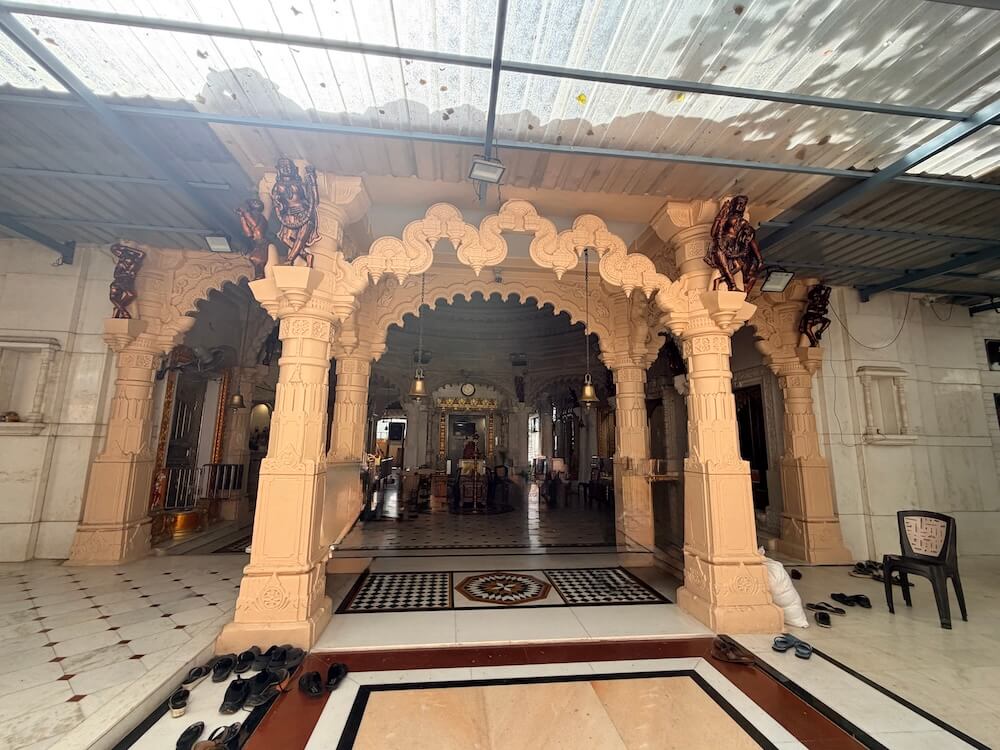
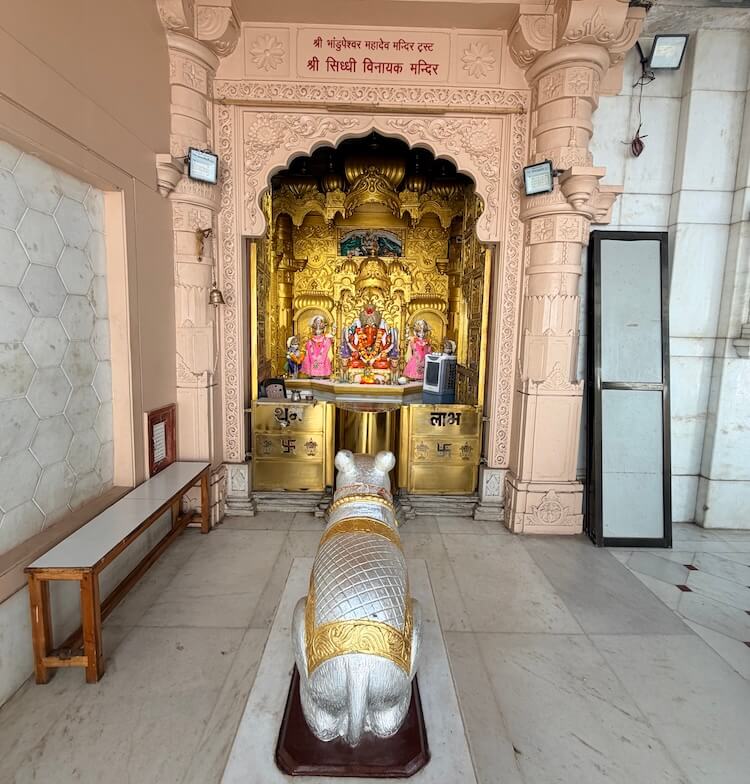
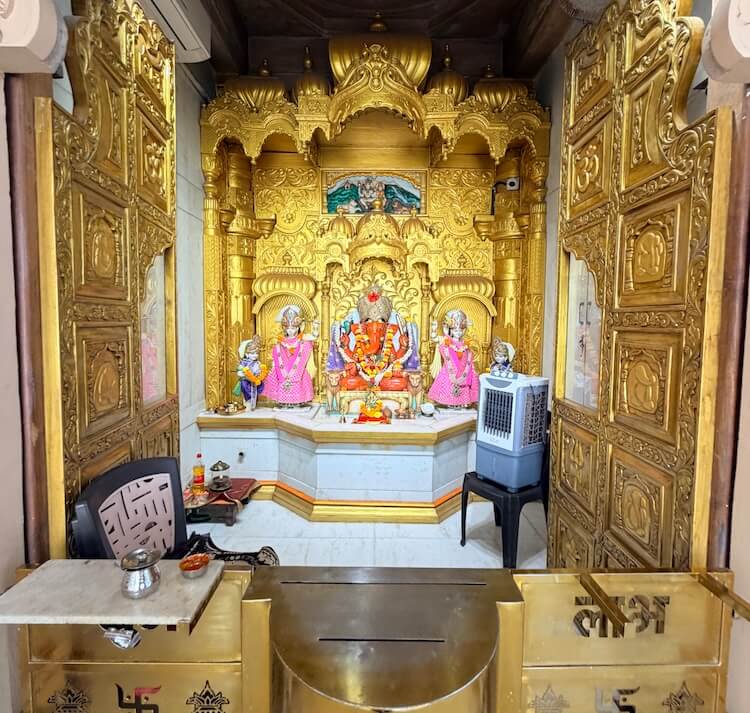
This temple is situated in the bustling Station Road area of Bhandup. Having undergone recent renovations, the temple has now attained its present grand and captivating form. The temple’s structure comprises a Darshan Mandap, a Sabha Mandap, the main Garbhagriha, and several Upagabhagrihas. One enters the partially open Darshan Mandap through the main entrance. This Darshan Mandap features four intricately carved pillars and stone benches for devotees to sit upon. All these pillars are interconnected by ornate arched gateways. Above each pillar are distinctive sculptures of Surasundaris engaged in singing and playing musical instruments. In the Sabha Mandap, on an elevated Vajra Peetha, are the marble idols of Nandi and a tortoise. Further ahead, in the Antarala, within the Devakoshthakas on both sides, are enshrined the idols of Shri Ganapati and Shri Maruti. From the entrance of the Garbhagriha, which is situated in the Antarala, one descends a few steps into the somewhat deeper Garbhagriha. In the marble-floored Garbhagriha, at the very centre, is the Shiva Lingam of Bhandupeshwar Mahadev. This Lingam is adorned with an intricately carved silver covering. An Abhishek Patra and a Chhatra rest upon this Lingam. In the Devakoshthaka on the wall behind the Lingam is the idol of Devi Parvati Mata. Besides the main Garbhagriha, other sub-shrines within this temple house the idols of Siddhivinayak, Sheetala Mata, Santoshi Mata, Batuk Bhairav, Kaal Bhairav, Hanuman, Vitthal-Rukmini, Radha-Krishna, the Navagrahas, Shri Datta, Shri Krishna, Devi Saraswati, Mahalakshmi, Vagheshwari, Kali Mata, Gayatri Mata, Shri Ram-Lakshman-Sita, and Mahadev.
Devotees may partake of Darshan at this sacred temple from सकाळी ६ to दुपारी १२ and from सायंकाळी ४ to रात्री ९. The grandest festival celebrated here is Mahashivaratri. On this auspicious day, sacred rituals such as Rudrabhishek, special Pujas, Bhajan-Kirtan, and Maha-Aarti are devoutly performed. During this time, the temple is beautifully adorned with electric lamps and garlands of fragrant flowers. Countless devotees from Bhandup and the surrounding areas reverently queue up for Darshan on this day.
Furthermore, throughout the entire holy month of Shravan, especially on every Shravani Somvar, sacred ceremonies including Jalabhishek, Dugdhabhishek, offering of Belpatra, and Aartis are performed. On the Pradosh Tithi that arrives every fortnight, special Shiva Puja and Abhishek are devoutly offered here. Similarly, the festivals of Ram Navami and Ganesh Chaturthi are also celebrated with immense zeal and devotion at this holy shrine.
This sacred temple stands as a testament to deep spiritual devotion, ancient architectural grandeur, and rich local cultural traditions.
The sanctum sanctorum houses the divine idol consecrated according to ancient Vedic traditions, surrounded by serene courtyards and traditional temple architecture.
Navratri, Maha Shivratri, Annual Temple Jatra & Deepotsav
Compare and book flights, secure top-rated local hotels near the temple, hire reliable guides, and rent cars instantly.
Extend your pilgrimage by visiting other highly sacred temples located nearby.


Add ₹999 more to unlock FREE SHIPPING!
Your sacred cart is currently empty.
Shop Photo FramesFill in your delivery details below to place your order.
Add comment