
Add ₹999 more to unlock FREE SHIPPING!
Your sacred cart is currently empty.
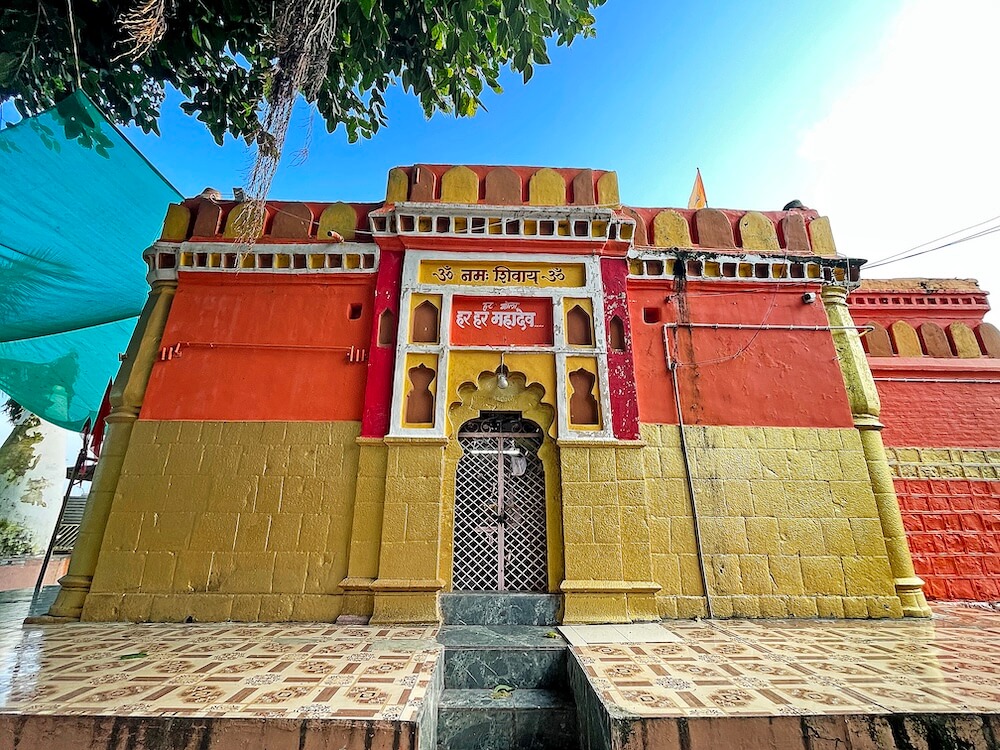
Shop Photo FramesSituated near the Katepurna (Mahan) Dam, the Siddheshwar Mahadev temple in Kothali (Budruk) is the presiding deity for many families across Vidarbha. Built using black stone, this temple is one of the ancient temples in the Akola district. According to local legends, the temple was constructed in the 11th century. It is said that Sidaji Maharaj, considered the village deity of Patur, resided in this temple for some time. Along with thousands of devotees from Vidarbha, pilgrims from Gujarat, Madhya Pradesh, and Karnataka also visit for darshan. There is a tradition of offering ‘Rodga’ as naivedya to the Siddheshwar here.
During the 10th and 11th centuries, this region was under the rule of the Chalukyas. In 1049 CE, the Chalukya king Ahavamalla Someshvara (I) ascended the throne. Shiva, Vishnu, Mahalakshmi of Kolhapur, and Kartikeya were the primary deities worshipped by the Chalukyas. Many temples were built during their era. According to the local legend of the Siddheshwar Mahadev temple in Kothali, this temple was constructed in 1060 CE, during the reign of Ahavamalla Someshvara (I). The legend states that there was a Shiva-devotee chieftain in this region. After conquering a territory, he would build a Shiva temple at his place of stay. He built many Shiva temples in districts like Akola, Amravati, and Solapur. He built the Siddheshwar temple at Kothali Budruk in 1060.
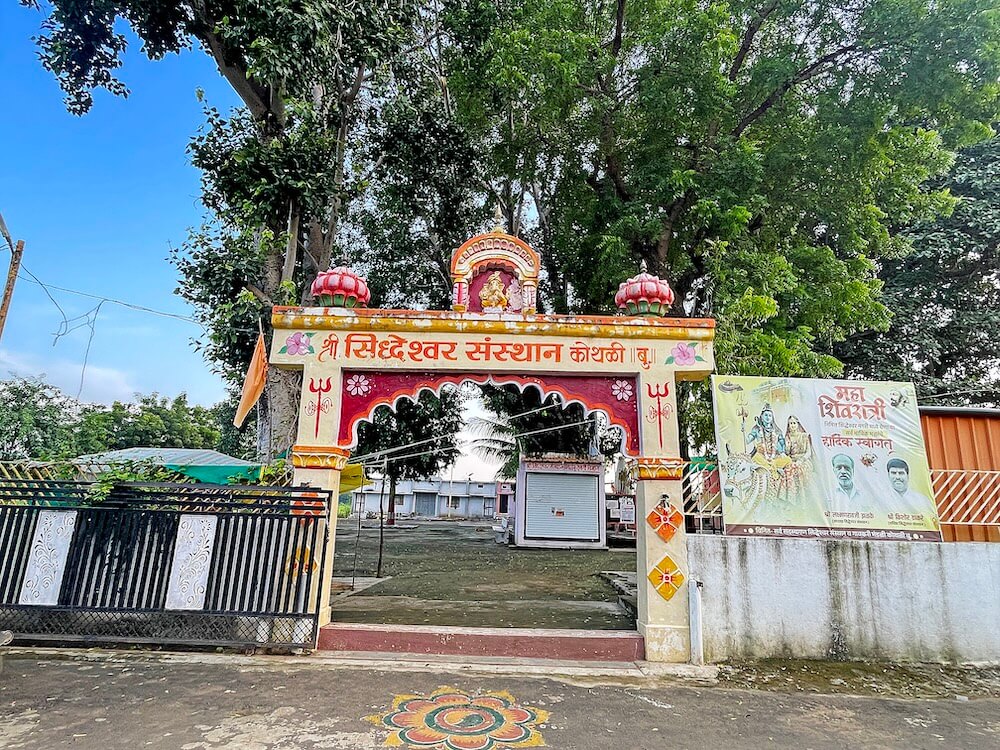
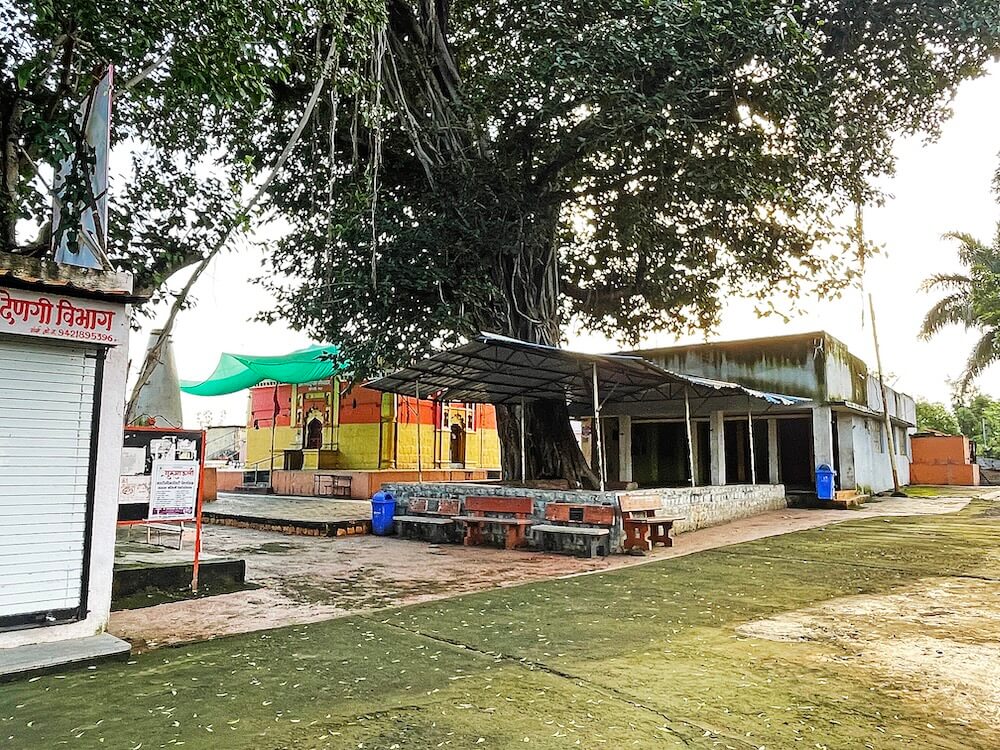
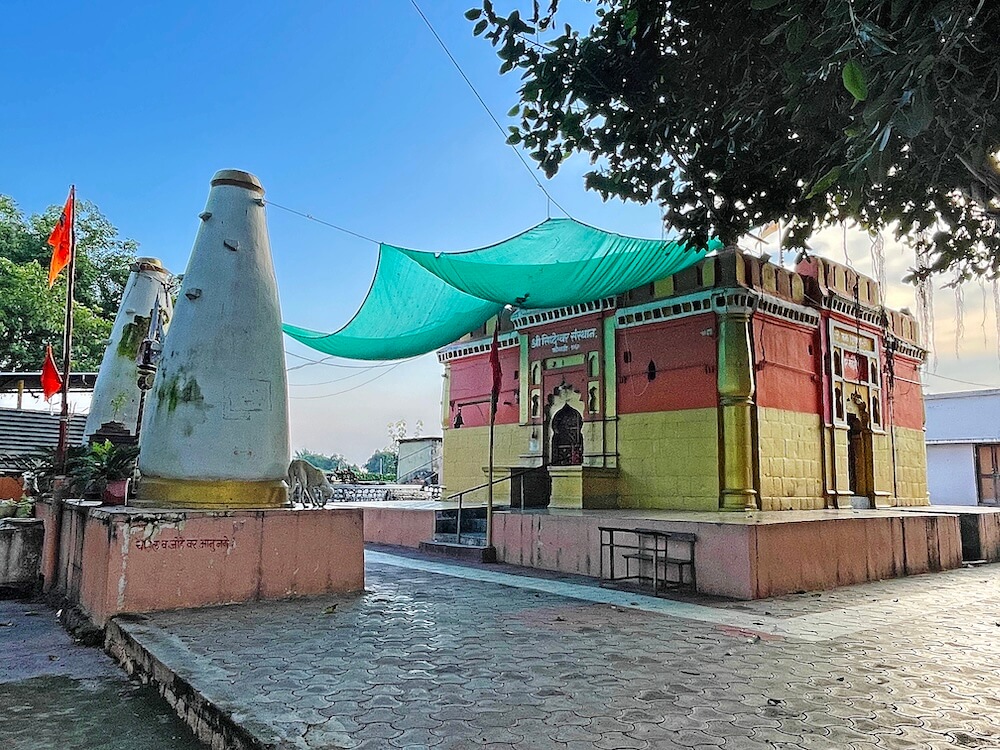
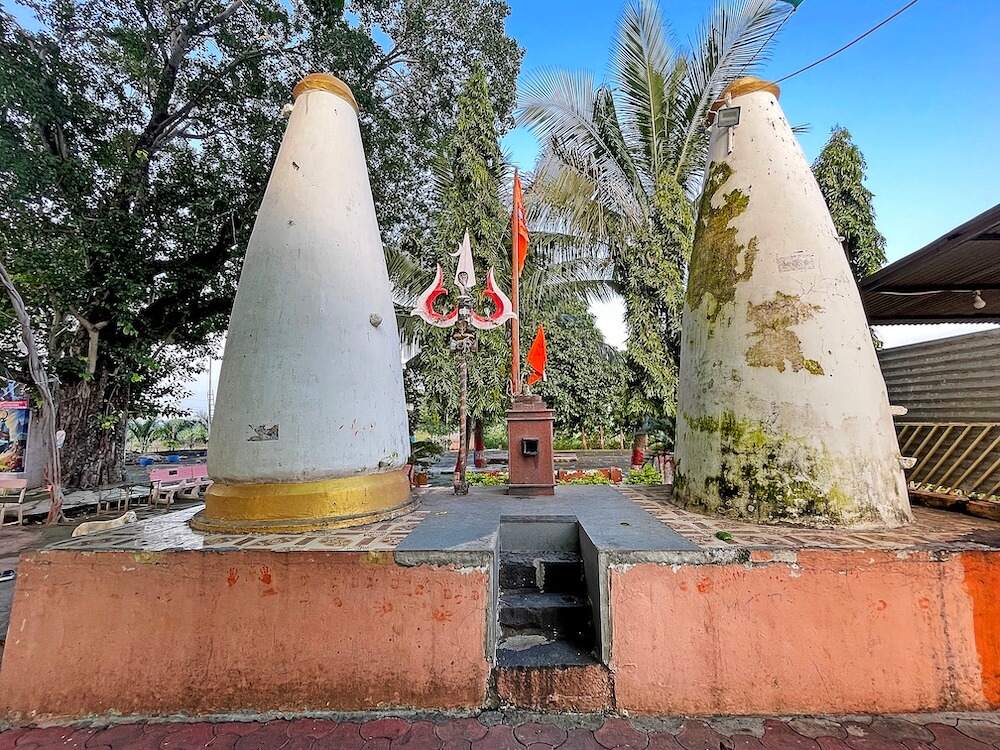
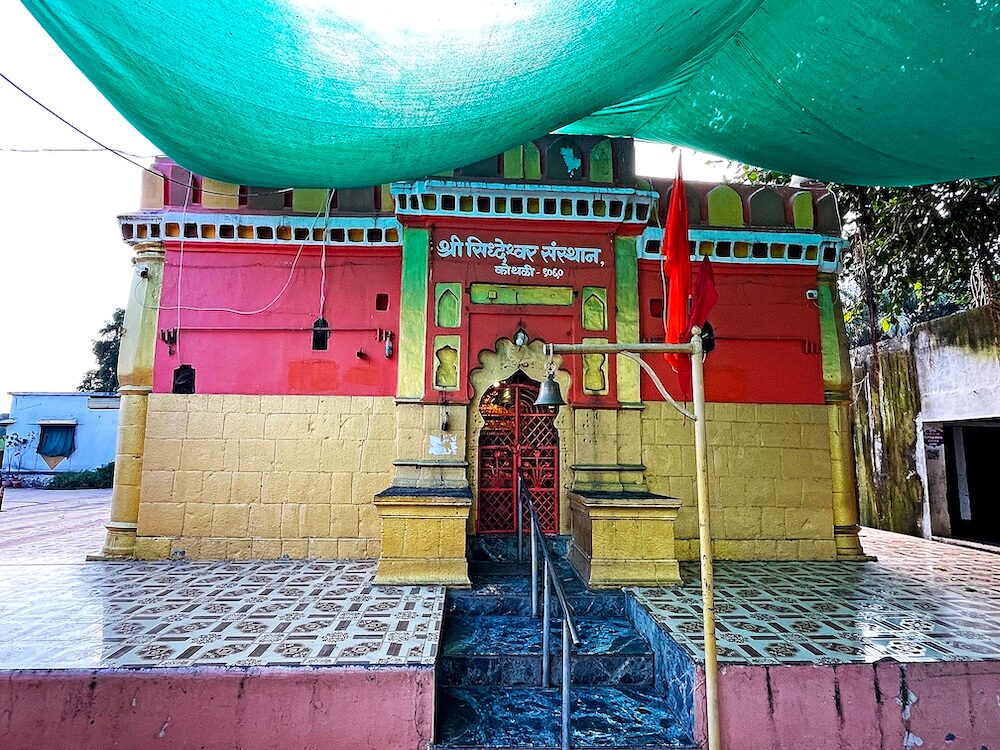
Located on the outskirts of Kothali (Budruk) village, just a stone’s throw from the Katepurna Dam, the temple premises are peaceful and serene. One enters the spacious courtyard of the temple through an arched gateway in the surrounding wall. In the center of the courtyard stands the ancient temple of Siddheshwar. In front of the temple, on a large platform, are two lamp pillars (deepstambhas) and an ancient banyan tree nearby. Between these lamp pillars stands a large trident. The architectural style of the temple’s facade shows the influence of the Mughal era, appearing somewhat like a mosque. The sanctum sanctorum, built on a high plinth, has a dome-shaped spire; however, being small in size, this spire is not visible from a distance. The temple is constructed using black stone. One enters the assembly hall (sabhamandapa) through an arched doorway. There are railings on both sides of the entrance, which feature many small pits. Similar pits are also found on the steps near the entrance of the assembly hall. In the past, silver coins were embedded in these pits. This was done with the sentiment that wealth has no importance before the Divine, and one should leave behind the vanity of riches before entering the temple. The assembly hall has sixteen pillars, all connected to each other by arched designs. In the center, between four pillars, is the place for Nandi. The niches in the assembly hall contain idols of Shri Dattatreya, Hanuman, Lord Mungasaji Maharaj, and other deities. There are stone steps to go from the assembly hall to the upper part of the temple, with a distance of about one and a half feet between two steps. The sanctum sanctorum houses the Shiva Linga of Siddheshwar Mahadev. A beautifully crafted metal sheet covers the area around the Linga. During festivals, a mask is placed on the Linga.
Siddheshwar Mahadev is the family deity (kuldevata) for many families in Vidarbha, which is why many devotees visit this temple daily. Many visiting devotees prepare ‘Rodga’ naivedya in the temple premises. Rodga is a special food item of Vidarbha, prepared by layering thick dough made of semolina and wheat flour, which is then baked over cow dung cakes. This naivedya is distributed among the devotees present in the temple premises.
Various religious programs are organized here on the day of Mahashivratri, and prayers are chanted throughout the night in the temple. A large fair is held here on the twelfth day after Gudi Padwa, during which a procession of Mahadev is taken out through the village. Hanuman Jayanti is also celebrated here with great enthusiasm. Hundreds of devotees visit during the month of Shravan, and a ‘Kavad Yatra’ arrives at this temple on the last Monday of this month.
This sacred temple stands as a testament to deep spiritual devotion, ancient architectural grandeur, and rich local cultural traditions.
The sanctum sanctorum houses the divine idol consecrated according to ancient Vedic traditions, surrounded by serene courtyards and traditional temple architecture.
Navratri, Maha Shivratri, Annual Temple Jatra & Deepotsav
Compare and book flights, secure top-rated local hotels near the temple, hire reliable guides, and rent cars instantly.
Extend your pilgrimage by visiting other highly sacred temples located nearby.


Add ₹999 more to unlock FREE SHIPPING!
Your sacred cart is currently empty.
Shop Photo FramesFill in your delivery details below to place your order.
Add comment