
Add ₹999 more to unlock FREE SHIPPING!
Your sacred cart is currently empty.
Shop Photo FramesThane city, blessed with a rich historical heritage, is home to many ancient and famous temples. The Jagnath Mahadev Temple, located in the Gaimukh area on Ghodbunder Road, is one such sacred site. Due to the firm belief of devotees that the Swayambhu (self-manifested) Shivlinga here is ‘Jagrut’ (living and divine), the temple came to be known as Jagnath Mahadev Temple—the Lord of the Awakened. Situated on a hill amid scenic, tranquil surroundings, the temple continuously attracts devotees seeking the sacred darshan of Lord Shivshankar. On every Monday of the holy month of Shravan and on Mahashivratri, the entire area comes alive with thousands of pilgrims arriving for darshan.
It is said that the Swayambhu Shivlinga here has existed since time immemorial. In earlier times, the water of a natural waterfall used to perform continuous Abhishek over this Shivlinga. The dense forest surrounding this area was inhabited by many wild beasts, so no one dared to venture here. The temple rose to prominence due to the revered Siddha Purusha, Buddhadev Maharaj, who originally hailed from Punjab. Born in 1907 into a farming family in Punjab, Buddhadev Maharaj renounced worldly life at a young age and embraced Sannyasa. After wandering through various places, he arrived in the Vajreshwari region of Thane district around 1956. After performing penance there for a few days, he came to this spot, where he engaged in deep austerity for many years. He sustained himself by consuming roots and wild fruits
from the forest. During that time, local tribals and cowherds who passed through would behold the revered saint meditating undisturbed near the Shivlinga, completely unperturbed despite being amidst wild beasts.
As news spread about the Swayambhu Shivlinga and Buddhadev Maharaj, many people began visiting the place for his darshan. Buddhadev Maharaj offered them spiritual guidance, and gradually his circle of disciples grew. In time, Buddhadev Maharaj had a wooden and tiled temple of Lord Shiva constructed here through his disciples. Four decades ago, as the temple structure aged, he initiated its complete renovation with the help of devotees. Stones for the reconstruction were brought from Rajasthan and Haryana. Having attained spiritual perfection through decades of arduous penance, Buddhadev Maharaj remained away from fame and dedicated himself to numerous philanthropic works. He renovated the Narmadeshwar Mahadev Temple in Vajreshwari, built a Dharamshala in its complex, and started a Bhandara (free meal distribution) for the poor. He also built a Lord Shiva temple and two Dharamshalas in Ratlam, constructed an Ashram in the Gaimukh area, established the Shri Ram Hospital in Ovale, Thane, and the Arunoday Secondary School in the Kasarvadavali area. In 2008, in the presence of hundreds of devotees, he took Jalasamadhi in the Mahisagar Ganga at Baroda.
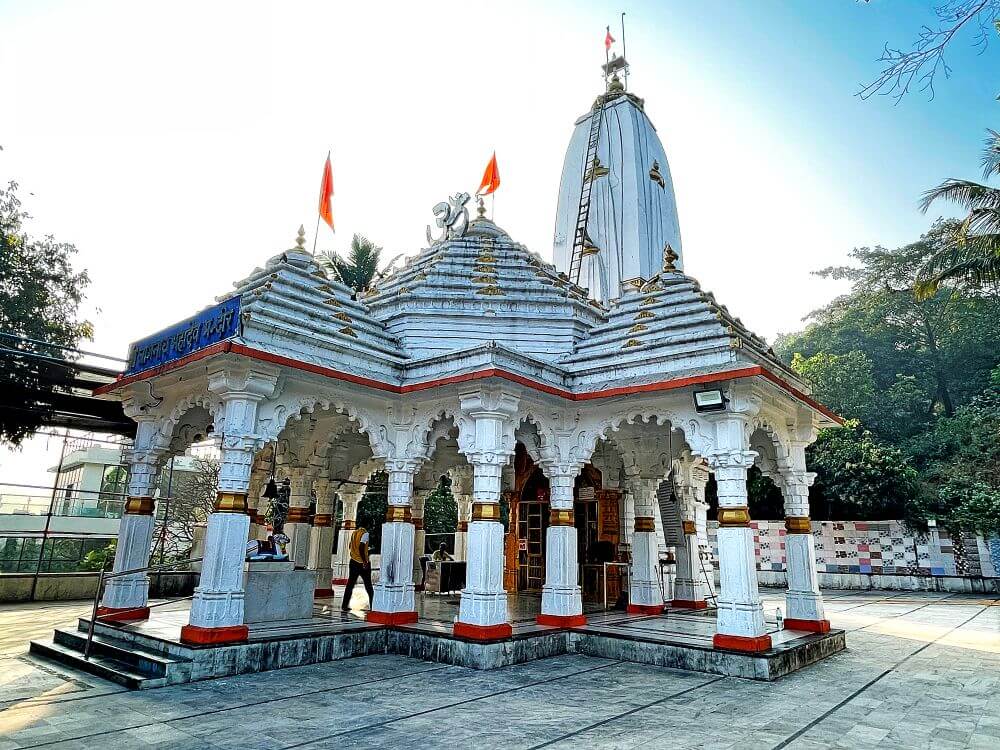
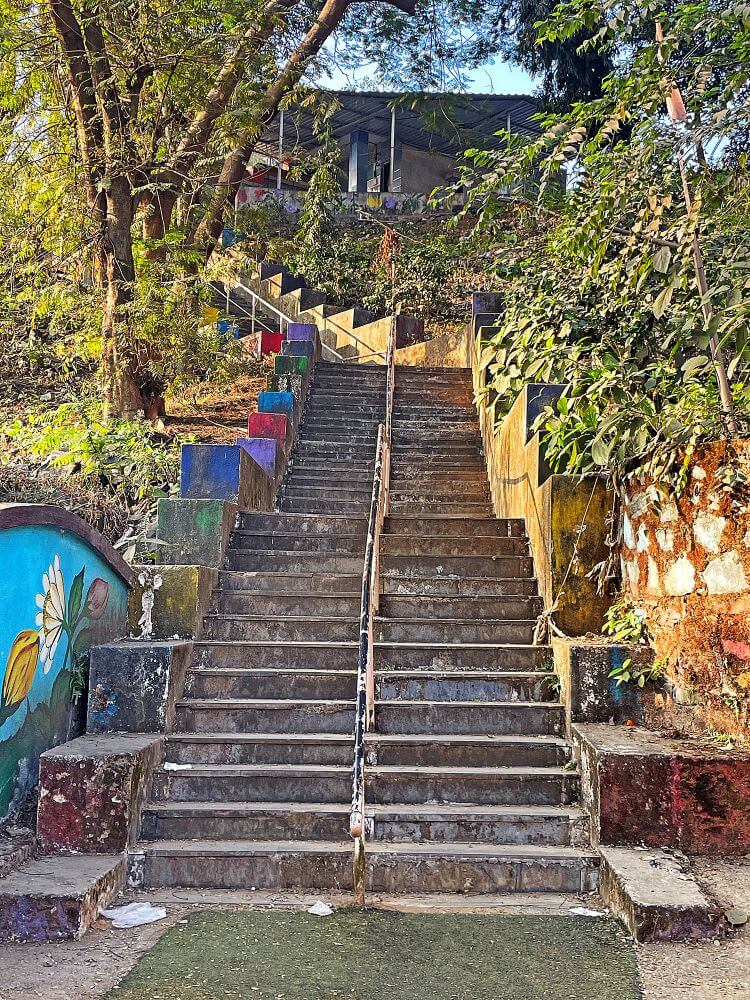
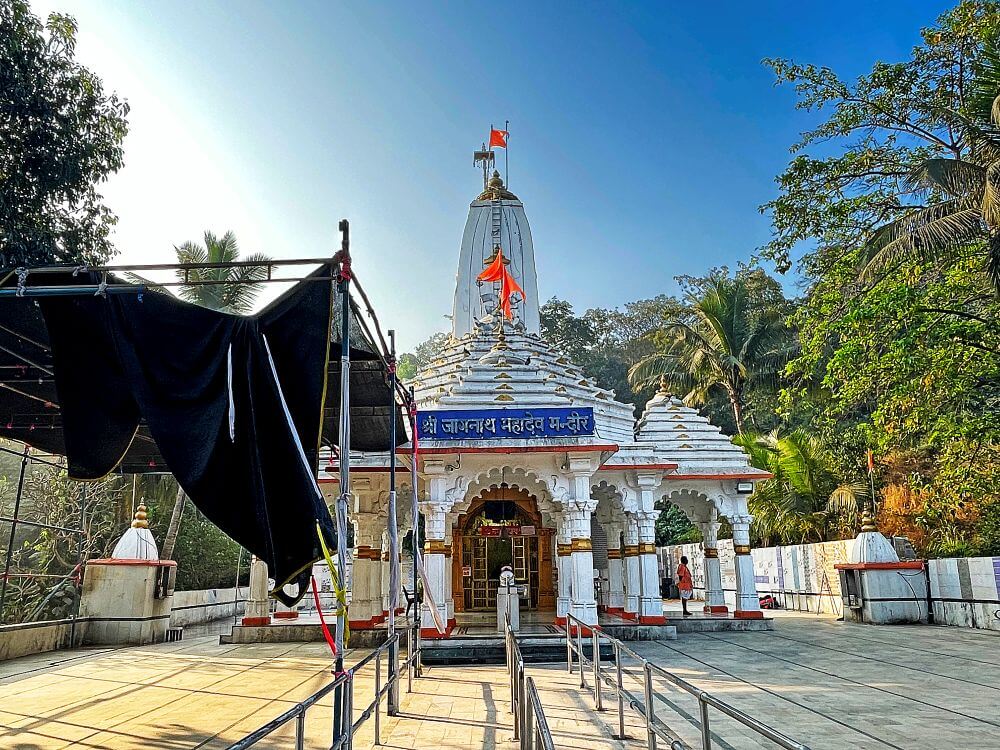
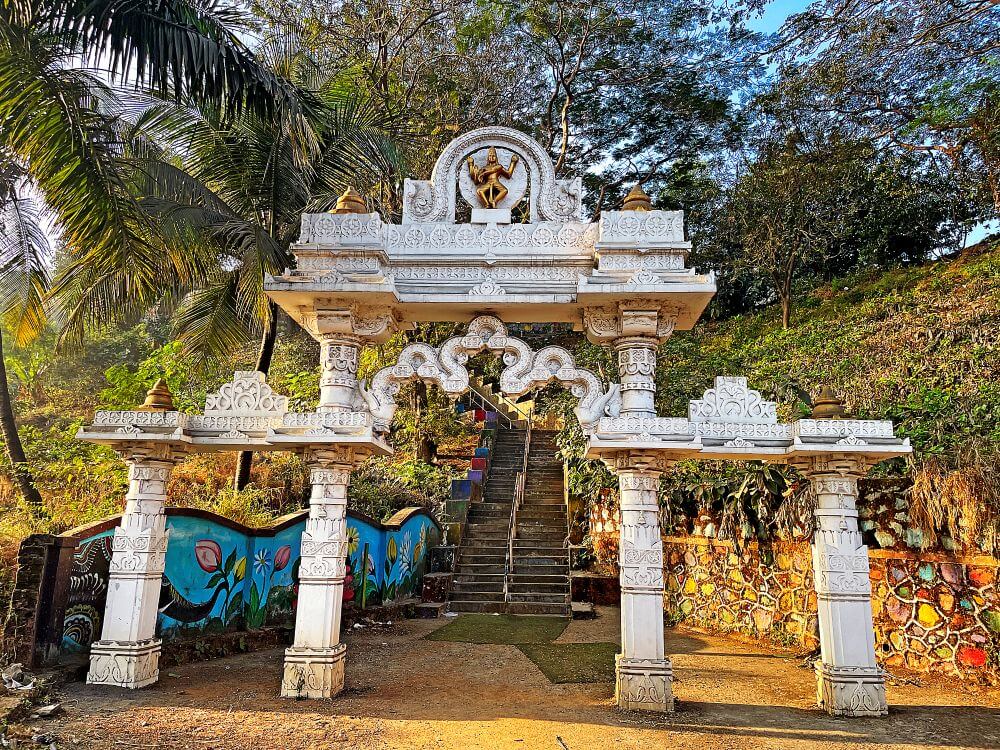
The Jagnath Mahadev Temple is situated atop a lush green hill opposite Nagla Bunder in the Gaimukh area along Ghodbunder Road, Thane. The main entrance of the temple is just a two-minute walk from the Gaimukh bus stand. Upon entering through the gate, one sees a beautifully carved, pristine white four-pillar archway with an idol of Lord Nataraja enshrined at its center. There are two routes to reach the temple: the first allows vehicles to drive right up to the temple premises, while the second is a flight of 87 steps. As the temple is located on a hill, these steps wind in a serpentine fashion, with railings installed down the middle to manage the crowd of devotees. The picturesque environment makes the climb effortless and refreshing. After ascending a few steps, the spire (shikhara) of the temple comes into view, and at the end of the steps stands the magnificent white temple.
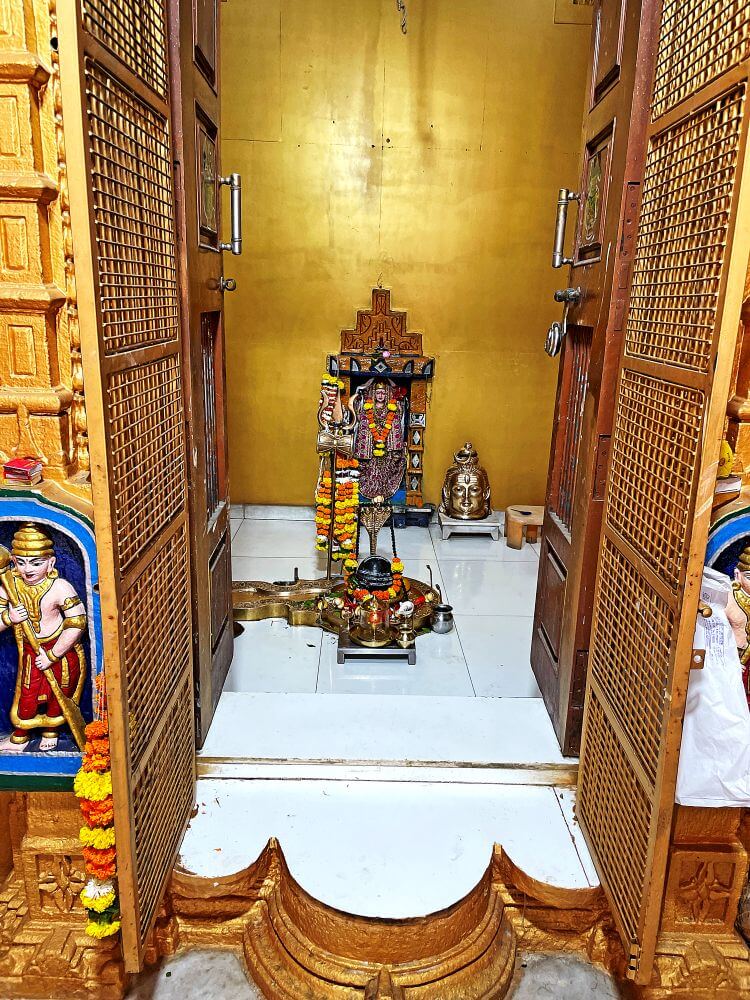
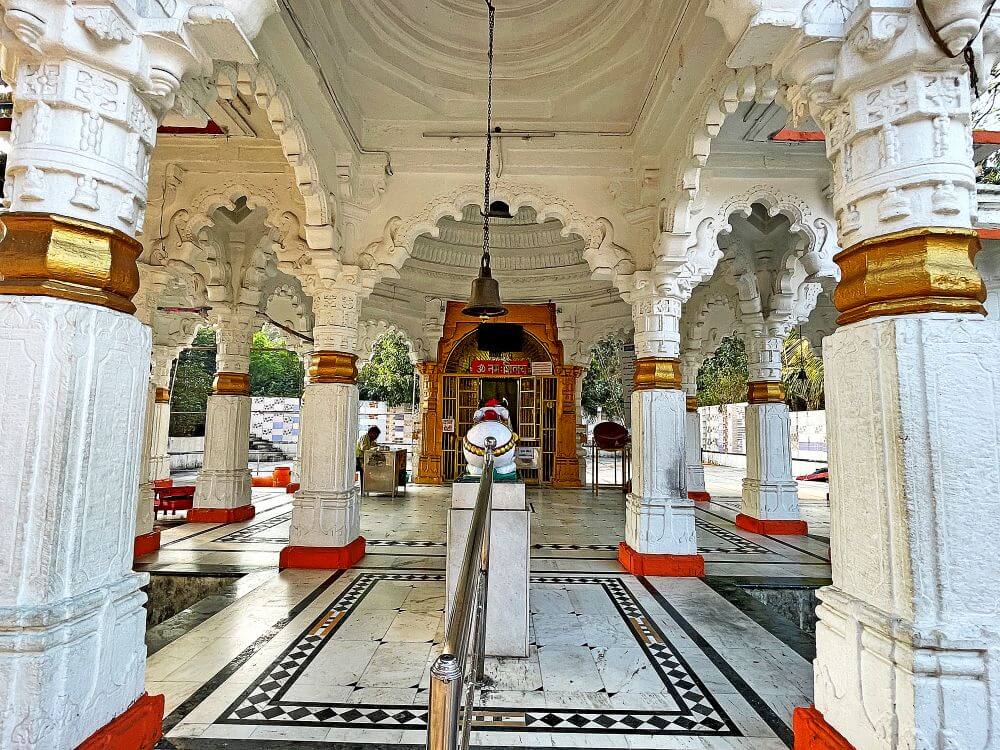
The temple architecture comprises an open Sabhamandap (assembly hall), a main Mukhamandap (porch) facing west along with two additional Mukhamandaps on the north and south, an Antarala (vestibule), and the Garbhagriha (sanctum sanctorum). In the Sabhamandap, Nandi is seated on a raised platform with a turtle facing him. The design of this wall-less hall allows devotees to catch a direct glimpse of Lord Shivshankar in the sanctum sanctorum from anywhere within the hall, reflecting thoughtful architectural planning. The Antarala houses marble idols of Lord Ganesha and Lord Hanuman. On either side of the Garbhagriha entrance stand Dwarapalas (gatekeepers), with a sacred Mangal Kalash carved above the doorway. Inside the Garbhagriha resides the Swayambhu Shivlinga, canopy-covered by a multi-hooded Naga (serpent). Behind the Shivlinga is an idol of Goddess Parvati, and nearby rests a sacred mask (mukhwata) of Lord Shivshankar. During Mahashivratri and other grand festivals, this mask is placed upon the Shivlinga for ritual worship.
No one except the priests is permitted to enter the Garbhagriha. When devotees wish to offer Abhishek to the Shivlinga, the priest places a vessel (tambya) filled with holy water before them. Once the devotees touch the vessel, the priest performs the Abhishek on the Shivlinga with that water and blesses the devotees with a flower offered to the deity as Prasad. It is believed that the holy water from the Abhishek flows out through a Gomukh (cow-head spout) on the exterior, which gave this region the name ‘Gaimukh’. The temple features five spires (shikharas): one over each of the three Mukhamandaps, a circular domed spire over the Sabhamandap, and the main spire over the Garbhagriha. The temple is open for darshan from 6:00 AM to 9:00 PM. The evening Aarti of Lord Mahadev takes place at 7:00 PM. On Mahashivratri, hundreds of devotees flock here for darshan, and numerous religious programs are organized. Wedding ceremonies are also conducted in the temple premises at nominal charges.
Surrounding the temple is a dense grove of trees including Banyan, Peepal, Sonchafa, Jamun, and Coconut. In the temple courtyard stands a small Shiva shrine housing a small Shivlinga, Nandi, and an idol of Goddess Parvati, along with a sacred lamp carved out of a single stone. Adjacent to it is a Ganesha temple featuring a beautifully crafted idol of Lord Ganesha seated on a lotus. A spacious courtyard stretches in front of the temple. Due to the lush greenery and serene environment, devotees gather in large numbers in the evening to enjoy the natural beauty and seek divine blessings. From here, one can enjoy a scenic view of the Ulhas River flowing between hills, dotted with small boats at Nagla Bunder. A path near the temple leads into the forest towards Buddhadev Maharaj’s Ashram, a small Shiva temple, and a waterfall; however, entry into this area is restricted without permission.
This sacred temple stands as a testament to deep spiritual devotion, ancient architectural grandeur, and rich local cultural traditions.
The sanctum sanctorum houses the divine idol consecrated according to ancient Vedic traditions, surrounded by serene courtyards and traditional temple architecture.
Navratri, Maha Shivratri, Annual Temple Jatra & Deepotsav
Compare and book flights, secure top-rated local hotels near the temple, hire reliable guides, and rent cars instantly.
Extend your pilgrimage by visiting other highly sacred temples located nearby.


Add ₹999 more to unlock FREE SHIPPING!
Your sacred cart is currently empty.
Shop Photo FramesFill in your delivery details below to place your order.
Add comment