
Add ₹999 more to unlock FREE SHIPPING!
Your sacred cart is currently empty.
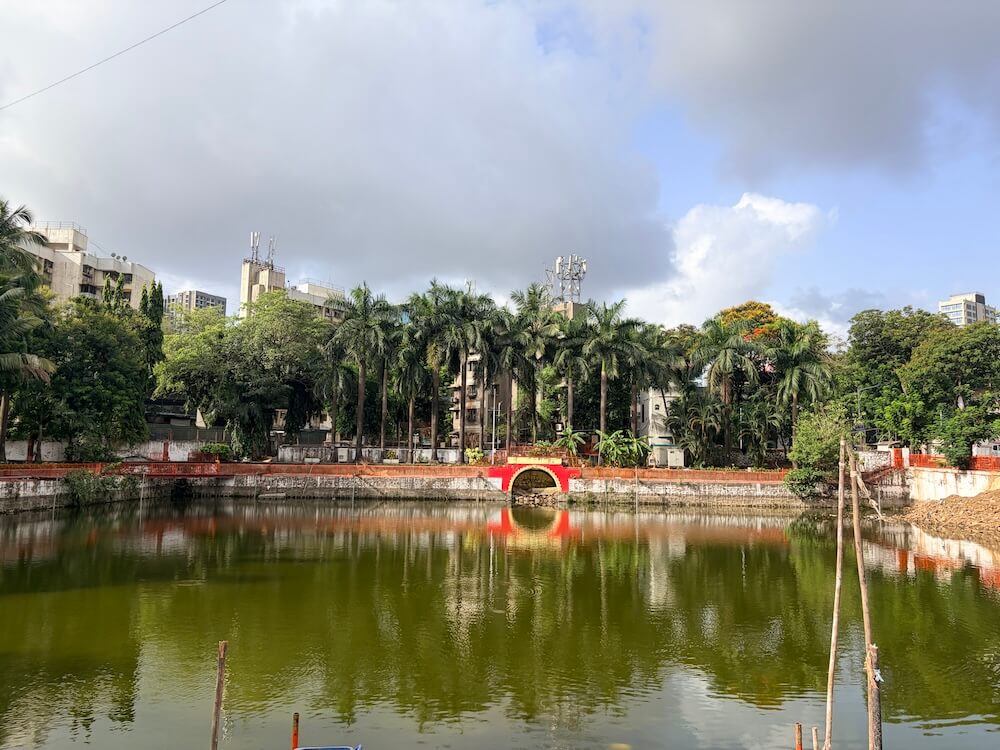
Shop Photo FramesThe original name of the area known in English as Sion is Sheev. The Portuguese, who ruled over this region, referred to it as ‘Siva’ or ‘Syva’. It is a unique coincidence that a temple dedicated to Lord Shiva stands on the banks of a large lake here. A distinctive feature of this temple, built in the traditional stone masonry style, is that it houses two separate sanctum sanctorums for Parvati Shankar and Bhavani Shankar. The festival of Mahashivratri is celebrated with great enthusiasm in this temple, which is the revered deity for countless devotees in the Sion area.
Sheev means the boundary or limit of a specific region. It is an island-like area situated on the geographical border between the island of Mumbai and the island of Sashti (Salsette). In the sixteenth century, this area was under the control of the Portuguese. Sheev fell under the administrative jurisdiction of the Mahim township. According to the book ‘The Origin of Bombay’ (१९००) by historian J. Gerson da Cunha, the Portuguese Viceroy D. Joao de Castro was here between the years १५४५ and १५४८. During his time, the village of Sheev, along with Parel, Wadala, and Worli, was given on an annual lease to a Portuguese nobleman named Manuel Serrao. The Portuguese were extremely fanatical. The priests who accompanied them carried out religious propagation here at the point of a gun. They demolished the temples here and forcibly converted many people. By the end of the sixteenth century, the Jesuit order had established ownership over Sheev and its surrounding areas.
Even after the British Royal Family took possession of Mumbai, the Portuguese refused to hand over the villages of Sheev, Worli, Dharavi, and Wadala to the British. However, the British Governor Humphrey Cooke managed to gain control of these areas through diplomacy. The British built small fortifications, bastions, and guard posts here to protect Mumbai. The Sion Fort is a British creation. In १७६०, this fort was made more impregnable under the supervision of Colonel Keating. Govind Narayan Madgaonkar provided a description of the Sion of that time in his book ‘Mumbai-che Varnan’ (१८६३). According to him, there were salt pans at Sion and Matunga. In some places in Sion, there were settlements of the Vadval people. At the end of this island, there was a government outpost. On the hill beyond it lies the Sion Fort. An English officer and some sentries lived there. A little distance below this fort was another small ground-level fort. Madgaonkar provides information that it was called the ‘Reva Fort’. Both Madgaonkar and J. Gerson da Cunha have mentioned the temples of Sion. Madgaonkar has only mentioned the temple here. In his book ‘Mumbai-che Varnan’, Madgaonkar noted that there is a large lake and a temple next to the outpost at the end of this island. Based on this description, this temple is the present-day Parvati – Bhavani Shankar Temple.
The exact history of the establishment of this temple is unknown. Many temples were destroyed during the Portuguese period. According to history scholars, given the religious intolerance of the Portuguese Jesuits, it is likely that the renovation of old temples or the construction of new ones was only possible after their rule ended. The influence of the Shaiva sect on the Mumbai islands can be seen from the sixth century AD, that is, from the time of the Kalachuris and Traikutakas. The caves at Gharapuri (Elephanta) and the fifteen-hundred-year-old Shiva sculpture (Baradev) found at Parel give an idea of this. Because of this, there must have been Shiva temples in Sheev in ancient times as well. There is an ancient tradition of establishing Lord Shiva on the banks of water bodies. Accordingly, there must have been a place for Shiva here in ancient times as well. According to scholars, it is possible that it was renovated and a large temple was built here at some later date, or this temple might have been newly constructed during the British colonial period. Since this temple on the lakefront is mentioned in the book ‘Mumbai-che Varnan’ published in १८६३, it is clear that this temple has a history of at least १६३ years.
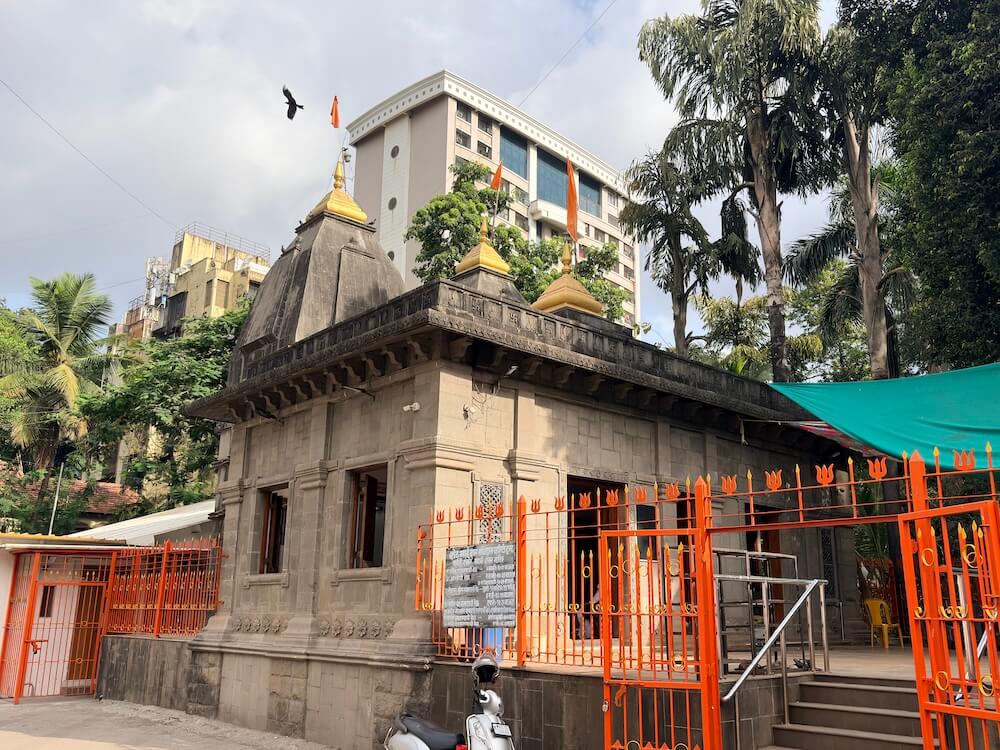
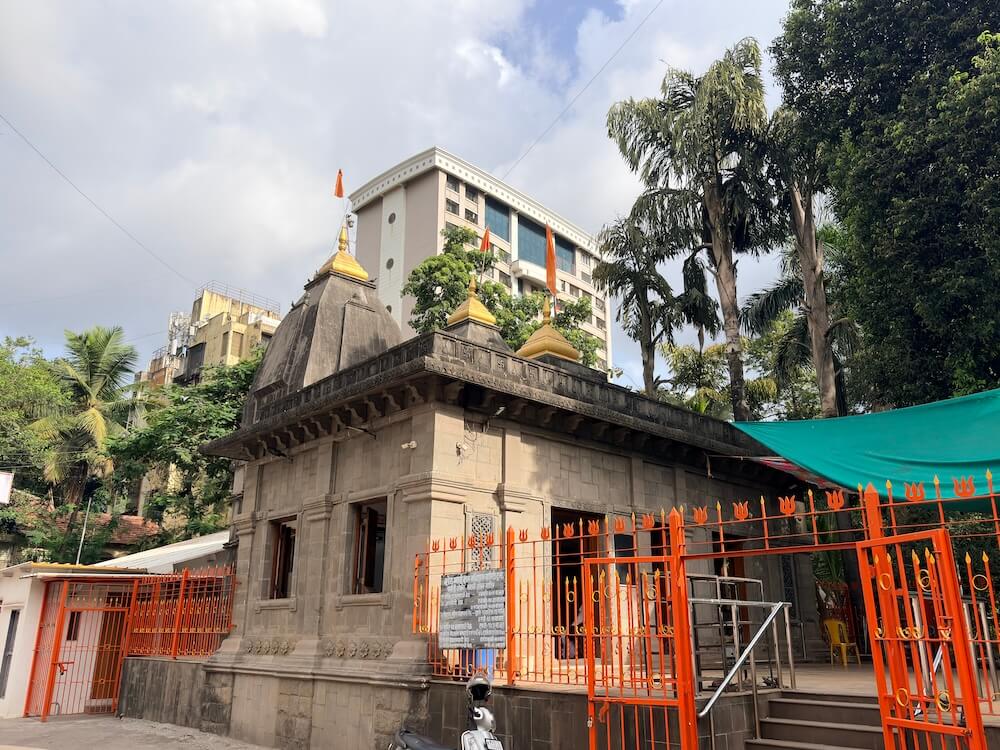
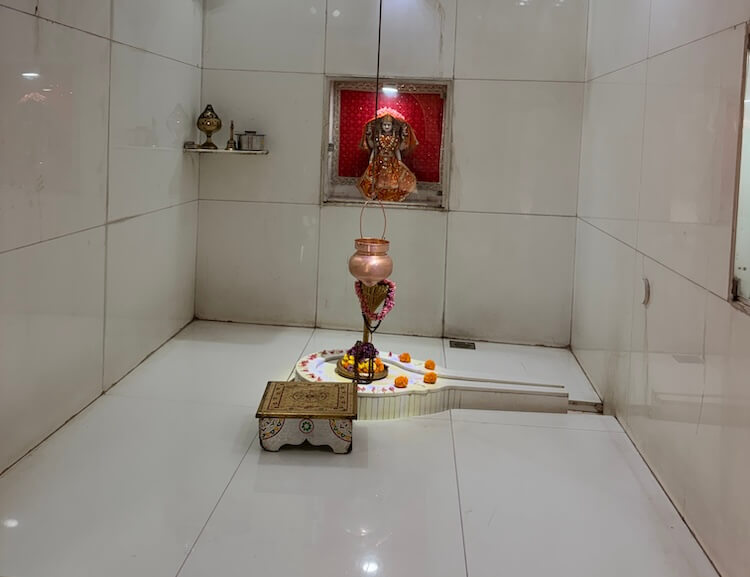
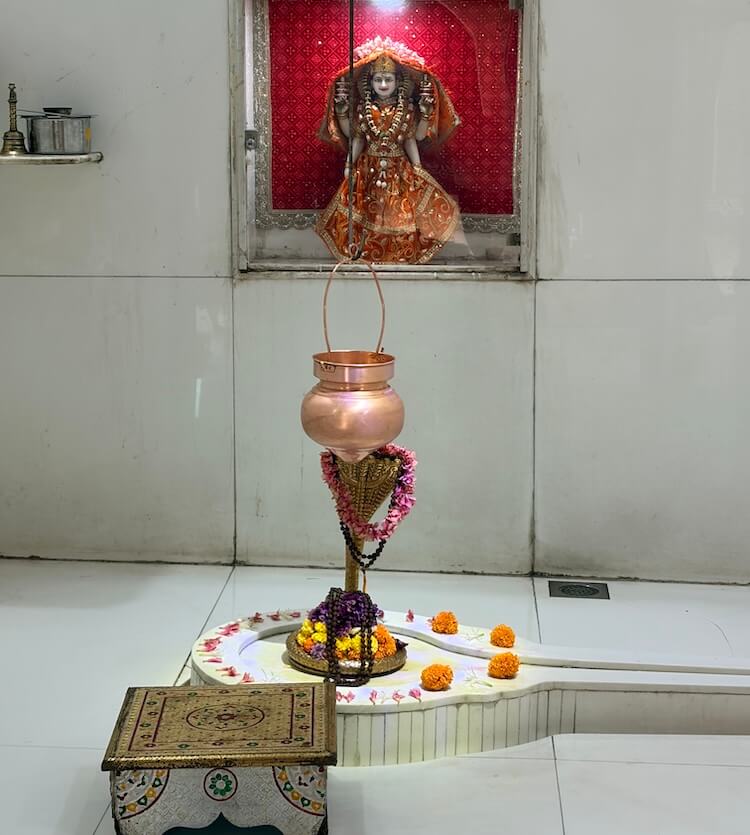
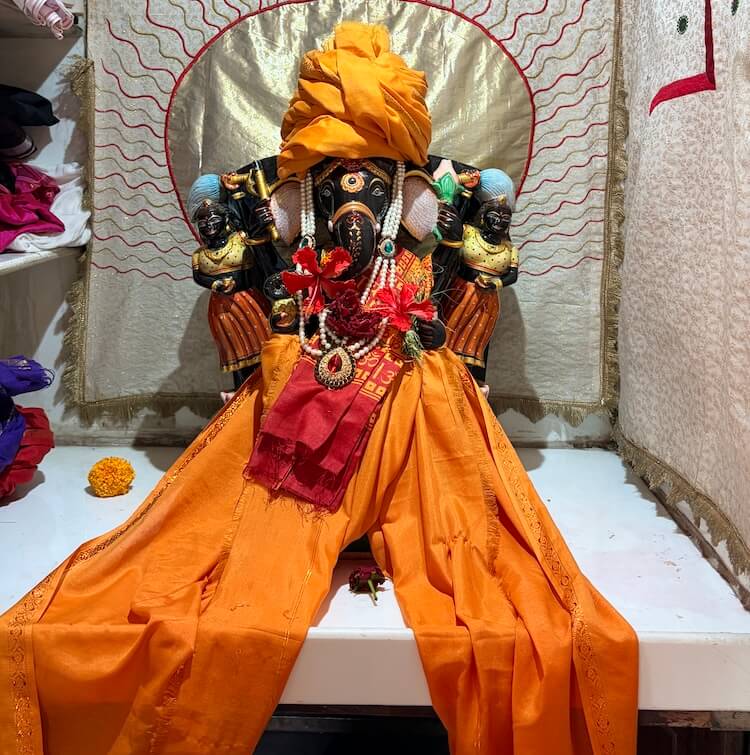
This temple is situated on the banks of Sion Lake, which has been declared a Grade २-A heritage structure by the Brihanmumbai Municipal Corporation. The temple architecture is of sturdy stone masonry in the Maratha style. There is a large courtyard in front of this temple, which is built on a high plinth. One enters it by climbing seven steps. In this paved courtyard, a replica of the Trimukhi Maheshmurti from Gharapuri is carved on the wall facing the temple. The middle face of this Maheshmurti is that of Tatpurusha, the creator of the universe. The face on the right shows the calm and gentle form of Shiva, while the face on the left shows the Bhairava or Rudra form of Shiva. A Tulsi Vrindavan is located at some distance from this sculpture. The assembly hall (Sabhamandap) of the temple has two entrances and one semi-entrance. The assembly hall has a spire covered with golden-colored metal sheets. On top of it is a South Indian style Amalaka and a tall Kalash. In the center of the assembly hall, on a seat covered with ornate fabrics, are small idols and pictures of various deities. The temple has two sanctum sanctorums for Parvati Shankar and Bhavani Shankar. In front of both these sanctums, Nandi and tortoise idols are seated on marble platforms. Inside the sanctums, decorated with marble tiles, there is a Shiva Linga at ground level. This Linga has a marble base (Shalunka) and contains a stone Linga. It is adorned with a serpent canopy and an Abhishek vessel. Idols of Ganesha and Hanuman are seated in the niches of the sanctums. The idol of Mother Parvati is installed in the Parvati-Shankar sanctum, and the idol of Mother Bhavani is installed in the Bhavani-Shankar sanctum. Between these two sanctums, on a high pedestal, the black stone idol of Shiva’s son Ganesha is installed. Since there are two sanctums here, there are two spires above them. These Maratha-style stone spires feature South Indian style Amalakas. The Amalaka and Kalash here are covered with golden-colored metal sheets.
The administration of this temple is managed by the Sheth Bhaydas Sakhidar Charity Trust. Devotees can seek the blessings of the deity here daily from 7:00 to 12:30 in the morning and from 4:00 in the evening to 8:00 at night. The ceremonial musical Aarti of the deity is performed in the temple every morning and evening at 7:30. The Bhog offering is presented to the deity at 12:00 in the afternoon and 8:00 at night. Local residents visit the temple in large numbers every morning and evening for Darshan. The crowd of devotees increases significantly on the Mondays of the holy month of Shravan. Mahashivratri is the grandest festival celebrated at this temple. This festival is observed here through various religious programs and rituals. Hundreds of devotees arrive here for Darshan on this auspicious day.
This sacred temple stands as a testament to deep spiritual devotion, ancient architectural grandeur, and rich local cultural traditions.
The sanctum sanctorum houses the divine idol consecrated according to ancient Vedic traditions, surrounded by serene courtyards and traditional temple architecture.
Navratri, Maha Shivratri, Annual Temple Jatra & Deepotsav
Compare and book flights, secure top-rated local hotels near the temple, hire reliable guides, and rent cars instantly.
Extend your pilgrimage by visiting other highly sacred temples located nearby.


Add ₹999 more to unlock FREE SHIPPING!
Your sacred cart is currently empty.
Shop Photo FramesFill in your delivery details below to place your order.
Add comment