
Add ₹999 more to unlock FREE SHIPPING!
Your sacred cart is currently empty.
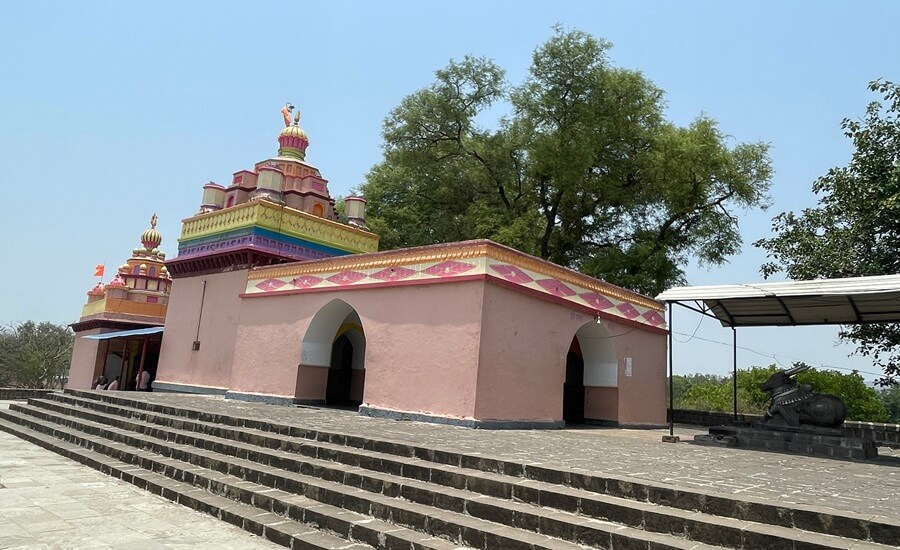
Shop Photo FramesHuman civilization developed on the banks of rivers. It was on the riverbanks that humanity first practiced agriculture. Many cities and temples were established and flourished along riverbanks. However, it is hard to believe that a temple has stood in the middle of a riverbed for hundreds of years. Near Bahe village in the Walwa taluka of Sangli, there is an ancient Shriramling temple situated on an island in the middle of the Krishna river. It is said that the Shiva Linga in this temple was installed by Lord Shriram himself. Devotees have deep faith that this is a spiritually awakened sacred site.
It is estimated that this temple, built in the Hemadpanti architectural style, dates back to the fourteenth century. There is a record stating that the idol of Maruti in the Maruti temple located behind this temple was installed by Samarth Ramdas Swami in the year Shake 1573 (1651 CE). The legend of this place is that from Lanka While returning to Ayodhya, Shri Rama installed a Shiva Linga at this place on the banks of the Krishna River. At that very moment, the Krishna River flooded. To hold back the water, Hanuman assumed a colossal form. Standing behind Shri Rama, he spread his arms wide. Consequently, the riverbed of the Krishna was divided into two parts, creating an island in the middle. This area, formed by Maruti spreading his arms, came to be known as Bahe. It is said that because Hanuman stood behind Shri Rama, the temple of Maruti here is situated behind the Rama temple.
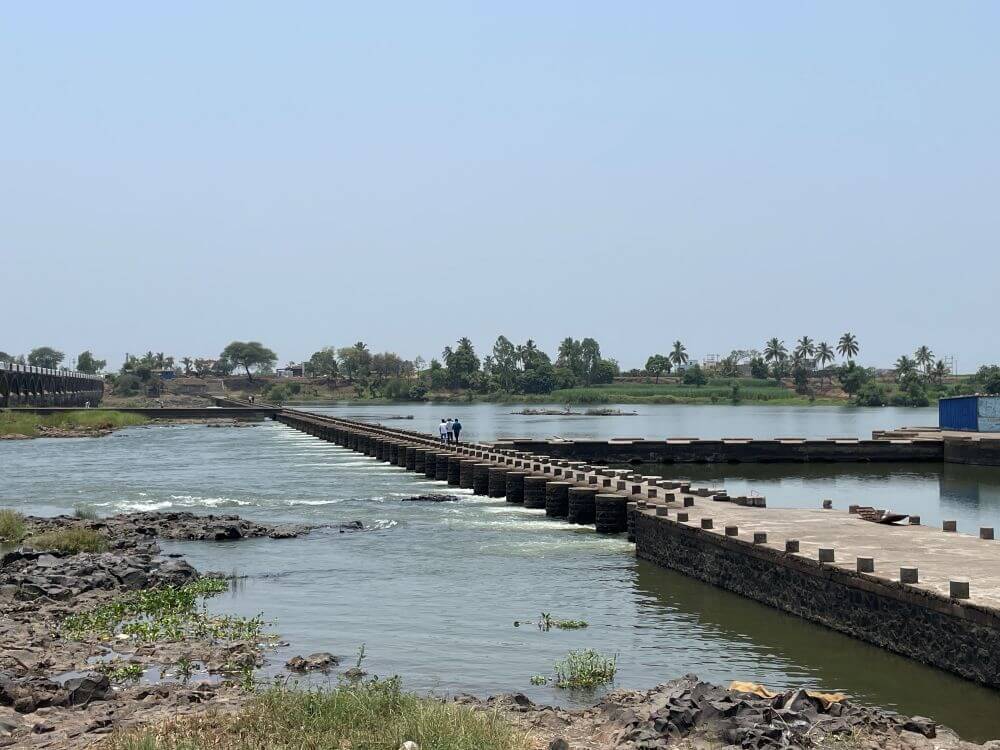
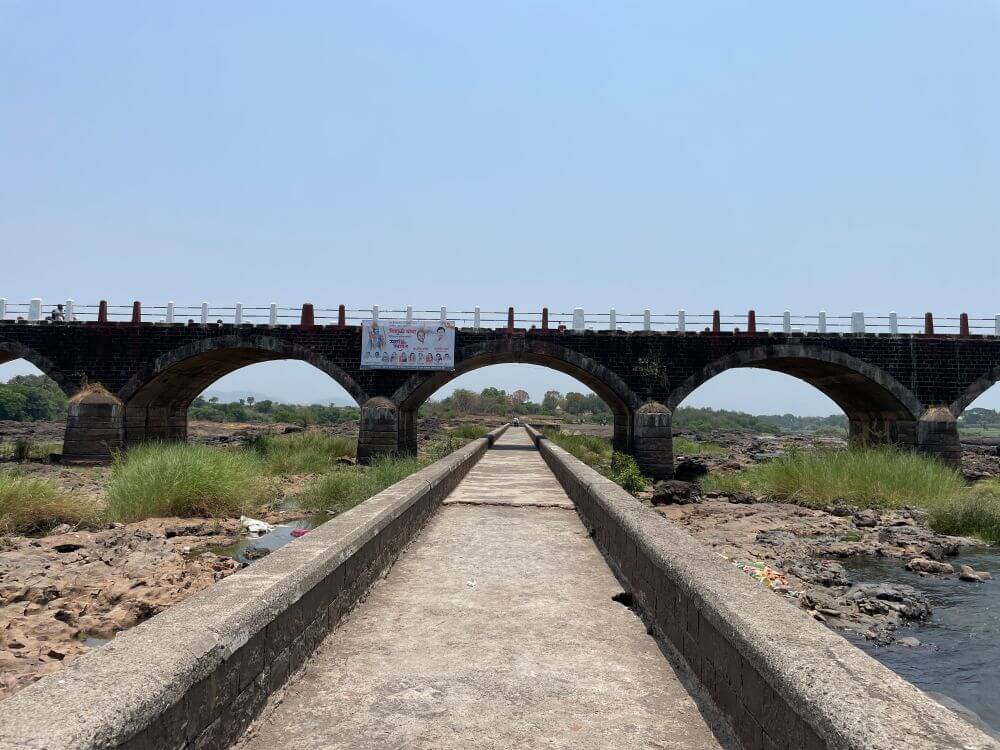
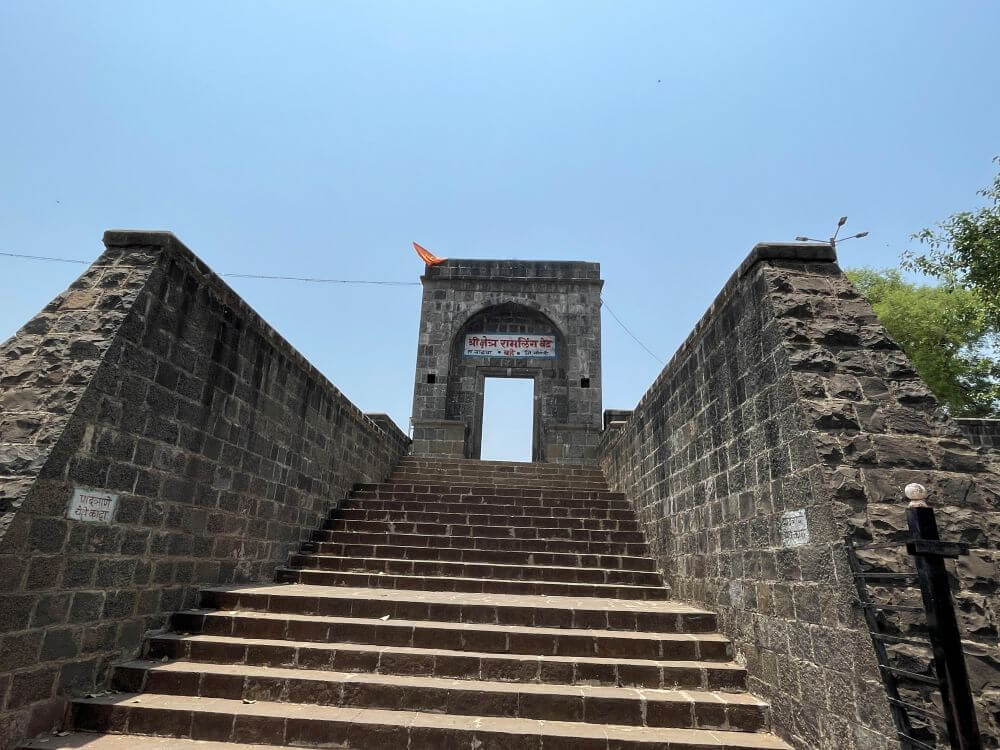
To reach the temple on this island, a bridge-like causeway has been constructed across the riverbed. One must walk across this causeway or through the riverbed to reach the temple. Further ahead, after climbing approximately twenty-five steps, one reaches the spacious entrance of the temple. On both sides of the steps, there are protective walls about six feet in height. The steps, protective walls, and the entrance are constructed entirely of stone.
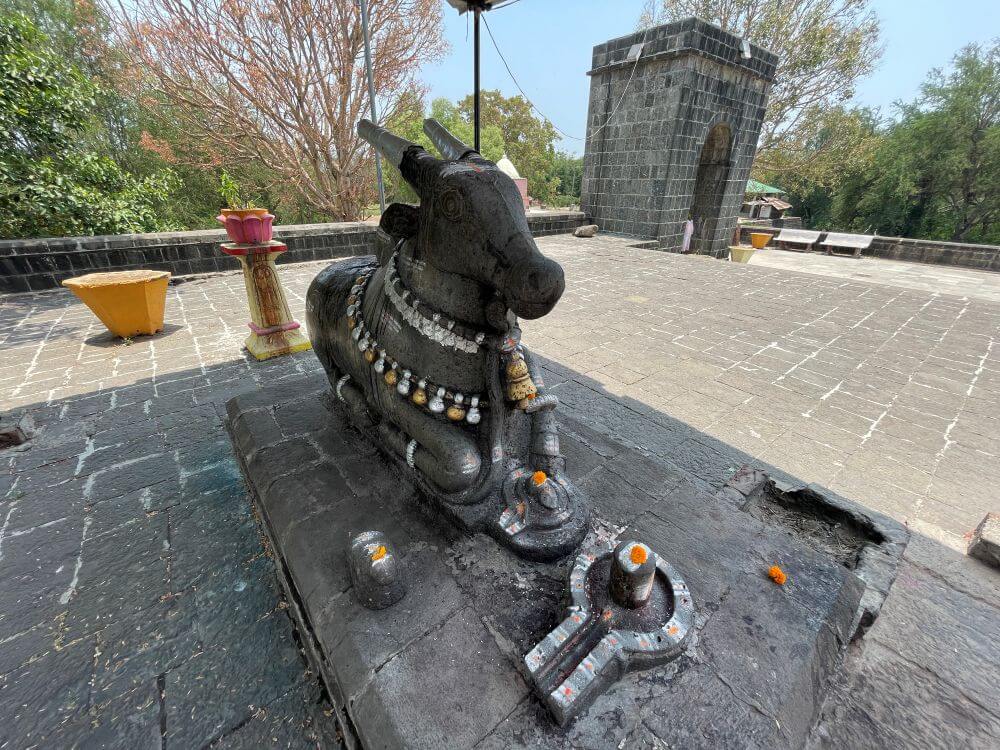
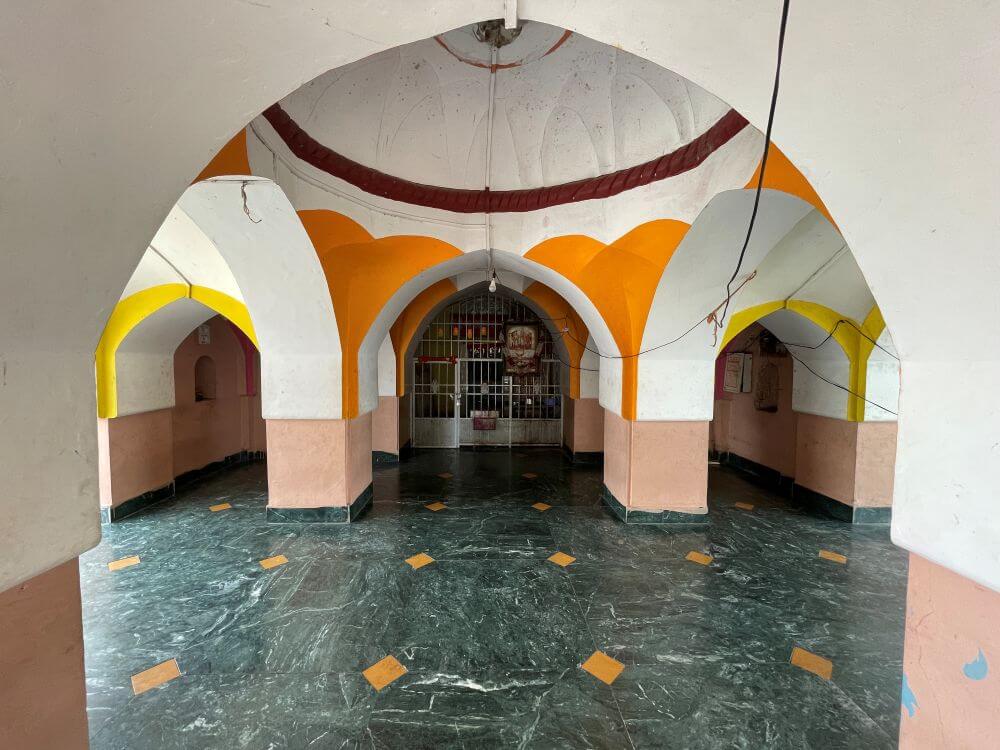
On both sides of the entrance gate, there are lamp niches and guard rooms inside. It is recorded here that this entrance gate was erected in the year 1814. Upon passing through the entrance, one enters a paved courtyard surrounded by a boundary wall. Along this boundary wall, there are seats provided for the convenience of the devotees. To the right, the temple is situated on a platform that is elevated above the courtyard. There are five steps to ascend the platform. In front of the temple, on a platform, there is a Shiva Linga and Nandi. This platform is covered by a roof supported by iron pillars on all four sides. Further ahead is a closed-style assembly hall (Gudhamandapa) with entrances on all three sides. In the assembly hall, there are four rows of five square pillars each. The pillars on the outer sides are embedded in the walls. All the pillars are connected to each other by arches, and there are domes in the ceiling between every four pillars.
Ahead is the Antarala, featuring a latticed wall and a doorway, followed by the Garbhagriha with a narrow entrance. Inside the Garbhagriha, there is a tortoise and a Shiva Linga on the floor. There is a five-hooded brass serpent canopy held over the Shiva Linga, and an Abhisheka vessel is suspended from the ceiling. In the niche on the rear wall of the sanctum sanctorum, there are marble idols of Shri Rama, Lakshmana, Sita, and Hanuman. The roof of the sanctum sanctorum features an ornate railing on all four sides and four hexagonal sub-spires at the four corners. In the center, there is a three-tiered main spire. The first tier contains four niches on all four sides, and the two tiers above it feature vertical pillar carvings. At the apex of the spire, there is an Amalaka adorned with lotus flower carvings, topped with a Kalasha and a flag.
Behind the Ramling Temple is the temple of Maruti, established by Samarth Ramdas Swami. This is one of the eleven Maruti shrines established by Samarth. It is said that Samarth Ramdas Swami came here with the hope of having a vision of Hanuman. He did not receive a vision of Hanuman in idol form here. He then fervently prayed to Hanuman. At that very moment, he heard calls coming from the pool behind the temple. Following the direction of that voice, Samarth jumped into the pool, retrieved the idol from there, and consecrated it in this temple. They have described it as follows –
I have come to behold Lord Hanuman.
I could not see the Beloved, and I was filled with great wonder.
Without Him, those temples are desolate.
From the waters, the servant calls out to the Lord.
In front of the Maruti temple, there is a pillared hall with a railing and a corrugated metal roof. Further ahead is the entrance to the sanctum sanctorum. The door frames feature faint carvings, and Lord Ganesha is depicted on the lintel. Inside the sanctum, in a niche on the back wall, stands an eight-foot-tall idol of Maruti, smeared with vermilion. The idol is adorned with carved garments and ornaments. A unique feature of this idol is that, unlike Hanuman idols in other temples which typically hold the Dronagiri mountain or a mace, and are often depicted with one leg raised, this idol stands with both arms hanging freely at its sides. Devotees believe that these hands are in a posture intended to hold back the floodwaters of the Krishna River. The ceiling of the sanctum features a dome. The temple roof is surrounded by a railing on all sides, with small spires at each of the four corners. In the center stands a three-tiered octagonal main spire. The first tier of the spire has niches on all four sides. The second and third tiers feature eighteen secondary spires. The third tier is crowned with an amalaka adorned with lotus flower carvings, topped by a finial and a flag.
Beside this temple is a Ganesha temple, and a short distance away is the Lakshmana temple. Festivals such as Chaitra Padwa, Ram Navami, Das Navami, Hanuman Jayanti, and Mahashivratri are celebrated at the Ramling temple. During these festivals, thousands of devotees come here for darshan. Hundreds of tourists also visit this temple every day to experience the natural beauty of the island situated in the basin of the Krishna River.
This sacred temple stands as a testament to deep spiritual devotion, ancient architectural grandeur, and rich local cultural traditions.
The sanctum sanctorum houses the divine idol consecrated according to ancient Vedic traditions, surrounded by serene courtyards and traditional temple architecture.
Navratri, Maha Shivratri, Annual Temple Jatra & Deepotsav
Compare and book flights, secure top-rated local hotels near the temple, hire reliable guides, and rent cars instantly.
Extend your pilgrimage by visiting other highly sacred temples located nearby.


Add ₹999 more to unlock FREE SHIPPING!
Your sacred cart is currently empty.
Shop Photo FramesFill in your delivery details below to place your order.
Add comment