
Add ₹999 more to unlock FREE SHIPPING!
Your sacred cart is currently empty.
Shop Photo FramesKaranja Lad is known as the ancient Karanjanagari. According to mythological legends, this city, which was the penance ground of Sage Karanja, is considered the birthplace of Nrusimha Saraswati, who is regarded as the second avatar of Dattatreya. This region is also known as the ‘Sheshankita Kshetra’. In historical times, it was an extremely wealthy trading center. This city is also linked to the history of Chhatrapati Shivaji Maharaj as well as the Bhonsles of Nagpur. In the Hatotipura area of this city, which is a land of many ancient pilgrimage sites and temples, stands the ancient temple of Siddheshwar Mahadev. Devotees believe that the Shiva Linga in this temple is self-manifested (Swayambhu).
The significance of this region is described in the ‘Shri Karanje Mahatmya’. According to it, the ashram of Sage Karanja, a disciple of Sage Vashistha, was located here. Sage Karanja had invited all the holy pilgrimage sites and rivers to the Rishi Talav (Sage’s Pond) here. Legend has it that this region derived the name ‘Karanjanagari’ from his name. Fearing Garuda, Shesha had taken refuge here along with his kin, which is why the Karanja region came to be called ‘Sheshankita Kshetra’. According to information in the ‘Washim Gazetteer’, Nizam Shah had gifted the village of Karanja as a dowry during the wedding of his daughter ‘Bib’. Therefore, this village was called ‘Bibche Karanje’. Since there was a large number of families with the surname ‘Lad’ here, it later came to be known as ‘Ladache Karanje’ or ‘Karanja Lad’.
Karanja was an extremely prosperous village during the Mughal era. History records that Chhatrapati Shivaji Maharaj stayed for three days in this village, which was under the control of Aurangzeb, in the year १६७०. In October १६७०, Chhatrapati Shivaji Maharaj looted the city of Surat, which was considered the ‘hair of the beard’ of Emperor Aurangzeb. Just two months later, his army struck Burhanpur and Baglan. From there, Chhatrapati Shivaji Maharaj came to Karanja. Regarding this expedition, the ‘Sabhasad Bakhar’ mentions: ‘Thereafter, Karanja was a major city in the Mughal territory. From there, the King himself, taking his army along, moved forward. On the way, he raided the market of Aurangabad. After a rapid march through seven villages, he reached Karanja, stayed for three days, captured the mansions of the city, and unearthed the wealth (treasure). Taking cash, jewelry, gold, silver, and fine cloth, the expedition moved on.’ This is also mentioned in the English ‘Factory Records’. A letter dated १९ December १६७० states: ‘Shivaji Maharaj looted the wealthy village of Karanja and captured all the rich people there. However, one very prominent person escaped by dressing as a woman.’ This account bears witness to the prosperity of the city of Karanja.
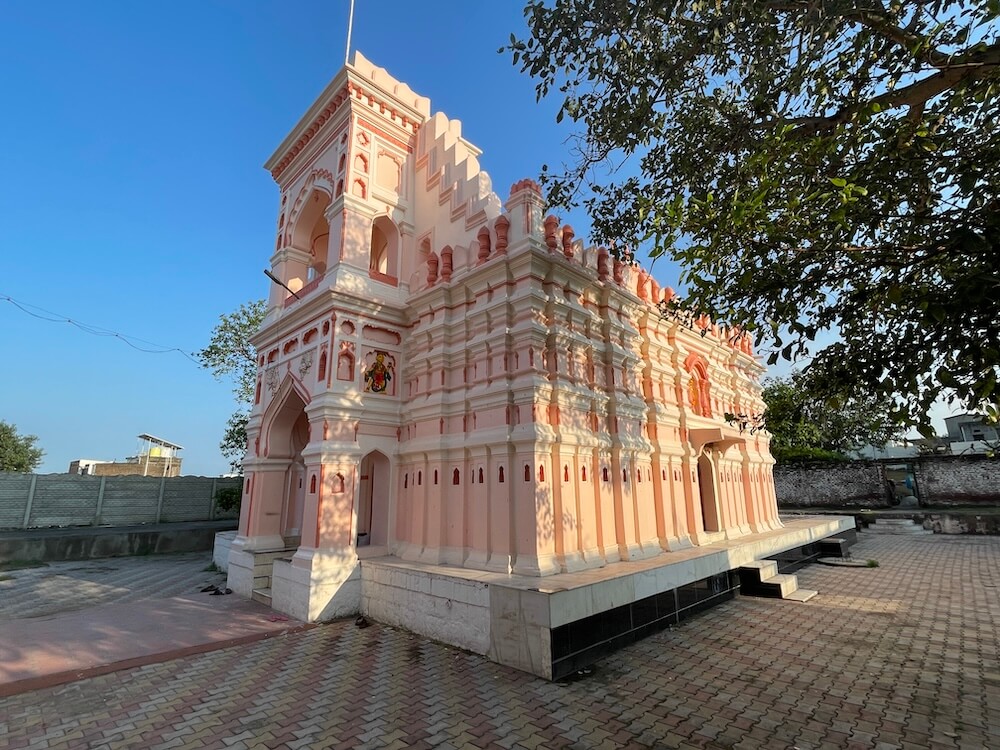
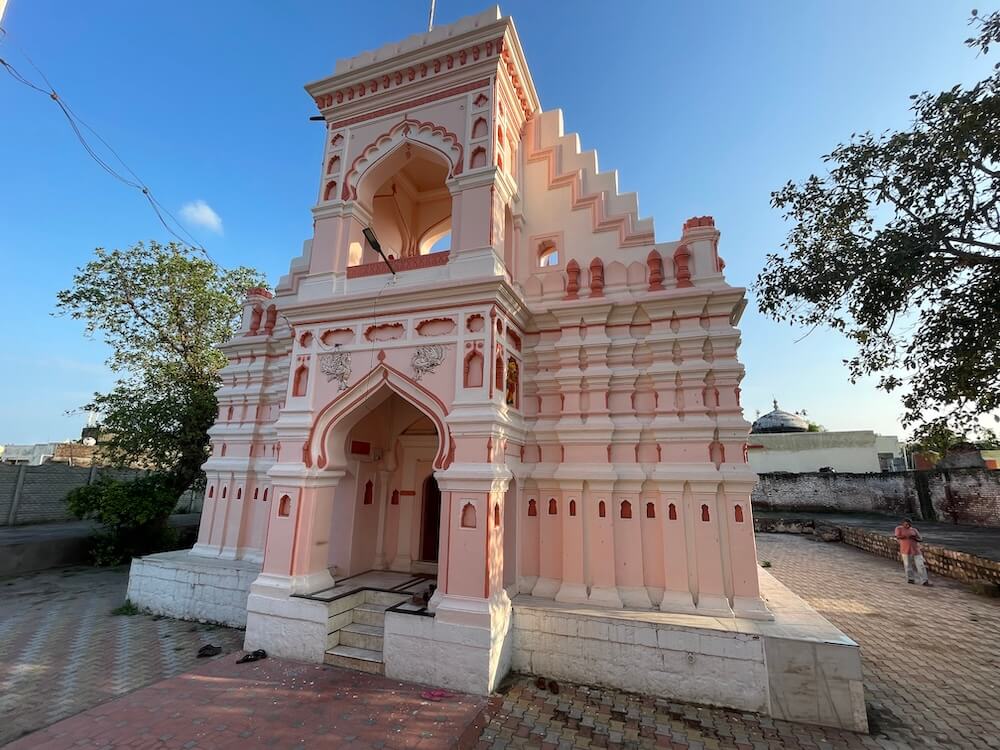
In such a historical city, there are five ancient temples of Mahadev. One of them is the temple of Siddheshwar Mahadev. The exact date of the establishment of this temple and its history are not available, but it is claimed that the site of this temple is a thousand years old. It is said that the grand main entrance, the Nagarkhana (drum house), and the Parikot (fortified perimeter wall) of this temple were constructed by the Bhonsle kings of Nagpur.
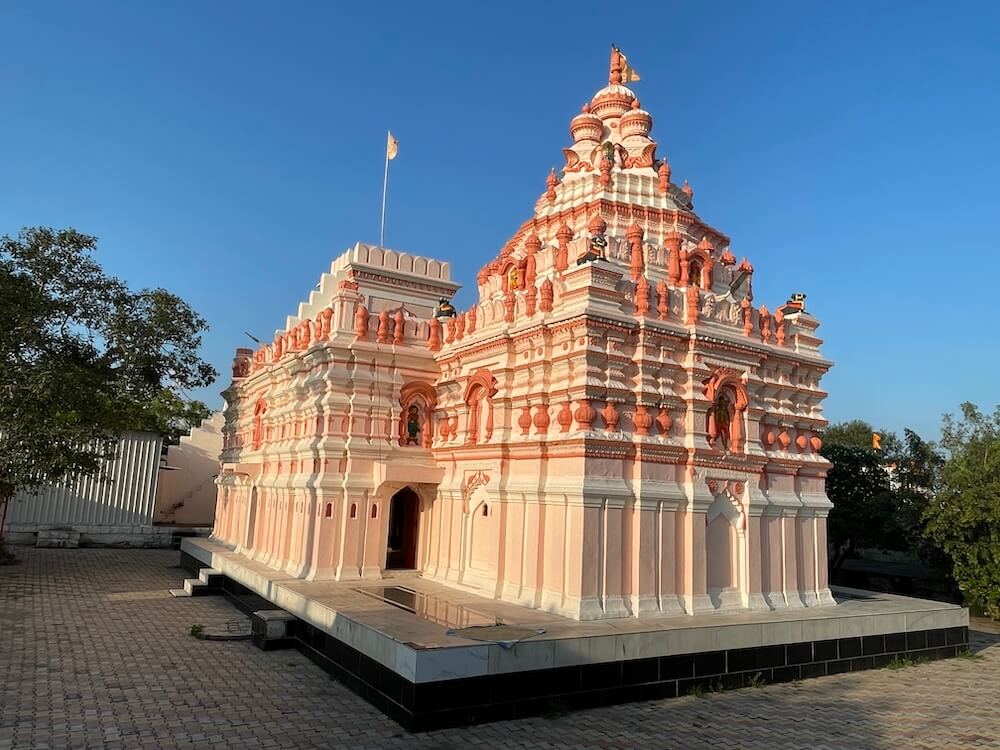
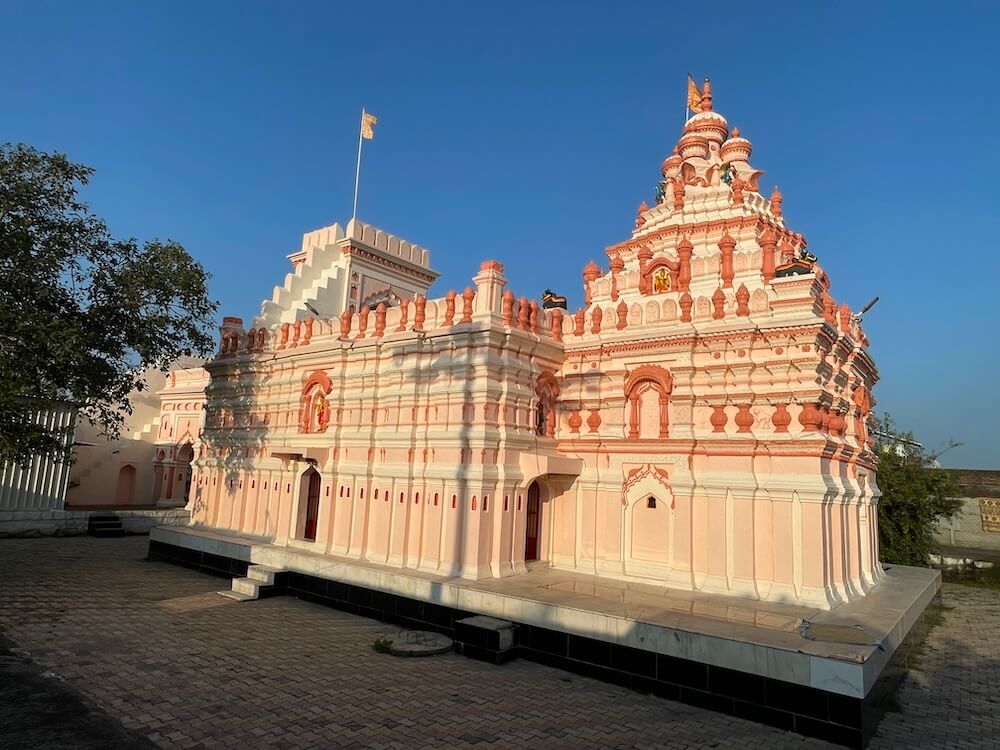
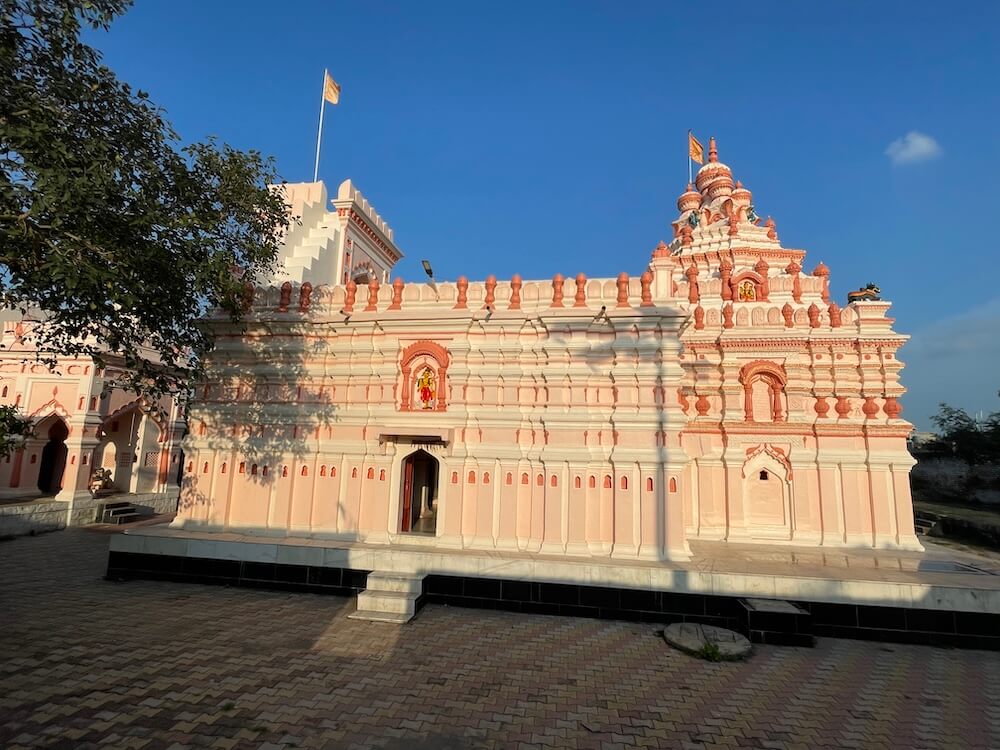
The temple has a grand main entrance built using stone and bricks. Above it is a Nagarkhana with three windows. On both sides of this main entrance, there is a wall shaped like descending steps. The temple is surrounded by a Parikot on all four sides. One enters the main gate by climbing a few stone steps. Upon entering, there is a large Nandi Mandap directly in front, where a stone statue of Nandi is placed. The grand building of the temple stands right ahead. This temple is built on a plinth four to five feet high from the ground. Its lower part is made of stone, while the upper part is constructed with bricks. The structure of the temple consists of a Mukhamandap (front porch), Sabhamandap (assembly hall), and Garbhagriha (sanctum sanctorum). The Mukhamandap has a high two-story entrance. The entrance has a large arch, on both sides of which are carved beautiful sculptures of peacocks with fanned-out tails. From here, one enters the Sabhamandap of the temple. A statue of Ganesha is carved above the entrance of the Sabhamandap. The Sabhamandap features four large octagonal pillars, arches between them, a small square formed by these pillars in the center, and entrances in the side walls. Here, near one of the pillars, the statue of Vedamurti Sadguru Ramchandra Maharaj Undangaonkar is seated in a niche on a marble platform. He was originally from the Aurangabad district. It is said that he received a vision of Siddheshwar.
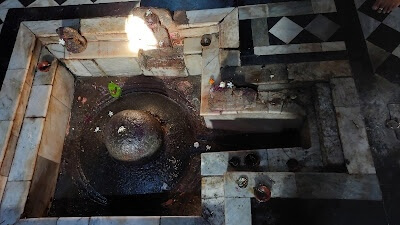
The entrance to the Garbhagriha is made of stone. A statue of Ganesha is carved at the center of the door frame (Lalatbimba). There is a Kirtimukh on the threshold. The upper parts of the large stone pillars on the sides of the frame are intricately carved. In the lower section, there is a large carved niche containing a standing statue of Bhairavnath. The Garbhagriha is large in size. In its center, there is a large Shiva Linga made of black stone in a square area about one foot deep. On the railing of this square area, next to the Shiva Linga, are some stone-carved statues of deities, as well as a statue of Nandi. In a niche within the Garbhagriha, there is a marble statue of Lord Ganesha. The antiquity of this temple is evident from the carved half-pillars in the four corners of the Garbhagriha walls, the arched structures on the walls, and the carvings on the dome-shaped ceiling.
The design of the temple’s outer walls is unique. These walls have been constructed by placing tall pillars side by side. The upper part of the outer walls of the Garbhagriha is decorated with pot-shaped designs on artistic pillars and carved niches within them. These niches contain statues of Vishnu, Hanuman, Narad Muni, and others. Ravana is considered a great devotee of Shankara, which is why he has been given a place in a niche on the outer wall behind the Garbhagriha. Here, there is a ten-headed sculpture of Ravana. Nandi sculptures are installed at the four corners above these outer walls of the Garbhagriha. From here, the Shikhar (spire) part of the temple begins. This Shikhar is also built using an artistic arrangement of pillars. Its niches contain statues of Ganesha, Hanuman, and Kalbhairav. In the upper part, Naga (serpent) and Mayur (peacock) sculptures are carved on all four sides. At the very top, there is a large central Kalash (finial) and four smaller Kalashas on its four sides, making a total of five Kalashas here.
There are niches of various sizes located at several places within the walls of this temple. The number of these niches is eighty-four on the exterior, eighteen in the walls of the drum house (Nagarkhana), twenty-seven in the main assembly hall (Sabhamandapa), and eight in the sanctum sanctorum (Garbhagriha). During Shivratri and the festival of lights (Deepotsav) on Dev Diwali, the temple premises are illuminated by countless lamps placed in these niches. There is a large gathering of devotees in this ancient temple every Monday, and especially during the time of Shivratri.
This sacred temple stands as a testament to deep spiritual devotion, ancient architectural grandeur, and rich local cultural traditions.
The sanctum sanctorum houses the divine idol consecrated according to ancient Vedic traditions, surrounded by serene courtyards and traditional temple architecture.
Navratri, Maha Shivratri, Annual Temple Jatra & Deepotsav
Compare and book flights, secure top-rated local hotels near the temple, hire reliable guides, and rent cars instantly.
Extend your pilgrimage by visiting other highly sacred temples located nearby.


Add ₹999 more to unlock FREE SHIPPING!
Your sacred cart is currently empty.
Shop Photo FramesFill in your delivery details below to place your order.
Add comment