
Add ₹999 more to unlock FREE SHIPPING!
Your sacred cart is currently empty.
Shop Photo FramesThe tradition of sun worship has been practiced across the world since ancient times. In India, particularly within the Hindu religious tradition, sun worship holds a distinct and significant place. The documented history of sun temples in our country dates back to approximately the seventh century. Many sun temples are famous in India, among which the Sun Temple at Konark in Odisha is world-renowned. Additionally, the eighth-century Martand Sun Temple in Jammu and Kashmir and the Sun Temple at Modhera, situated on the banks of the Pushpavati River in Gujarat, are especially famous. Carrying forward this historical legacy, an ancient sun temple is situated in the village of Barbada in the Mantha taluka of Jalna district. Devotees believe that by seeking blessings at this historical sun temple in Barbada, one attains excellent health, prosperity, and wealth. This temple in the rural area is a revered place for devotees.
An ancient legend is prevalent at the local level regarding the establishment of the temple. In ancient times, a Brahmarakshasa haunted this area. Due to the suffering caused by it, the villagers in the vicinity were troubled by various physical and mental ailments. When Saint Mahant Ramgiri Maharaj learned of this, he decided to resolve the problem. He established his place of penance here and sat for meditation. Ramgiri Maharaj performed rigorous penance for twelve consecutive years and attained spiritual power. Through this spiritual power, he completely eradicated the Brahmarakshasa that was troubling the area. With the intention that such negative forces would never again trouble this region in the future, he established the Sun Temple here.
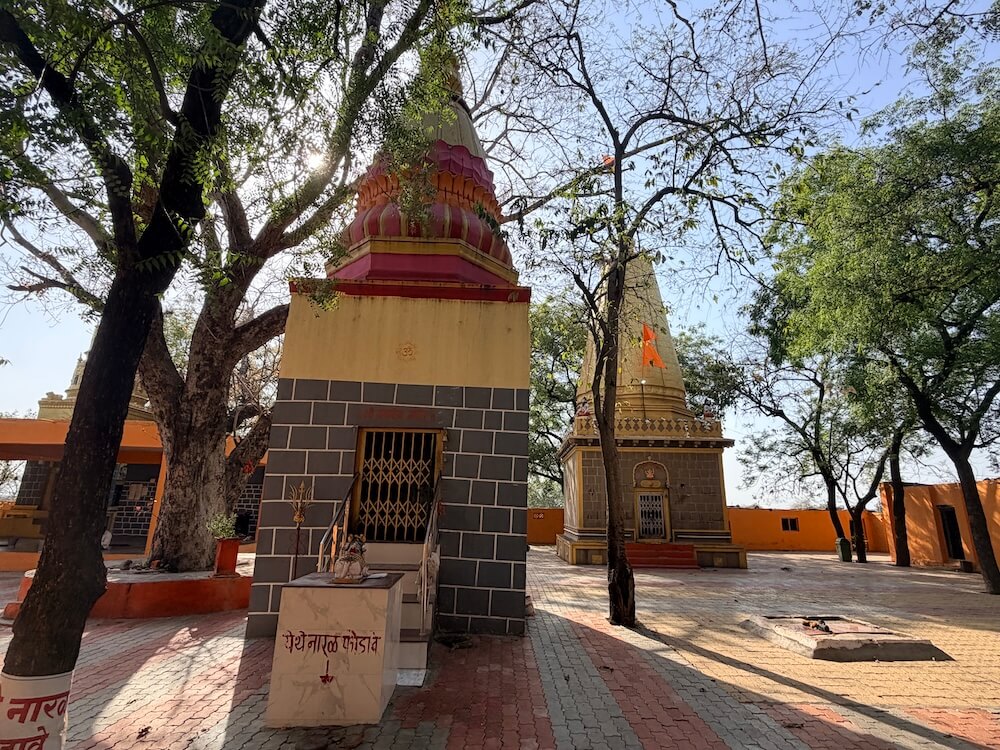
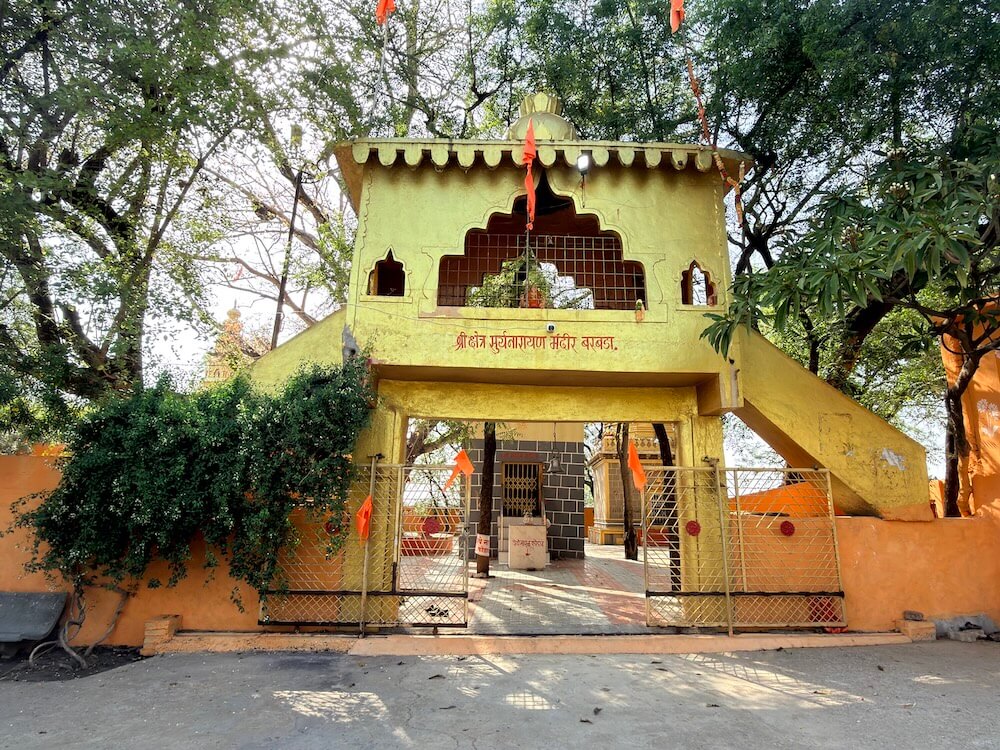
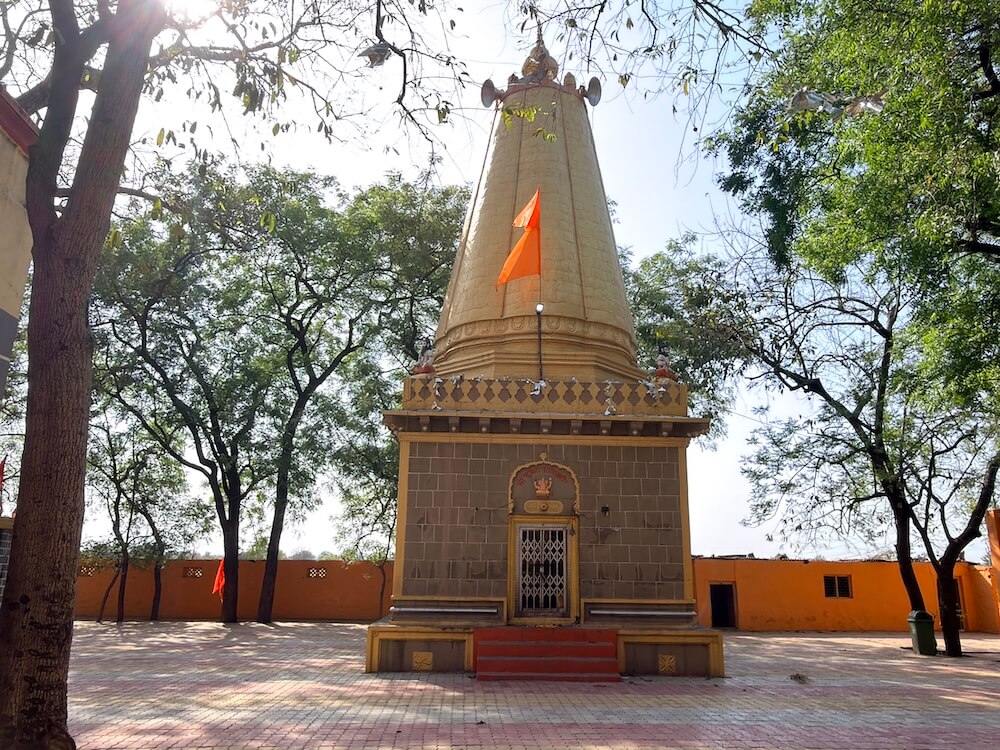
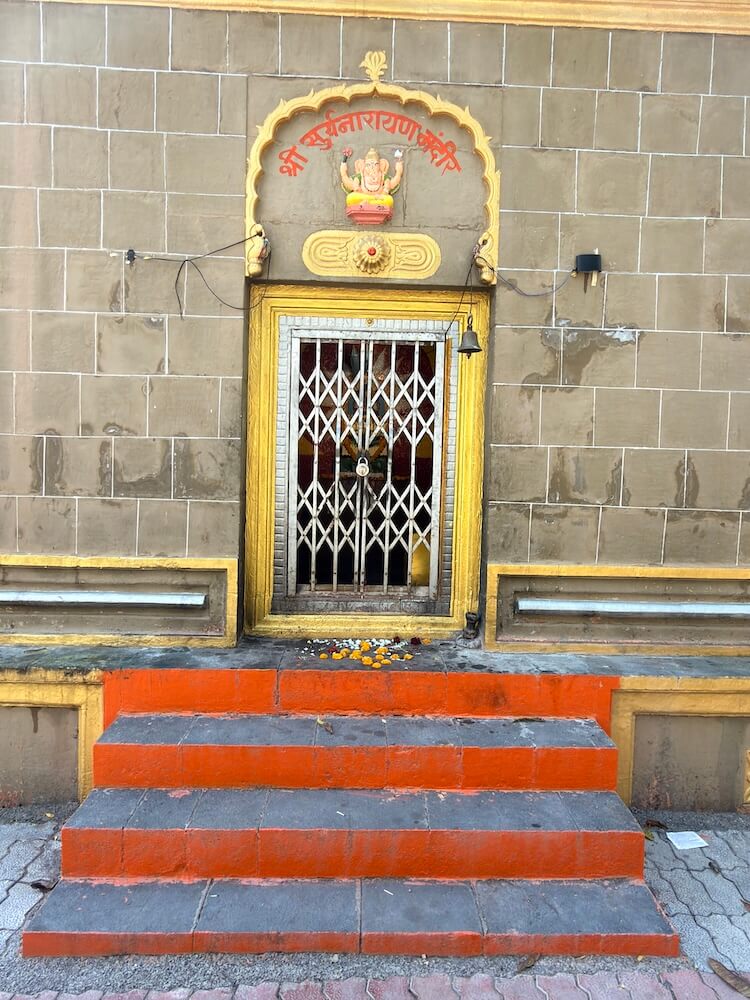
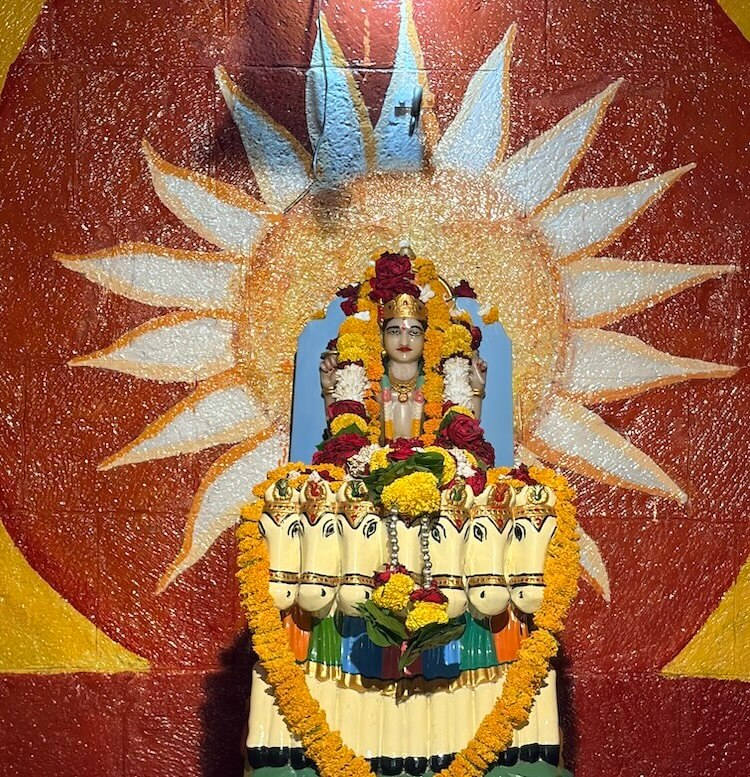
This temple is situated in a nature-rich area at a short distance from Barbada village. There is a paved road facility from the main village to the temple. In the area in front of the temple, there is a spacious parking lot under the shade of trees. In the vicinity of this parking lot, seats for the rest of devotees, restrooms, and an open platform for various cultural programs have been built. The main temple is protected by a fortification on all four sides. A two-story entrance gate has been built within this fortification. There is a drum house (Nagarkhana) on the first floor of this entrance, and an idol of Ganesha is carved on the front wall of the entrance. There is a dome-shaped spire on the roof of the entrance. In the spacious courtyard that one enters after passing through the gate, there are ancient trees. The architecture of the Suryanarayan Temple is unique. This temple is primarily in the form of a sanctum sanctorum (Garbhagriha). The entire temple stands on a stone foundation, or plinth, about two feet high from the ground. There are four steps to enter the temple. On the doorframes on both sides of the entrance to the sanctum, carvings of leaves and flowers are visible. An idol of Ganesha is carved on the lintel of this entrance, and an arched toran is seen above it. Inside the sanctum of the temple, the idol of Lord Suryadev is installed on a Vajrapitha (diamond throne). This idol is four-armed and is mounted on a chariot with seven horses. This stone idol of Suryadev is adorned with clothes and ornaments. Sculptures of sages are carved on the four corners of the temple ceiling. On the central part of the ceiling, there is a circular spire that tapers towards the top. On the Amalaka at the top of this spire, there is a finial (Kalash) and a flag (Dhvajapataka).
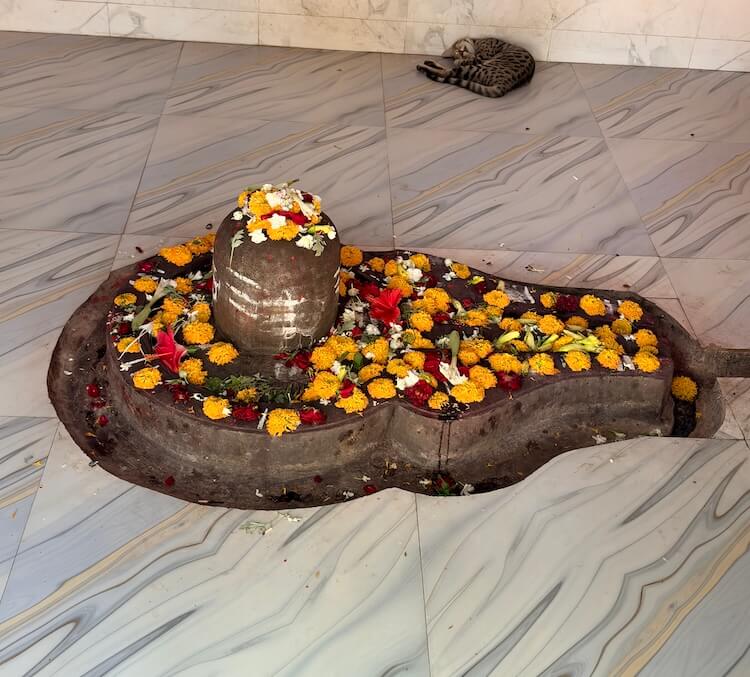
Beside the main Sun Temple, there is a small temple of Mahadeva. In front of this temple, there is an idol of Nandi made of black stone on a stone Vajrapitha. Since this Mahadeva temple is slightly higher than the ground level of the courtyard, there are four steps to its entrance. A Shiva Linga is installed in the sanctum of the temple. A copper vessel for ritual bathing (Abhishek) is hung from the ceiling for the water flow over this Shiva Linga. A circular spire is built on the roof of the temple. On the inner and lower layers of the spire, carvings of a lotus petal circle (Padmadal Mandala) are visible. There is an Amalaka on the upper part of the spire and a finial on top of it.
Behind the Mahadeva temple is the Samadhi temple of Mahant Ramgiri Maharaj. The structure of this temple consists of two parts: a assembly hall (Sabhamandap) and the main sanctum. The assembly hall here is open in nature. Since the sanctum part is at a higher level compared to the assembly hall, there are five steps to reach it. On the stone plinth above these steps, the footprints (Padukas) of Ramgiri Maharaj are installed. Leaf and flower patterns are carved on the doorframes and the lintel of the sanctum entrance. Inside the sanctum, a stone idol of Mahant Ramgiri Maharaj in a meditative posture is installed on a Vajrapitha. On the roof of the sanctum, there is a three-layered circular spire. In each layer of this spire, there are eight niches for deities. In these twenty-four niches in total, there are idols of various goddesses and gods. On the top of the spire, there are two Amalakas one above the other, and a finial on top. Beside the Samadhi temple, there are small Samadhi temples of other late Mahants. Also, there is the temple kitchen, a regularly operating food charity (Annachhatra), residences for servants and devotees, and other structures.
In this Sun Temple at Barbada, two main annual festivals, Makar Sankranti and Ratha Saptami, are celebrated on a large scale every year. During these festivals, married women and other devotees come to the temple for darshan. They offer sesame-jaggery offerings and traditional earthen pots (Sugade) to the Sun God. Devotees also come for darshan to this Suryanarayan Temple during all other major Hindu festivals and celebrations throughout the year. Vows of food distribution are made by devotees at this temple, and to fulfill these vows, a food charity is regularly operated here. During festival days, many Bhajan groups and Kirtankars present Bhajan and Kirtan services in the temple. The number of devotees visiting the temple for darshan is higher on special days like every Sunday, full moon (Purnima), new moon (Amavasya), and auspicious days. Devotees can have darshan here every day from six in the morning until eight in the evening.
This sacred temple stands as a testament to deep spiritual devotion, ancient architectural grandeur, and rich local cultural traditions.
The sanctum sanctorum houses the divine idol consecrated according to ancient Vedic traditions, surrounded by serene courtyards and traditional temple architecture.
Navratri, Maha Shivratri, Annual Temple Jatra & Deepotsav
Compare and book flights, secure top-rated local hotels near the temple, hire reliable guides, and rent cars instantly.
Extend your pilgrimage by visiting other highly sacred temples located nearby.


Add ₹999 more to unlock FREE SHIPPING!
Your sacred cart is currently empty.
Shop Photo FramesFill in your delivery details below to place your order.
Add comment