
Add ₹999 more to unlock FREE SHIPPING!
Your sacred cart is currently empty.
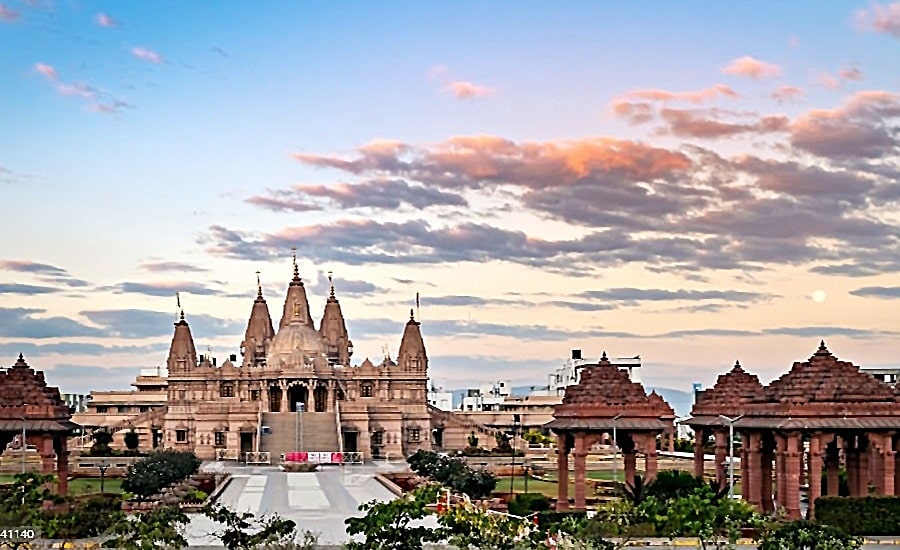
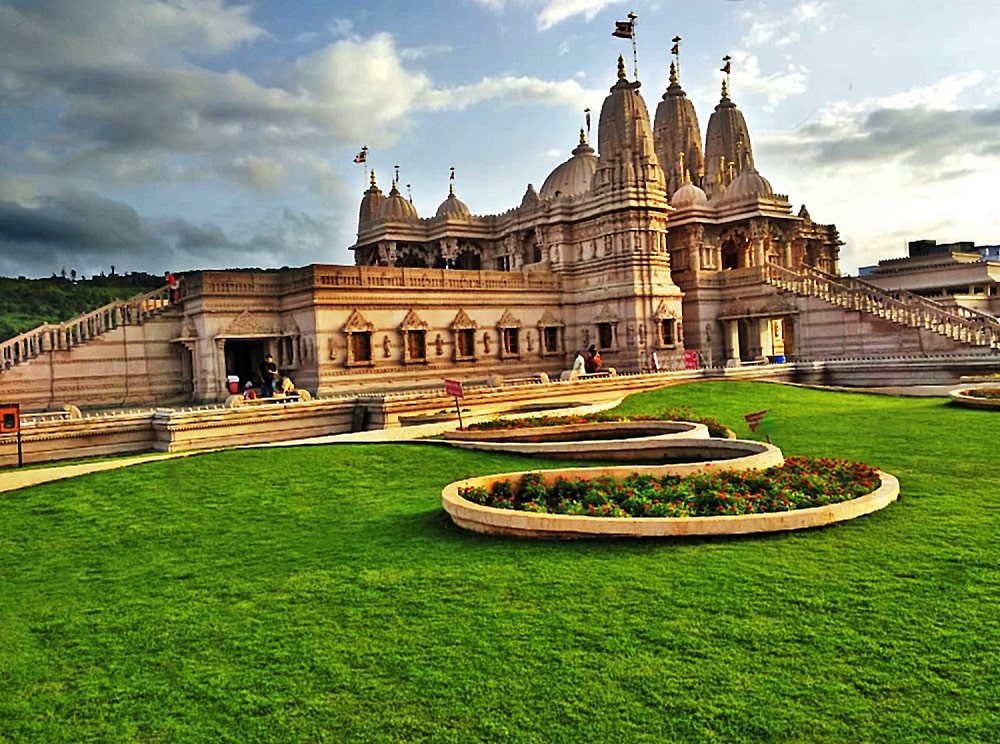
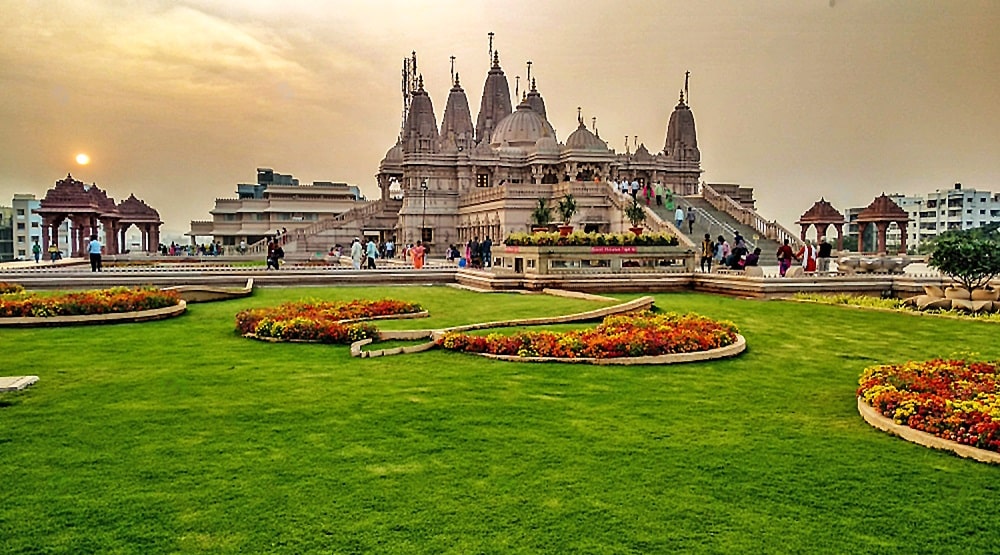
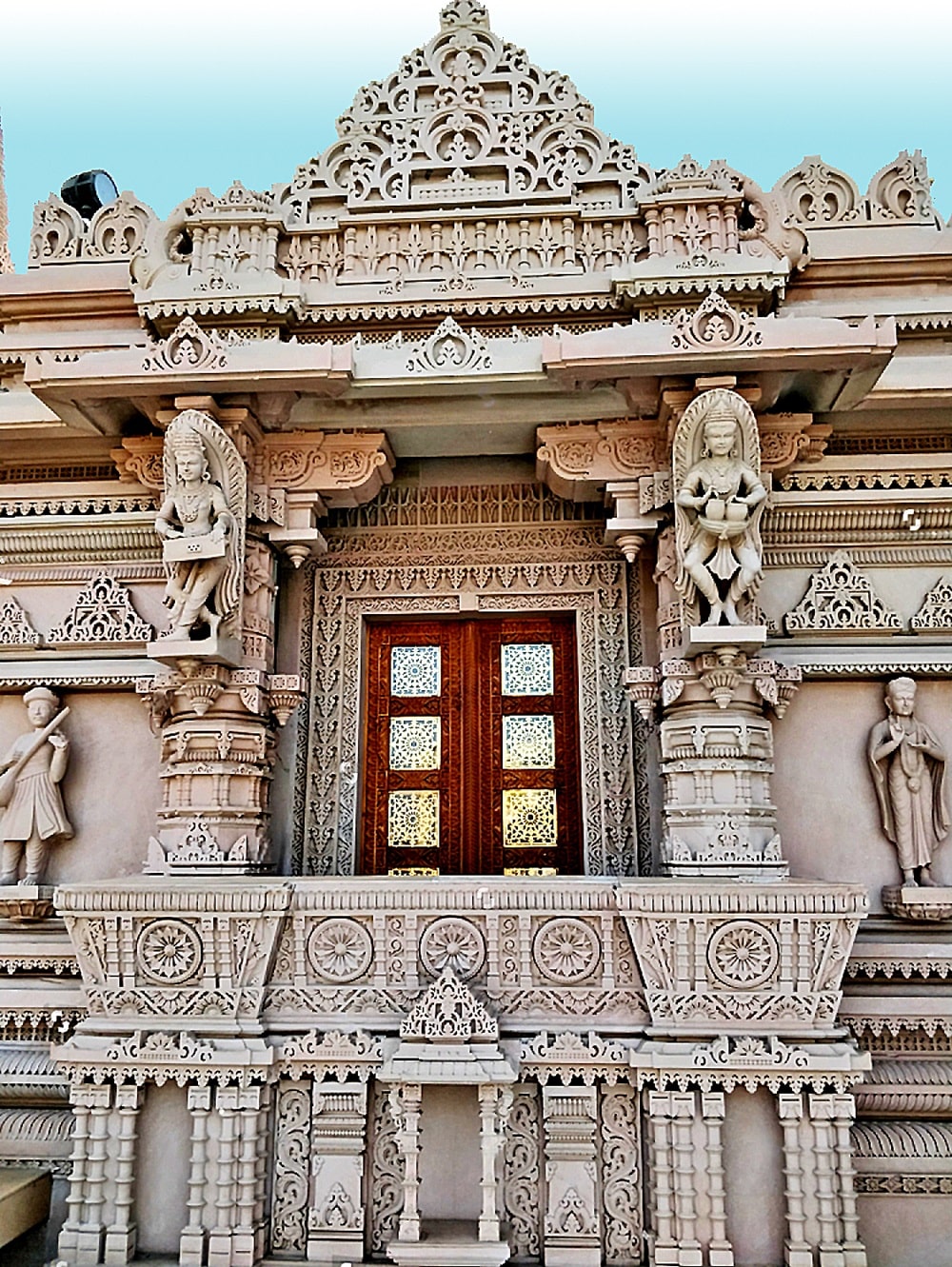
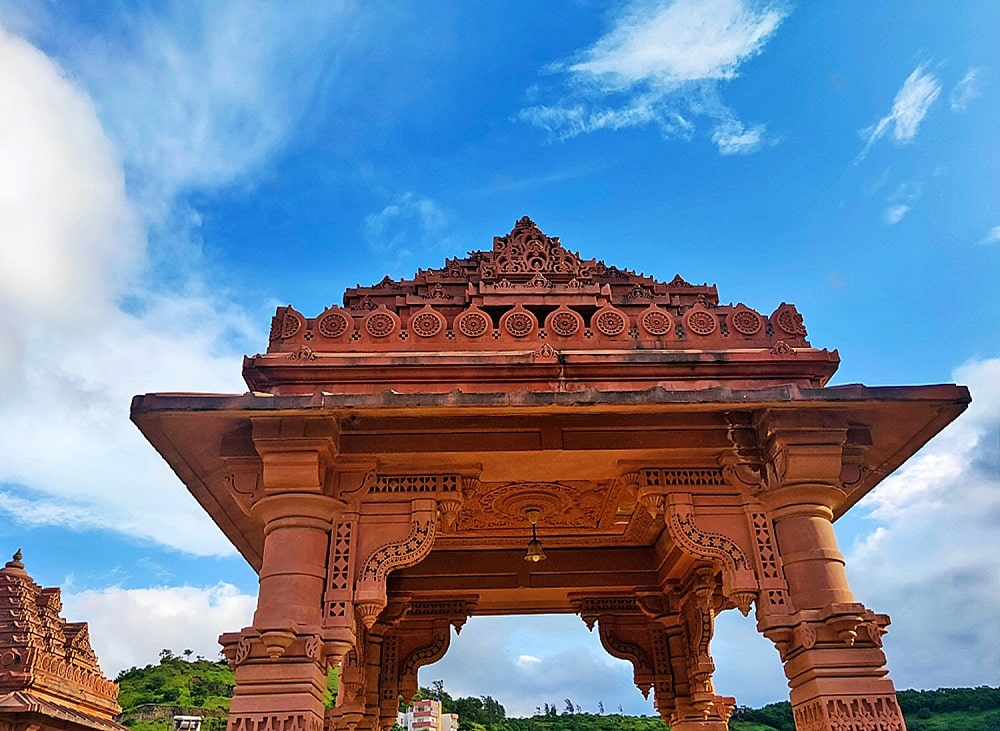
Shop Photo FramesSituated in the southwestern part of Pune city on the Nanhe-Ambegaon Road, the BAPS Shri Swaminarayan Mandir is considered a significant center of modern architecture. Opened for public viewing in February 2017, this temple was crafted from distinctive pink sandstone from Rajasthan. Based on the Nagara style of architecture, the structure is grand and expansive. This temple complex houses idols of various Hindu deities along with Bhagwan Swaminarayan. Located at the foothills of the Ambegaon hills, this structure adds immense value to the cultural glory of Pune.
BAPS is a renowned religious organization. Followers of this tradition believe that Bhagwan Swaminarayan established the Swaminarayan Bhakti Sampradaya in Gujarat about two hundred years ago. The third guru in the guru-shishya lineage of this tradition, Brahmaswarup Shastriji Maharaj, later worked to re-establish this sect in the city of Bochasan, Gujarat. Due to this historical revival, the organization came to be known as the ‘Bochasanwasi Shri Akshar Purushottam Swaminarayan Sanstha’ or ‘BAPS’. Over the last hundred years, this tradition has spread extensively across the world. Currently, more than fifty thousand volunteers and around ten lakh devotees are active in this tradition worldwide. The organization has built grand temples in various places across the globe that preserve cultural values.
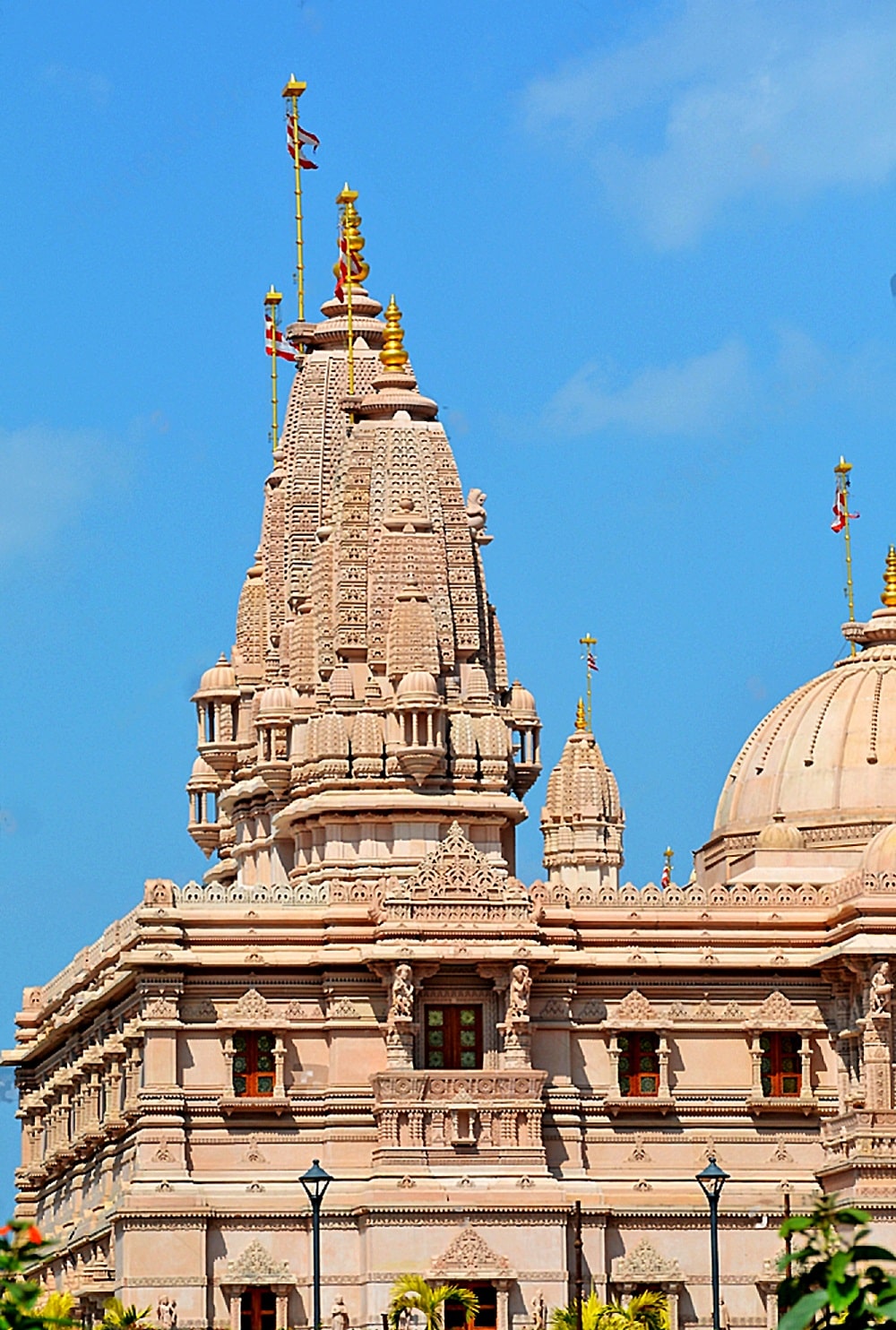
The temple is located at the foothills of the Ambegaon hills, on the Mumbai-Bengaluru National Highway, in the southwest direction of Pune city. This modern temple has added significant value to the cultural splendor of Pune, a city blessed with a rich historical heritage. This grand temple was constructed using distinctive pink sandstone from Rajasthan. A unique feature of this temple’s construction is that no steel or iron has been used. Adhering strictly to the principles of ancient Indian architecture, the temple has been erected solely by interlocking stones.
Skilled Sompura artisans from Rajasthan meticulously hand-carved each stone. The stones carved in Rajasthan were brought here and skillfully assembled. The grand arches in the Rajasthani toran style at the main entrance are carved with sculptures of various deities, including elephants and peacocks. One enters the spacious courtyard of the temple through this main entrance. The courtyard surrounding the main temple structure features landscaped gardens and fountains. In the courtyard, in front of the main temple, are the idols of Ganesh and Hanuman.
The structure of the temple consists of a Mukhamandap (entrance hall), Sabhamandap (assembly hall), and Garbhagriha (sanctum sanctorum). After climbing a few steps from the courtyard, one enters the Mukhamandap, which is supported by pillars. The ceiling of the Mukhamandap features distinctive carvings. Beyond the Mukhamandap lies the spacious Sabhamandap. Here, 140 carved pillars depict various scenes from mythological stories, including dancers and musicians. The ceiling of this Sabhamandap is dome-shaped from the inside. A beautiful chandelier hangs in this space. The doors of the Garbhagriha feature exquisite wooden carvings covered with silver plating. Inside the Garbhagriha are the divine idols of Bhagwan Swaminarayan and his first spiritual successor, Aksharbrahma Gunatitanand Swami. Along with these main idols, there are also idols of other prominent gurus of the tradition’s lineage.
The temple complex houses shrines for Shri Lakshmi-Narayan and Radha-Krishna, Shri Balaji, Vitthal-Rukmini, and Shankar-Parvati. Additionally, there are idols of great saints from Maharashtra such as Sant Dnyaneshwar, Sant Tukaram, Sant Eknath, and Sant Namdev. The temple features large and tall shikharas (spires) in the Nagara style. The tallest shikhara above the main Garbhagriha is surrounded by smaller sub-shikharas. All of them are topped with gold-plated kalashas. This 74-foot-tall shikhara attracts attention even from a distance. The beauty of the shikharas and kalashas is further enhanced by the illumination on the temple at night.
Daily rituals in the temple are performed according to ancient traditions and in a disciplined manner. Aarti is performed five times a day here. The day begins with the Mangala Aarti at 6:00 AM. This is followed by the Shangar Aarti at 7:30 AM and the Rajbhog Aarti at 11:15 AM. Hundreds of devotees are present for the Sandhya Aarti held at 7:00 PM. After the Shayan Aarti at 8:30 PM, the doors are closed for the deities to rest.
‘Annakut’ is the biggest festival at this temple. This festival is celebrated on the second day of Diwali, i.e., Kartik Shuddha Pratipada. On this day, there is a tradition of preparing various types of pure vegetarian dishes and offering them to the deity as a grand feast. This puja is performed in memory of Bhagwan Shri Krishna lifting the Govardhan mountain to protect the residents of Gokul from the wrath of Indra. During this time, hundreds of food items are artistically arranged in the temple. This mountain-like heap of food is referred to as ‘Annakut’. Apart from this, festivals like Janmashtami and Swaminarayan Jayanti are celebrated with great enthusiasm. Along with religious activities, the temple also conducts social work such as blood donation camps and disaster management. Devotees can visit the temple daily from 7:30 AM to 12:00 PM and from 4:00 PM to 9:00 PM.
This sacred temple stands as a testament to deep spiritual devotion, ancient architectural grandeur, and rich local cultural traditions.
The sanctum sanctorum houses the divine idol consecrated according to ancient Vedic traditions, surrounded by serene courtyards and traditional temple architecture.
Navratri, Maha Shivratri, Annual Temple Jatra & Deepotsav
Compare and book flights, secure top-rated local hotels near the temple, hire reliable guides, and rent cars instantly.
Extend your pilgrimage by visiting other highly sacred temples located nearby.


Add ₹999 more to unlock FREE SHIPPING!
Your sacred cart is currently empty.
Shop Photo FramesFill in your delivery details below to place your order.
Add comment