
Add ₹999 more to unlock FREE SHIPPING!
Your sacred cart is currently empty.
Shop Photo FramesThe ancient Varad Vinayak Temple in Gavarala, located in the Bhadravati taluka, holds a special place among the Ashtavinayakas of Vidarbha. It is said that Lord Ganesha manifested at Gavarala, pleased by the penance of Sage Gritsamada. The current temple was established by Sage Gritsamada himself. Because it is located in the village of Gavarala, this Ganesha is also known as ‘Gavarala Ganesh’. This site is mentioned in the 37th chapter of the Upasana Khanda of the Ganesha Purana.
Between the years 1076 and 1126, this region was under the rule of the Chalukya Emperor Vikramaditya VI Tribhuvanamalla. His feudatory, Dhadibhandak Ranaka, managed the affairs of this region on his behalf. At that time, the Ranaka’s officer, Vasudeva Dandanayaka, purchased some land here on 8 July 1087 by paying gold coins. A stone inscription found in a field at Gavarala some years ago mentions that a portion of this land was reserved for cattle grazing and another part for the maintenance of the cowherds. This inscription, written in Sanskrit-mixed Marathi, is now housed in the Central Museum at Nagpur. It contains 11 lines, and the final line warns that anyone who misuses this land or harms the cows will face the wrath of the deities and will go to hell. This suggests that this area was formerly ‘Gaurala’, meaning a grazing pasture for cows. It is said that when a village was later established here, it derived its name, Gavarala, from this.
According to records in mythological texts, while wandering, Sage Gritsamada was captivated by the natural beauty of this area and decided to reside here. He performed rigorous penance for Lord Ganesha here for 15 years. Pleased by the Sage’s devotion, Varad Vinayak manifested and asked him to seek a boon. Sage Gritsamada requested the gift of divine knowledge (Brahma-jnana). Varad Vinayak granted his wish, saying “Tathastu” (so be it), and declared that this place would be known as ‘Manipur’ in the Treta Yuga, ‘Bhanak’ in the Dvapara Yuga, and ‘Bhadrak’ in the Kali Yuga, and that the wishes of devotees who bathe and perform worship here would be fulfilled. This is the site where the temple stands today. Bhadrak later became famous as Bhadravati.
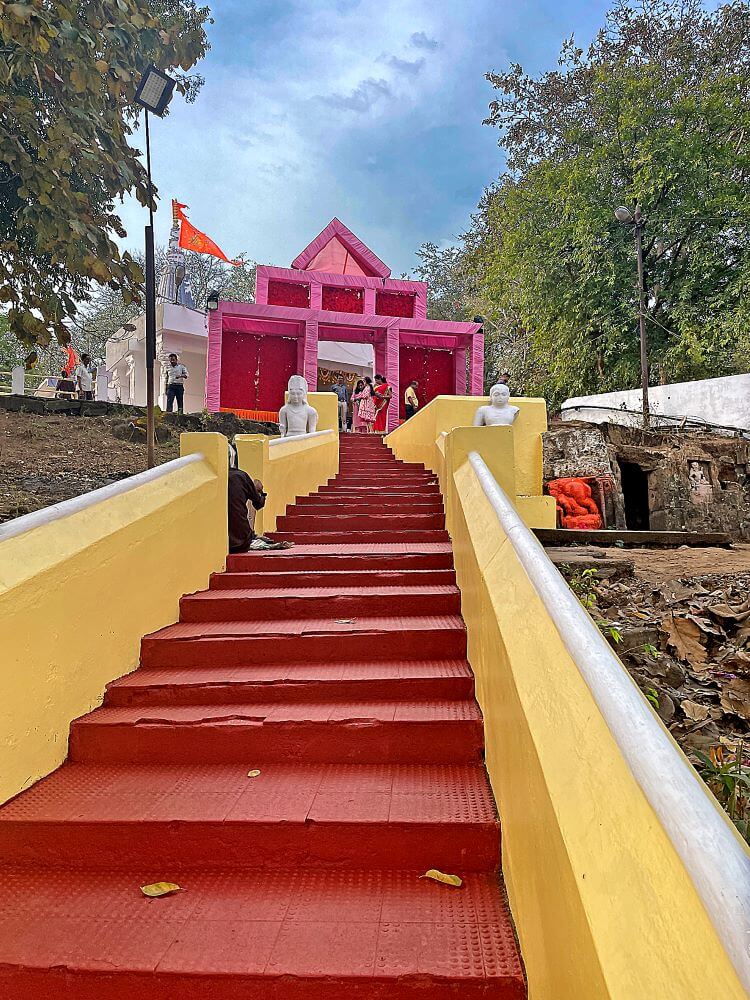
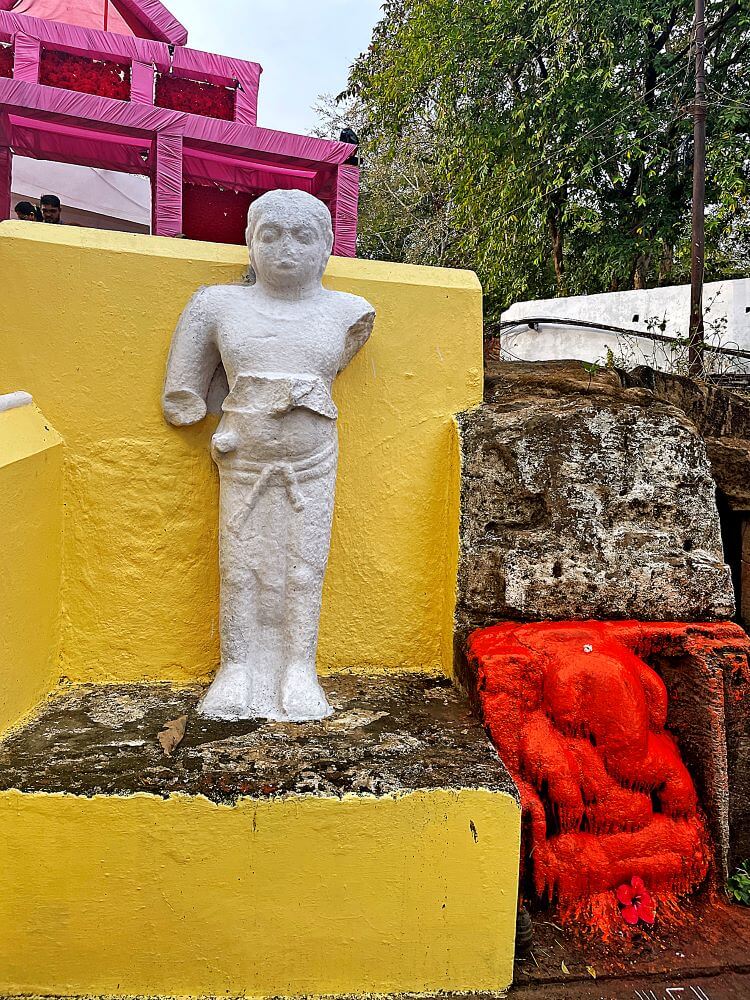
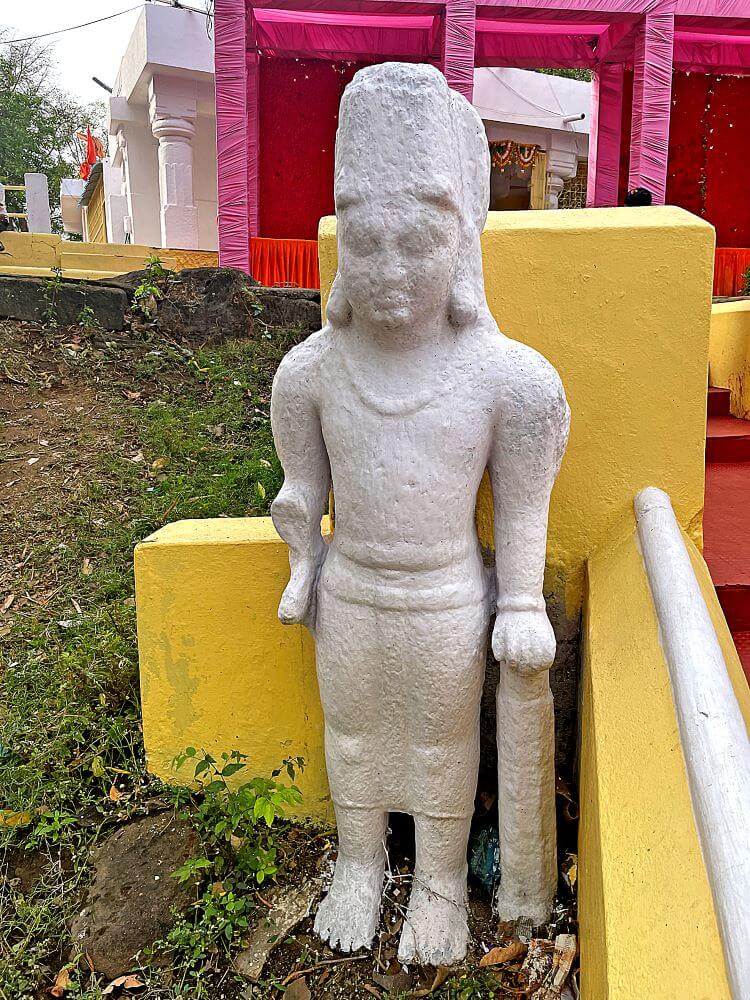
This ancient temple of Varad Vinayak is situated on a Ganesha hill in Gavarala, near the Bhandak railway station in the Bhadravati taluka. There are 30 steps from the base to reach this temple located on a small hill. After climbing approximately 20 to 22 steps, statues of gatekeepers (Dwarapalas) can be seen on both sides. Some scholars believe these to be Yaksha statues. There is a small cave to the left of the steps. At the entrance of the cave, there are statues of Kevala Narasimha and Kubera.
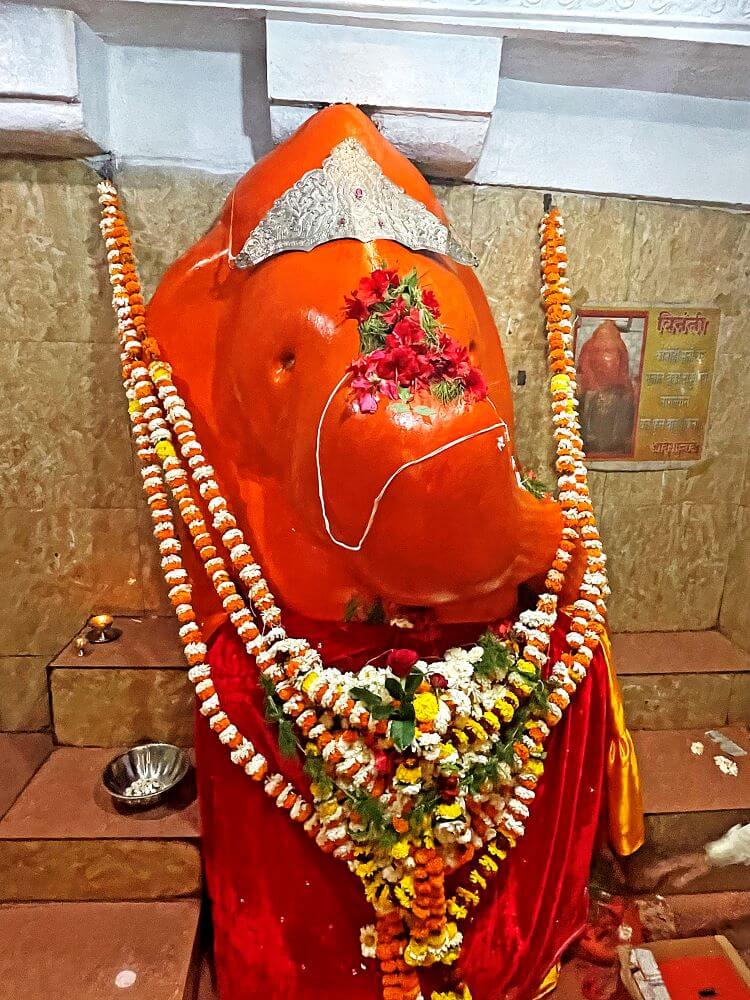
The Varad Vinayak temple faces north. One must descend 3 to 4 steps from the assembly hall (sabhamandapa) to enter the sanctum sanctorum (garbhagriha). The entrance to the sanctum is quite low. Inside, there is a unique, north-facing Ganesha idol approximately 6 feet tall. The idol wears a crown and ornaments around the neck. The trunk is turned to the left, and there is a distinctive halo (prabhavali) behind it. The left leg of the idol is folded. It is estimated that this idol dates back to the Vakataka period. To the left of the assembly hall, in a second sanctum, is the abode of Lord Mahadeva. It contains a Nandi, a Shiva Linga, statues of Shiva-Parvati, and statues of Jaya-Vijaya on the sides. There was an inscription on the wall of the entrance to this sanctum, but it has become blurred and illegible due to the plaster applied during later renovations.
This site, with its historical and mythological significance, is one of the famous pilgrimage sites in Chandrapur. A fair is held here on every Sankashti Chaturthi, Vinayaka Chaturthi, Ganesha Jayanti, and Angarki Chaturthi. Thousands of devotees from various places come here for darshan, abhishek, and worship. There is a particularly large influx of devotees from Bhadrapada Chaturthi to Anant Chaturthi.
Behind this hill is a large lake, and there are many caves along its banks, which also contain several ancient and carved statues.
A temple located at some distance to the north of the Varad Vinayak temple is referred to by the villagers as the Yavanashva temple or Mahal. An inscription in this temple clarifies that it was built in 1104 during the reign of the Chalukya King Vikramaditya VI. Opposite the Varad Vinayak temple is the Suryamukhi Hanuman temple. This Hanuman temple is also famous here. A pilgrim residence (Bhakta Niwas) with 25 to 30 rooms has been constructed next to this temple.
This sacred temple stands as a testament to deep spiritual devotion, ancient architectural grandeur, and rich local cultural traditions.
The sanctum sanctorum houses the divine idol consecrated according to ancient Vedic traditions, surrounded by serene courtyards and traditional temple architecture.
Navratri, Maha Shivratri, Annual Temple Jatra & Deepotsav
Compare and book flights, secure top-rated local hotels near the temple, hire reliable guides, and rent cars instantly.
Extend your pilgrimage by visiting other highly sacred temples located nearby.


Add ₹999 more to unlock FREE SHIPPING!
Your sacred cart is currently empty.
Shop Photo FramesFill in your delivery details below to place your order.
Add comment