
Add ₹999 more to unlock FREE SHIPPING!
Your sacred cart is currently empty.
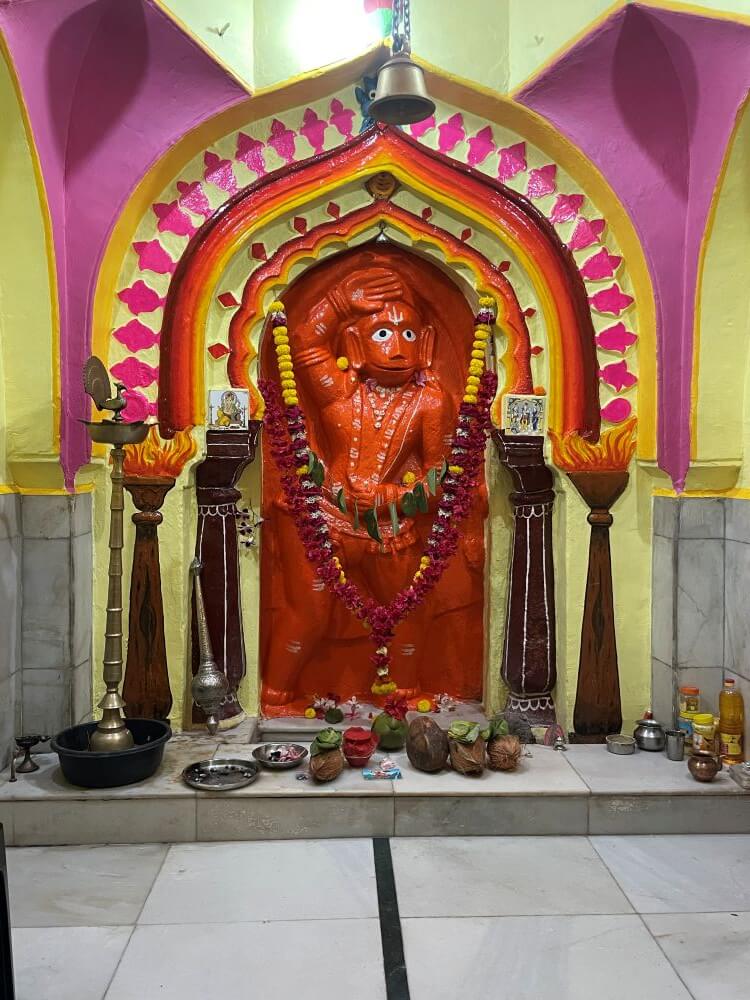
Shop Photo FramesWith the objective of increasing strength and courage among the youth so that they could actively participate in nation-building, Samarth Ramdas Swami established eleven Maruti temples in the districts of Satara, Sangli, and Kolhapur, representing the symbol of power. These temples later became famous as the eleven Samarth-established Maruti temples. One of the important places among these is at Battis Shirala in Sangli district. In Shaka 1576, that is, 1655 CE, Ramdas Swami established the Maruti temple here. This Maruti is known as Veer Maruti. Devotees have faith that this Maruti fulfills their vows.
In the seventeenth century, the society was suffering from self-reproach due to divine and worldly calamities. “Je yugin dev dharma budale. Avaghe yenkar jalale. Satya jatinasin harpale. Swadharmasakat..” meaning that the divine religion had sunk, truth was lost, and the state of society had become chaotic. To uplift such a society and to create an interest in the worship of strength along with knowledge and devotion among the people, Samarth Ramdas Swami composed works like Dasbodh and Manache Shlok. Along with this, for this purpose, he established many Rama temples and Hanuman temples here. Samarth Ramdas Swami considered Shri Rama as his Guru, while Hanuman was his family deity. In a six-verse poem, Samarth said, “Hanumant amuchi kulvalli” (Hanuman is our lineage deity).
He established 11 temples of this family deity, who is the god of devotion and strength, with his own hands. Samarth Ramdas Swami was born in 1608 CE. In 1619, at the age of eleven, Narayan Thosar, or Ramdas Swami, who said “I worry for the universe,” fled from his wedding. After this, he went on a pilgrimage across North India. In 1640, at the age of 32, he returned to his birthplace, Jamb. Thereafter, after another four years of pilgrimage to the south, he came to the Satara area in 1644. He used to travel along the banks of the Krishna River, visiting Masur, Shahapur, Umbraj, and Charegaon in Karad taluka. In this area, he established these 11 Maruti sites between 1644 and 1654. Samarth’s disciple Venabai was originally from Miraj. She provided information about these Maruti temples in one of her Abhangs, which is as follows:
‘Chafalamajin don Umbrajesi yek. Paraganvin dekh chautha to ha.
Panchva Masuri Shahapurin sahava. Jaan to satva Shiralyant.
Singanvadin athva Manpadale navva. Dahava janava Majganvin.
Bahyant akrava yene riti gava. Sarva manoratha purvil.
Veni mhane Swami Samarth Ramdas. Kirti gagant nasamaye.’
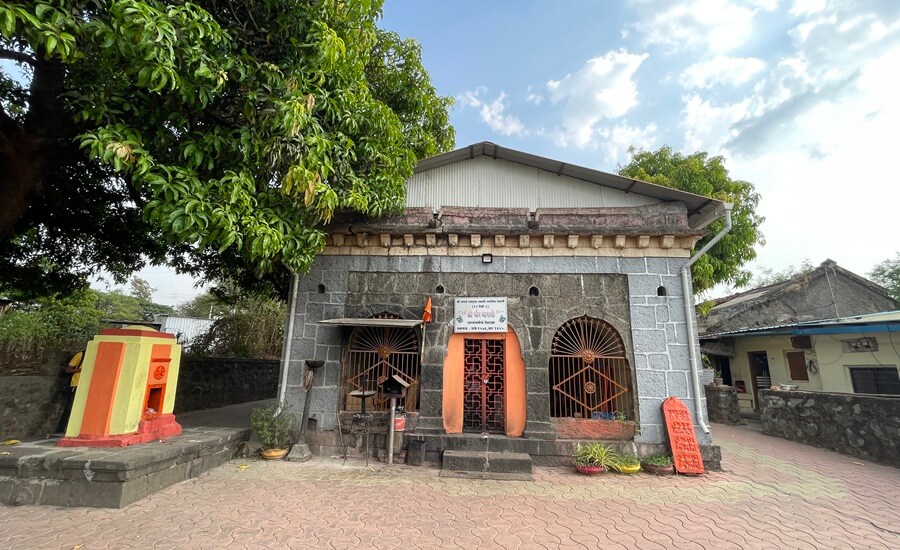
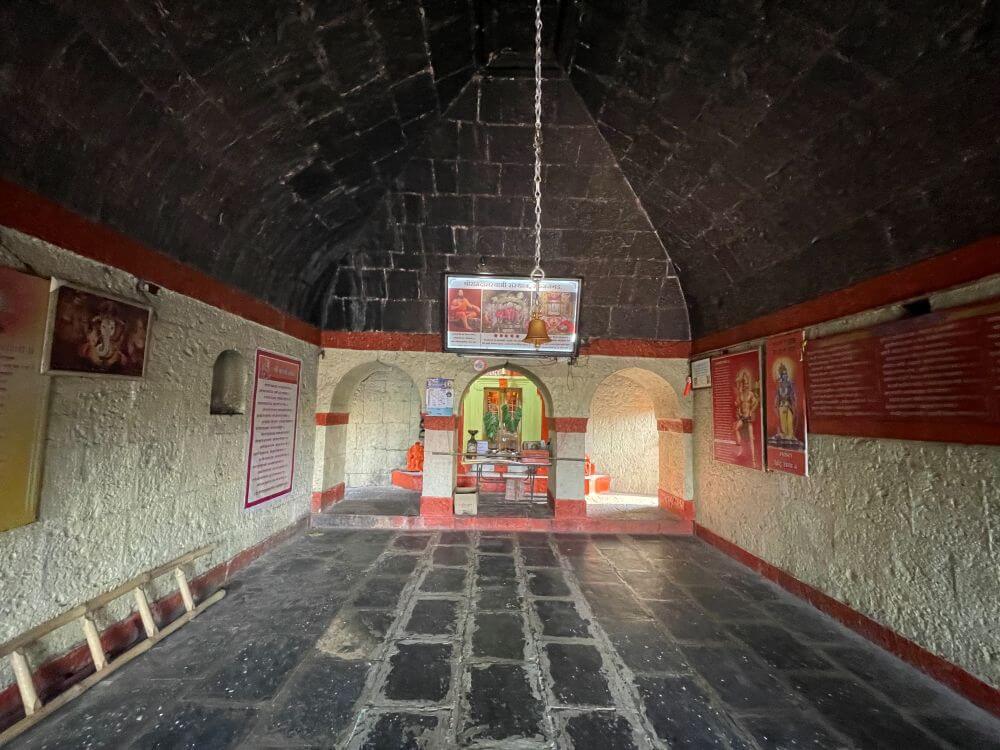
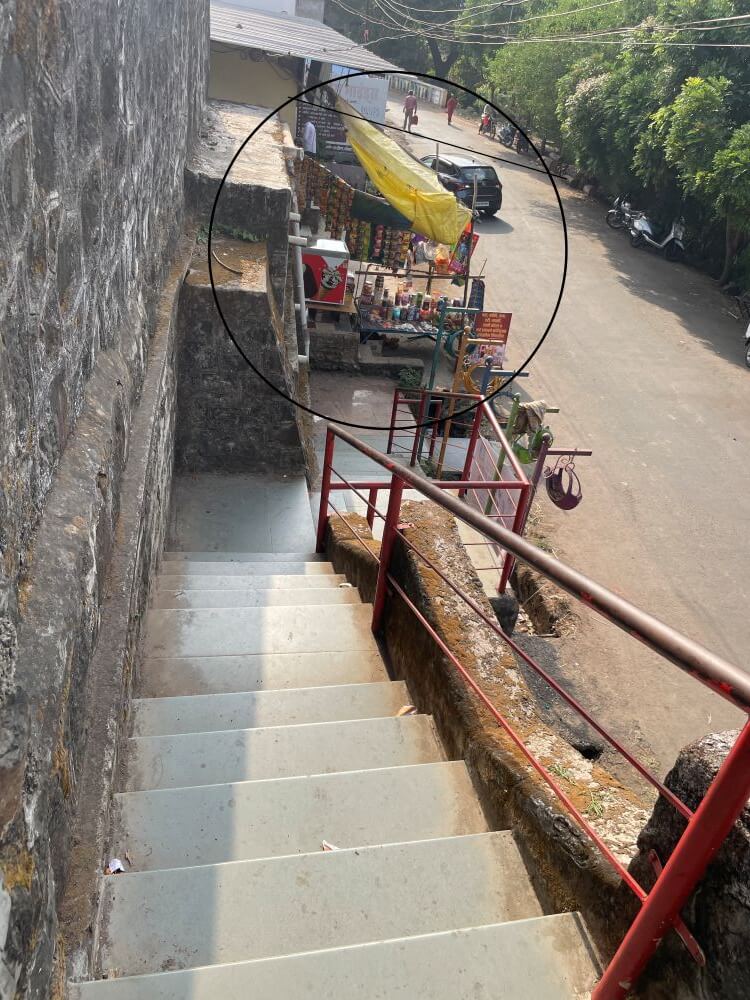
From this, it is clear that Samarth established the seventh Maruti out of 11 at Battis Shirala. Regarding this, the Samarth devotee Sadashiv Khando Altekar, in his research book ‘Shri Samarth Charitra’ written in 1933, stated that “Many people, including the Deshpandes of Shirala, received the grace of Samarth. At their request, he established the Maruti there and entrusted the work of worship to the Deshpandes.” There are about 25 steps to reach the courtyard of this temple, which is located on a hill slightly above the road. This temple has a strong boundary wall on all four sides. One enters the temple courtyard through a narrow entrance in this boundary wall. The temple structure consists of a Sabha Mandap (assembly hall), Antaral (vestibule), and Garbhagriha (sanctum sanctorum). There is an ancient Virgal (hero stone) adjacent to the temple entrance. The Sabha Mandap here is of an enclosed type (Gudhamandap). The ceiling side of the Sabha Mandap is in the shape of a tortoise back (Gajaprishtha), and there is a circular design in the center of the ceiling. Further on, there is the temple’s Antaral with four pillars and three arches on them. There are entrances on the left and right sides in the circumambulation path of the Antaral. In the Antaral, near the front wall of the Garbhagriha, there are ancient idols of local deities.
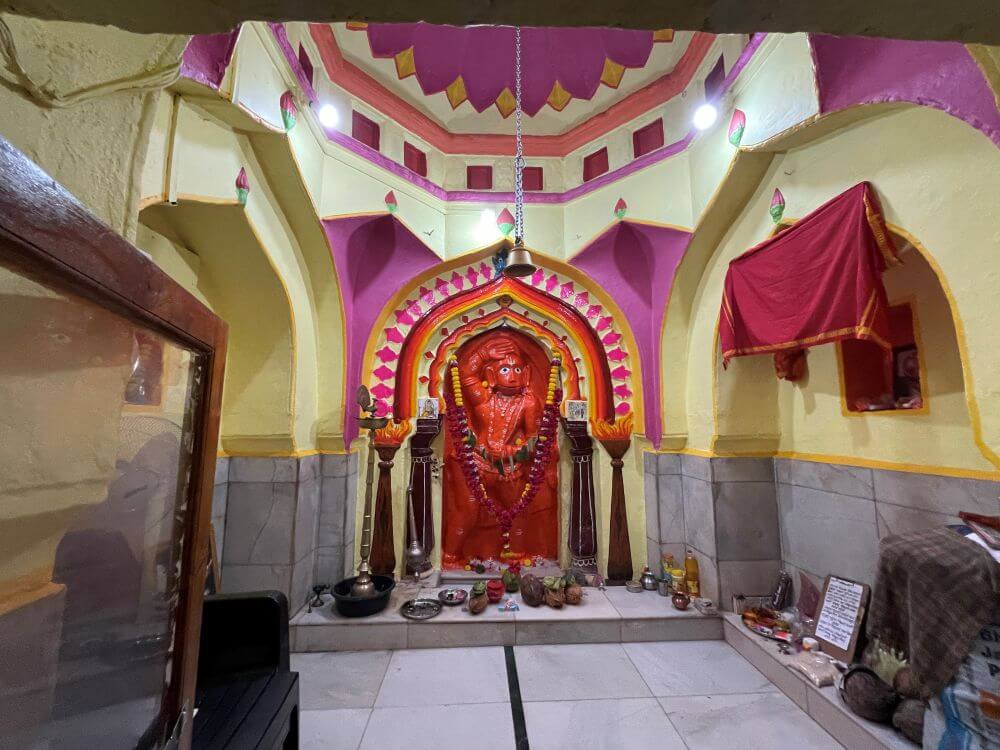
Further ahead is the entrance to the Garbhagriha. On the door jambs of the entrance, there are lotus flower carvings at the bottom and vertical ridge carvings at the top. There is a Ganpati sculpture on the Lalatbimba (lintel) and a Kirtimukh sculpture on the Mandarak. In the Garbhagriha, on a Vajrapitha (diamond pedestal), there is a seven-foot-tall standing stone idol of Maruti smeared with vermilion. The cloth on the idol’s waist, the waistband, and the bells in it are carved with fine craftsmanship. On both sides of the idol, there are pillars, and on the arches above them, there are leaf and flower carvings. There are windows on both sides of the idol in the Garbhagriha. Through them, sun rays fall on the idol in the morning and evening.
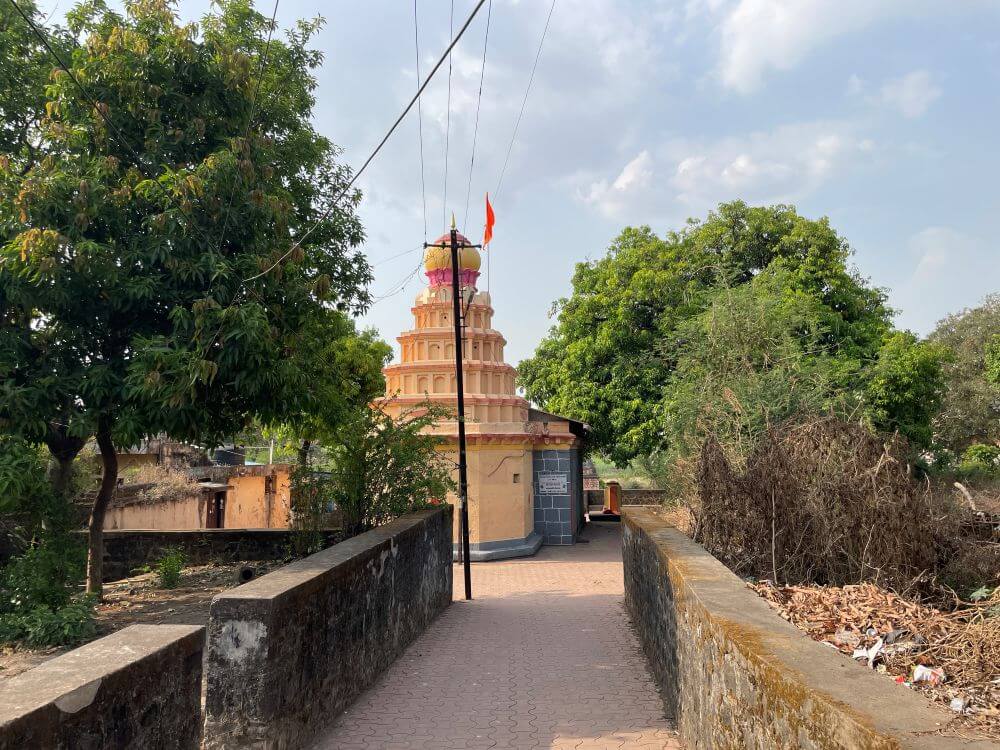
There is a parapet on all sides of the temple roof. On the roof of the Garbhagriha, there is a five-tiered square Shikhara (spire). In each tier of the Shikhara, there are Devakoshthakas (niches), an Amalaka with lotus petal carvings at the top, and a Kalash above it. In the courtyard, adjacent to the boundary wall, there are some shops for worship materials. Hanuman Jayanti is the main festival celebrated with great enthusiasm in this temple. On this day, a palanquin procession of the deity is taken out. At this time, thousands of devotees come for the darshan of the deity and to fulfill their vows. Apart from this, festivals are organized in the temple on Chaitra Padwa, Ram Navami, and Shravani Mondays. Every Saturday, the number of devotees coming for the darshan of Maruti is large.
Useful Information
The sanctum sanctorum houses the divine idol consecrated according to ancient Vedic traditions, surrounded by serene courtyards and traditional temple architecture.
Navratri, Maha Shivratri, Annual Temple Jatra & Deepotsav
Compare and book flights, secure top-rated local hotels near the temple, hire reliable guides, and rent cars instantly.
Extend your pilgrimage by visiting other highly sacred temples located nearby.


Add ₹999 more to unlock FREE SHIPPING!
Your sacred cart is currently empty.
Shop Photo FramesFill in your delivery details below to place your order.
Add comment