
Add ₹999 more to unlock FREE SHIPPING!
Your sacred cart is currently empty.
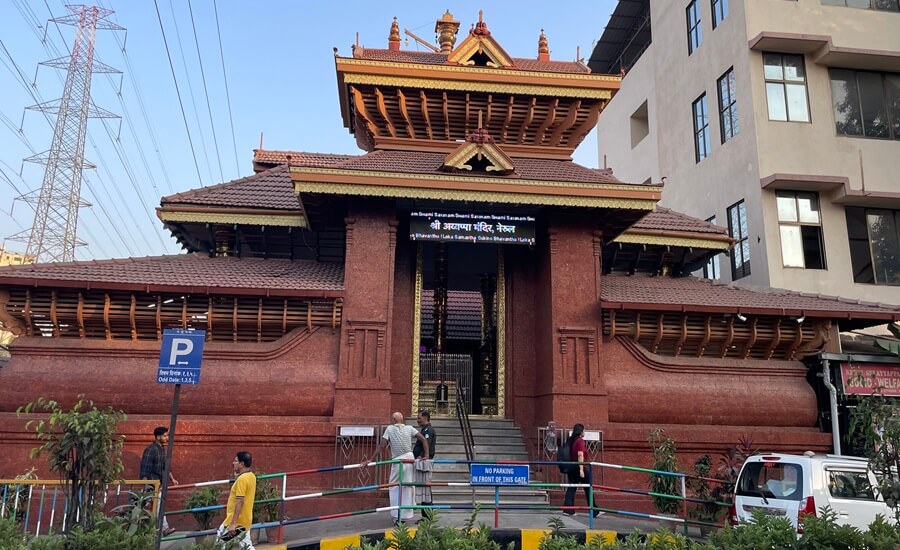
Shop Photo FramesNavi Mumbai, a meticulously planned city renowned as the ‘City of the Twenty-first Century,’ was once home to numerous villages and hamlets. Nerul was one such settlement, and today it stands as one of Navi Mumbai’s largest suburbs. A diverse populace from various regions resides here in great numbers, and consequently, the area is graced with many temples dedicated to their revered deities. Among these is the magnificent temple of Bhagwan Ayyappa. This grand shrine is situated on a spacious plot in the bustling Sector १७ of Nerul. Given the profound devotion of the people of Kerala towards Ayyappa, the temple witnesses a daily throng of devotees seeking Darshan.
In Kerala, a majestic Ayyappa temple stands at Sabarimala. It is said that the name Sabarimala is derived from Shabari of the Ramayana. Each year, millions of devotees journey here for Darshan. With the noble intention of enabling Ayyappa devotees residing in Navi Mumbai, Thane, and Mumbai to partake in His Darshan, the ‘Shri Ayyappa Seva Samiti’ of Nerul constructed this temple in nineteen ninety-six. Ayyappa is also known by the names Ayyappa Sastha, Hariharaputra, and Manikandan. He is revered as the son of Shiva and Vishnu in His Mohini form. Bhagwan Vishnu assumed the feminine form of Mohini to vanquish the demon Bhasmasura. Subsequently, Mohini enchanted Lord Shivashankara with Her divine beauty. From their union, Ayyappa was born. Hence, He is also addressed as Hariharaputra.
A Puranic legend regarding Ayyappa recounts that Vaishnava King Rajashekhara of Pandalam, Kerala, once went hunting and heard the cry of a small child on the banks of the Pamba River. The child wore a garland around His neck, and a divine aura emanated from His face. The king was childless, yet he harboured doubts about whether to take the child with him. At that moment, Sage Agastya instructed him to accept the child, declaring Him to be divine. As the child wore a pearl necklace, He was named Manikanta. After some time, King Rajashekhara’s queen bore a son. However, the king regarded Manikanta as his eldest son and even resolved to anoint Him as the Yuvaraja (crown prince).
Yet, Manikanta had no interest in worldly kingship. Meanwhile, some wicked ministers in Rajashekhara’s court poisoned the queen’s mind, and they conspired to eliminate Manikanta. They informed the king that the queen was suffering from stomach pain and required tigress’s milk as a remedy. Manikanta readily undertook the task of fetching the tigress’s milk. While in the forest, He encountered Mahishi, the sister of Mahishasura. After Devi Durga vanquished Mahishasura, Mahishi performed severe penance and received a boon from Brahma that no one could kill her except the son of Shiva and Vishnu. Knowing that a son of Shiva and Vishnu was deemed impossible, she became arrogant. Finally, all the Devas prayed to Vishnu to end her tyranny. Vishnu had assumed the form of Mohini during the Samudra Manthan (churning of the ocean). Vishnu decided to marry Shankara in that form and entrust their child to the childless king of Pandalam. As Ayyappa was thus the son of Shiva and Vishnu, He was able to slay Mahishi. Thereafter, He returned to the palace with the tigress’s milk. Everyone was then convinced of His divine avatar. Having completed His life’s mission of slaying Mahishi, He decided to leave the palace. Before departing, He instructed the king to build His temple at Sabarimala.
The worship of Ayyappa represents a unique confluence of Shaiva, Vaishnava, and Shakti traditions. Strict celibacy, abstinence from alcohol and meat, and a rigorous code of conduct are considered essential for His devotion. Devotees undertaking the Sabarimala pilgrimage observe such a forty-one-day Vrata (vow) before entering the temple. ‘Shribhootanatha Sadananda Sarvabhoota Dayaparaḥ | Rakṣaḥ Rakṣaḥ Mahabaho Shastre Tubhyam Namonamaḥ ||’ is the Ayyappa Puja Mantra. Amidst its chanting, the old Ayyappa temple in Nerul was renovated in two thousand thirteen. The Prana Pratishtha ceremony was celebrated in this temple on the tenth of July, two thousand thirteen.
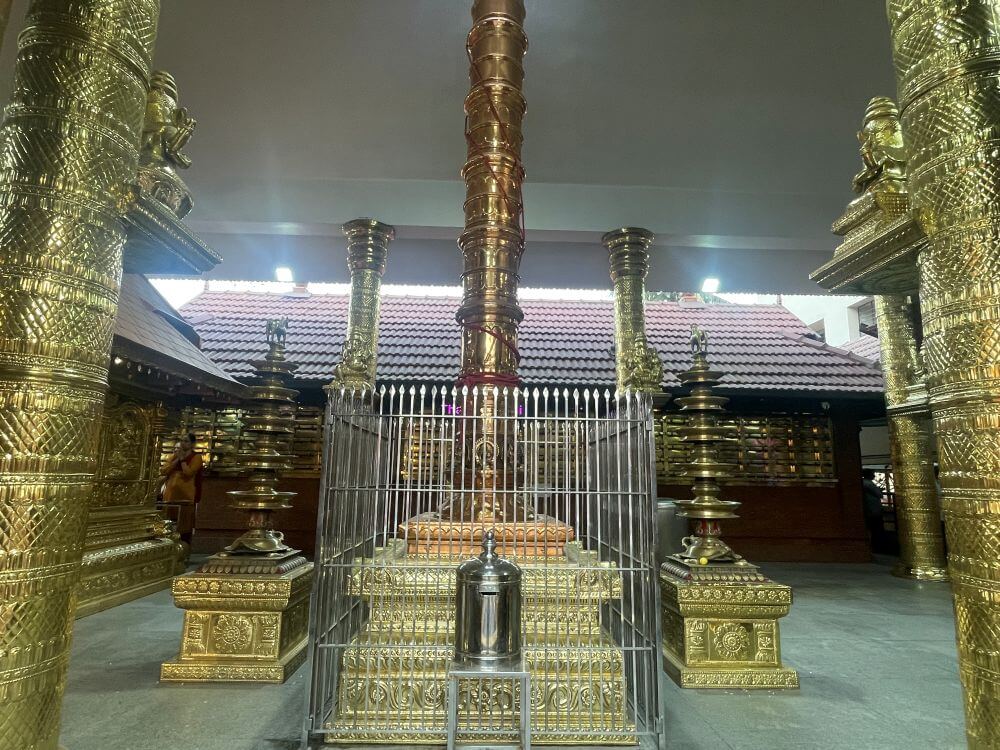
This temple is constructed in the distinctive Kerala architectural style, meticulously considering Vastu Shastra and ‘Thachu Shastra’ (the science of carpentry). It stands on a high Adhishthana (plinth) built of red stone. A Prakara wall encircles the Adhishthana. In Kerala architecture, this is known as ‘Pooram Matil’ (boundary). It encompasses the temple’s Gopuram. As Kerala, much like the Konkan region, experiences heavy rainfall, its roofs are predominantly sloping on all four sides. The Gopuram of this temple also features a sloping, two-tiered roof. Within this Gopuram is the ‘Sopanam,’ a pathway of steps. Upon entering through it, one is greeted by the ‘Kodimaram’ (flagpole), which stands taller than the Gopuram itself. This flagpole is made of metal and is adorned with golden sheets. Adjacent to it are Deepastambhas (lamp pillars). Directly in front of this stands the temple of Ayyappa Swami.
The temple’s structure comprises the Sopanam, Mukhamandapam, and ‘Shrikovil’ (Garbhagriha or sanctum sanctorum). To enter the Mukhamandapam, there are three or four steps on either side. The walls of the Mukhamandapam are adorned with tall, grand sculptures of Dvarapalas (gatekeepers). A unique feature of these black stone sculptures is that they stand upon coiled serpents. The Dvarapalas’ right foot rests on the serpent’s hood, with their left hand placed on the knee of that foot.
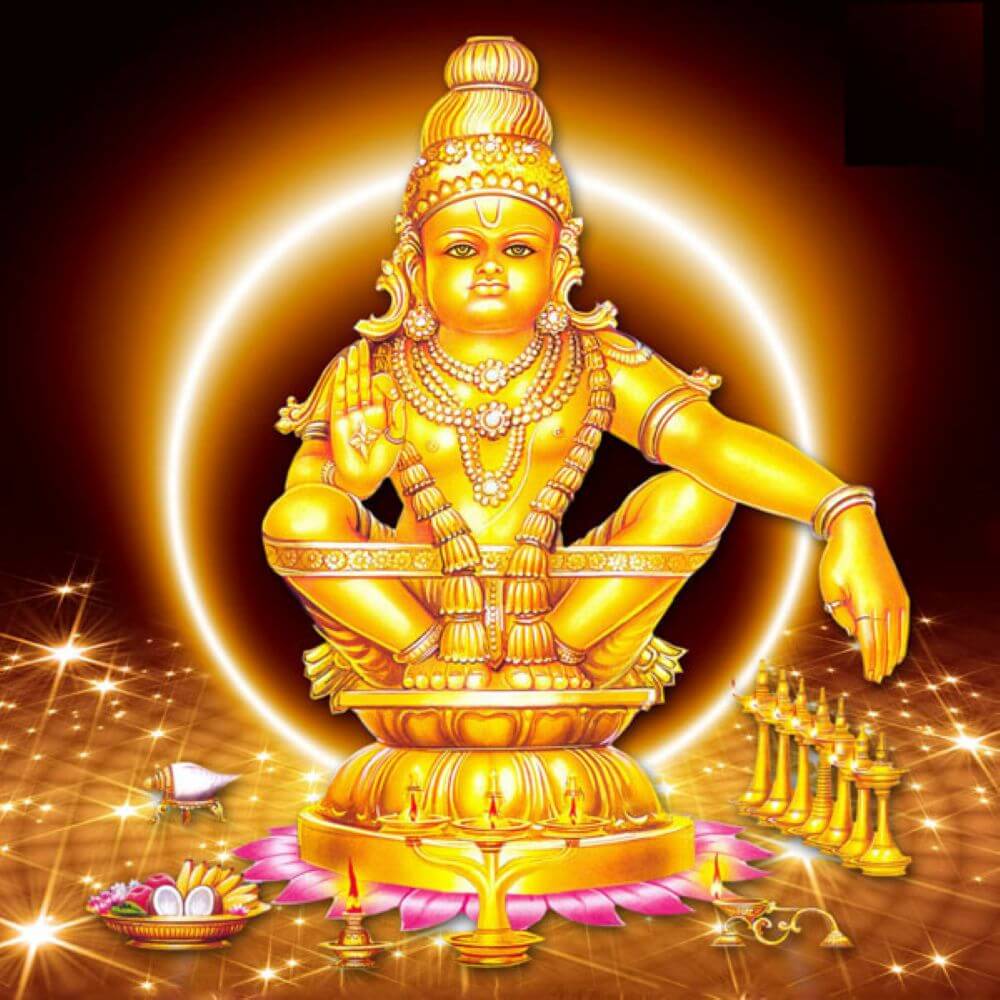
Within the Shrikovil, the idol of Ayyappa Swami is majestically seated on a high Vajrapeetha. Ayyappa, seated with knees bent, rests the elbow of one hand on His left knee. The other hand is in the Abhaya Mudra (blessing gesture). A crown adorns the deity’s head. Behind the idol is a crescent-shaped Makara. Numerous lamps glow around the idol, their radiance illuminating the deity’s face.
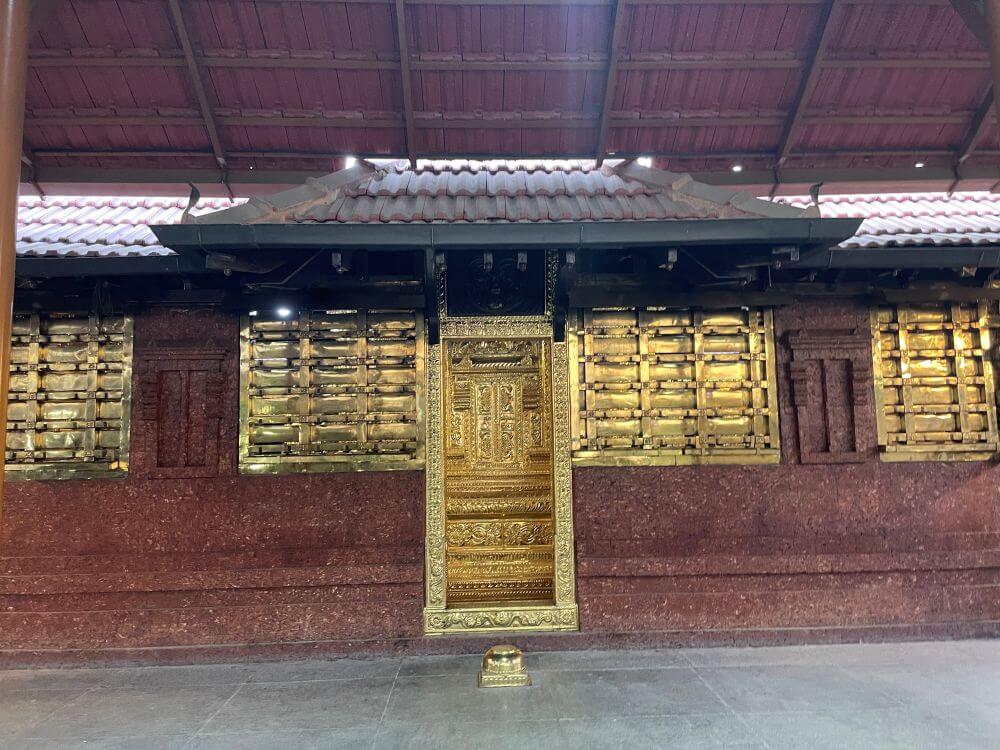
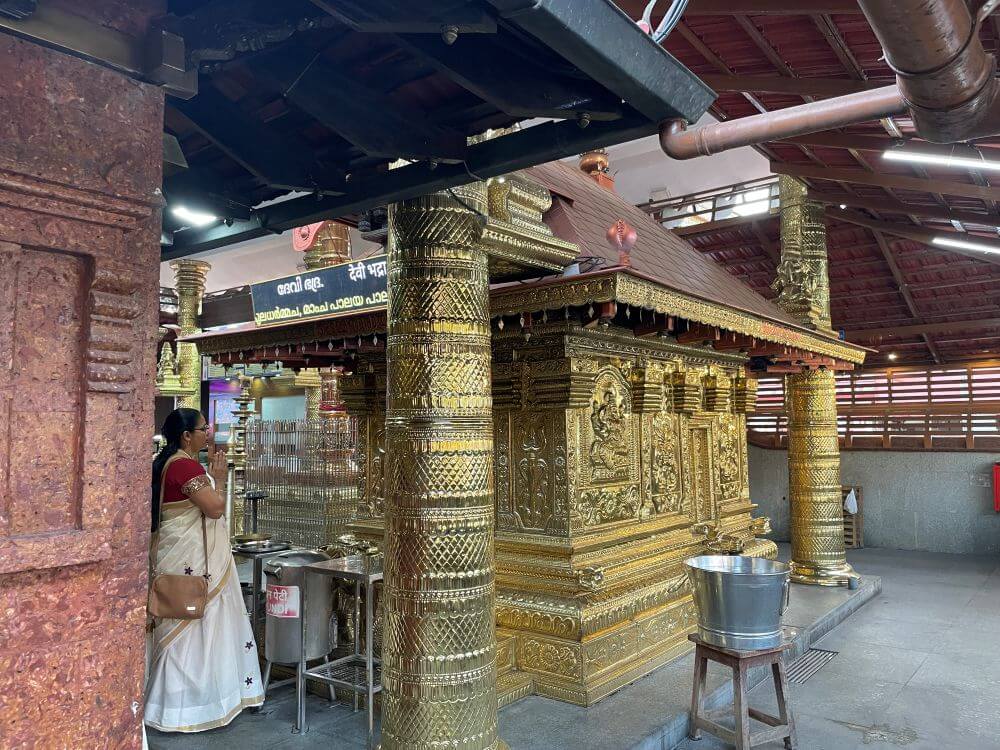
Within this temple complex, in addition to the principal deity Bhagwan Ayyappa, there are also temples dedicated to Ganapati, Devi Bhadra (Durga Mata), Shri Krishna, Subramanyam (Murugan or Kartikeyan), and Vettakoru Makan (Shiva). These temples also follow the Sopanam, Mukhamandapam, and Shrikovil structure. All these temples, along with the pillars in the Balikkal Mandapam (where the flagpole stands) and those along the Pradakshina path, are adorned with gleaming golden sheets. They are embellished with intricate carvings, lending the temple a rich and opulent appearance.
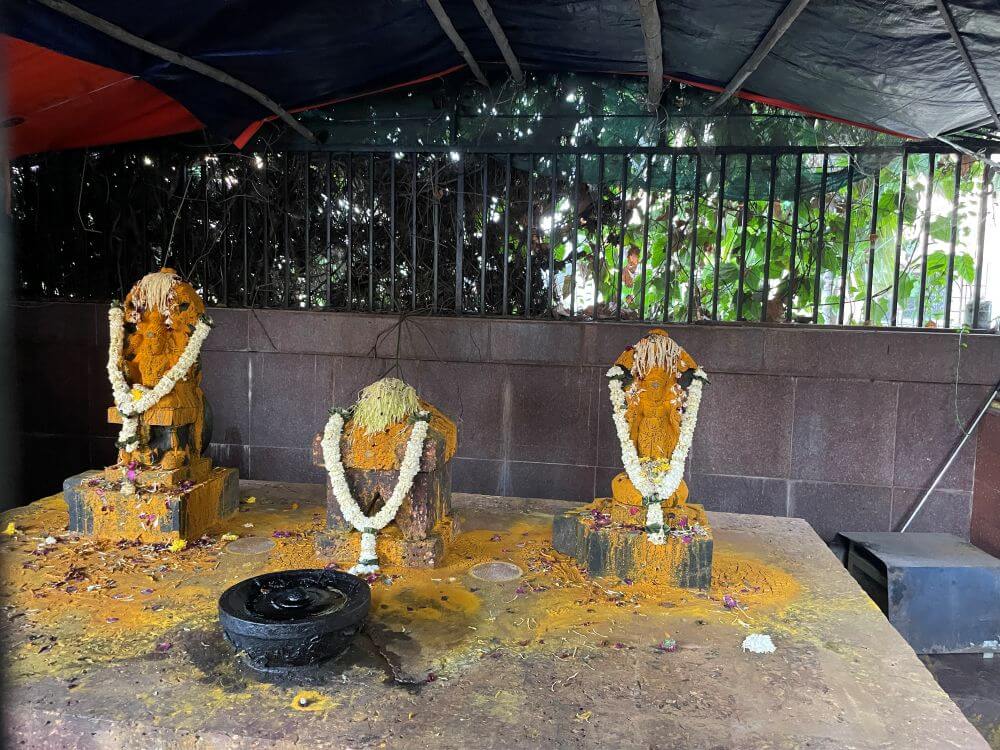
Behind these temples are stone idols of Nagaraja and Nagayakshi. In Malayalam, these are referred to as ‘Kavu,’ meaning sacred grove or stone. Nagaraja Devotees reverently worship Nāgayakṣī, who is considered a divine couple, for blessings of good fortune, prosperity, and protection. Within the temple precincts, to the right, there is also a large hall. Here, festivals, sacred rituals, spiritual discourses, and other such programmes are conducted. This hall has become an integral part of the religious, cultural, and social life of the Keralite community in Navi Mumbai.
At the Lord Ayyappa Temple, devotees throng morning and evening every day. Here, daily at five-thirty in the morning, Nirmālya Darśanam and the Abhiṣekam of the deities take place. Following this, ceremonies such as Gaṇapati Homa, Uṣā Pūjā, and Dīpārādhanā (Āratī) continue until ten-thirty in the morning. Thereafter, in the evening at five-thirty, the Darśanam, Pūjā, and Dīpārādhanā (Āratī) ceremonies commence. At eight-thirty at night, Athāḻa Pūjā (evening worship) and Āratī begin. Devotees can have Darśanam here from five-thirty in the morning until ten-thirty in the morning, and from five-thirty in the evening until nine at night.
Every year, the temple celebrates a forty-one-day Maṇḍala Pūjā festival from mid-November until the end of December. Additionally, a five-day annual temple festival is celebrated here every year. This festival concludes on the last Saturday of the Vṛścikam month of the Malayalam calendar (in mid-December). Furthermore, festivals and holy days such as Mahāśivarātri, Gaṇeśa Caturthī, Makar Saṅkrānti, Rāmanavamī, Kṛṣṇa Janmāṣṭamī, and Navarātri are celebrated in the temple with immense devotion and a sacred atmosphere.
This sacred temple stands as a testament to deep spiritual devotion, ancient architectural grandeur, and rich local cultural traditions.
The sanctum sanctorum houses the divine idol consecrated according to ancient Vedic traditions, surrounded by serene courtyards and traditional temple architecture.
Navratri, Maha Shivratri, Annual Temple Jatra & Deepotsav
Compare and book flights, secure top-rated local hotels near the temple, hire reliable guides, and rent cars instantly.
Extend your pilgrimage by visiting other highly sacred temples located nearby.


Add ₹999 more to unlock FREE SHIPPING!
Your sacred cart is currently empty.
Shop Photo FramesFill in your delivery details below to place your order.
Add comment