
Add ₹999 more to unlock FREE SHIPPING!
Your sacred cart is currently empty.
Shop Photo FramesThe vibrant and unique shrine of Dev Bhutnath, who rushes to answer the calls of his devotees, is located in Malgaon, in the Sawantwadi taluka. The idol of Lord Bhutnath here is the largest among the Sonurli-Malgaon Panchayatan. In the mysterious and inaccessible regions of the Konkan, filled with hills, valleys, sea creeks, and dense forests, both gentle and fierce deities are worshipped. Devotees believe that Dev Bhutnath—also known by many names such as Vetoba, Munjoba, and Vetaldev—is easily pleased by the simple, innocent devotion of his followers and grants them the boon of happiness.
It is said that the Bhutnath temple in Malgaon is extremely ancient. References to ‘Bhutas’ (spirits/entities) are found in many old scriptures and Puranas, suggesting that the worship of Bhutnath has existed since ancient times. While the exact age of this temple in Malgaon cannot be determined, villagers believe it to be at least five to six hundred years old. It is widely held that Dev Bhutnath wards off the troubles of his devotees and bestows happiness, prosperity, and contentment upon those who seek his refuge.
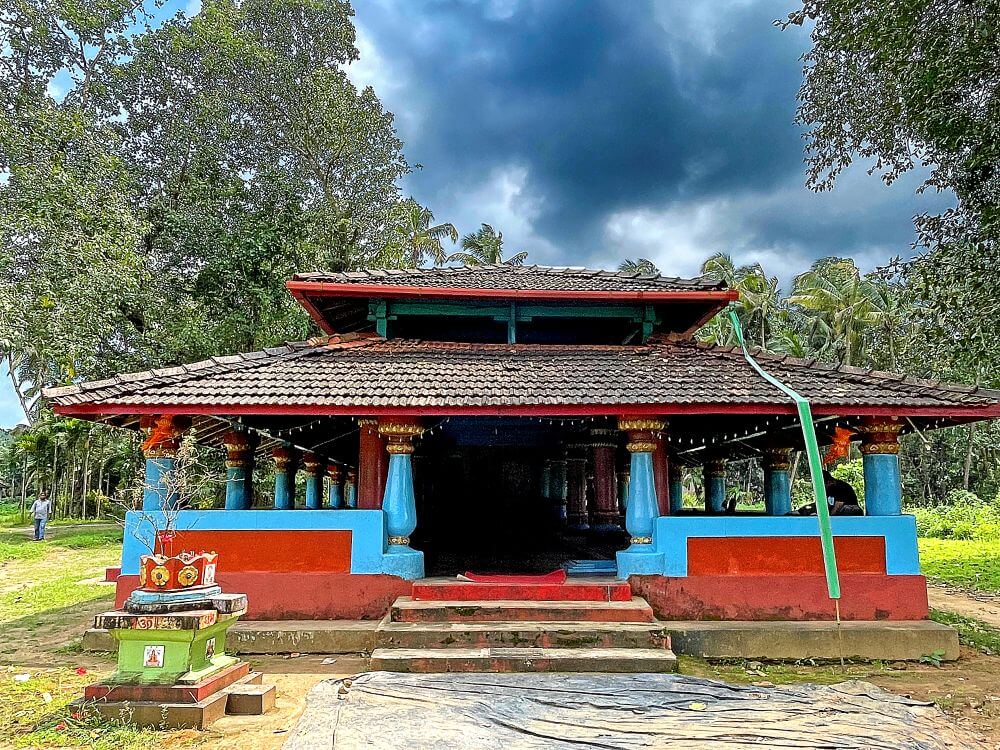
The Dev Bhutnath temple is situated in a quiet, picturesque area away from the village. There is a welcome arch by the roadside. On the pillars on both sides of the arch are statues of the gatekeepers, Jaya and Vijaya. They hold a conch, discus, and mace in three of their hands, while the fourth hand rests on their waist. There is a golden pinnacle atop the arch. The temple is located approximately one kilometer from this arch. The temple is constructed in the traditional two-story Konkani style with tiled roofing. Outside the temple, there is a beautiful Tulsi Vrindavan. The temple is elevated from the ground, and one must climb four steps to enter. The temple consists of a Sabha Mandap (assembly hall), Antaral (vestibule), and Garbhagriha (sanctum sanctorum).
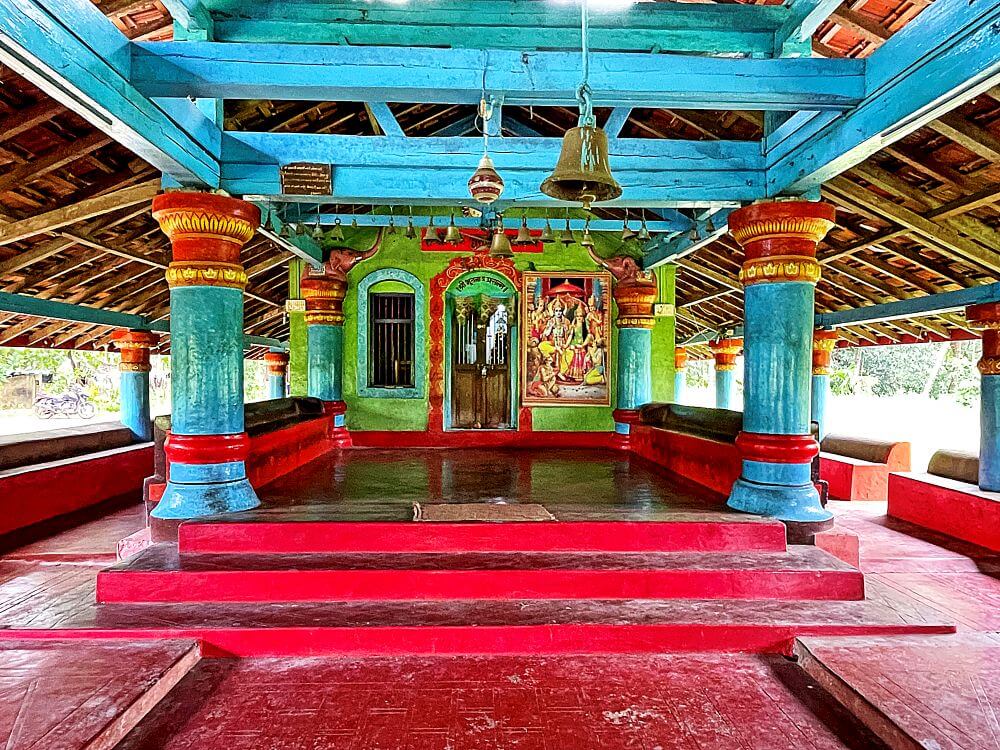
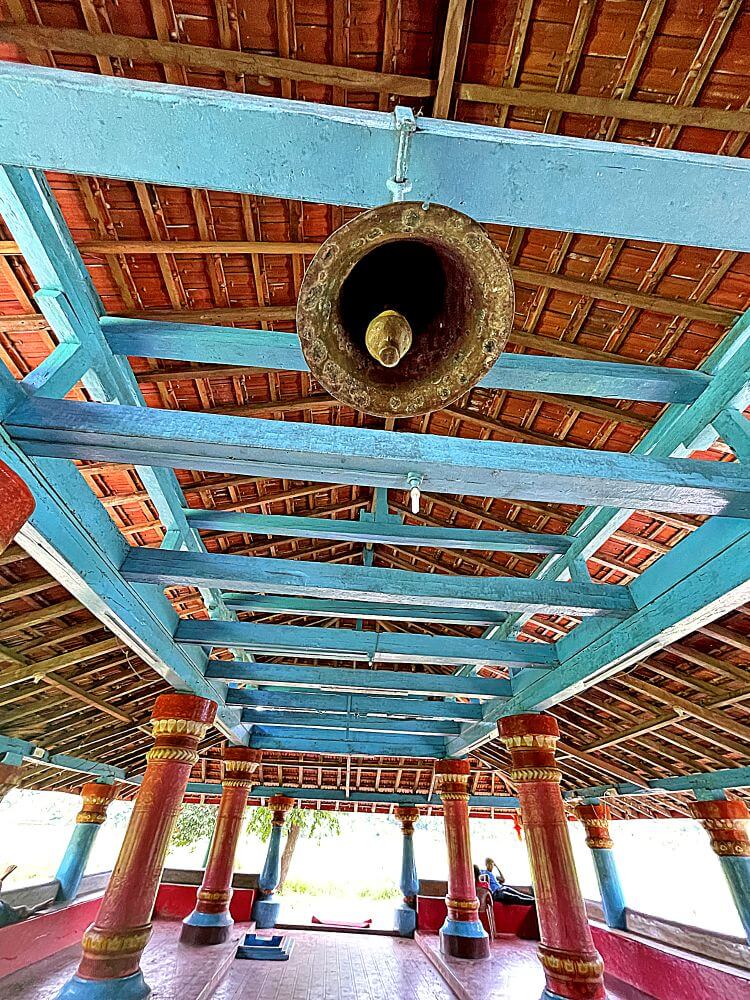
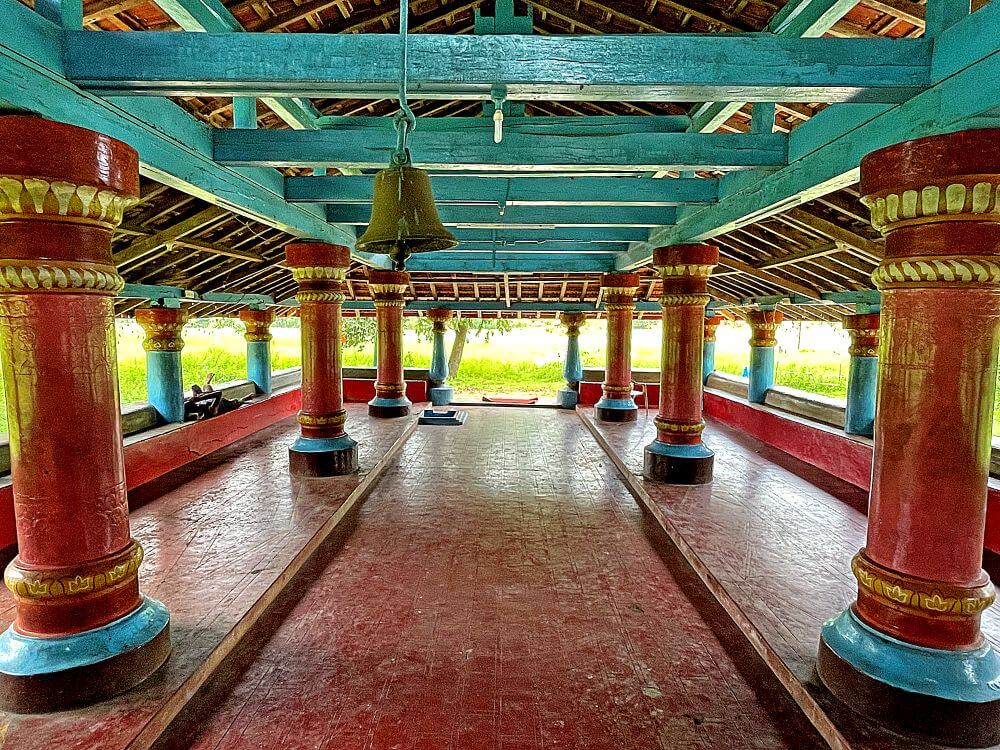
The Sabha Mandap is semi-open, with stone benches (kakshasanas) on both sides for devotees to sit. There are wooden pillars throughout the hall; some are positioned on the benches, while two rows of pillars stand in the center of the rectangular hall. Following the Konkani architectural style, the floor of the Sabha Mandap between these two rows of pillars is slightly recessed by a few inches. The pillars are intricately carved and painted. The upper parts of these pillars feature serpent-hood carvings, while the lower parts are adorned with floral motifs. The pillars on the benches are also decorated with delicate leaf and flower carvings. Near the entrance of the Sabha Mandap, on the inside, there is a square section measuring two feet in length and width and one and a half to two feet in depth, where the idols of the family deities are installed. The tiled roof of the temple is divided into two levels, providing natural ventilation and sufficient light.
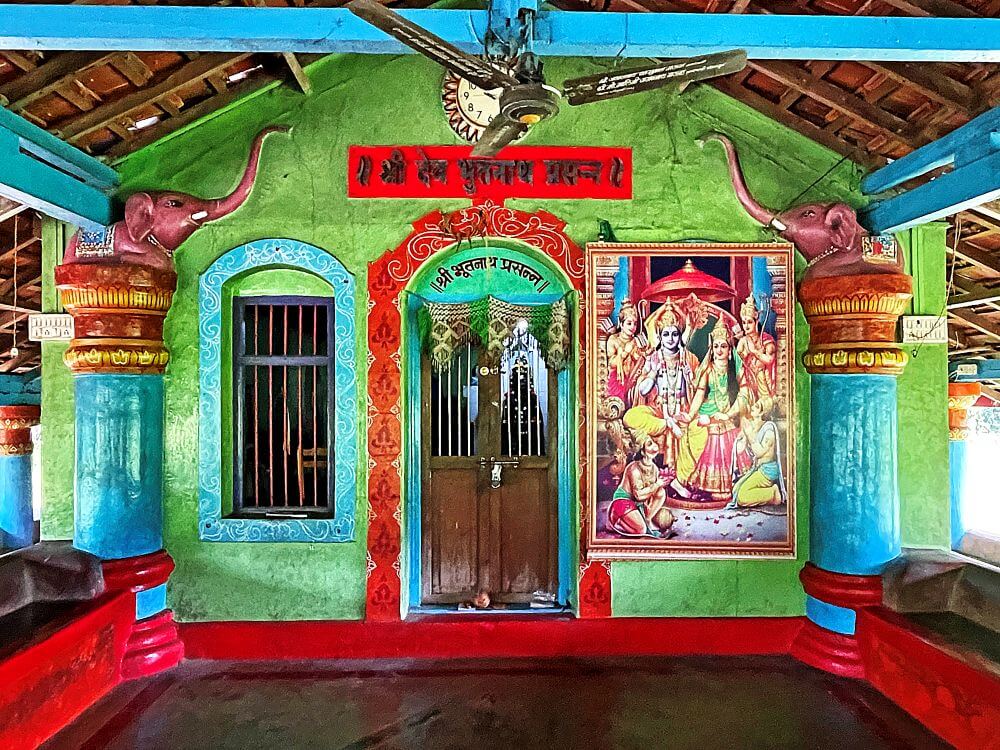
Beyond the Sabha Mandap, after a circumambulation path, lie the Antaral and the Garbhagriha. These are slightly elevated compared to the Sabha Mandap. The design of the Antaral is also semi-open. On the two pillars flanking the wall facing the Garbhagriha, there are carvings of elephants with raised trunks. Many devotees hang brass bells on the wooden beams of these pillars after the fulfillment of their vows. In the Garbhagriha stands the radiant, two-armed idol of Dev Bhutnath, carved from black stone. The idol holds a sword in one hand and a drinking vessel (panpatra) in the other. Adorned with a crown of serpent hoods, large eyes, a majestic beard and mustache, Rudraksha beads around the neck, a belt at the waist, and anklets, the idol is truly magnificent. Beside this idol, there are stone idols of other deities and Ganas in the Garbhagriha.
Every year, the Jatra (fair) of Dev Bhutnath is held on the days of Margashirsha Shuddha Panchami and Shashthi. During this time, the one-kilometer stretch from the village arch to the temple is illuminated with electric lights. Hundreds of stalls selling worship materials, toys, and household goods line both sides of the road during the festival. Devotees from all over the Konkan, as well as from within and outside the state, attend this festival. Devotees believe that vows made to this deity are fulfilled. In the Sawantwadi region of Konkan, there is a common practice of taking a vow to perform ‘Lotangan’ (prostration). Accordingly, devotees take vows to perform prostrations to this deity and fulfill them during the Jatra.
This sacred temple stands as a testament to deep spiritual devotion, ancient architectural grandeur, and rich local cultural traditions.
The sanctum sanctorum houses the divine idol consecrated according to ancient Vedic traditions, surrounded by serene courtyards and traditional temple architecture.
Navratri, Maha Shivratri, Annual Temple Jatra & Deepotsav
Compare and book flights, secure top-rated local hotels near the temple, hire reliable guides, and rent cars instantly.
Extend your pilgrimage by visiting other highly sacred temples located nearby.


Add ₹999 more to unlock FREE SHIPPING!
Your sacred cart is currently empty.
Shop Photo FramesFill in your delivery details below to place your order.
Add comment