
Add ₹999 more to unlock FREE SHIPPING!
Your sacred cart is currently empty.
Shop Photo FramesAcross the country, there are countless temples dedicated to Radha-Krishna or Yashoda-Krishna. However, temples dedicated to the mother-son duo of Mother Devaki and Lord Krishna are extremely rare. The Devaki-Krishna Lakshmi Ravalnath Sansthan, established by the Saraswat community in the village of Marcel, is one such unique temple. Narrating the story of Mother Devaki’s maternal love, this temple located in Marcel is at least 465 years old. The sacred idol of Devaki-Krishna, the family deity (Kuldevta) of the Parrikar family, is even older. Along with Devaki-Krishna, temples dedicated to deities such as Lakshmi Ravalnath, Chodaneshwar, and Bhumika Devi are also situated here. The annual Yatra (fair) of Devaki-Krishna and Lakshmi-Ravalnath held here is widely renowned.
This temple of Devaki-Krishna originally belonged to the village of Chodan in Tiswadi taluka. Its mythological legend is connected with the war between Lord Krishna and Jarasandha. Jarasandha was the Emperor of Magadha and the father-in-law of Krishna’s maternal uncle, Kamsa. He was immensely powerful and equally cruel. In the Rajasuyarambha Parva of the Sabha Parva in the Mahabharata, Lord Krishna Himself states: ‘Ṣaḍaśītiḥ samānītāḥ śeṣā rājaṁścaturdaśa | Jarāsaṁdhena rājānastataḥ krūraṁ pravartsyate ||’ meaning Jarasandha has imprisoned 86 out of a hundred kings, and only 14 kings remain. Once he imprisons them as well, he will commit even more heinous deeds. Enraged because Sri Krishna had slain his son-in-law Kamsa, Jarasandha attacked Mathura eighteen times. Neither side achieved a decisive victory in those wars.
In one such fierce battle, the army of Krishna and Balarama had to retreat. At that time, Krishna took refuge at Mount Gomanchal along with His army. Deeply distressed by separation from Krishna and filled with anxiety, Mother Devaki was grieved. Determined to meet Krishna by any means and behold Him to her heart’s content, Mother Devaki set out towards Mount Gomanchal. Upon seeing His mother, Lord Krishna realized that since His childhood was spent in Vrindavan, Devaki had not been able to witness His divine child form. Therefore, He assumed the form of a little child. Mother Devaki lovingly lifted Him in her arms. Legend has it that this reunion of mother and son took place at Chudamani Island (present-day Chodan). In course of time, a temple dedicated to Devaki-Krishna was established at that sacred spot.
The Portuguese, who arrived in Goa at the beginning of the sixteenth century, initially established their rule in the provinces of Tiswadi, Bardez, and Salcete (Sashti). Soon, driven by religious fanaticism, a period of brutal atrocities began. These fanatics destroyed numerous temples in the region, spreading great panic among the local Hindus. Many fled along with their sacred deities to the adjacent Adilshahi territory. This is documented in the book *Tombo das Terras de Goa, Salcete e Bardez* written in 1595 CE by the Portuguese official Francisco Pais. According to this book, around 1540 CE, temples dedicated to deities such as Ganapati, Ravalnath, Mallinath, Bhagavati, Devakikrishna, Narayan, Mahadev, and Chondeshwar existed in Chodan. All these temples were eventually relocated from Chodan to Mayewada. During the Inquisition, the devotees of Chodan also safely smuggled the idol of Devaki-Krishna away from the Portuguese soldiers and hid it in Maye village. After some time, the idol was brought to Marcel and enshrined in the home of a Brahmin family. Subsequently, around 1567 CE, a small shrine was constructed here and the idol was re-consecrated. Nearly two hundred and seventy-five years later, in 1842, the temple underwent a complete renovation.
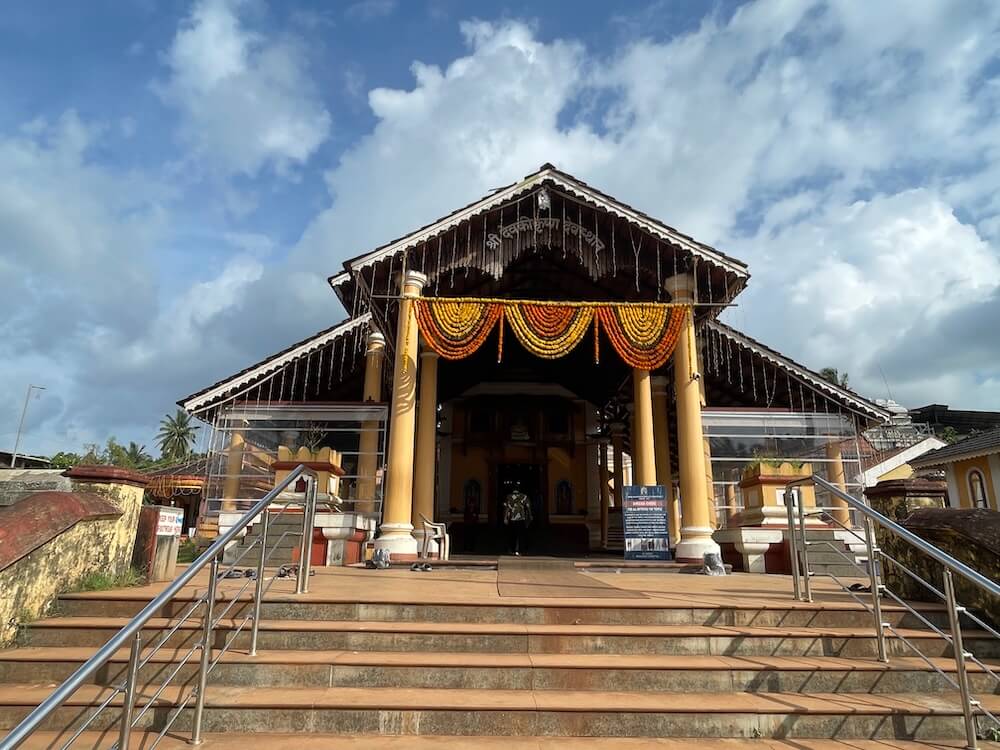
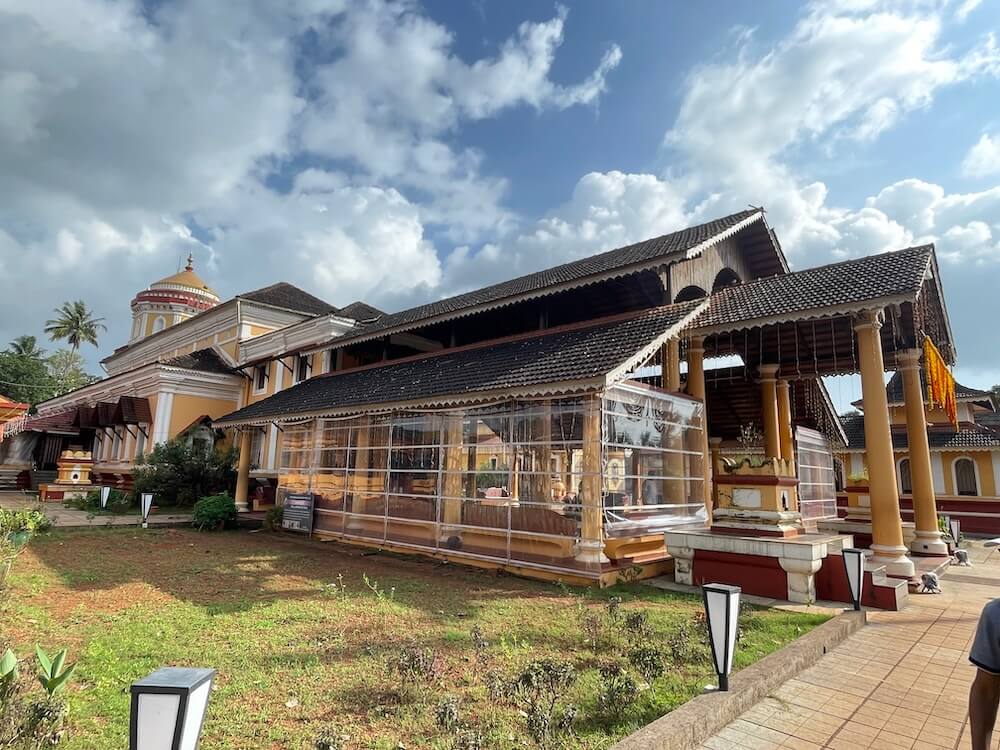
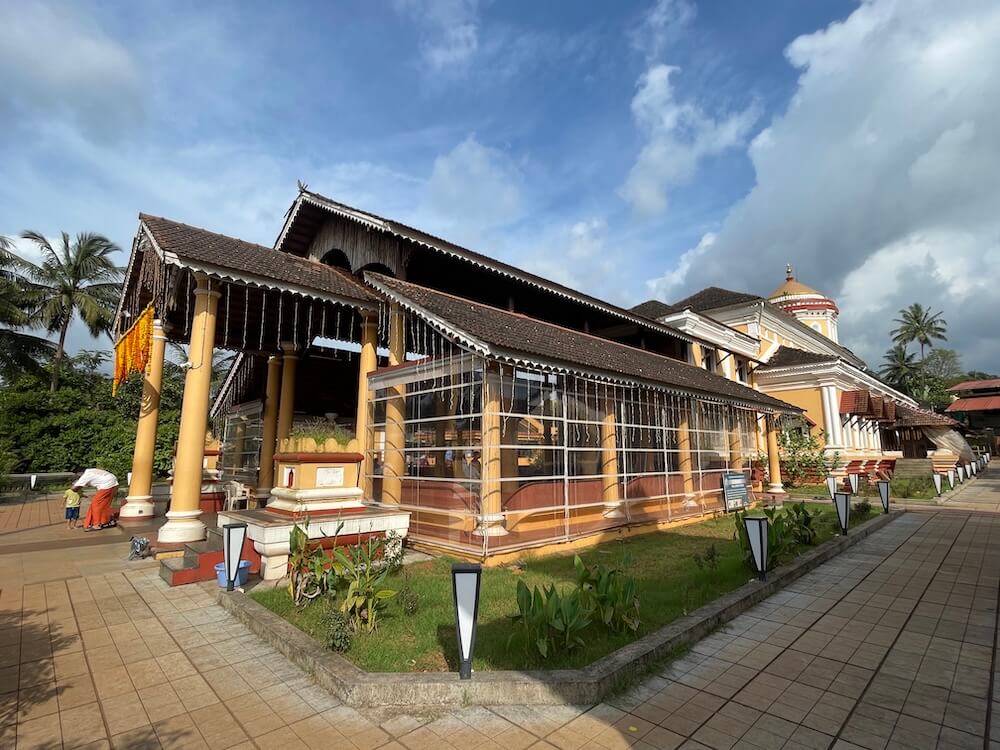
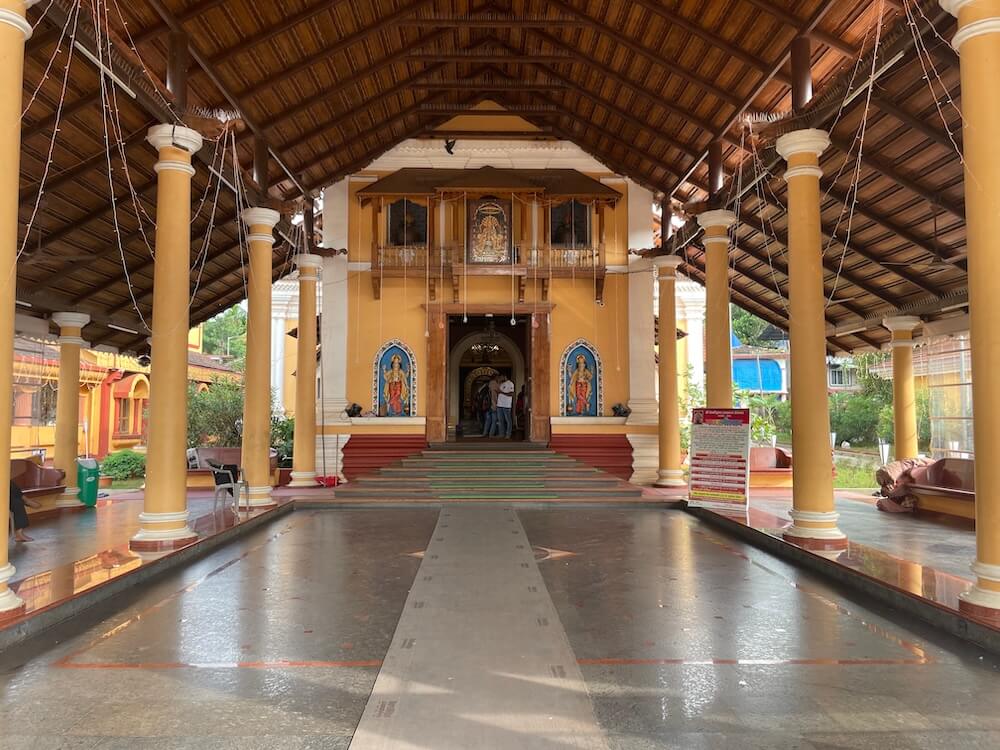
The temple is situated on a vast expanse of land in Gawanwada, Marcel. Surrounded by coconut and betel nut groves, lush gardens, and greenery, this grand temple built in the distinct Goan architectural style stands on an elevated plinth (*jagati*). The facade of the temple features a *Mukhamandapa* (front porch) with tall cylindrical pillars, sloping tiled roofs on both sides, and sacred *Tulsi Vrindavans* (basil altars) beloved to Lord Krishna positioned on either side in front. Upon entering through the *Mukhamandapa*, one reaches a spacious *Sabhamandapa* (assembly hall), referred to as *Chauk* in Goan temple terminology. Verandahs (*ovaryas*) with seating arrangements are constructed around it. Beyond stands the main two-storey building of the temple. Climbing seven steps from the *Chauk*, one enters the *Mukhamandapa* of the temple. Here, on both sides of the entrance, in tall niches, stand the idols of the Vaishnava dwarapalas (doorkeepers), Jaya and Vijaya. In the wooden balcony-like upper section, a large image of Devaki-Krishna is installed. From here, an arched doorway leads into the main *Sabhamandapa* of the temple.
This assembly hall is grand and spacious. There are numerous windows on the outer walls of the hall. Set back a few feet from these walls is a row of large-diameter circular pillars. A traditional brass lamp (*samai*) is placed at the center of the hall. A beautiful glass chandelier adorns the ceiling. A grand relief sculpture depicting Lord Sri Krishna imparting the sermon of the Bhagavad Gita to Arjuna on the battlefield of Kurukshetra is mounted near the upper ceiling area of this hall.
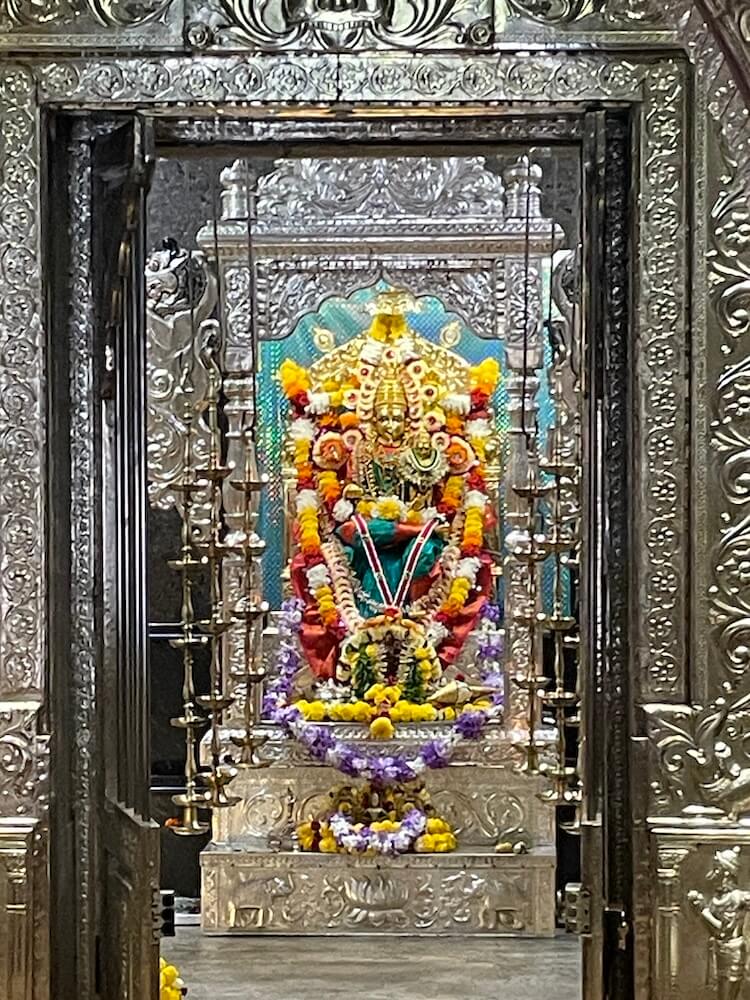
The *Antarala* (vestibule) of the temple has an arched doorway clad in silver plating. The ten incarnations (*Dashavatara*) are carved on its arch. At the base of the doorposts are carvings of Vaishnava dwarapalas, above which figures of swans are engraved. At the *Lalatabimba* (center of the lintel) is a large sculpture of the five-hooded Serpent Deity (*Panchamukhi Nagdevta*). Above this, in a niche in the upper section, is an idol of Devaki-Krishna, flanked by Garuda on one side and Hanuman on the other. The doorframe of the *Garbhagriha* (sanctum sanctorum) is also covered with intricately carved silver plating. It features a *Kirtimukha* at the *Lalatabimba* and images of Garuda and Hanuman carved at the base of the doorposts. Inside, enshrined within a tall, beautifully decorated silver shrine (*devhara*), stands a large idol of Devaki-Krishna adorned with fine garments and ornaments. Here, Infant Krishna is seated in Mother Devaki’s lap. In front of this idol rests the ancient black stone idol of Devaki-Krishna. The original idol of Devaki-Krishna is truly unique. Mother Devaki is depicted wearing a flared skirt, standing in an upright posture (*samacharana*). She wears various ornaments around her neck, an upper garment draped over her shoulders from behind, and a crown (*kirita*) upon her head. Child Krishna is seated on her waist, holding a ball of butter in His right hand. According to historical scholar Dr. Rohit R. Phalgaonkar, this stone idol dates back to the 15th–16th century during the Vijayanagara Empire. Above the sanctum sanctorum rises an octagonal tower-like *shikhara*, topped with a dome and a *kalasha*.
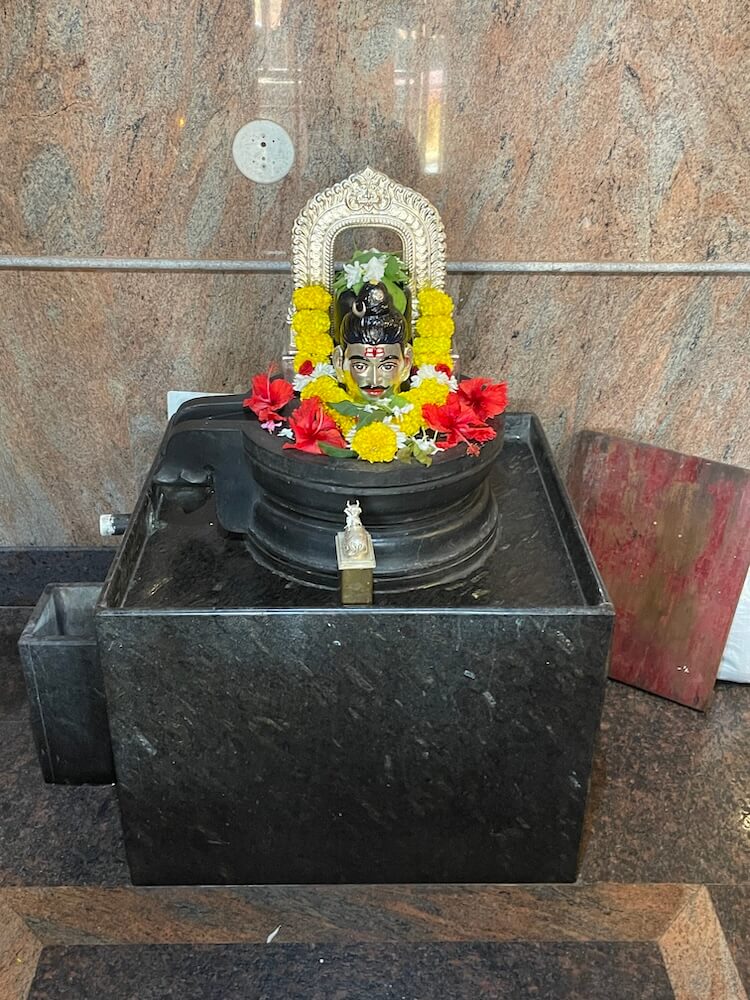
To the left side of the Devakikrishna temple stands the recently renovated shrine of Goddess Bhumika. Goddess Bhumika is revered as the sister of Lord Krishna. She is worshipped here in the form of Sthandevi (the presiding deity of the place). Additionally, there are shrines dedicated to Goddess Lakshmi, Ravalnath—the Kshetrapal (guardian deity) of Konkan, Laxminarayan, Goddess Katyayani, Lord Mahadev, Dadsakhal, Rampurush Mhale, and the Panchishta deities. Within the premises, a grand Devakikrishna Hall has been constructed for various religious and cultural events, along with an Agrashala (guest house) for devotees.
A grand array of festivals is celebrated at this temple throughout the year. These include Krishna Janmashtami, Govardhan Pratipada, Deepavali, Ratha Saptami, Rama Navami, Shivratri, Navratri, and Chikhalkala, among others. A grand annual fair (Jatrotsav) is held here from Margashirsha Shuddha Dashami to Trayodashi. Margashirsha Shukla Trayodashi marks the main day of the fair. The festival of Janmashtami is celebrated here in a deeply devout atmosphere. The traditional Chikhalkala festival celebrated here is renowned across the entire state. On the day of Ashadha Shuddha Dwadashi, devotees of all ages, young and old, roll in the mud prepared in the courtyard in front of the temple. A huge crowd gathers to witness this sacred event.
This sacred temple stands as a testament to deep spiritual devotion, ancient architectural grandeur, and rich local cultural traditions.
The sanctum sanctorum houses the divine idol consecrated according to ancient Vedic traditions, surrounded by serene courtyards and traditional temple architecture.
Navratri, Maha Shivratri, Annual Temple Jatra & Deepotsav
Compare and book flights, secure top-rated local hotels near the temple, hire reliable guides, and rent cars instantly.
Extend your pilgrimage by visiting other highly sacred temples located nearby.


Add ₹999 more to unlock FREE SHIPPING!
Your sacred cart is currently empty.
Shop Photo FramesFill in your delivery details below to place your order.
Add comment