
Add ₹999 more to unlock FREE SHIPPING!
Your sacred cart is currently empty.
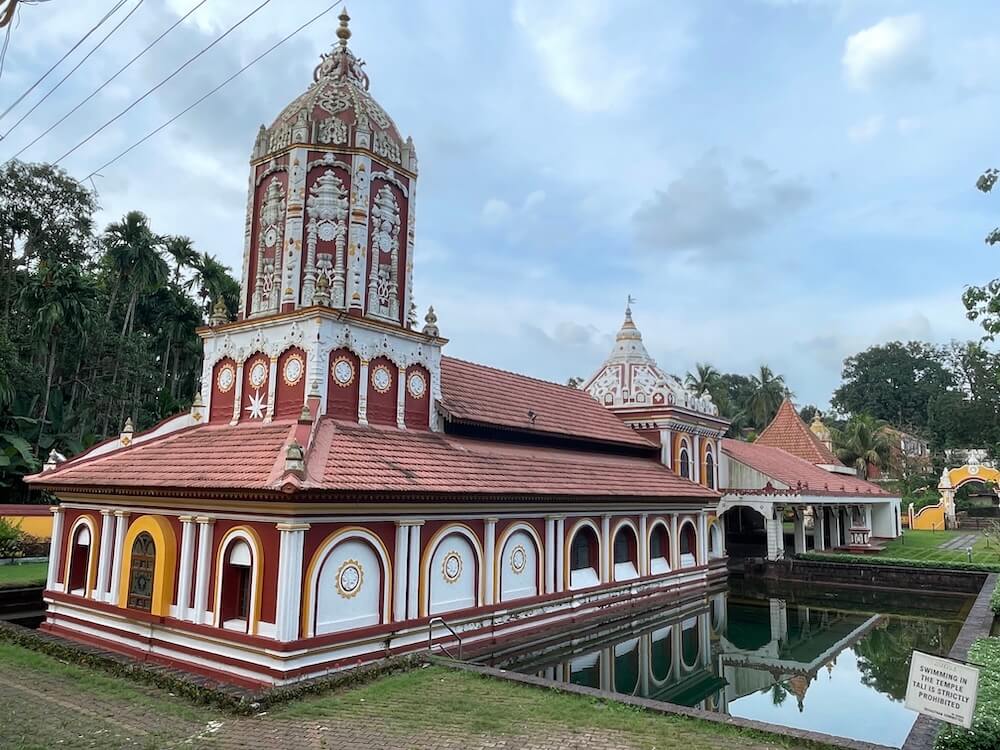
Shop Photo FramesLord Vishnu, described in the Rigveda (१.१५५) as the one who traversed the three worlds in three steps for the welfare of the vast universe, is considered in Hindu scriptures at times as the form of the Sun and at others as the form of the sky. It is from this Vishnu that ‘Nara’ or water was created. In this context, Vishnu is called Narayana, meaning one who resides (Ayana) in the waters. One form of Vishnu is Sheshashayi Narayana. A temple housing an ancient idol of Vishnu in this form is situated in Savoi-Verem. The unique feature of this Shri Mad Anant Temple is that its foundation rests upon a pond.
Lord Parashurama, who settled the land of Gomantaka, is an avatar of Vishnu. A profound influence of the Vaishnava tradition is observed in this land. There are several ancient temples of Vishnu in Goa. The Anant Devasthan is one of them. According to religious belief, Anant is originally the name of Shesha. In mythological literature, it is said that Sheshanaga, in the form of Anant-time, rests coiled in the Kshirasagara (Ocean of Milk). Lord Vishnu reclines upon this Anant Sheshanaga. The Vishnu Purana presents the concept that a lotus flower emerges from His navel, and from that very lotus, Lord Brahma originates. This reclining form of Vishnu is also called Anantashayi Vishnu. The Padmanabha Temple in Thiruvananthapuram, Kerala, is well-known for the Sheshashayi Vishnu, where Vishnu reclines on Anant Shesha.
It is said that this temple in Savoi-Verem dates back about ४०० years. It is narrated that the idol of Anantashayi Vishnu here was found in the boat of a Muslim man. The legend associated with this is that about ४०० years ago, a person from Savoi-Verem had a vision that an idol of Anant made of stone was present on the riverbank in the village. Following this, he began searching for the idol. He could not find the idol anywhere on the riverbank. At that same time, he saw a boat on the other side of the river. He crossed the river to inquire about the idol. He asked the person who owned the boat. To this, the person replied, ‘I am a Muslim merchant. Idol worship is not practiced in our religion. Therefore, I have no information about any idol.’ Nevertheless, that person and some villagers who accompanied him continued to search for the idol in the vicinity. Suddenly, one of the villagers noticed a stone in the boat. When they went closer and looked, it was an exquisitely crafted idol of Anantashayi Vishnu. The Muslim man had kept that stone there to balance the boat.
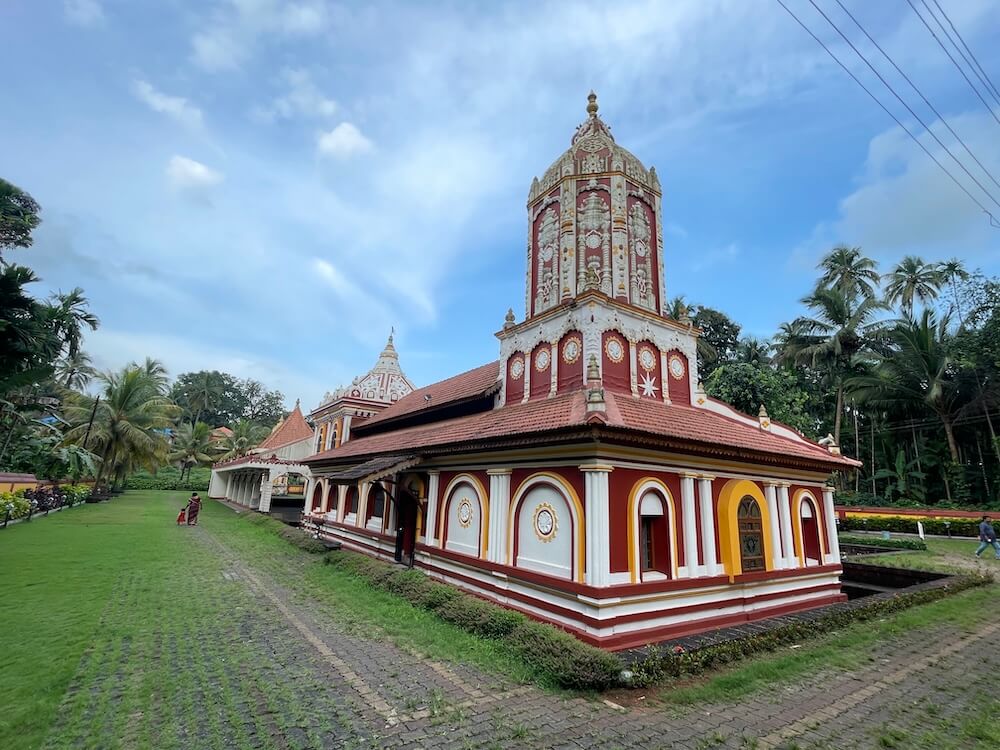
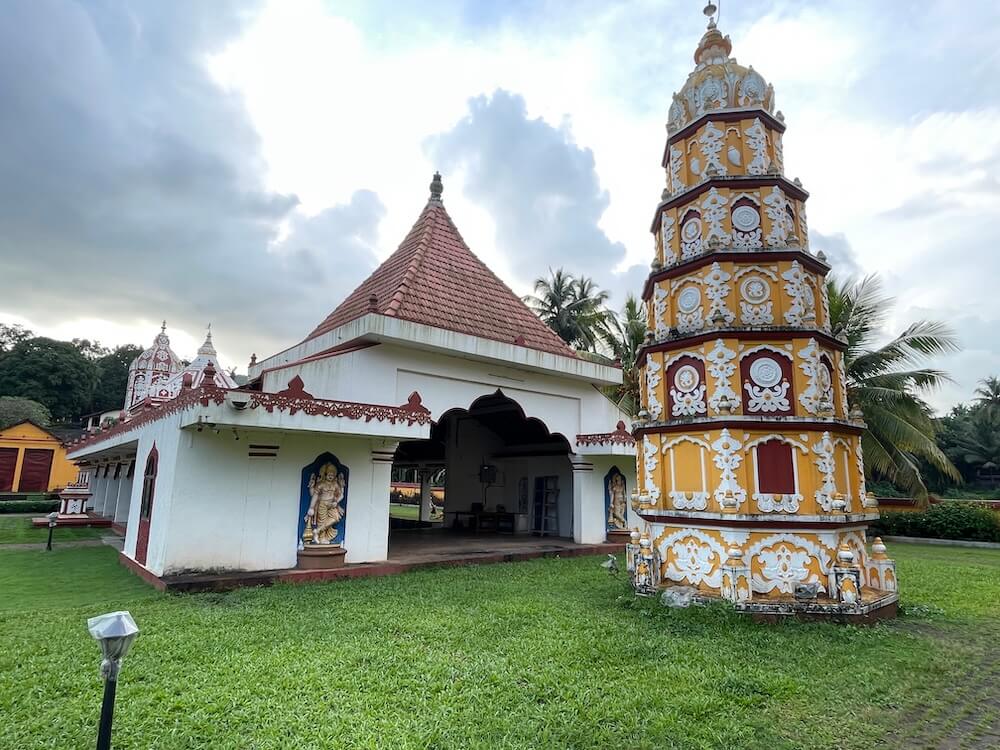
After this, the villagers together brought the idol to the village. They dug a pit in a coconut grove, filled it with water, and placed the idol inside. Within some time, a temple was built there for this idol. Since the abode of Anantashayi Vishnu is in the Kshirasagara, the foundation of this temple was also placed over a water reservoir. One enters the temple courtyard by descending a few steps. The surroundings of the courtyard are filled with coconut and areca nut trees. Inside, there is greenery and flowering plants everywhere. The architecture of this grand temple is in the Gomantak style. The temple structure consists of a Pravesh-mandapa (entrance hall), Sabha-mandapa (assembly hall), Ardha-mandapa (half-hall), Maha-mandapa (great hall), Antarala (vestibule), and Garbhagriha (sanctum sanctorum). Above the entrance hall is a sloping tiled roof on all four sides. The assembly hall and the great hall also have sloping tiled roofs on both sides. The half-hall features an upright dome and a spire with a finial, while the sanctum sanctorum has a square base, topped by a hexagonal tower, followed by a dome, and crowned with an Amalaka and Kalasha. The octagonal part of the sanctum’s spire, as well as the dome above it, is decorated with intricate carvings. The seven-tiered lamp pillar (Deepastambha) in front of the temple also features relief carvings. The temple is surrounded by water on all sides, and there is a large water tank on one side. On both sides of the entrance hall are tall statues of Vaishnava gatekeepers (Dwarapalas). The assembly hall is of an open type. The pillars there, as well as the beams above them, are decorated with carvings in the Kavi art style. While entering the half-hall from this assembly hall, devotees realize that this temple stands on a water reservoir. Near the front wall, glass has been installed instead of tiles at the base. Through this, the water below and the fish swimming in it can be seen.
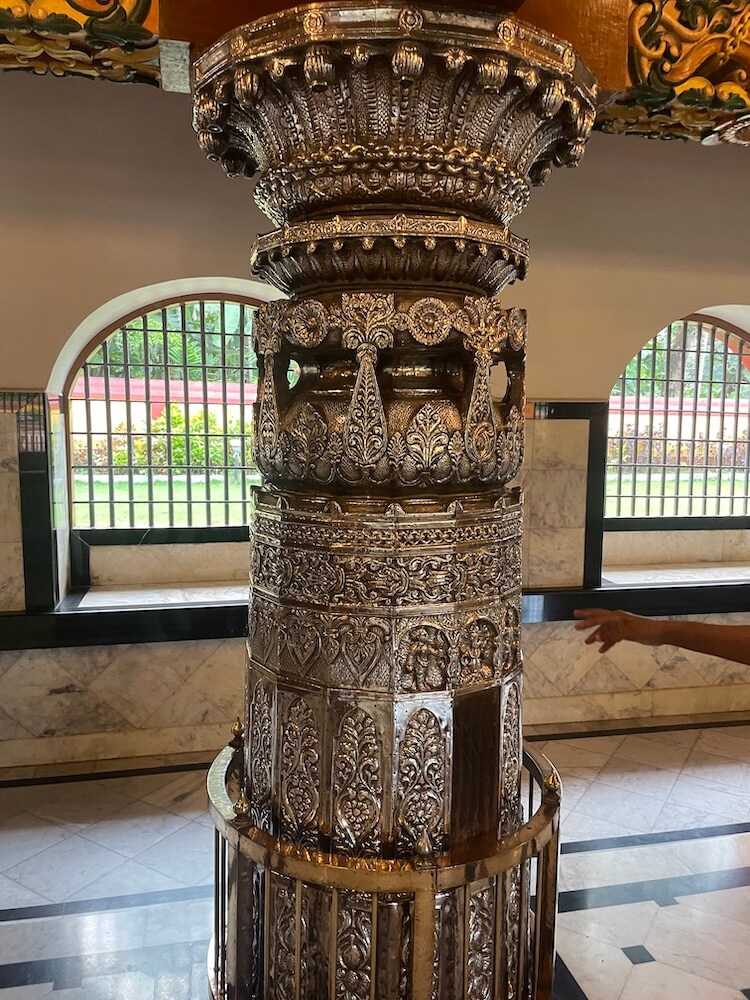
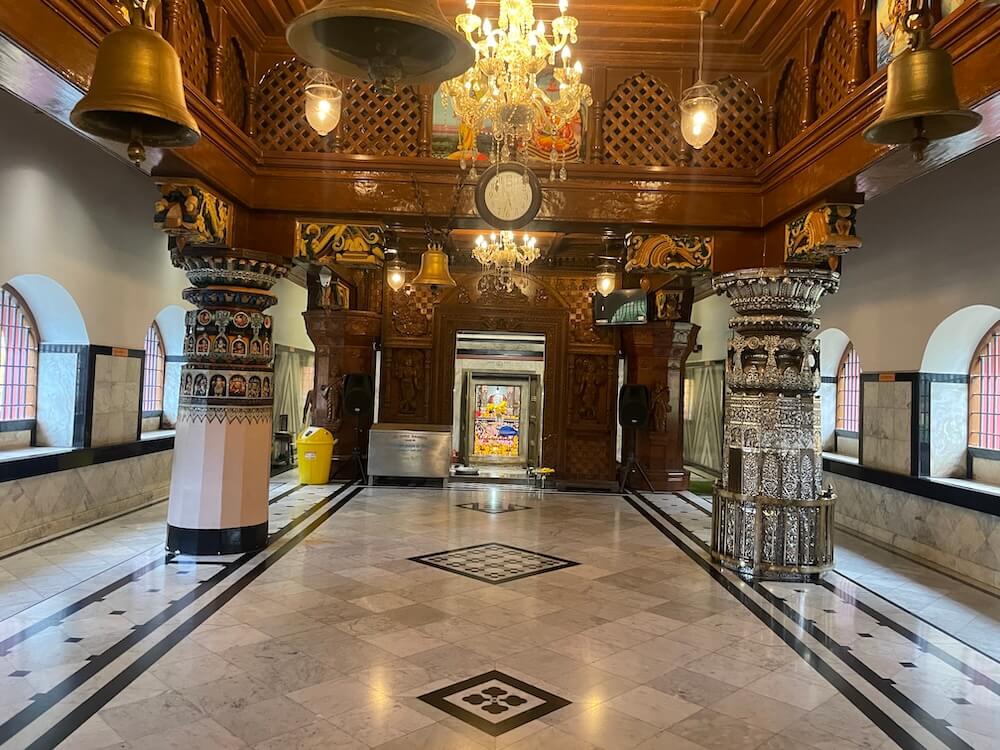
The half-hall has an arched entrance. Above it is a large Garuda-vimana. In the niche to its left is an idol of Shri Rama, and to the right is an idol of the four-armed Vishnu. The great hall here is two-storied. The outer walls of the great hall have arched windows. Inside, there are circular pillars. The pillars have wooden brackets carved in the shape of waves. Above this, in a balcony-like section, wooden latticework is installed. The ceiling here is made of wood, from which brass bells, lamps, and chandeliers are hung. Images of the Dashavatara (ten incarnations) of Lord Vishnu are placed in the area near the ceiling. The pillars in this great hall are highly distinctive. The pillars here are seen as a beautiful example of the wood-carving art of Gomantak. In the upper two levels of these pillars, idols of various deities are carved. In the upper section, many serpent images are carved. Another carved pillar is covered with a fine silver sheet with delicate engravings. The divine oracle (Kaul) is taken from this pillar.
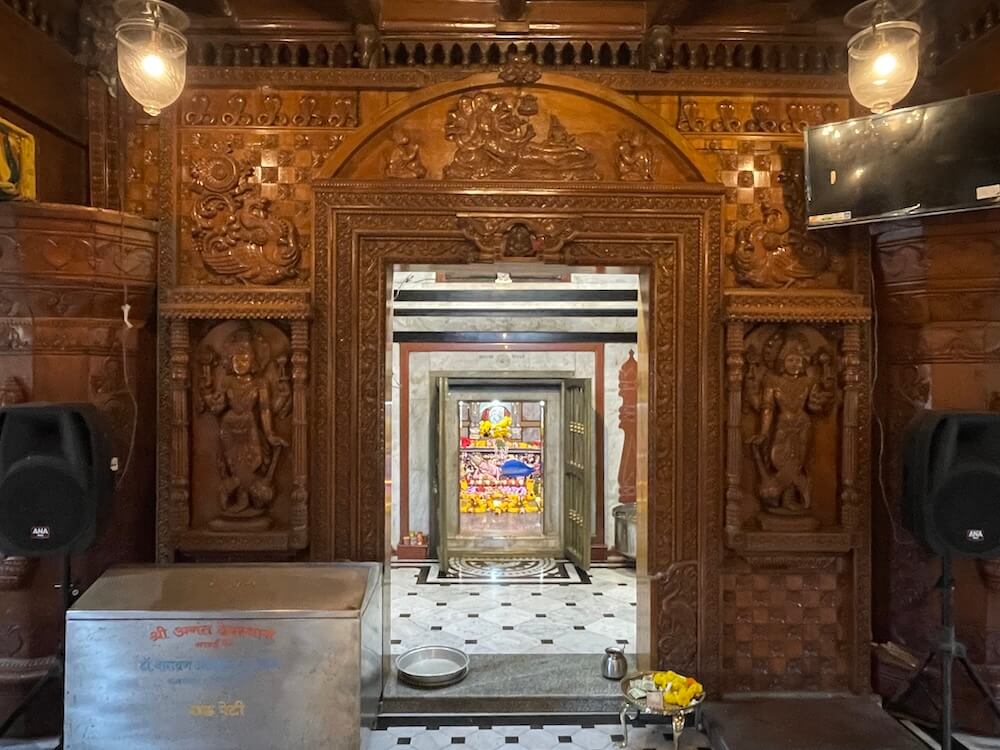
The wide door frame of the vestibule also features intricate carvings. An idol of Ganesha is carved at the center of the lintel, while in the upper section, sculptures of Sheshashayi Vishnu and, beside Him, Garuda and Hanuman are carved. On the walls here are Vaishnava gatekeepers, and on the side pillars are sculptures of Surasundaris (celestial damsels). In the sanctum sanctorum, the horizontal stone idol of Anantashayi Vishnu is seated on a pedestal covered with brass sheets. In this, Lord Vishnu is in a reclining position. One leg is bent at the knee and placed over the other. One hand supports His head. With the other lower hand, He holds the stalk of the lotus emerging from His navel. One upper hand is stretched along the body, while the other holds a conch. A lotus flower has emerged from Vishnu’s navel, upon which is the four-faced Brahma. Near the feet of Vishnu is Mother Lakshmi. The idol is sheltered by the seven-hooded Anant Shesha. Apart from this, the sculptures of the demons Madhu and Kaitabha, as well as divine attendants, are also visible in this idol composition. The original beautiful stone idol is adorned with garments, a crown, and a mask.
In this temple, festivals and celebrations such as Ram Navami, Hanuman Jayanti, Vaman Jayanti, Narasimha Jayanti, as well as Akshaya Tritiya, Vijayadashami, Deepavali, Navaratri, and Shravani Mondays are celebrated with religious fervor and enthusiasm. Anant Chaturdashi (the fourteenth day of the bright fortnight of the Bhadrapada month) is an important festival here. On this day, a special vow dedicated to Lord Vishnu is observed. The tradition of the Anant Chaturdashi vow has been practiced in Goa for hundreds of years. This tradition is particularly observed among the Madhva Vaishnava Saraswat Brahmins as well as the Karhade Brahmins of Goa. It is said that this vow spread in Goa due to the worship of Sheshashayi Ananta. On this day, Abhishek, Mahaprasad, and Kirtan programs are organized at the temple. Religious rites such as Panchayatan Abhishek, Mahanaivedya, Laghurudra, Laghuvishnu, and Vishnuyag are also performed in the temple.
This sacred temple stands as a testament to deep spiritual devotion, ancient architectural grandeur, and rich local cultural traditions.
The sanctum sanctorum houses the divine idol consecrated according to ancient Vedic traditions, surrounded by serene courtyards and traditional temple architecture.
Navratri, Maha Shivratri, Annual Temple Jatra & Deepotsav
Compare and book flights, secure top-rated local hotels near the temple, hire reliable guides, and rent cars instantly.
Extend your pilgrimage by visiting other highly sacred temples located nearby.


Add ₹999 more to unlock FREE SHIPPING!
Your sacred cart is currently empty.
Shop Photo FramesFill in your delivery details below to place your order.
Add comment