
Add ₹999 more to unlock FREE SHIPPING!
Your sacred cart is currently empty.
Shop Photo FramesSituated at an altitude of approximately 800 to 900 feet on a hill along the border of Matond and Pendur villages in Vengurla Taluka of Sindhudurg district, stands the sacred Ghodemukh Shrine. Martand Bhairav is the original name of this deity. It is also famous as Giroba Shrine. He is also referred to as the Commander-in-Chief (*Sarsenapati*) and the Supreme Lord of 360 *Chalas* (guardian spirits). Wayfarers traveling along the Sawantwadi-Malewad road bow down here in reverence. Local residents devoutly believe that Lord Ghodemukh guards the surrounding villages of Matond, Pendur, Malewad, and Nhaveli from high above the hill.
According to a legend regarding the temple, a chieftain serving in the Sawantwadi Princely State found that whenever he crossed the boundary of Nhaveli village and entered the Matond-Pendur region, his horse would come to a halt and refuse to move. The horse would only resume walking once the chieftain dismounted. This began happening repeatedly in that specific area. The chieftain then brought this matter to the attention of an Acharya. Following their discussion, the noble chieftain received a divine vision (*drishtant*) revealing the form of Lord Shiva. Upon searching, a Linga-shaped sacred stone of Ghodemukh was discovered in the dense forest. He consecrated it at that very spot. This area was earlier known as ‘Yuvarache Ran’ (Forest of Yuvar); however, since the consecration of Ghodemukh, the surrounding region came to be known as Ghodemukh Dev. Even today, riding a horse in the Matond-Pendur area is strictly forbidden, as doing so is considered an insult to the deity. According to another belief, the Divine Mother Goddess took away the deity’s horse and requested Him to reside here permanently for the well-being of the people. Since then, the deity has dwelt here in the form of Ghodemukh.
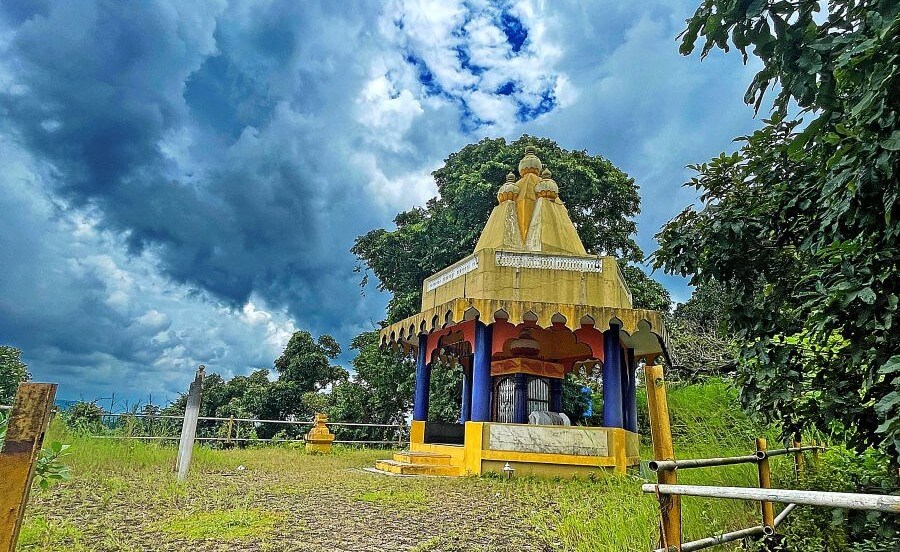
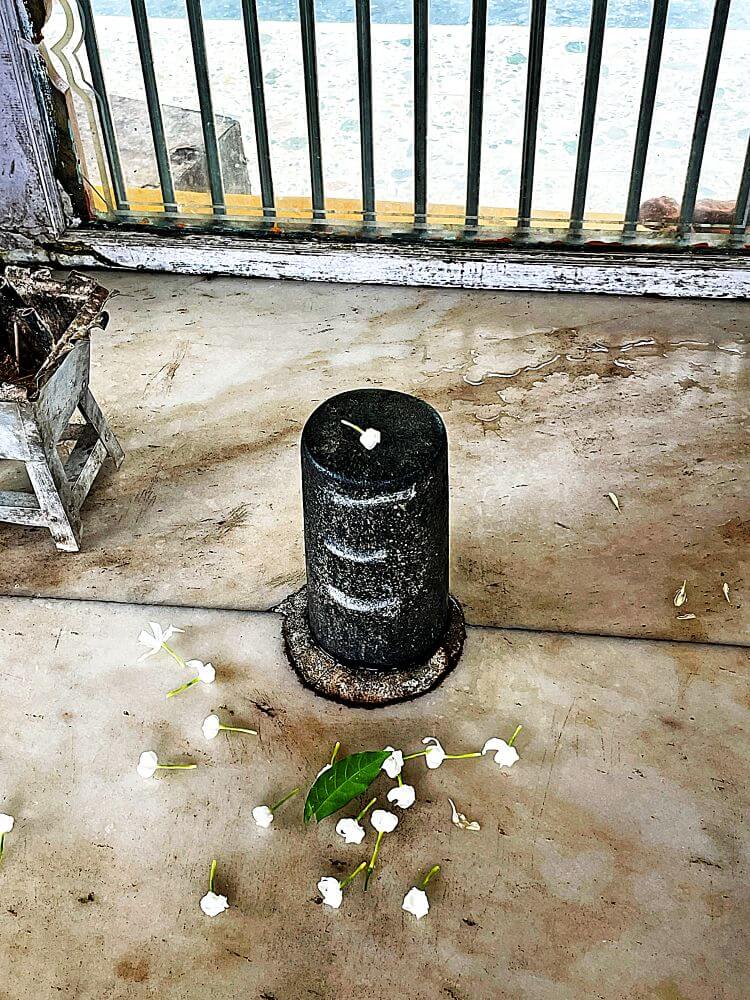
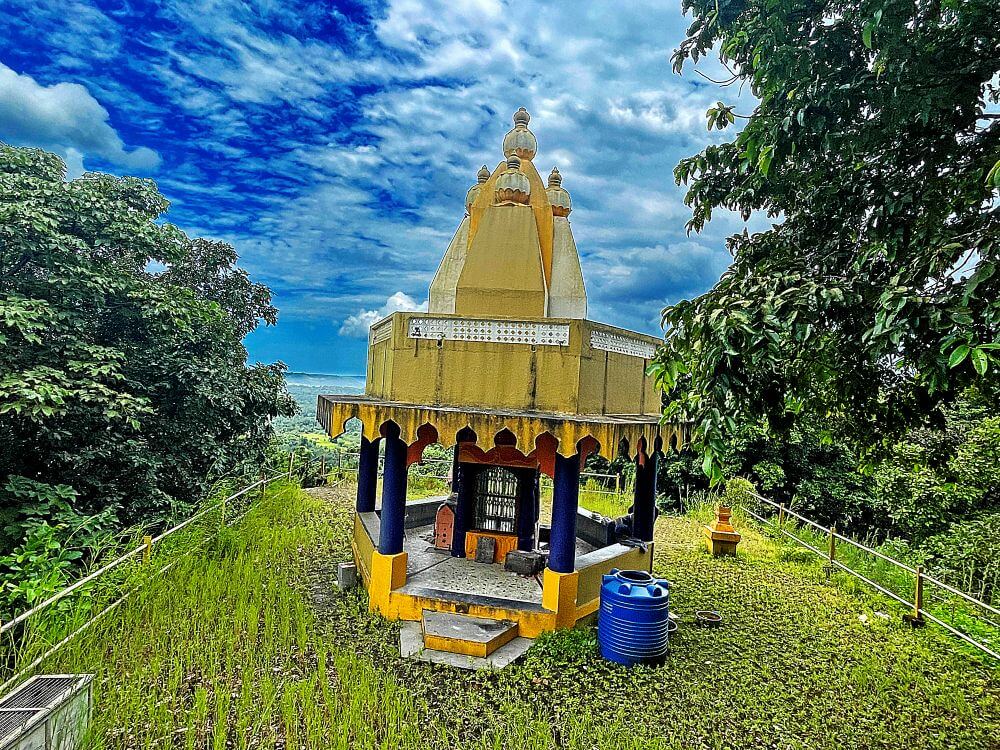
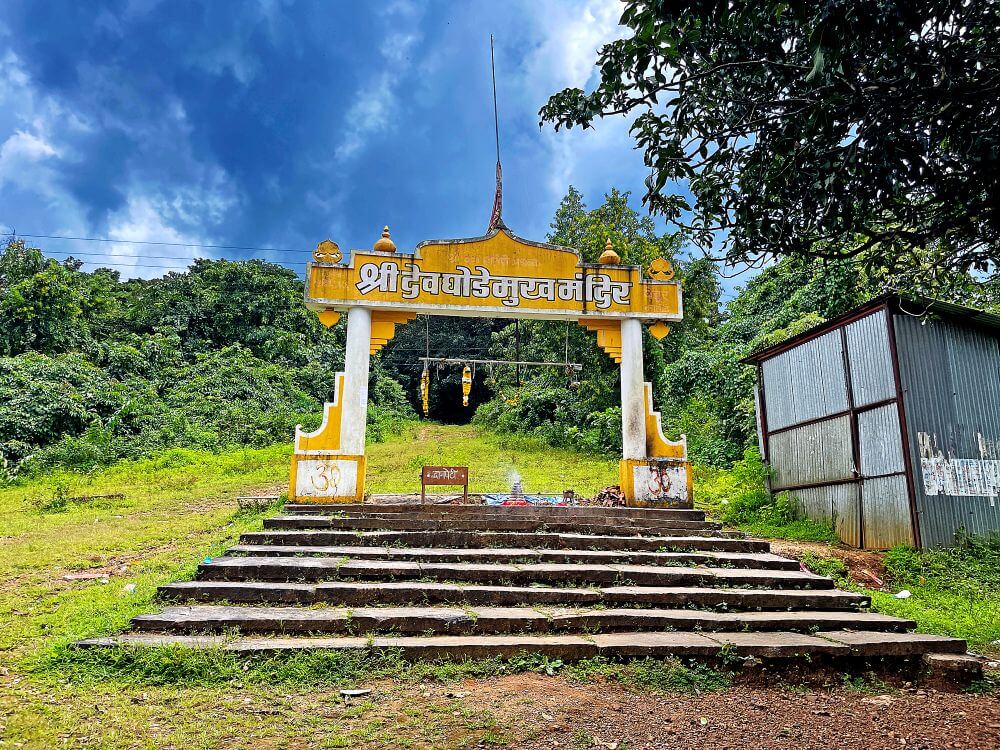
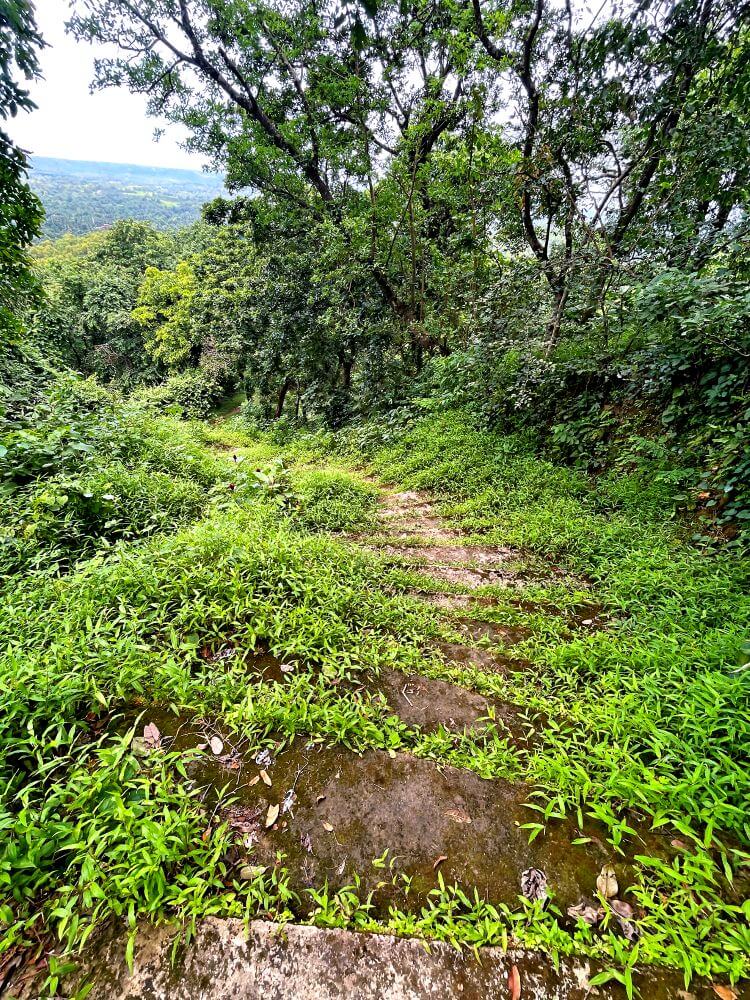
The path leading to the Ghodemukh Temple begins from the entrance gate (*vesh*) at the foot of the hill in Pendur village. Steps have been constructed at certain places along this uphill path that winds through dense foliage. Due to the steep ascent, devotees get breathless by the time they reach the temple. Situated on a plateau atop this lush, tree-covered hill stands the small temple of Lord Ghodemukh. The temple courtyard is enclosed with railings. In the center of the courtyard, raised on a high plinth, stands this small temple resembling a semi-open assembly hall (*Sabhamandap*) supported by six hexagonal pillars. At its center lies the sanctum sanctorum (*Garbhagriha*) surmounted by a circular spire (*Shikhara*). The *Sabhamandap* also has a spire, which is flanked on all four sides by smaller spires, giving the appearance of a cluster of spires. All these spires are adorned with an *Amalaka* and a *Kalas* (finial). Inside the sanctum sanctorum, the cylindrical stone *Linga* of Lord Ghodemukh is consecrated.
Lord Ghodeshwar is the village deity (*Gramdaivat*) of Pendur village. The annual fair (*Jatra*) of this deity begins at the temple of Goddess Sateri. Devotional night-long vigils (*Jagar*) take place at the temple for four consecutive days. On the fifth day, which is Dev Deepawali, the grand fair festival of Lord Ghodeshwar is celebrated. On that day, the sacred holy staffs (*Tarang-kathya*) of Lord Ravalnath, Goddess Sateri, and Goddess Pavanai assemble at the temple of Goddess Sateri. Thereafter, amidst grand musical processions, this procession travels a distance of ten kilometers, visiting other village temples along the way, before reaching the Ghodemukh Shrine. There, ritual worship (*vidhiwat puja*) of the deities’ *Tarang-kathya* is performed. After offering a sweet food offering (*Naivedya*) to the Lord on a banana leaf, the ritual of honoring with rooster sacrifice begins. This deity is considered the Supreme Lord of 360 *Chalas* (subordinate guardian spirits). The *Chalas* are under the command of Lord Shiva. People devoutly believe that the *Chalas* deliver the village from impending troubles. Shielding the village from evil powers and keeping the village boundaries safe is considered their duty. To honor them, their traditional tribute is offered once a year as per custom, part of which includes rooster sacrifices. On the day of the fair, approximately three and a half to four thousand roosters offered in fulfillment of vows (*navas*) are sacrificed here. Hence, this fair is popularly known as the ‘Kombya’ or ‘Rooster Fair’. However, Lord Ghodemukh Himself is considered strictly vegetarian, and offerings of bananas, coconuts, and sweet delicacies are presented to Him. In the evening, after these rituals conclude, the sacred *Tarang-kathya* descend from the hill. Various religious ceremonies are organized on the occasion of the fair.
Another unique feature of this fair is that on the festival day, clay replicas of human body parts are offered to Lord Ghodemukh. Devotees hold a firm belief that if a clay replica of an afflicted body part is offered to the deity, that ailment gets cured. Devotees make vows (*navas*) to the deity to this effect. Devotees travel from Sindhudurg, Mumbai, Kolhapur, Goa, and Karnataka to attend this fair. The temple premises bustle with stalls selling foodstuffs, toys, sacred offerings (*Prasad*), and household goods. Clay replicas of human body parts are sold here on a large scale.
This sacred temple stands as a testament to deep spiritual devotion, ancient architectural grandeur, and rich local cultural traditions.
The sanctum sanctorum houses the divine idol consecrated according to ancient Vedic traditions, surrounded by serene courtyards and traditional temple architecture.

Navratri, Maha Shivratri, Annual Temple Jatra & Deepotsav
Compare and book flights, secure top-rated local hotels near the temple, hire reliable guides, and rent cars instantly.
Extend your pilgrimage by visiting other highly sacred temples located nearby.


Add ₹999 more to unlock FREE SHIPPING!
Your sacred cart is currently empty.
Shop Photo FramesFill in your delivery details below to place your order.
Add comment