
Add ₹999 more to unlock FREE SHIPPING!
Your sacred cart is currently empty.
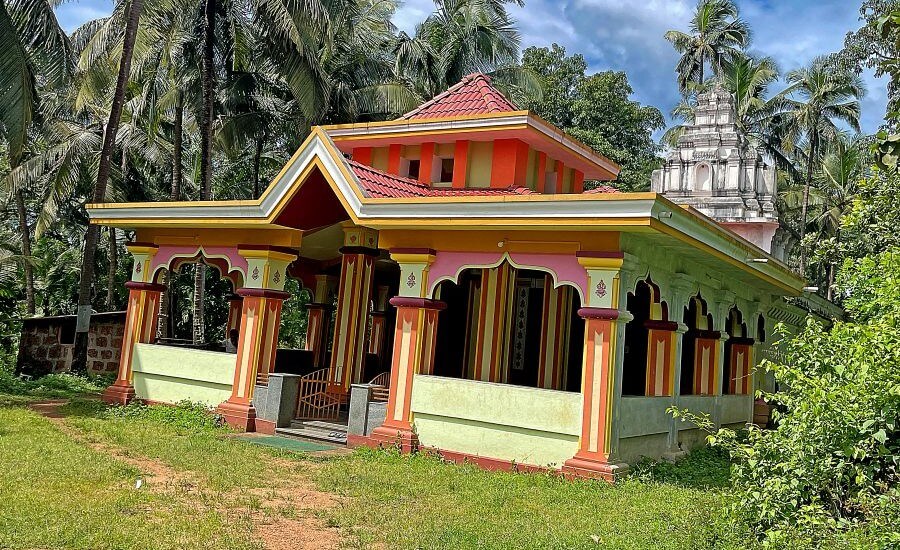
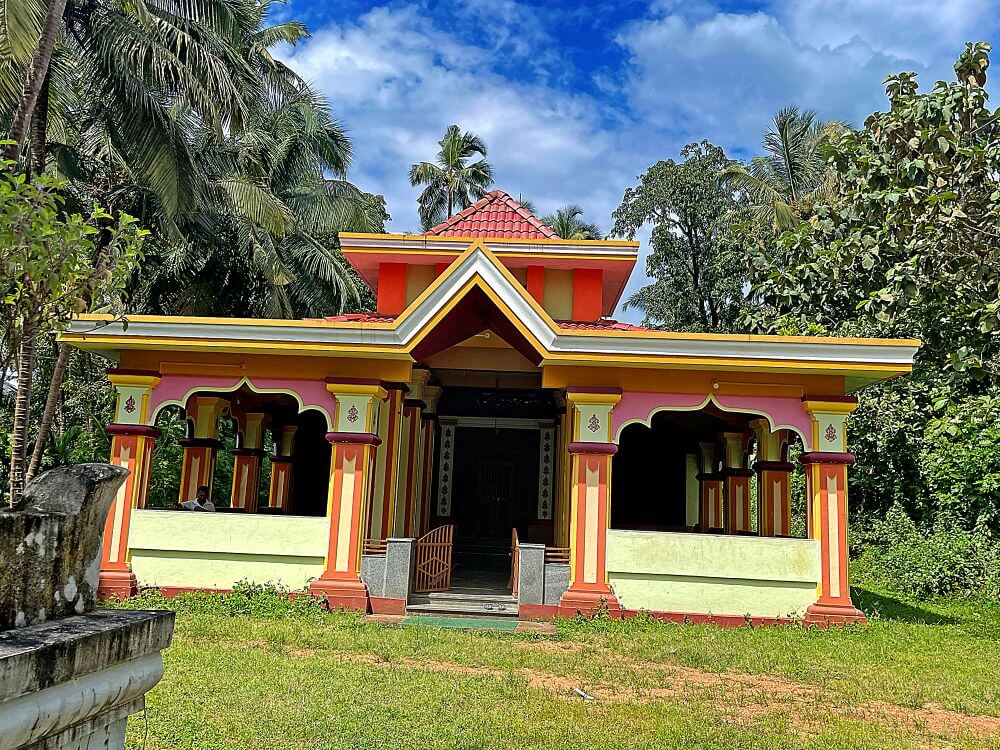
Shop Photo FramesLord Rawalnath is considered a vigilant deity of South Konkan. The seat of Rawalnath is located at Matond in Vengurla Taluka. Externally, the Rawalnath temple here is a fine example of the Konkani temple architectural style. Rawalnath is believed to be a form of Lord Mahadeva. There are more temples of this deity in the southern part of Konkan than in the north. There are २११ temples of Rawalnath across the eight talukas of Sindhudurg district. In the neighboring state of Goa, there are approximately ५० temples of this deity. Matond Rawalnath is one of the famous temples among them.
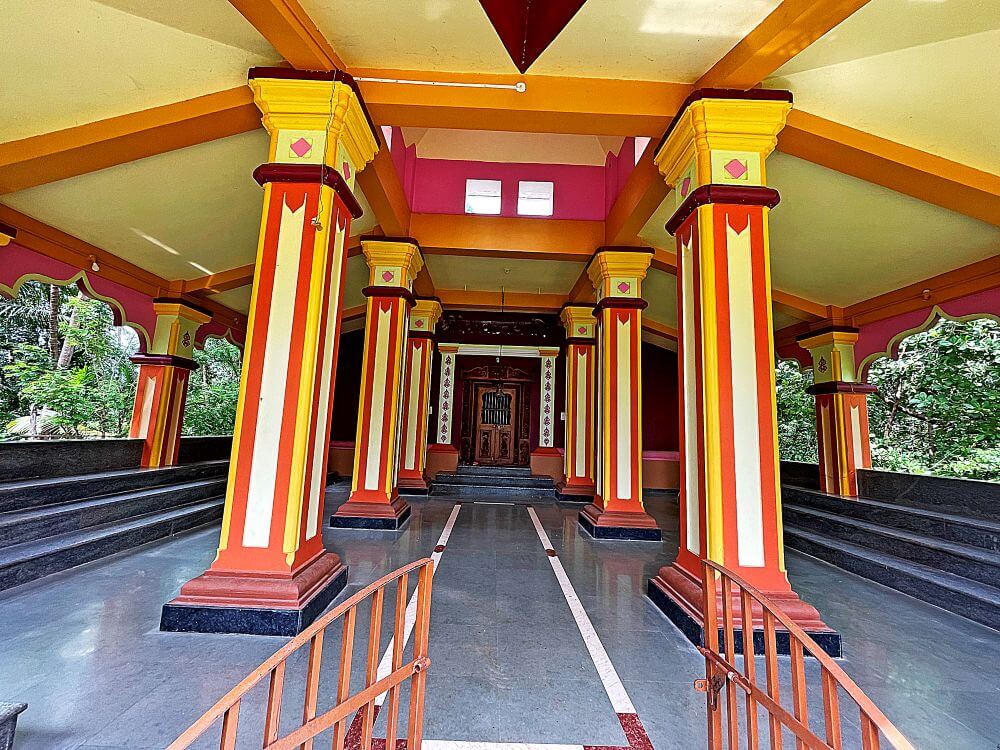
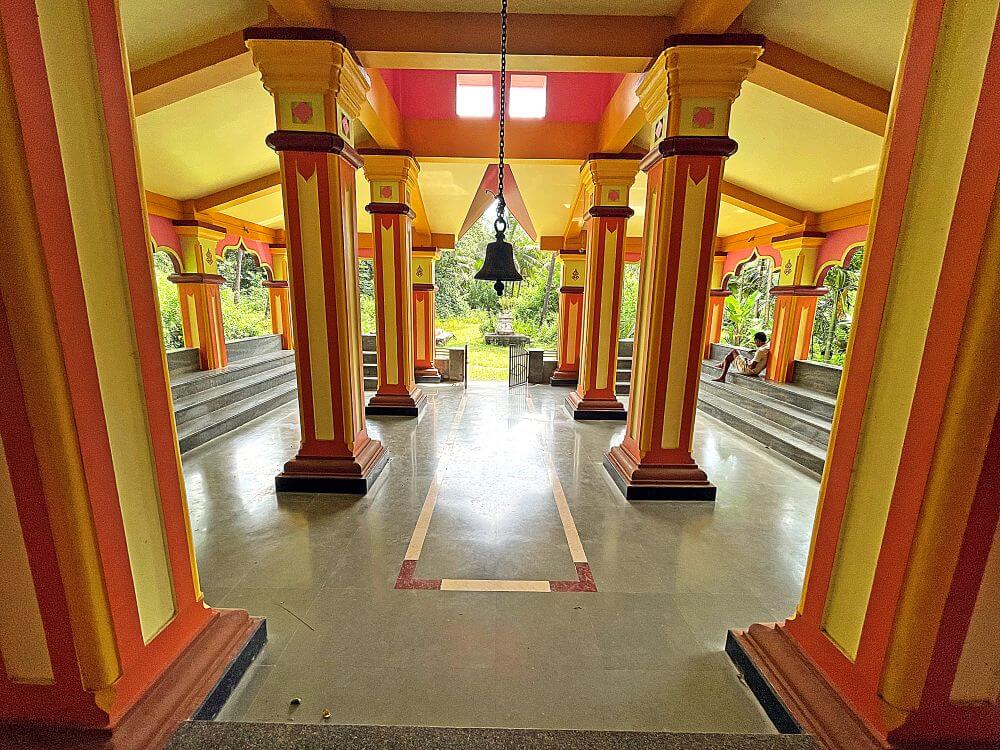
This temple is nestled amidst a dense cluster of lush green trees. There is a small path leading from a simple entrance gate along the road into the temple courtyard. A lamp pillar (Deepastambha) has been erected on a pedestal right in front. This pillar is circular and seven-tiered. The upper part of each tier features floral motifs. The top of this pillar is dome-shaped. Beside it stands a small, old-style Tulsi Vrindavan. In front is the main structure of the temple. The temple is designed with a semi-open assembly hall (Sabhamandap), an intermediate chamber (Antaral), and the sanctum sanctorum (Garbhagriha). The facade of the assembly hall features two square pillars supporting a triangular roof in the center. The upper part of the roof is also sloping and triangular. Thus, when viewed from a distance, the structure appears symmetrical.
This assembly hall has four square pillars on the outer side. These pillars are connected to each other by arched gateways along the roofline. At the base, there is a continuous seat (Kakshasana) resembling three steps. A short distance away, there are four pillars on each side. Passing through them, one ascends three steps to enter the intermediate chamber. The intermediate chamber has a carved wooden doorway. It is adorned with carvings of female gatekeepers, a Yaksha mask, and images of other deities. Upon entering, one sees wide pillars erected on a broad stone pedestal, supporting a semi-circular arch. This creates the impression of being under a grand bridge. These sturdy pillars have been erected a short distance inside from the wall of the intermediate chamber. They are so wide that it takes four people to encircle them together. The intermediate chamber houses items used during festivals, as well as three sacred palanquin poles (Tarangkathya). There is a swing on the right side. Devotees believe that Rawalnath sits on this swing to take a rest. There is a circumambulatory path (Pradakshinamarga) from the intermediate chamber around the sanctum sanctorum.
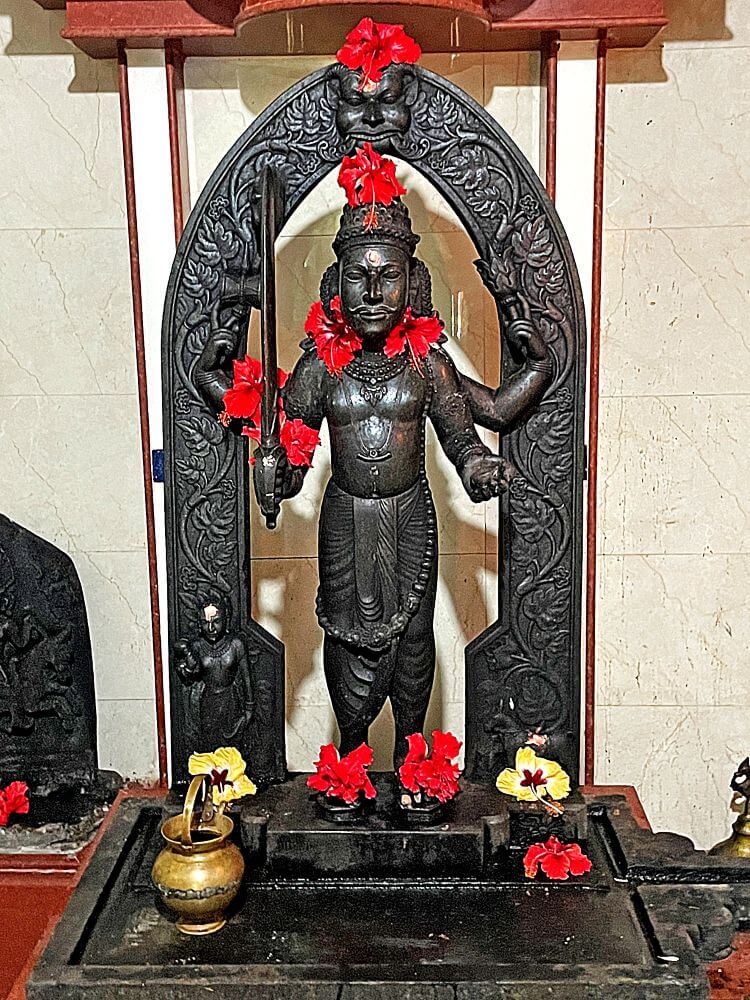
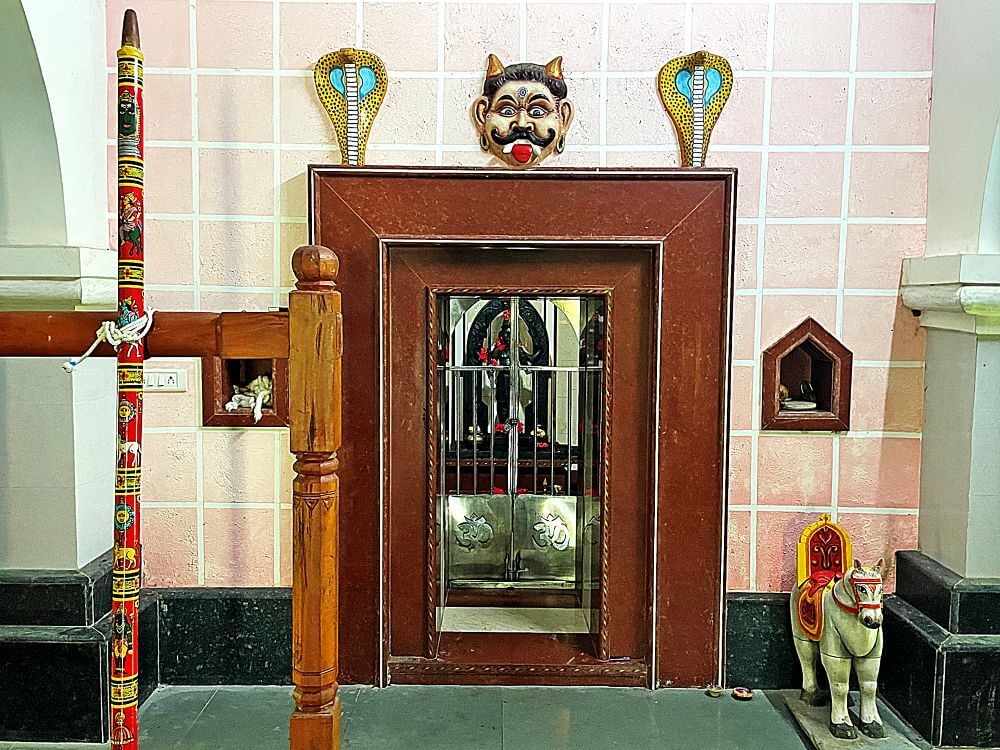
While entering the sanctum, there are small niche-like shrines on both sides of the doorway. They contain various deities. Above the door frame, in the center, is a demon mask (Rakshasmukh), and on both sides are relief sculptures of serpent deities with raised hoods. Near the doorway is a horse statue. Inside the sanctum, on a diamond-shaped pedestal (Vajrapitha), is a beautiful idol of Rawalnath carved in black stone. It is surrounded by a stone arched frame. On its upper part is a Yaksha mask. A female attendant is visible on the lower left side. Rawalnath holds a sword in his hand. Above the idol, a structure resembling a temple pinnacle (Kalash) has been created. Some family deities are also visible in the sanctum sanctorum. The spire (Shikhara) of this temple is in the Dravidian style.
It is said that Rawalnath is a prominent deity in Goa. His original name is ‘Rawalu’. It is a name of endearment that has been passed down since ancient times. When the Nathpanthis arrived in Goa, they changed the name of the deity to Lord Rawalnath. Rawalnath is considered to be one of the attendants (Ganas) of Lord Shiva. In Konkan, Rawalnath is also called Piso Rawalu. According to Pandit Mahadevshastri Joshi, the author of ‘Bharatiya Sanskriti Kosh’, the main specialty of Rawalnath is considered to be the neutralizing of snake venom. Temples of Rawalnath are seen in smaller numbers from Karwar in the south towards the north. They appear in the form of the Kedarling deity. Temples of Rawalnath are found in the Chandgad and Ajara regions, which leads the literary scholar and researcher Pu. Ra. Behere to believe that it entered Konkan from the south.
Rawalnath holds dominion over the sea. Fishermen bow before this deity before starting their work. Traditional festivals like Dussehra and Kavlas are celebrated on a large scale at the Matond Rawalnath temple. On the day of Dussehra, a procession of sacred palanquin poles is taken out with music and fanfare. At this time, there is a large gathering of devotees here.
Apart from the village deities Sateri Devi and the Rawalnath temple, the village of Matond in Vengurla Taluka is famous for a unique reason. That is, starting a tea shop or selling tea is considered prohibited in this village. It is said that this might be the only village in Maharashtra that has traditionally banned tea shops. According to the villagers, if anyone tries to start a tea shop in the village, they do not succeed. Just as there is an unwritten ban on tea shops here, there is one on liquor shops as well. Not only that, but there are also restrictions on bringing a bottle of liquor into the village. This custom has been in place here for the last १०० years.
A legend is told about this: १०० years ago, there was a quarrel over tea in the village. This dispute was brought before the village deity. According to the oracle (Kaul) given by the village deity at that time, an unwritten ban was placed on the sale of tea in the village. It is said that a few years ago, a young man from the village tried to break this tradition of the tea ban. He started a tea shop here; however, he fell ill as soon as the shop opened. His illness worsened, and he passed away within a few days. Because of this, the faith of the villagers here became even stronger. A few years ago, Matond village was divided, and the village of Pendur was formed. The Ghodemukh shrine in Pendur is famous in Maharashtra, as well as in Goa and Karnataka. There is no tea shop in the vicinity of this shrine either. Even though the village is new, the village tradition remains intact, according to the villagers of Pendur.
Apart from this temple, the Ravalnath Temple located in the nearby village of Khanoli is also famous. This temple is an excellent example of the traditional Konkani architectural style. It is a two-storied structure with a tiled, sloping roof. Outside the temple, there is a five-tiered lamp pillar (Deepstambha) on a raised platform. In front of it lies a semi-open assembly hall (Sabhamandap), where stone benches have been built along the sides for devotees to sit. Ascending three steps from here, one enters the inner sanctum (Antaral) of the temple. In this semi-open space, there are large, ancient stone pillars placed at a distance from the outer walls. Wood has been used extensively in the construction of the temple. Images of deities are affixed to the wooden rafters. Adjacent to the front wall of the sanctum sanctorum (Garbhagriha) are the family deities carved in black stone. Inside the sanctum, the stone idol of Ravalnath is placed on a Vajrapitha. The idol appears fierce due to its large eyes. A grand fair (Jatra) is held for this guardian deity on the day of Mahashivratri. At this time, villagers and people working away from home attend in large numbers.
An interesting mythological legend is told about the Ravalnath of Khanoli: it is said that there is a goddess named Andhalidevi in the village of Tendoli, over whom a great conflict arose between the Ravalnath of Khanoli and the Ravalnath of Tendoli. At that time, the Ravalnath of Khanoli broke the fortification of the Tendoli Ravalnath temple. It is said that since then, the fortification there cannot be repaired.
This sacred temple stands as a testament to deep spiritual devotion, ancient architectural grandeur, and rich local cultural traditions.
The sanctum sanctorum houses the divine idol consecrated according to ancient Vedic traditions, surrounded by serene courtyards and traditional temple architecture.
Navratri, Maha Shivratri, Annual Temple Jatra & Deepotsav
Compare and book flights, secure top-rated local hotels near the temple, hire reliable guides, and rent cars instantly.
Extend your pilgrimage by visiting other highly sacred temples located nearby.


Add ₹999 more to unlock FREE SHIPPING!
Your sacred cart is currently empty.
Shop Photo FramesFill in your delivery details below to place your order.
Add comment