
Add ₹999 more to unlock FREE SHIPPING!
Your sacred cart is currently empty.
Shop Photo FramesThe ancient and famous Ichhaporti Trimurti Hanuman Temple is situated near the village of Yashwadi in the Manwath taluka of Parbhani district. This temple is a place of deep faith for countless devotees in the region. Because of the belief that the Hanuman here fulfills the wishes of his devotees, this deity is known as Ichhaporti (Wish-Fulfilling) Trimurti Hanuman. Lord Hanuman, the devotee of Rama and son of King Kesari of Mount Sumeru and Queen Anjani, served as a minister to Sugriva, the Vanara King of Kishkindha. In this temple at Yashwadi, Hanuman is worshipped in three distinct forms: as a devotee of Rama (Rambhakt), in the form of a Yaksha (Yaksharupa), and in the form of Rudra (Rudrarupa). Due to the union of these three forms, this idol is addressed as Trimurti Hanuman. While there are many Trimurti Hanuman temples in North India, this temple in Maharashtra is a unique example of its kind.
Although precise historical documentation regarding the founding of this temple is unavailable, based on its architecture and traditions, it is believed to be approximately four to five hundred years old. Several legends are prevalent at the local level regarding this temple and the renaming of the village. According to these, there was once a prosperous village at this location in ancient times. This Trimurti idol of Hanuman, established at the village entrance, was the /sLrn guardian deity (Gramadaivat) of the village. About three to four hundred years ago, a guest arrived in the village. He mocked this Trimurti form of Hanuman at the entrance and spoke disparagingly about the deity. That guest stayed in the village for the night, but the next morning, he was found dead under suspicious circumstances. After this incident, any person arriving from outside the village who stayed overnight began to die. As this pattern repeated, panic spread among the villagers. To save their lives, the villagers gradually began to leave the village. They sought refuge in surrounding villages and the nearby town of Manwath. With the entire village emptied, it became desolate. Consequently, people began to refer to this village as ‘Oswadi’ (Desolate Village). After some time, a saint came to live in this deserted temple. He began to serve this Hanuman. Due to the saint’s presence, the fear in people’s minds gradually subsided, and devotees from the surrounding areas began to visit the temple for darshan. People’s wishes began to be fulfilled upon seeing this Hanuman. Therefore, devotees gave this Hanuman the name Ichhaporti Trimurti Hanuman. Through the worship of Hanuman, the efforts of the devotees began to meet with success, and prosperity returned to the village. It is because of this success (Yash) that the village of Oswadi was later renamed ‘Yashwadi’.
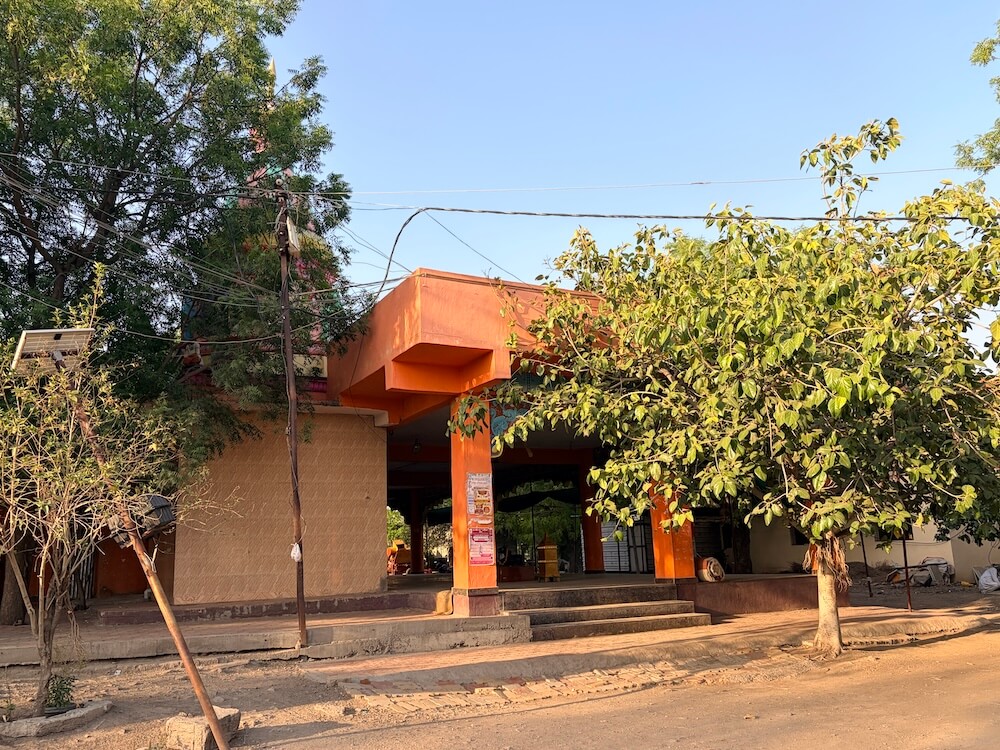
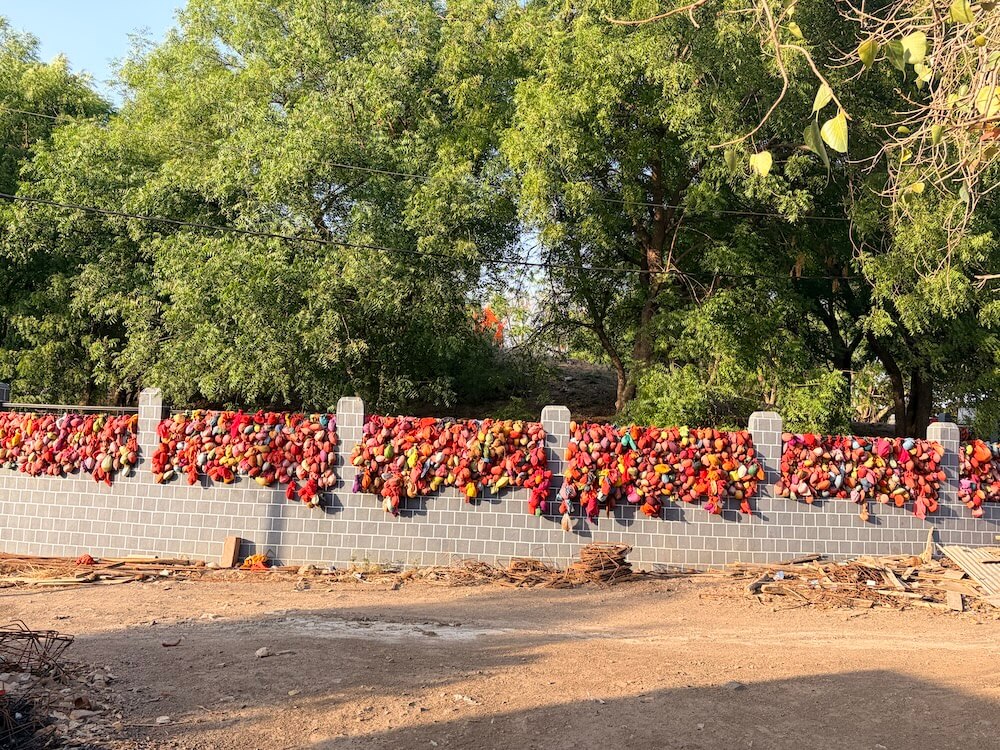
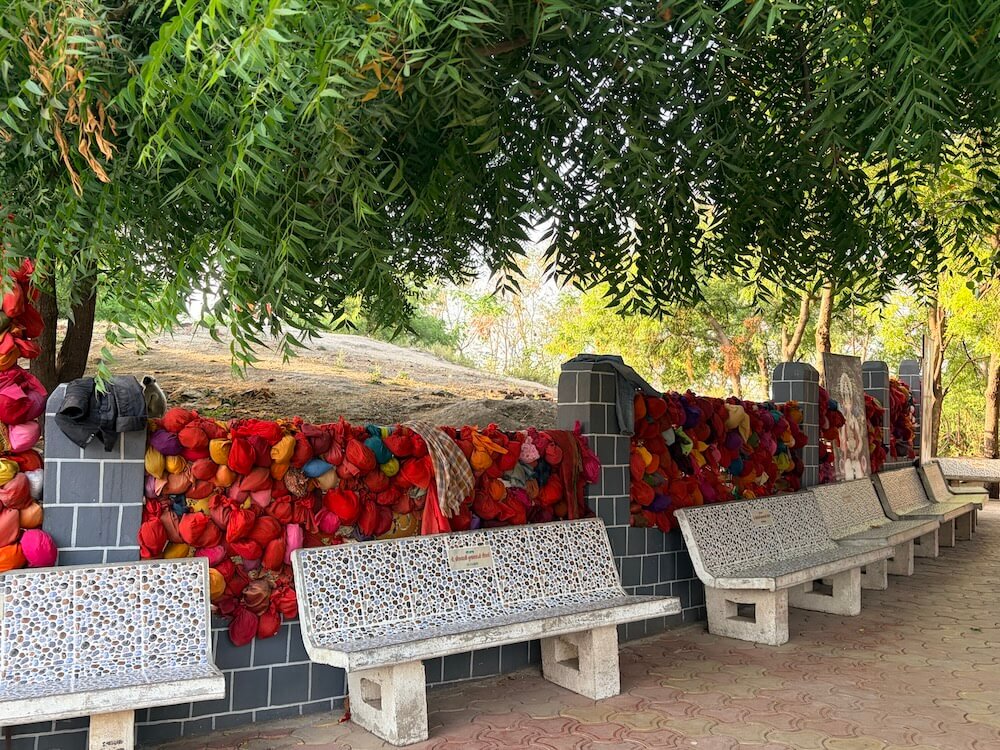
This temple is located a short distance from Yashwadi village. There is a paved road to reach the temple from the village. A stone fortification has been built on all four sides to protect the temple. Iron grilles have been installed on this fortification. There are trees within the fortification area and the temple courtyard. Devotees tie coconuts wrapped in red cloth to these trees and iron grilles. It is a tradition to make a vow and tie a coconut in this temple so that one’s wishes may be fulfilled. Once the devotees’ desires are fulfilled, they return to the temple, untie the coconut they had tied, and offer it at the feet of the deity. In the temple courtyard, shops for worship materials, a storage room, and a kitchen for the Annachhatra (free food distribution) have been built for the convenience of devotees. The residences of the priests and the regular attendants who serve here are also located in this same courtyard. A hall has been constructed in front of the temple. During annual festivals, Kirtans, discourses, and various cultural programs are organized in this hall. During festivals, rows for the Mahaprasad are also arranged here. Seating arrangements have been made at various places in the courtyard for devotees to rest.
This temple has been renovated in recent times. The entire construction of the new temple is done in Rajasthani red sandstone. This temple is built on a high plinth. Unique carvings have been done on the stone walls of this plinth. It features various types of composite patterns, layers of leaves and flowers (foliage layers), and animal figures (animal layers). Since the temple is elevated from the ground, there are six steps to enter the assembly hall (Sabhamandapa). There are twenty pillars in the assembly hall. All these pillars stand on square-shaped bases. Various types of patterns are carved on the middle sections of the pillars. The inner part of the ceiling, or the canopy, is carved with circular patterns. All parts of the pillars, including the brackets, capitals, and beams, are intricately carved.
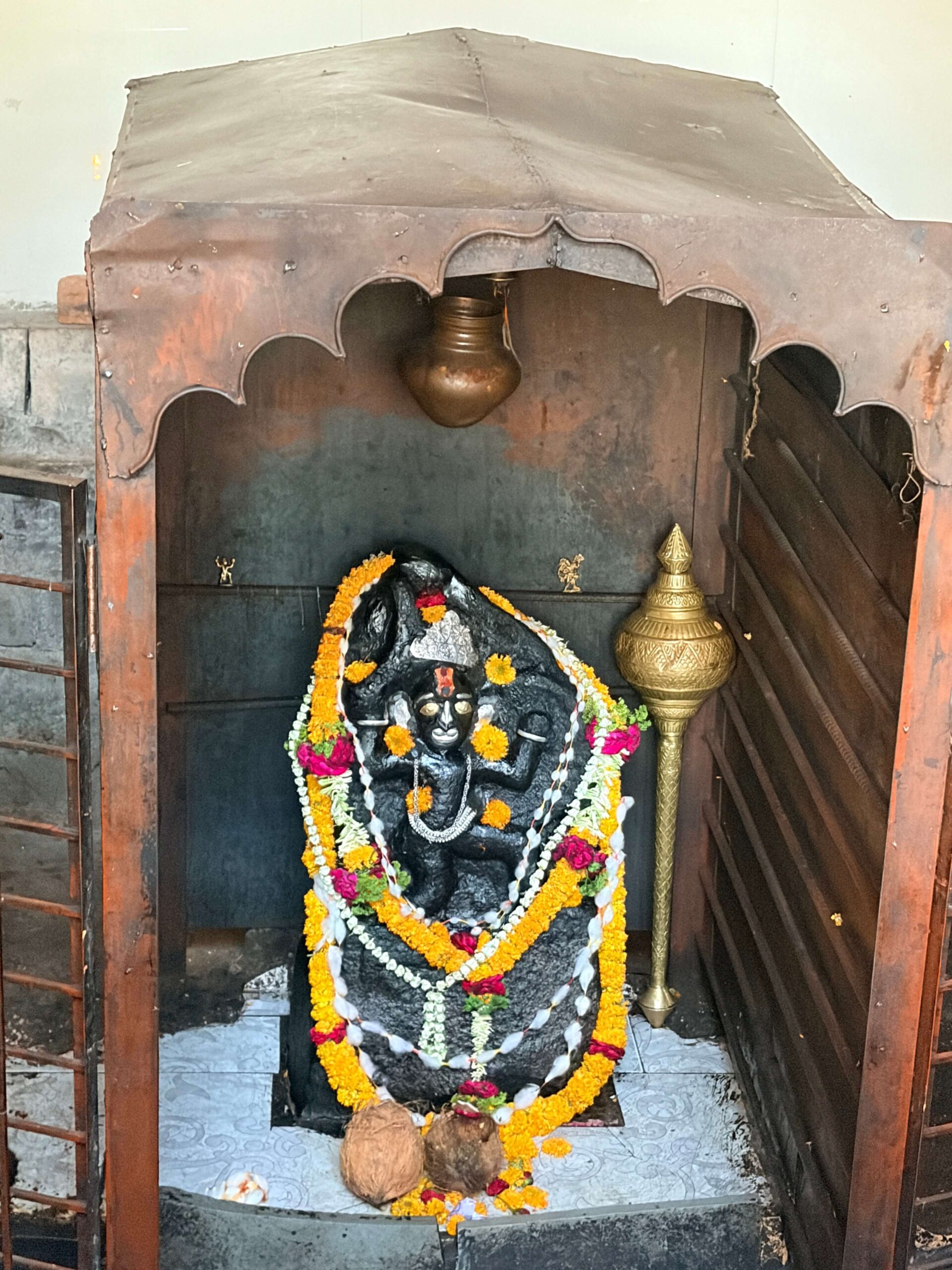
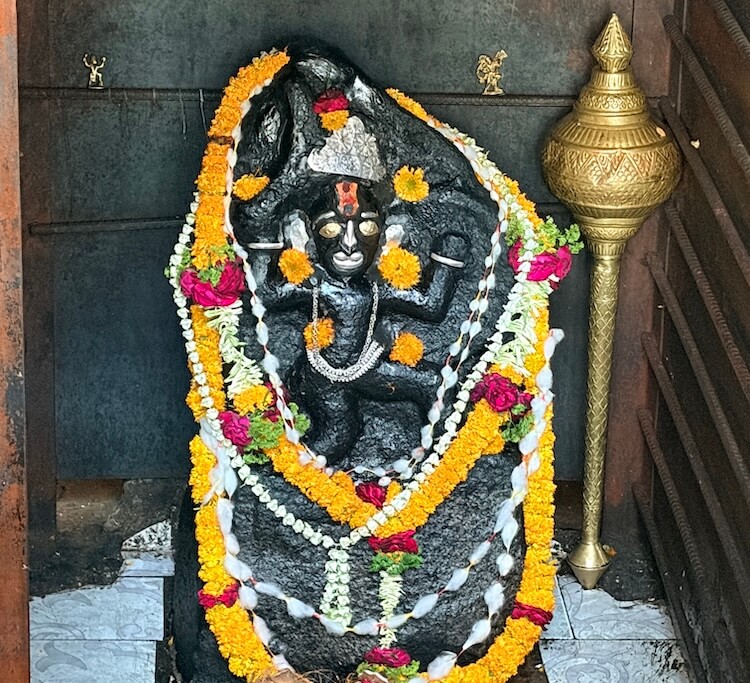
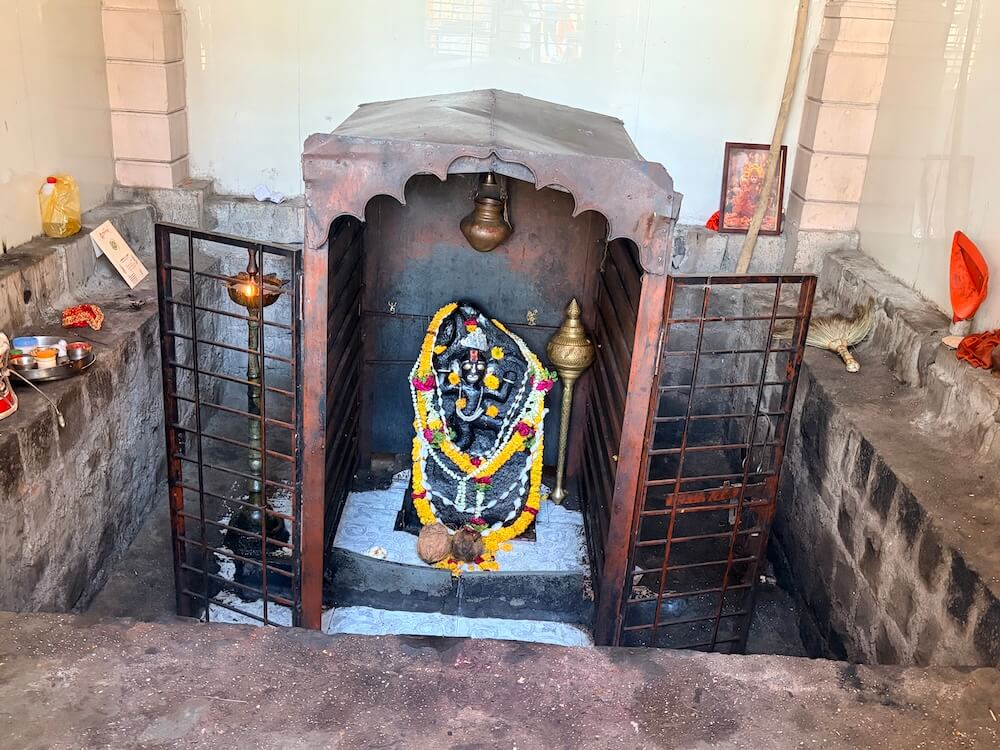
Beyond the assembly hall is the sanctum sanctorum (Garbhagriha) of the temple. The door frames of the entrance to the sanctum are carved with leaves and flowers. An image of Lord Ganesha is carved on the lintel of the door frame. On the arch above the entrance, spire sculptures are carved on both sides, while an ornate head ornament (Bashing) is visible in the center of the arch. Inside the sanctum, on a Vajrapitha (diamond throne), stands the three-faced idol of Trimurti Hanuman made of black stone. There is a silver crown on the head of the idol. Beside the idol is a brass mace, which is the weapon of Hanuman. There is a circumambulation path (Pradakshinamarga) around the exterior of the sanctum. There are various types of carvings on the outer walls of the temple, known as the Mandovara. The design of the temple roof is also a beautiful example of architecture. A dome-shaped spire is built over the roof of the assembly hall. There is a finial (Kalash) on the stone Amalaka at the top of the spire. A two-tiered square spire is built over the roof of the sanctum. The first tier of this spire is of the Pancharatha type and flat. In the second tier of the spire, there is a design of small auxiliary spires on all four sides and corners. The spire features a pot-shaped layer (Kumbhathar) and other geometric carvings. There are niches for deities on all four sides of the spire.
Various religious festivals and celebrations are observed in this temple throughout the year. Hanuman Jayanti is considered the main annual festival here. For this birth anniversary celebration, devotees from Parbhani district as well as surrounding districts come to Yashwadi for darshan. On the day of Hanuman Jayanti, there is a tradition of celebrating the birth anniversary by placing the utsavamurti (processional deity) of Hanuman in a cradle. On this occasion, various religious and cultural programs such as Homa-Havan, Bhajans, Kirtans, Akhand Granth Vachan (continuous scripture reading), Ramkatha, and Mahaprasad are organized by the temple administration and the devotees. Apart from Hanuman Jayanti, special pujas and festivals are organized in the temple during Ram Navami, Dussehra, Diwali, and the entire month of Shravan. During all these festivals, various traditional religious rituals are performed at the temple. Every Saturday, the temple witnesses a large crowd of devotees. Every Saturday, about four to five thousand devotees visit here for the darshan of the Lord, and to make or fulfill vows (navas). Devotees making a vow wrap a coconut in a red cloth and tie it within the temple premises or to the trees. Devotees whose vows have been fulfilled come here, untie the coconut they had tied, offer it at the feet of the Lord, and take darshan. Devotees can have darshan of Trimurti Hanuman in this temple daily from 6:00 AM to 12:00 PM and from 4:00 PM to 9:00 PM.
This sacred temple stands as a testament to deep spiritual devotion, ancient architectural grandeur, and rich local cultural traditions.
The sanctum sanctorum houses the divine idol consecrated according to ancient Vedic traditions, surrounded by serene courtyards and traditional temple architecture.
Navratri, Maha Shivratri, Annual Temple Jatra & Deepotsav
Compare and book flights, secure top-rated local hotels near the temple, hire reliable guides, and rent cars instantly.
Extend your pilgrimage by visiting other highly sacred temples located nearby.


Add ₹999 more to unlock FREE SHIPPING!
Your sacred cart is currently empty.
Shop Photo FramesFill in your delivery details below to place your order.
Add comment