
Add ₹999 more to unlock FREE SHIPPING!
Your sacred cart is currently empty.
Shop Photo FramesMahalakshmi is a form of Goddess Lakshmi. She is known by various names such as Vishnupriya, Padmavati, Hiranyavarna, Adityavarna, Prabhasa, Yashasa, Jwalanti, Padmavarna, Madhavi, and Chandralakshmi. It is believed that with the blessings of Goddess Mahalakshmi, one attains success, wealth, fame, health, and stability in human life, leading to overall progress. For this reason, an increasing number of devotees worship Mahalakshmi in the Kaliyuga. Kolhapur is the main Shakti Peetha of Goddess Mahalakshmi, while many temples across India are famous as sub-shrines (Upapeethas) of the Goddess. One such temple is located in the village of Shidod near Beed city. Devotees firmly believe that the awakened Goddess here grants their prayers.
The legend regarding this temple is that Shidoji Deshmukh, a resident of Beed, was the then-Vatandar (hereditary revenue collector) of the Beed Pargana. As the position of ‘Deshmukh’ carried the authority of revenue collection and administration, he held great respect in society. Despite this, he was better known as a devout devotee of the Goddess. He was an ardent devotee of Shri Mahalaxmi of Kolhapur. In those days, means of transport were extremely limited and travel was arduous; yet, without fail, Shidoji Deshmukh would undertake the pilgrimage of hundreds of miles from Beed to the Mahalaxmi Temple in Kolhapur every full moon. As Shidoji Deshmukh grew older, his body began to tire. Due to old age, it became impossible for him to undertake the strenuous pilgrimage to Kolhapur. Seeing the condition of her beloved devotee and his yearning for her darshan, Ambabai of Kolhapur appeared to him in a vision. The Goddess came in his dream and said, “Do not take the trouble of traveling such a long distance for my darshan anymore.” “I am pleased with your devotion, and therefore, I myself am coming to reside in your village.” After receiving this divine vision, Shidoji Deshmukh felt the presence of the Goddess in Shidod village near Beed. According to some, he discovered the idol of the Goddess in the ground, while others believe he installed an idol in the form of a Taandala (aniconic stone) brought from Kolhapur. Due to this event, the village of Shidod came to be known as ‘Deviche Shidod’. As a fragment of the Goddess of Kolhapur resides here, this temple is considered a sub-seat (Upapeetha) of the Kolhapur Peetha.
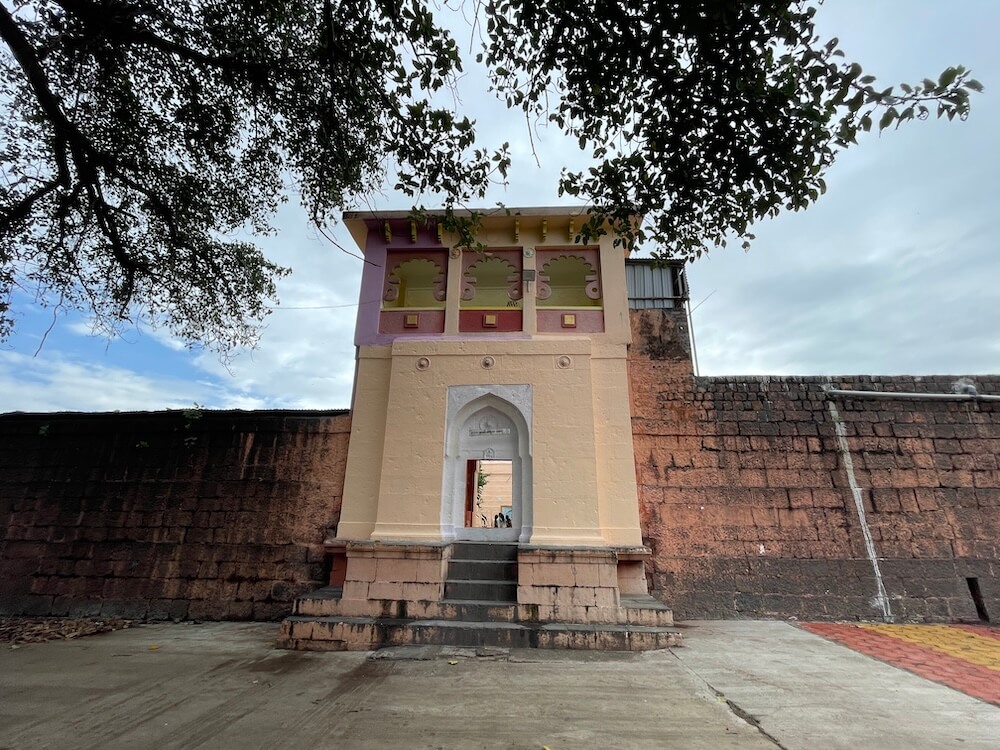
Villagers here state that this temple, built in the Hemadpanti style, dates back approximately one thousand years. Records indicate that the temple was renovated in the year 1749 by Laxman Raghunath Nirantar. The temple is situated at some distance from the village, and there is a paved road leading up to it. In front of the temple, there is a spacious parking area, and an ancient banyan tree stands right there. A wide stone platform has been built around the banyan tree, upon which are idols of Maruti and other local deities. The platform is covered by a tin roof supported by iron pipes. The temple is enclosed by a sturdy, twelve-foot-high fortification wall, which features a two-story entrance gate. As the temple is situated at a higher elevation than the road, there are five steps leading to the entrance. There are platforms on both sides of the steps. On the walls flanking the entrance, paintings of Dvarapalas (gatekeepers) are depicted. The entrance features an intricately carved wooden door frame and shutters, with an image of Lord Ganesha on the lalata-bimba (lintel). There is a Nagarkhana (drum house) on the upper floor. A staircase on the left side of the entrance leads from the courtyard to the Nagarkhana. A beautiful garden has been created in the temple courtyard by planting various types of trees. There are iron safety railings on both sides of the paved pathways in the courtyard.
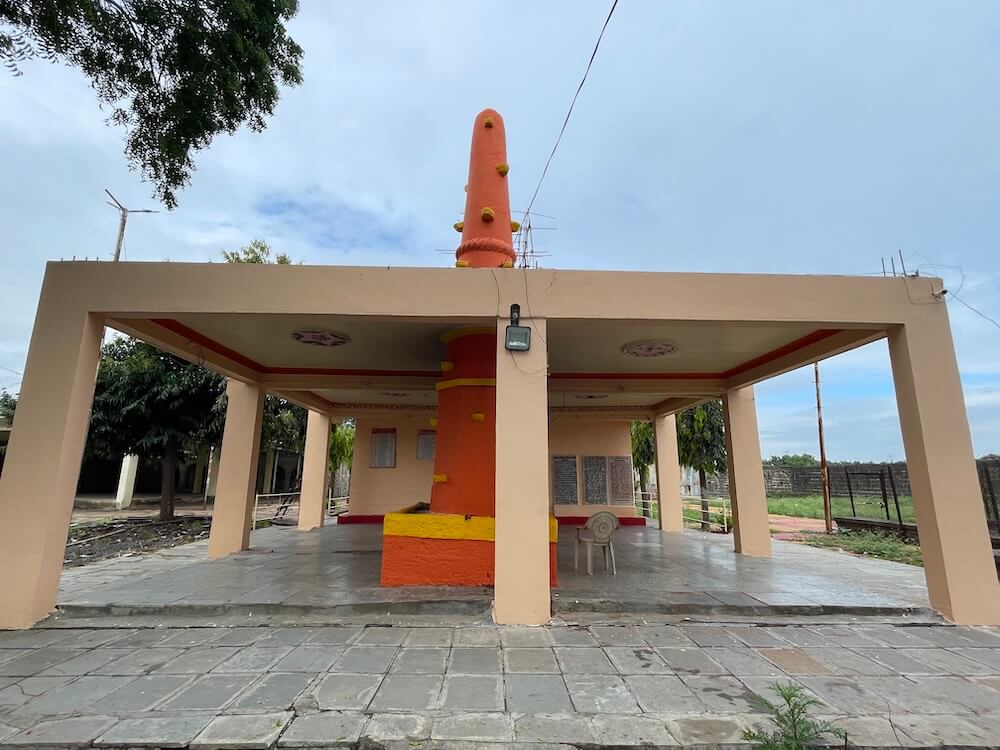
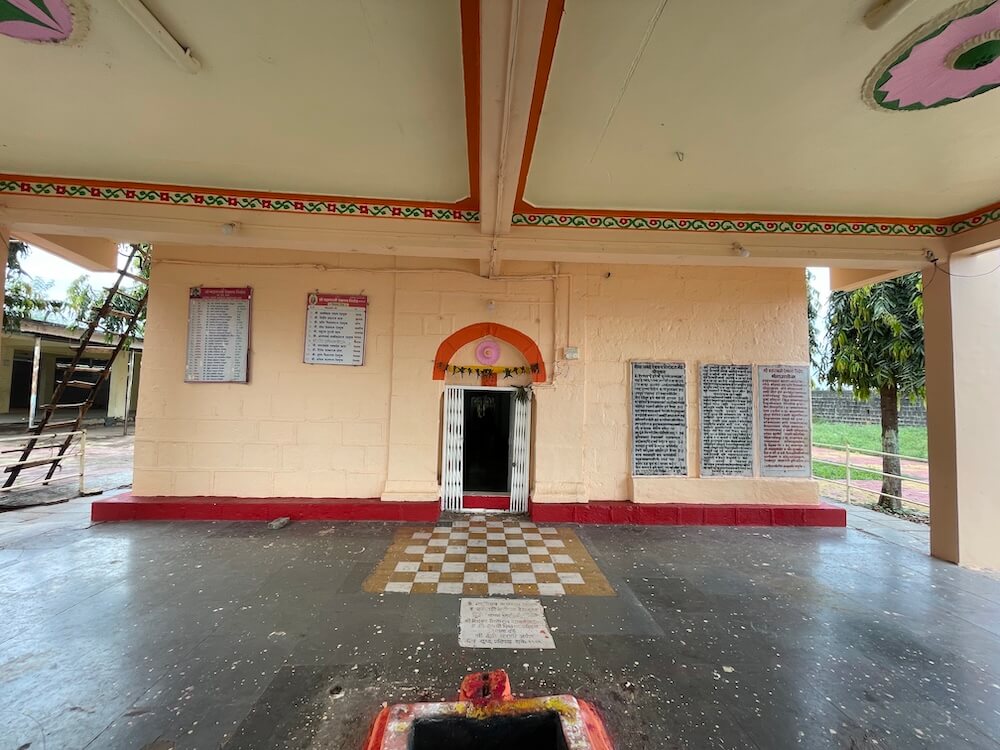
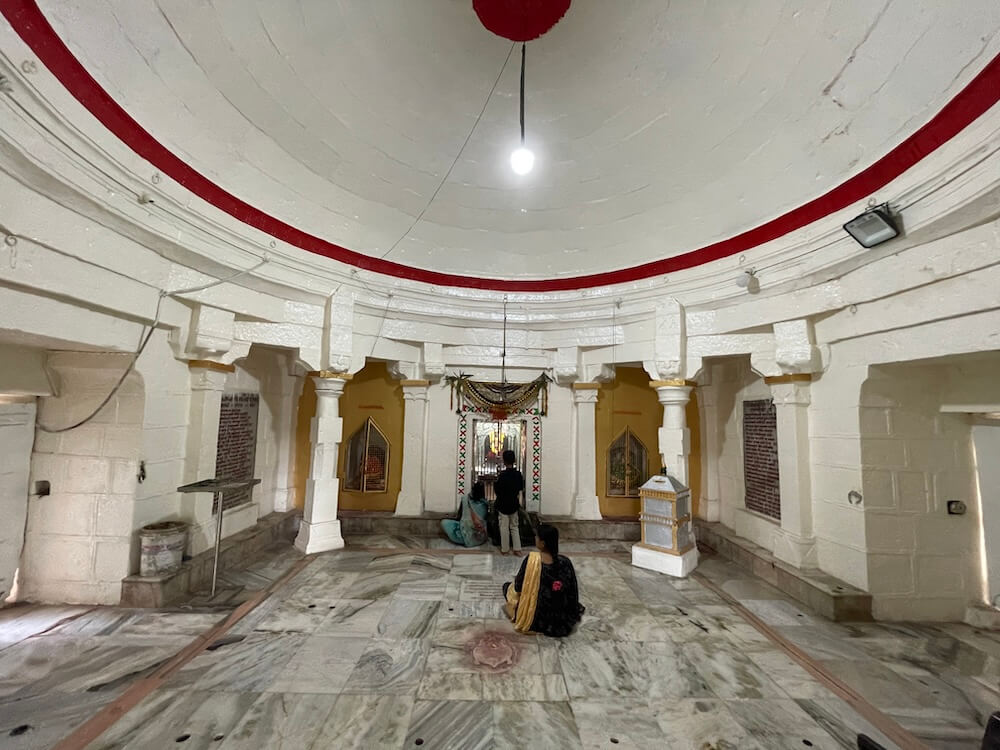
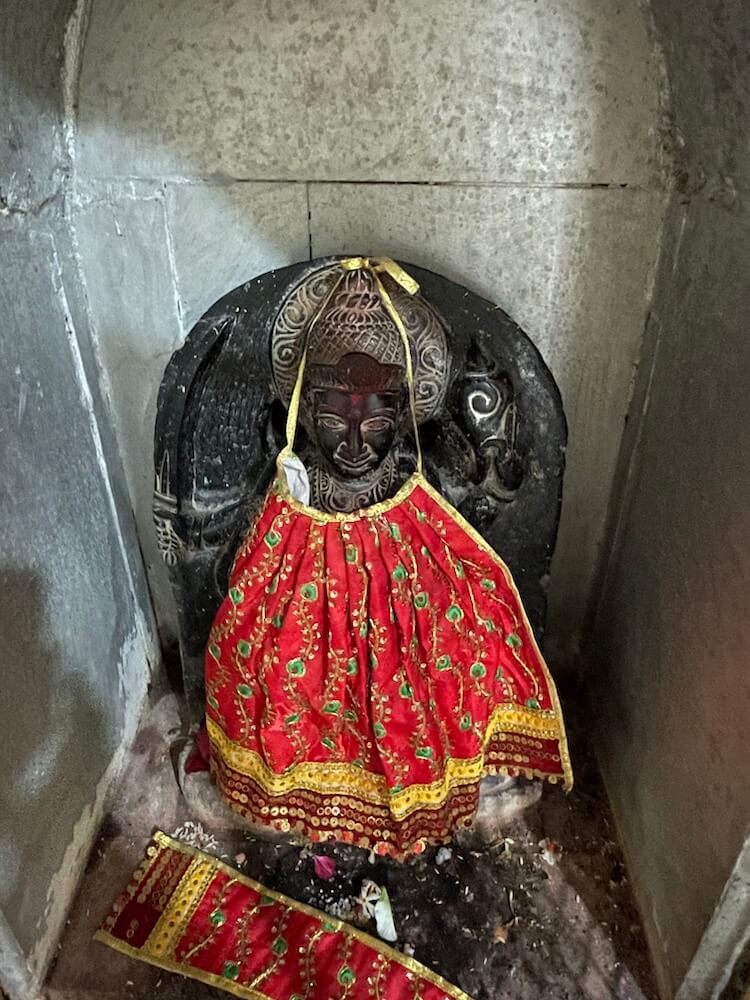
The temple is structured with a Sabhamandapa (assembly hall), a Mukhya Sabhamandapa (main assembly hall), an Antarala (vestibule), and a Garbhagriha (sanctum sanctorum), with the Sabhamandapa being semi-open in nature. This structure has been recently constructed using cement concrete. There are a total of seven pillars in the Sabhamandapa, supporting beams upon which the ceiling rests. The beams are adorned with floral and vine motifs, while the ceiling features painted circular patterns. Within the Sabhamandapa stands an ancient stone pedestal, upon which a hexagonal Deepmala (lamp tower) passes through the ceiling. The lower half of the Deepmala is situated below the ceiling, while the upper half extends above it. Adjacent to this platform is an idol of Garuda, and on the platform itself are stone idols of local deities anointed with vermilion. Further ahead lie the main Sabha Mandapa (assembly hall), the Antarala (vestibule), and the Garbhagriha (sanctum sanctorum). The entrance to the main Sabha Mandapa is low in height, requiring devotees to bow as they enter. On both sides of the entrance are paintings of Dwarapalas (gatekeepers), and on the Lalatabimba (lintel) is a sculpture of Lord Ganesha. Above the entrance is a semi-circular arch featuring a lotus sculpture in relief. There are two additional doors on the left and right sides of the main Sabha Mandapa. The hall contains a total of twelve ornate square pillars. Of these twelve, the four corner pillars feature geometric shapes such as squares and hexagons. In the Antarala, there is a sculpture of a tortoise on the floor in the center. In the main Sabha Mandapa, on the left and right sides of the entrance to the Antarala, there are two Devakoshtakas (niches). One of these niches houses an idol of Goddess Mahakali, and the other houses an idol of Goddess Mahasaraswati.
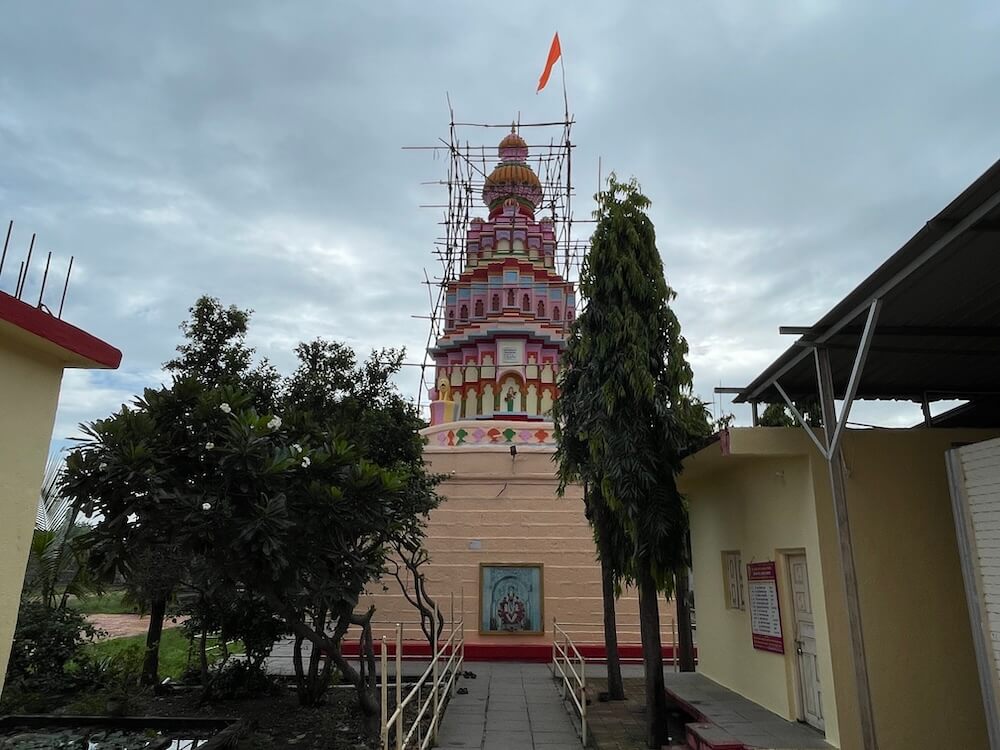
On both sides of the entrance to the sanctum, there are paintings of welcoming celestial maidens. The door jambs feature vertical decorative carvings, and the lintel bears a sculpture of Lord Ganapati. On the threshold, there is a moonstone (Chandrashila) with a Kirtimukha carved upon it. The entrance to the sanctum sanctorum (Garbhagriha) features doorjambs, with a sculpture of Lord Ganesha on the lintel (Lalatabimba). The architrave is adorned with intricate floral and foliate carvings. Inside the sanctum, placed against the back wall on a Vajrapitha (pedestal), stands the four-armed idol of Goddess Mahalakshmi, carved from black stone. The Goddess holds a mace (Gada), lotus (Padma), conch (Shankha), and discus (Chakra) in her hands, and is depicted wearing intricately carved garments and ornaments. On her head rests a crown, which features a carved serpent. The Goddess is adorned with armlets, bangles, and anklets. The Prabhavali (halo) behind the idol features two pillars on either side, topped by an arch decorated with leaf and floral motifs. Beneath this arch, the Prabhavali displays sculptures of elephants on both sides and a five-hooded serpent in the center. The temple roof is crowned by a four-tiered star-shaped Shikhara (spire). The lower three tiers of the Shikhara contain niches (Devakoshthakas) housing divine sculptures and pillar carvings. The fourth tier of the Shikhara consists of two stacked Amalakas, topped by a Kalasha.
In the temple courtyard, beside the main shrine, there is a Pushkarani (sacred water tank) constructed of carved stone. There are steps to descend into the Pushkarani. On both sides of this stairway, there are guard chambers built into the walls.
The Sharadiya Navaratrotsav is the main annual festival of the Mahalakshmi Temple. During this time, there is a large influx of devotees coming for Darshan for ten consecutive days. Devotees offer sarees and blouses as a gift to the Goddess and perform the ritual of ‘Oti Bharne’ with a blouse piece and a coconut. Votive offerings such as cradles, beads, Mangalsutras, and bangles are also presented to the Goddess. A large number of devotees visit the temple on days such as Shravan Maas, Margashirsha Maas, as well as on Tuesdays, Fridays, Purnima, Amavasya, and Ashtami.
This sacred temple stands as a testament to deep spiritual devotion, ancient architectural grandeur, and rich local cultural traditions.
The sanctum sanctorum houses the divine idol consecrated according to ancient Vedic traditions, surrounded by serene courtyards and traditional temple architecture.
Navratri, Maha Shivratri, Annual Temple Jatra & Deepotsav
Compare and book flights, secure top-rated local hotels near the temple, hire reliable guides, and rent cars instantly.
Extend your pilgrimage by visiting other highly sacred temples located nearby.


Add ₹999 more to unlock FREE SHIPPING!
Your sacred cart is currently empty.
Shop Photo FramesFill in your delivery details below to place your order.
Add comment